
Red Rock Canyon sits just 17 miles west of the Las Vegas Strip, but the story written into its rocks stretches back 1.8 billion years. The red rock canyon history most visitors glimpse from a car window, those dramatic crimson and cream sandstone formations, only scratches the surface of what actually happened here.
Long before Las Vegas existed, ancient seas, shifting deserts, and tectonic collisions shaped this landscape into what we see today. Southern Paiute and other Native peoples left petroglyphs across its sandstone walls, marking centuries of life and travel through the canyon. And it took decades of modern advocacy before the area earned federal protection as a National Conservation Area in 1990.
At Another Side Tours, our guides bring this full timeline to life during our Red Rock Canyon tours, walking guests through the geology, the cultural history, and the conservation milestones that make this place far more than a scenic backdrop. This article covers that same story, from the canyon’s oldest rocks to its present-day protections.
Why Red Rock Canyon history is worth knowing
Most people visiting Las Vegas treat Red Rock Canyon as a quick half-day detour, snap a few photos, and drive back to the Strip. That approach misses nearly everything. Understanding the red rock canyon history behind those formations transforms a scenic drive into something that actually makes sense, where the colors, the cliff shapes, and the canyon layout stop looking random and start telling a coherent story you can follow.
The difference between looking at Red Rock Canyon and actually understanding it comes down to one thing: context.
The layers you see are all timestamps
Every band of color in the canyon wall represents a distinct geological period, some stretching back hundreds of millions of years. The deep red comes from iron oxide in ancient desert dunes. The pale cream layers above record a time when shallow seas covered this entire region. When you know what each layer represents, the cliff face stops being a pretty backdrop and becomes a readable record of time.
Here is what each major layer type tells you:
- Red and orange sandstone: ancient desert dune fields from roughly 180 million years ago
- Cream and white limestone: marine deposits from older shallow seas
- Gray formations near the base: the oldest exposed rock, dating back over a billion years
The human story runs just as deep
The canyon was not empty before modern visitors arrived. Southern Paiute people traveled and camped here for centuries, leaving petroglyphs carved into the sandstone that researchers still study today. Ranchers moved through in the 1800s, and early Las Vegas residents used the area for weekend escapes long before federal protection existed.
Knowing this human timeline gives you a reason to slow down and look more carefully at what surrounds you, rather than photographing only the obvious red walls and moving on. That fuller picture is what separates a meaningful visit from a forgettable afternoon.
How Red Rock Canyon formed: a geology timeline
The geology behind red rock canyon history spans nearly 1.8 billion years, making what you see today the result of repeated sea floods, massive desert dune fields, and tectonic collisions. No single event shaped the canyon. Several distinct chapters stacked on top of each other to build what you now walk through.
From shallow seas to Jurassic sand dunes
Around 550 million years ago, shallow seas covered this region and left behind the limestone layers you can still spot near the canyon’s base. Those seas eventually retreated, and vast desert dune fields took over roughly 180 million years ago during the Jurassic period. Wind-blown sand compacted over millions of years into what geologists call the Aztec Sandstone, the formation responsible for the canyon’s signature red and cream walls.
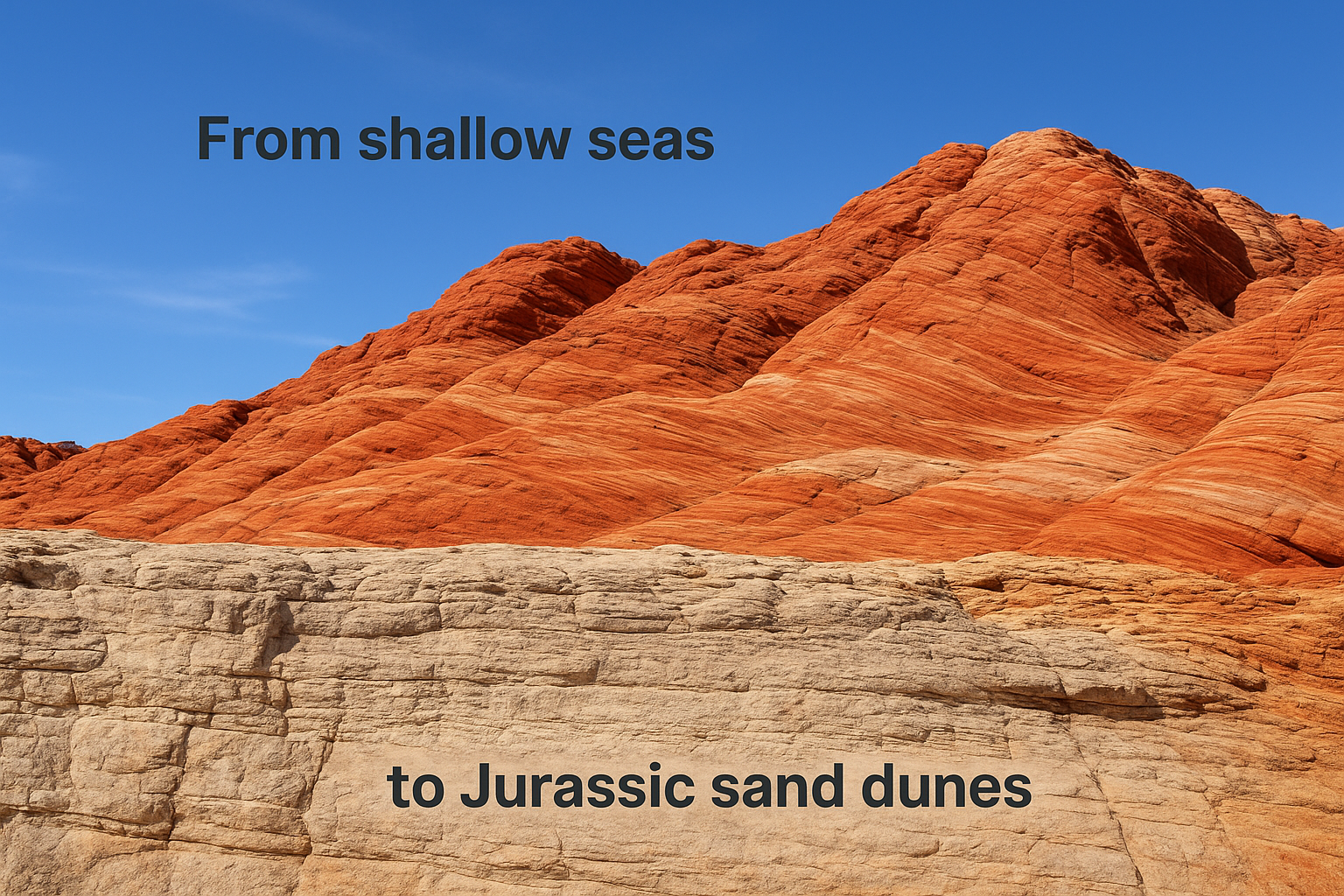
The iron oxide that turned those ancient dunes red came from water filtering through the sand long after it had already solidified into rock.
The collision that flipped the rock layers
About 65 million years ago, tectonic plates collided and pushed older gray limestone up and over younger red sandstone, creating what geologists call the Keystone Thrust Fault. That collision explains why you see darker, older rock sitting directly on top of lighter, younger rock throughout the canyon, a reversal of the normal geological order that surprises most visitors once they know to look for it.
Native peoples, petroglyphs, and sacred sites
The human chapter of red rock canyon history begins long before European contact. Southern Paiute people used this canyon for centuries as a travel corridor and resource zone. Archaic peoples passed through even earlier, with evidence of human presence dating back at least 7,000 years, making the cultural record here far older than most visitors expect.
What the petroglyphs show
Scattered across sandstone walls and boulders throughout the canyon, petroglyphs record animals, human figures, and geometric symbols carved by ancient peoples. These marks were functional. They communicated territory boundaries, water locations, seasonal routes, and ceremonial information to others traveling through the same landscape.
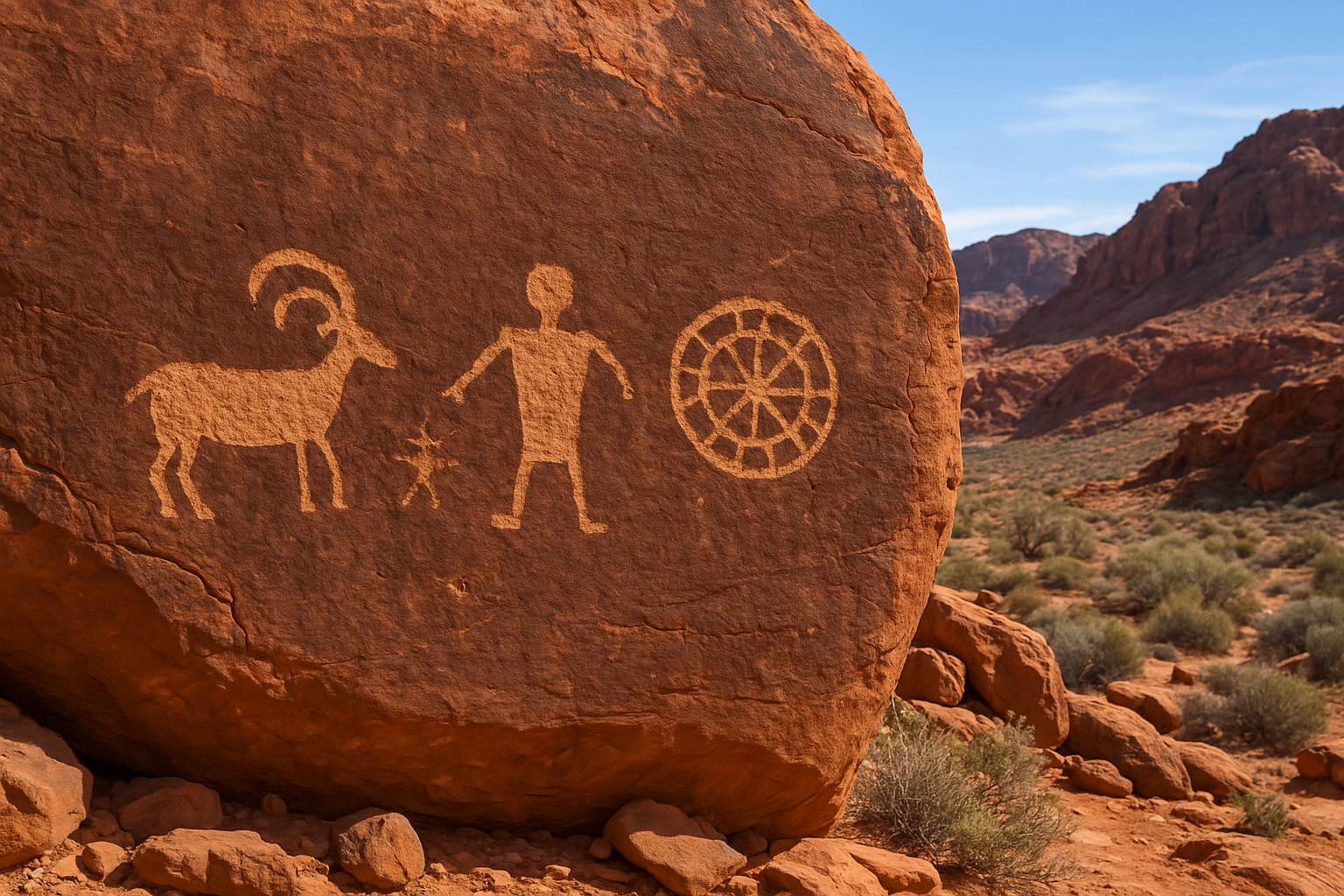
Common petroglyph subjects you will find here include:
- Bighorn sheep: a key food and spiritual symbol across the region
- Human figures: often marking ceremonial or ritual activity
- Geometric patterns: tied to seasonal cycles and astronomical events
Treating petroglyphs as photo props causes real physical and cultural damage, so keep your distance and avoid touching the rock surface.
Sacred sites and continued cultural ties
The Las Vegas Paiute Tribe and related nations maintain active connections to Red Rock Canyon today. Federal land managers formally recognize this living cultural relationship when making conservation and access decisions, which directly shapes what areas stay open to the public.
When you visit, staying on marked trails near petroglyph sites respects both the rock art and the ongoing cultural significance that tribal communities attach to these locations.
Settlers, ranching, and early tourism
After Native peoples established centuries of presence, European settlers began moving through the canyon in the mid-1800s. The Old Spanish Trail ran through this region, making the canyon a waypoint for traders and explorers traveling between California and New Mexico. Ranching operations followed, with homesteaders using the canyon’s water sources and vegetation to support livestock through the late 1800s and into the early 1900s.
The sandstone walls that now attract hikers once served as a practical landmark for ranchers navigating an otherwise unforgiving desert landscape.
From ranching to recreation
Red Rock Canyon’s shift toward tourism tracks closely with Las Vegas’s own growth. As the city expanded through the mid-20th century, residents began driving out to the canyon for weekend picnics and casual hikes. The Blue Diamond Road, built to connect Las Vegas to the nearby mining town of Blue Diamond, made the canyon far more accessible to ordinary visitors.
That growing foot traffic pushed conservation advocates to fight for formal federal protection, a turning point in red rock canyon history that directly shaped how the site you visit today is managed, maintained, and kept open for future generations.
Protection, management, and what to expect today
The most recent chapter in red rock canyon history came in 1990, when Congress designated the area as the Red Rock Canyon National Conservation Area. That designation handed management authority to the Bureau of Land Management (BLM) and put legal teeth behind decades of conservation advocacy.
Federal protection did not close the canyon to visitors. It set the rules that keep it accessible without destroying it.
What the 1990 designation controls
The NCA status gives the BLM direct authority to regulate land use, limit development, and require an entrance fee that funds ongoing maintenance. It also created a formal framework for balancing recreational access against habitat protection, which matters given that over 3 million people now visit each year.
What you will encounter on a visit today
When you arrive, you pay an entrance fee at the visitor center, which also houses exhibits on the canyon’s geology and cultural history. A 13-mile scenic drive loops through the main formations, with marked trailheads, designated climbing areas, and petroglyph viewing spots clearly signed throughout. Staying on those marked paths protects both the landscape and the rock art that makes this site worth visiting in the first place.
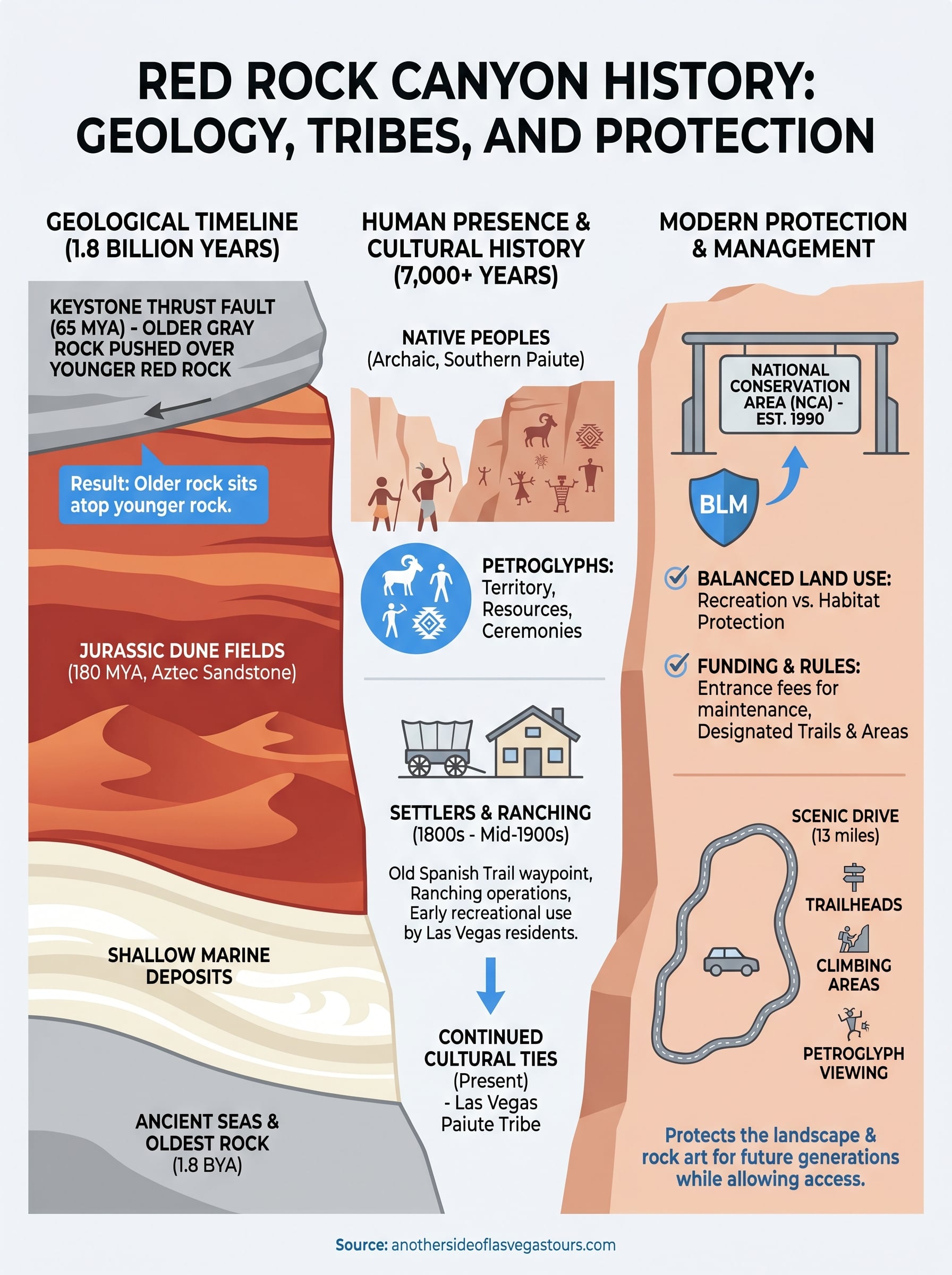
A quick recap before you go
Red rock canyon history covers more ground than most visitors expect. You are looking at 1.8 billion years of geology, from ancient seas and Jurassic dune fields to a tectonic collision that flipped rock layers upside down. Southern Paiute and earlier peoples used this canyon for at least 7,000 years, leaving petroglyphs and cultural ties that still shape how the land is managed today. Settlers and ranchers moved through in the 1800s, and federal NCA designation in 1990 locked in the protections that keep the canyon accessible without destroying it.
Knowing this timeline changes how you experience the canyon. Every color band, petroglyph, and trail sign carries meaning once you understand what came before. If you want a guide who can walk you through all of it in person, check out our Red Rock Canyon limo tours and see it the way insiders do.