
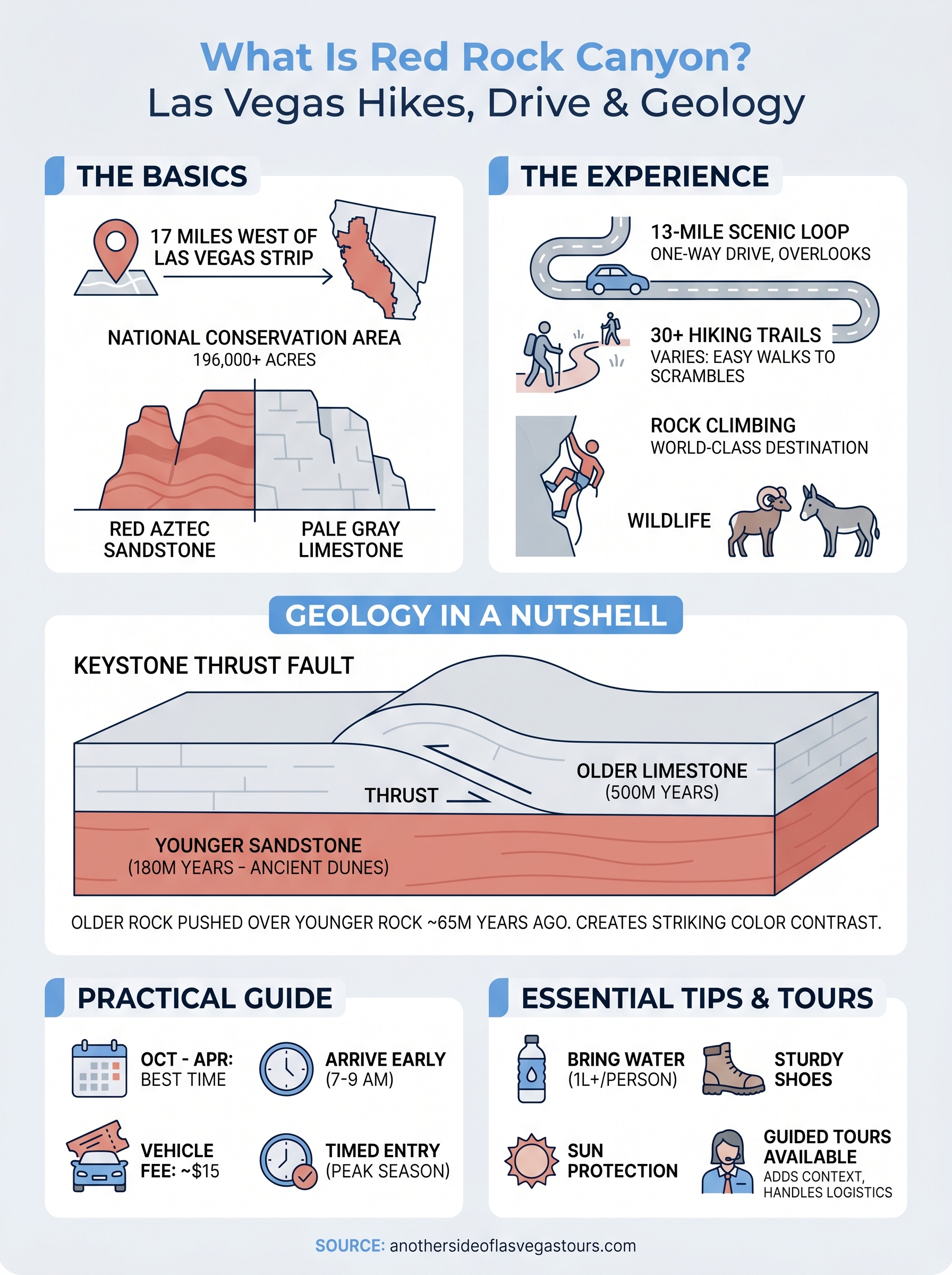
So, what is Red Rock Canyon, exactly? It’s a 195,819-acre National Conservation Area managed by the Bureau of Land Management, sitting just 17 miles west of the Las Vegas Strip. Most visitors know it for its striking red sandstone formations, but there’s far more going on here than a pretty backdrop for photos. The geology spans roughly 600 million years, the hiking trails range from flat boardwalks to serious scrambles, and the 13-mile scenic drive offers one of the best road experiences in southern Nevada.
Whether you’re planning a half-day escape from the casinos or genuinely curious about how ancient sand dunes turned to stone, this guide covers the full picture, location, geology, trails, the scenic loop, wildlife, and practical tips for visiting. At Another Side Tours, we take guests out to Red Rock Canyon regularly on our guided natural attractions tours, so the details here come from years of showing people what makes this place worth the drive.
Here’s everything you need to know before you go.
What Red Rock Canyon is and where it is
Red Rock Canyon National Conservation Area is a protected federal landscape covering nearly 196,000 acres in southern Nevada, managed by the Bureau of Land Management (BLM). It sits roughly 17 miles west of the Las Vegas Strip, which means you can be standing in front of dramatic red sandstone cliffs within about 30 minutes of leaving your hotel. The name comes from the deep red and orange coloring of the Aztec Sandstone that dominates the escarpment, a color produced by iron oxide staining the ancient rock over hundreds of millions of years.
The official designation and what it covers
The BLM designated Red Rock Canyon as a National Conservation Area in 1990, giving it a different status than a national park. National conservation areas protect natural, cultural, and scenic resources while still allowing a wider range of activities. At Red Rock, that means hiking, rock climbing, mountain biking, horseback riding, and wildlife viewing are all permitted across a managed system of trails, roads, and protected zones.
This distinction matters when you’re planning your visit. Because the area isn’t a national park, management focuses on balancing public recreation with long-term preservation rather than strict access controls. The conservation area also extends into the Spring Mountains to the west, which adds higher elevation terrain to the lower desert landscape closer to the city.
The BLM manages Red Rock Canyon specifically to balance public recreation with long-term preservation of its geological and ecological resources.
Where it sits in relation to Las Vegas
You reach Red Rock Canyon by heading west on West Charleston Boulevard (State Route 159) from Las Vegas. The drive takes 20 to 35 minutes depending on traffic, and the landscape shifts noticeably as you leave the suburbs. By the time you reach the Visitor Center entrance, the city has completely disappeared from view.
The canyon sits at the edge of the Mojave Desert, where the desert floor meets the Spring Mountains, creating a dramatic wall of sandstone known as the Keystone Thrust. This geological boundary, visible clearly from the scenic loop, marks where older limestone rock was pushed up and over younger sandstone roughly 65 million years ago during a period of intense tectonic compression.
What the landscape actually looks like
Photos don’t fully capture the scale. The main escarpment rises more than 3,000 feet above the valley floor, and the terrain inside the conservation area shifts between open desert, narrow slot-style canyons carved by seasonal water, and high ridgelines with sweeping views. Most of the striking color contrast comes from two rock types sitting side by side: deep red Aztec Sandstone and pale gray Paleozoic limestone.
The landscape supports a wide mix of plant and animal life that surprises many visitors. Some of what you’re likely to encounter includes:
- Desert bighorn sheep on rocky ledges, especially in early morning
- Wild burros in the lower desert areas near the scenic loop
- Joshua trees, yucca, and creosote bush across open terrain
- Cottonwood and willow trees along seasonal stream beds in the canyon floors
- Gila woodpeckers, red-tailed hawks, and peregrine falcons overhead
Understanding what is red rock canyon in full means recognizing it as a functioning desert ecosystem, not simply a scenic backdrop. The geological diversity and biological variety are what separate it from a typical roadside viewpoint, and they’re the main reasons this place draws over one million visitors each year.
Why Red Rock Canyon is worth visiting
Most people visit Las Vegas for the Strip, and that’s fine, but Red Rock Canyon sits 17 miles away and offers something the city can’t: open space, geological scale, and complete quiet. Understanding what is red rock canyon in context means recognizing it as one of the most accessible wilderness areas in the American Southwest. You don’t need a week-long road trip or a tent to experience genuine desert landscape here. A single morning or afternoon is enough to see why this conservation area draws over a million visitors every year.
The setting delivers a contrast that’s hard to find anywhere else
The visual shift from the Las Vegas suburbs to the canyon escarpment happens fast. Within 30 minutes of leaving your hotel, you’re standing in front of sandstone walls that rise over 3,000 feet above the valley floor. That kind of scale recalibrates how you experience the rest of your trip. The silence is also part of it. No traffic noise, no crowds pressing in on you, just open terrain and rock formations that have been building for hundreds of millions of years.
The contrast between the Las Vegas Strip and Red Rock Canyon is one of the most dramatic landscape transitions you’ll find within a half-hour drive anywhere in the country.
The canyon also works for a wide range of fitness levels. Paved scenic loop, flat nature trails, and technical scrambles all exist within the same conservation area, so whether you’re traveling with kids or experienced hikers, there’s something that fits without requiring a long drive to a separate location.
The wildlife and plant life add a layer most visitors don’t expect
Many first-time visitors arrive expecting a desert with rocks and leave surprised by how much life the landscape holds. Desert bighorn sheep stand on exposed ridgelines in the early morning. Wild burros roam the lower desert near the scenic loop. Seasonal streams in the canyon floors support cottonwood groves that feel completely out of place given the surrounding terrain.
That biological variety reflects the range of elevation and microhabitats packed into the conservation area. The Spring Mountains to the west bring cooler temperatures and different plant communities, which means the canyon isn’t a single ecosystem but several layered together across a short geographic span.
How Red Rock Canyon formed and what you are seeing
The geology here spans roughly 600 million years, and you’re looking at multiple chapters of Earth’s history stacked against each other in a single view. Understanding what is red rock canyon from a geological standpoint helps explain why the colors, shapes, and cliff heights look so different depending on where you stand along the scenic loop. The two dominant rock types, red Aztec Sandstone and pale gray limestone, each formed under completely different conditions separated by hundreds of millions of years.
The Keystone Thrust and why the colors divide so sharply
The most visible geological feature at Red Rock Canyon is the Keystone Thrust Fault, the sharp boundary where older limestone sits on top of younger sandstone. This looks counterintuitive at first. Normally, older rock sits below younger rock. At the Keystone Thrust, tectonic compression during the late Cretaceous period, roughly 65 million years ago, forced a massive slab of limestone westward and up and over the sandstone beneath it. The result is the striking color contrast you see on the main escarpment: gray limestone crowning the ridgelines, red sandstone forming the lower walls and canyon floors.
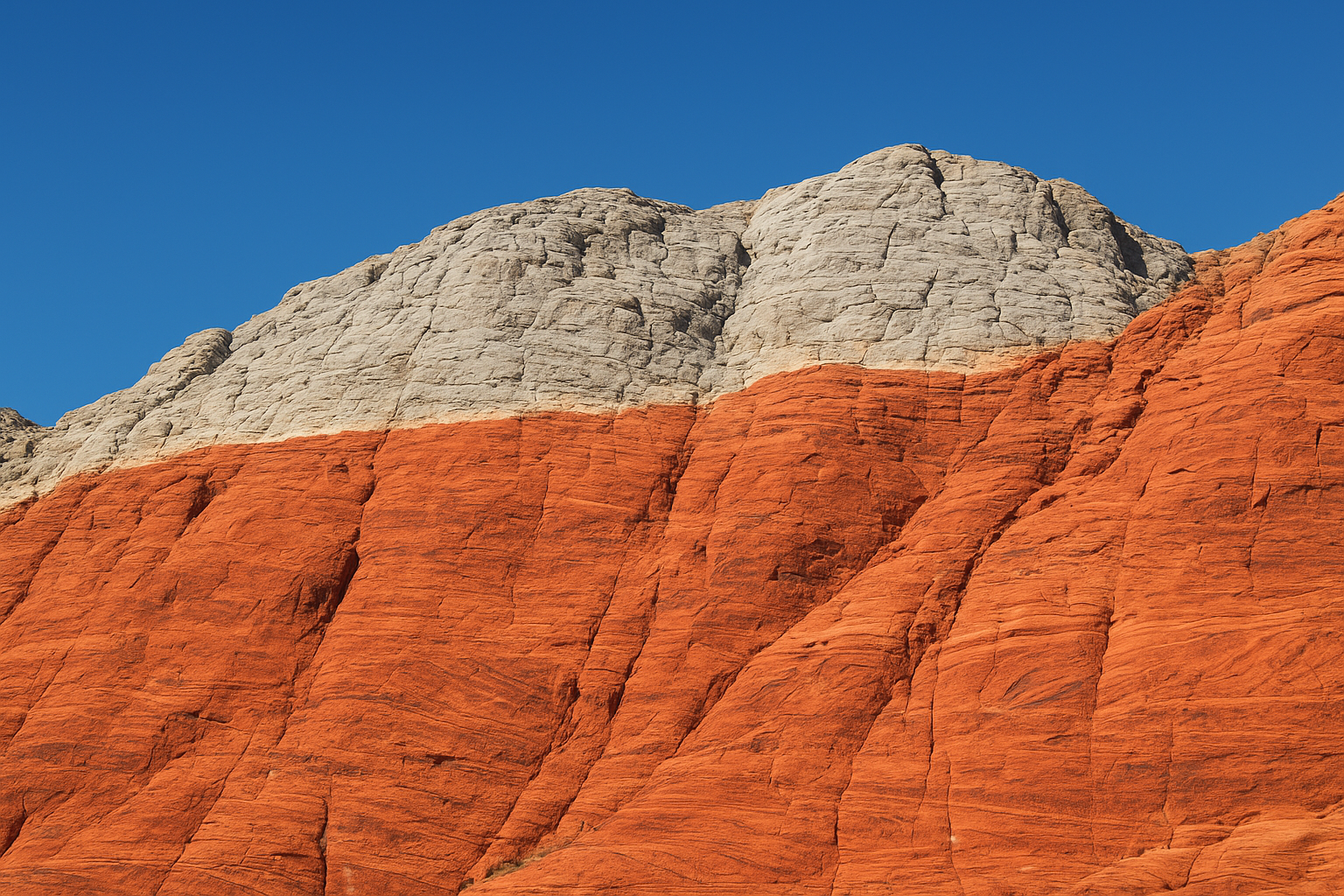
The Keystone Thrust Fault is one of the most clearly visible thrust faults in North America, which is part of why geologists and educators visit Red Rock Canyon regularly.
How ancient dunes turned to the red sandstone you see today
The Aztec Sandstone that gives Red Rock Canyon its name and most of its color started as a massive desert dune field roughly 180 million years ago, during the Jurassic period. Sand grains accumulated in layers over millions of years, compressed under their own weight, and eventually cemented into rock. Iron oxide coating those original sand grains is what produces the deep red and orange color you see across the escarpment. In some sections, you can still identify the original cross-bedding patterns from ancient dune faces preserved in the rock face.
The gray limestone at higher elevations formed even earlier, roughly 500 million years ago, when a shallow sea covered the region. Marine organisms built up calcium carbonate deposits over time, and those deposits lithified into the pale rock that now caps the canyon walls above the red sandstone.
What to do at Red Rock Canyon
Answering what is red rock canyon in practical terms means covering what you can actually do there, and the range is broader than most visitors expect. The conservation area supports hiking, rock climbing, mountain biking, wildlife watching, and scenic driving within a single visit, so you can mix activities based on your group’s fitness level and how much time you have.
Drive the 13-mile scenic loop
The one-way scenic loop road is the easiest way to experience the canyon without leaving your vehicle. It runs 13 miles through the heart of the conservation area, passing overlooks, trailheads, and open desert terrain. The drive takes about an hour at a relaxed pace, but most people stop multiple times to photograph the escarpment or walk short nature trails off the main road. The best light hits the red sandstone in the early morning and late afternoon, when the color intensifies noticeably compared to midday.
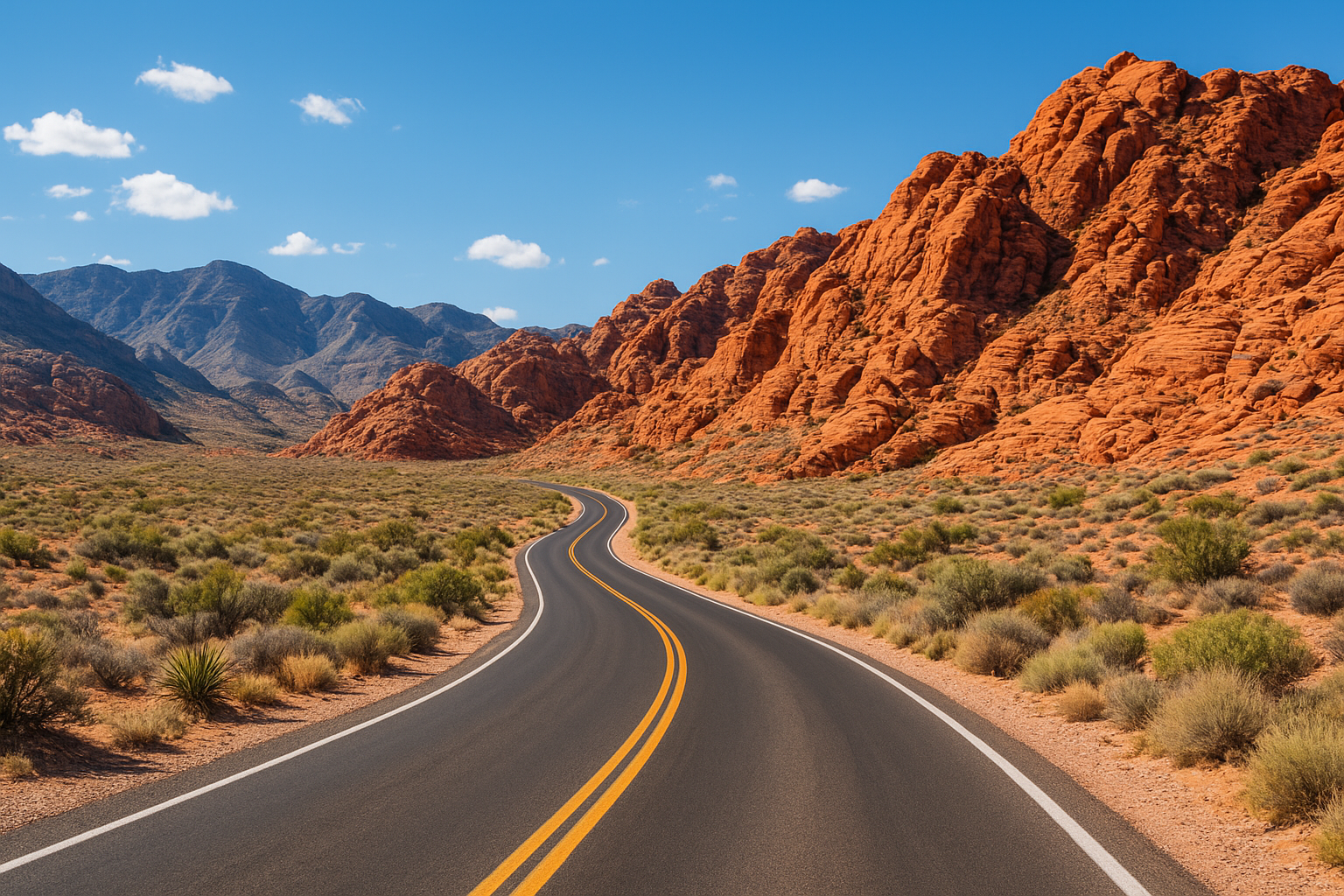
Arriving at the Visitor Center before 8 a.m. gives you the scenic loop with minimal traffic and the best chance of spotting desert bighorn sheep on the lower ridgelines.
Hike the trails
Red Rock Canyon has over 30 established hiking trails covering a wide range of difficulty levels. You don’t need technical experience to get deep into the landscape. Some of the most visited options include:
- Calico Hills Trail (2.2 miles, easy): Flat terrain with direct views of the main sandstone formations
- Icebox Canyon Trail (2.6 miles, moderate): Follows a seasonal streambed into a narrow canyon with shade and seasonal waterfalls
- Turtlehead Peak (4.8 miles, strenuous): A full summit hike with panoramic views across the Las Vegas Valley
- Lost Creek Children’s Discovery Trail (0.7 miles, easy): Short loop with interpretive signs, well-suited for families
Rock climb the sandstone walls
Red Rock Canyon is one of the premier rock climbing destinations in the American Southwest, drawing climbers from around the world because of the quality and texture of the Aztec Sandstone. More than 2,000 established climbing routes exist across the escarpment, ranging from beginner top-rope pitches to multi-day big wall climbs. If you’re not an experienced climber, several guide services operating within the conservation area offer instruction for first-timers.
How to plan a smooth trip from Las Vegas
Planning a day trip to Red Rock Canyon from Las Vegas is straightforward, but a few key decisions will determine whether your visit feels rushed or genuinely rewarding. The drive from the Strip takes 20 to 35 minutes, and the conservation area opens as early as 6 a.m., which means you can be at the Visitor Center before most casinos have finished serving breakfast.
When to go and how long to stay
The best time to visit Red Rock Canyon is October through April, when temperatures stay manageable for hiking and outdoor activity. Summer months push daytime highs well above 100°F, which makes long hikes dangerous and the midday scenic loop uncomfortably hot. Morning arrivals between 7 and 9 a.m. give you cooler temperatures, better light on the sandstone, and smaller crowds on the trails.
Plan for at least three hours if you want to drive the scenic loop and walk one trail. A half-day, roughly four to five hours, gives you time to explore two or three trailheads without feeling rushed. If you want to understand what is red rock canyon in full, including its geology, wildlife, and canyon interiors, a guided tour removes the guesswork and adds context that a self-guided visit rarely delivers.
A guided tour from Las Vegas covers the scenic loop, key geological features, and top trail access points in a structured format that maximizes your time on the ground.
What to bring and wear
Water is the single most important item you can carry. Bring at least one liter per person for a short hike, and more for anything over two miles. The desert air pulls moisture out quickly, and heat amplifies that effect even in cooler months.
Pack sturdy closed-toe shoes for any trail work, since the terrain shifts between loose gravel, sandstone slabs, and rocky scrambles without much warning. Sunscreen, a hat, and sunglasses are standard gear regardless of the season. If you’re visiting in winter, layering is smart because morning temperatures near the canyon floor can sit in the 30s before warming up quickly by midday.
Fees, hours, and timed entry reservations
Knowing the current entry fees and reservation requirements before you leave Las Vegas saves you from arriving at a closed gate or an overflowing parking lot. The Red Rock Canyon conservation area charges a per-vehicle entrance fee, and during peak visitation periods, the BLM requires timed entry reservations to manage traffic on the scenic loop. Getting both details sorted in advance takes less than ten minutes and makes the entire visit run more smoothly.
What you’ll pay to enter
Vehicle entry currently runs $15 per car, with separate rates for motorcycles ($10) and walk-in or bicycle visitors ($5 per person). If you plan to visit more than once or want access to other federal public lands during your trip, the America the Beautiful Annual Pass covers entry to Red Rock Canyon alongside hundreds of other federal sites. Annual pass holders enter without paying the per-vehicle fee, which makes it a strong value if you’re spending more than a few days in the region.
The America the Beautiful Annual Pass covers entry fees at most federal lands across the country for $80 per year, making it worthwhile if you visit even two or three federal sites in a single trip.
Hours and the timed entry reservation system
Operating hours shift by season, generally running from 6 a.m. to 7 p.m. in spring and fall, with extended hours in summer and reduced hours in winter. Checking the current posted schedule before you leave Las Vegas takes two minutes and prevents arriving at a locked gate. The BLM updates seasonal hour changes on its official site, so that’s the most reliable source for same-week planning.
The timed entry reservation system operates during high-traffic periods, typically May through September, when daily visitor numbers can overwhelm parking areas and back up the scenic loop for hours. Reservations are booked through the federal recreation platform at recreation.gov, and popular weekend slots fill quickly in summer, sometimes within days of opening. Booking at least a week ahead covers most situations. If you’re visiting as part of a guided tour, your tour operator typically manages reservation logistics as part of the booking process, which removes that planning step from your list entirely. That’s one practical advantage of a structured visit when understanding what is red rock canyon in full is the actual goal.
Wrap-up and next steps
Now you know what is red rock canyon in full: a 196,000-acre conservation area 17 miles from the Strip, shaped by 600 million years of geology, and packed with trails, wildlife, and one of the best scenic drives in the Southwest. The key details to lock in before you go are your timed entry reservation, your departure time (early morning works best), and how much water you’re bringing. Those three things cover most of what can go wrong on a self-guided visit.
If you want to skip the logistics and get more out of your time on the ground, a guided tour handles the planning while adding context you won’t find on trail signs. Another Side Tours takes guests to Red Rock Canyon regularly, with expert guides who know the geology, the wildlife patterns, and the best stops on the loop. Check out our Las Vegas limo tours to see how a private tour works.