
Red Rock Canyon sits just 20 minutes west of the Las Vegas Strip, but it feels like a different planet. Towering sandstone formations, desert wildlife, and over 30 miles of hiking trails make it one of the most visited natural areas in Nevada, and one of the most misunderstood. Without a solid red rock canyon visitor guide, first-timers often show up at the wrong time, skip the timed entry reservation system, or miss the best trails entirely.
We’ve been leading tours to Red Rock Canyon since 2007 as part of our guided Las Vegas experiences at Another Side Tours. That means thousands of trips through the Scenic Drive, countless trail recommendations, and a front-row seat to every policy change the BLM has rolled out over the years. This guide pulls from that hands-on experience to give you what actually matters.
Below, you’ll find current entry fees, how timed reservations work, trail breakdowns by difficulty, safety essentials, and practical tips that’ll help you plan a visit without the guesswork. Whether you’re hiking solo or joining one of our guided Red Rock Canyon tours, this is everything you need before you go.
Red Rock Canyon basics at a glance
Red Rock Canyon National Conservation Area covers 195,819 acres of Mojave Desert landscape managed by the Bureau of Land Management (BLM), not the National Park Service. That distinction matters because the rules, fee structure, and reservation system work differently here than at a traditional national park. Knowing what you’re walking into before you arrive is the foundation of any solid red rock canyon visitor guide, and it starts with understanding the basics.
What the landscape looks like
The signature feature is the Calico Hills, a series of dramatic red and cream-colored sandstone formations that rise up to 3,000 feet above the valley floor. These rocks formed roughly 180 million years ago from ancient sand dunes that compressed and oxidized over time. Iron oxide gives the stone its signature red color, while calcium carbonate creates the white and cream banding you’ll see throughout the hills.
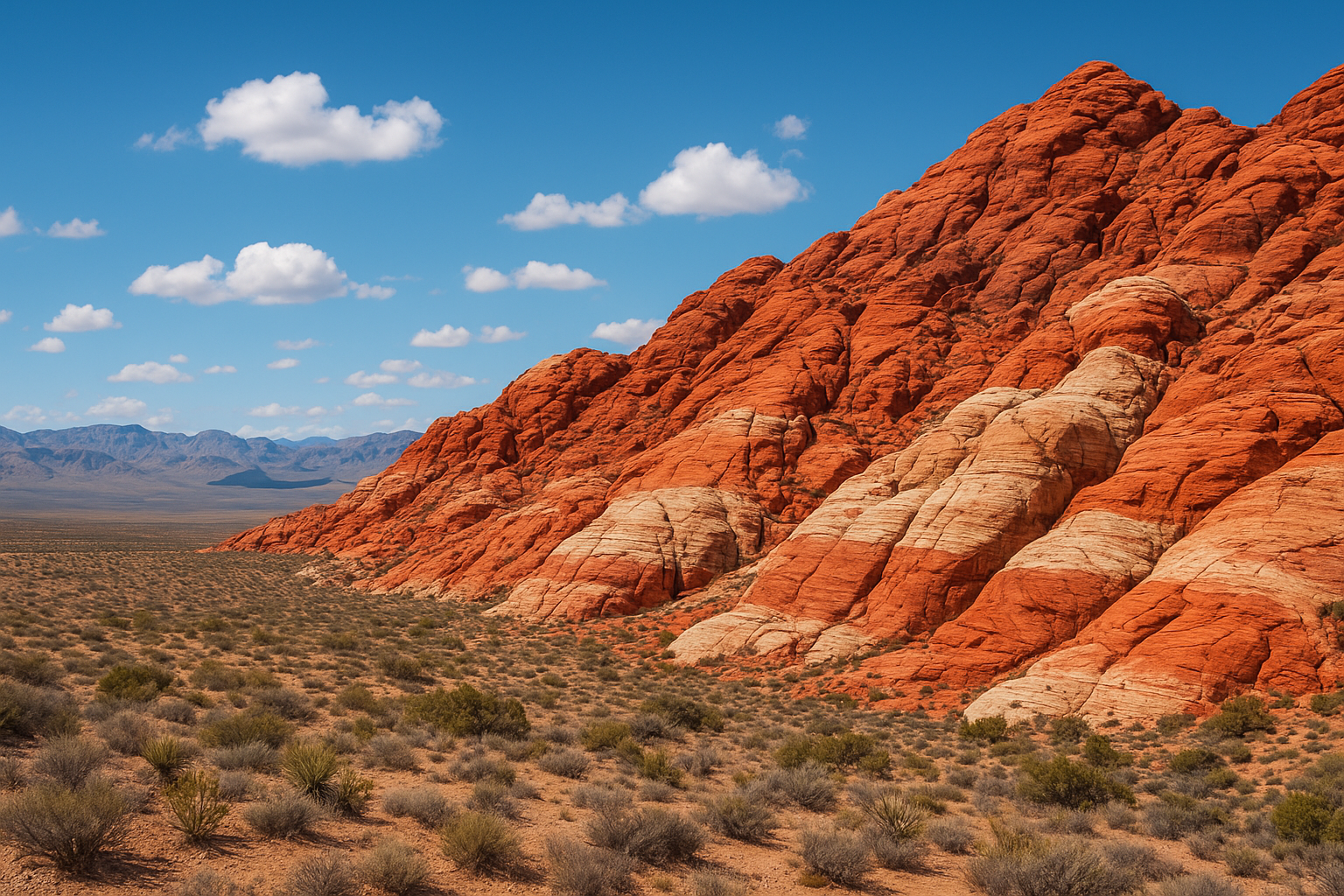
The Calico Hills sit at the boundary of two rock types, and that contrast creates one of the most visually striking landscapes in the American Southwest.
Beyond the sandstone, desert wildlife is surprisingly active here. Bighorn sheep, desert tortoises, coyotes, and over 200 bird species live in or pass through the conservation area. Your best chance of spotting bighorn sheep is on rocky outcroppings early in the morning before foot traffic picks up.
Core facts every visitor needs
Before you spend any time on logistics, lock down these fundamentals. The table below gives you the overview you need to start building your itinerary:
| Detail | Info |
|---|---|
| Official name | Red Rock Canyon National Conservation Area |
| Managed by | Bureau of Land Management (BLM) |
| Location | 17 miles west of Las Vegas on SR-159 |
| Total area | 195,819 acres |
| Scenic Drive length | 13 miles (one-way loop) |
| Elevation range | 3,600 to 7,068 feet |
| Hiking trails | 30+ miles |
| Nearest city | Las Vegas, NV (approx. 20 min. from the Strip) |
| Open year-round | Yes, with seasonal hour adjustments |
The Scenic Drive is the park’s main artery and runs as a one-way loop, which means you cannot turn around once you enter. Plan your stops before you pull in, because you’ll move through the route in a single direction. If you miss a trailhead, you’ll need to exit and re-enter, which can eat into both your time and your entry window during timed entry periods.
How the park differs from a national park
Because the BLM manages Red Rock Canyon rather than the National Park Service, your standard NPS America the Beautiful Annual Pass does not cover entry here. You’ll need either a separate Red Rock Canyon annual pass or to pay the per-vehicle day-use fee. The BLM does accept the America the Beautiful Interagency Annual Pass, which covers BLM-managed sites, so check which pass you already hold before purchasing anything new.
The BLM also runs the timed entry reservation system through Recreation.gov, the same federal platform used for campsite bookings and NPS permits. Setting up a free account on Recreation.gov before your trip saves you time when reservation windows open, since high-demand dates sell out fast and last-minute availability is not guaranteed.
Book timed entry, pay fees, and know the hours
Getting these logistics right before your trip is non-negotiable. The timed entry reservation system runs from late winter through early fall each year, and if you show up without a reservation during those months, rangers will turn you away at the gate. No exceptions. This section of the red rock canyon visitor guide breaks down exactly what to book, what to pay, and when the park opens its gates.
How timed entry reservations work
Reservations are handled entirely through Recreation.gov. Create a free account, search for "Red Rock Canyon," and select your entry window. Reservation windows are typically 30 minutes long, and you’ll choose a slot that works with your travel schedule. The reservation window for the upcoming season usually opens in late winter, so booking several weeks in advance is the safest move for spring and fall visits when demand peaks.
If you’re visiting between October and May, check Recreation.gov at least 2-3 weeks before your trip date. Spring weekends sell out fast.
When you book, you’ll receive a confirmation email. Print it or screenshot it before you leave, because cell service on SR-159 approaching the park entrance is unreliable. Present your confirmation at the entrance station alongside your payment or pass.
Current fees and pass options
The fee structure is straightforward. Here’s what you’ll pay as of the current season:
| Pass Type | Cost | Notes |
|---|---|---|
| Per-vehicle day-use fee | $15 | Covers up to 15 passengers in one vehicle |
| Motorcycle | $10 | Per motorcycle |
| Walk-in or bike-in | $5 | Per person |
| Annual Red Rock Canyon Pass | $30 | Unlimited entries for 12 months |
| America the Beautiful Interagency Pass | $80/year | Covers BLM-managed sites including Red Rock |
If you plan to visit more than twice, the annual pass pays for itself. The standard NPS America the Beautiful Annual Pass does not work here, since BLM manages the site, not the National Park Service.
Park hours by season
Hours shift throughout the year based on daylight and visitation patterns. The park generally opens between 6:00 a.m. and 8:00 a.m. and closes between 5:00 p.m. and 8:00 p.m. depending on the month. Confirm the current schedule directly on the BLM website before your visit, since hours change on specific dates rather than on the first day of each season.
Get to the park and plan your arrival
Getting to Red Rock Canyon is straightforward, but how you time your arrival shapes the entire experience. The park sits just 17 miles west of the Strip on State Route 159 (West Charleston Boulevard), and the drive takes roughly 20 to 25 minutes from most Las Vegas hotels under normal traffic conditions. Using this red rock canyon visitor guide to lock down your route and arrival window before you leave the hotel prevents the kind of last-minute scrambling that turns a smooth morning into a frustrating one.
Drive from Las Vegas
From the Strip, head west on West Charleston Boulevard (SR-159) and stay on it until you see the park entrance on your right. Google Maps handles this route well, but download an offline map before you leave because cell signal weakens significantly once you pass the suburban edge of Las Vegas. The road is well-maintained and straightforward, with no turns required after you get on SR-159. There are no gas stations near the entrance, so fill up in town before you go.
Download your offline map, screenshot your reservation confirmation, and top off your gas tank before you leave Las Vegas. All three of those feel unnecessary until they’re not.
You have two practical options for getting to the park: drive yourself or join a guided tour that handles transportation. If you drive, note that parking at popular trailheads like Calico Hills and Sandstone Quarry fills up fast on weekends. Arriving before 8:00 a.m. gives you the best shot at a spot close to your trailhead of choice.
Time your arrival right
Early morning visits consistently deliver the best experience at Red Rock Canyon. Temperatures are lower, crowds are thinner, and the light hits the Calico Hills from a lower angle that makes the red sandstone glow in a way you simply won’t see at midday. Aim to pull into the entrance gate no later than 8:30 a.m. on weekends between March and May, when spring hiking season brings the largest crowds.
Weekday visits between Tuesday and Thursday give you noticeably more space on trails and at scenic overlooks. If your schedule has any flexibility, shifting your visit to a weekday morning dramatically improves both parking and trail conditions. Plan to spend at least three to four hours to cover the Scenic Drive and one or two hikes without feeling rushed.
Use the visitor center and scenic drive smartly
Most visitors drive straight past the visitor center and head directly to the Scenic Drive. That’s a mistake. Spending 10 to 15 minutes inside the visitor center before you start your loop gives you a clearer picture of current trail conditions, recent wildlife sightings, and any temporary closures that aren’t posted on the BLM website yet. Rangers update their boards daily, and that information can save you from hiking toward a trailhead that’s been closed for raptor nesting season.
Make the visitor center work for you
The visitor center sits just inside the entrance and opens at 8:00 a.m. on most days. Pick up a free paper trail map the moment you walk in, even if you’ve already downloaded a digital version. Cell service disappears quickly once you leave the main road, and a paper map doesn’t need a signal. Ask the ranger on duty which trailheads have the shortest wait times that morning and where bighorn sheep have been spotted recently. Those two questions alone typically improve your visit more than any red rock canyon visitor guide article can.
The visitor center also has clean restrooms, water refill stations, and a small bookstore with regional field guides. Fill your water bottles here before you drive the loop. There are no water sources on the Scenic Drive or at any trailhead.
Carry at least one liter of water per person per hour of planned hiking. Desert heat accelerates dehydration faster than most people expect, even in mild temperatures.
Drive the Scenic Loop without wasting time
The 13-mile one-way loop takes roughly 45 minutes to drive without any stops. With two or three trailhead stops built in, plan for two to three hours minimum. Because the road runs in a single direction, you cannot backtrack, so decide in advance which pullouts matter most to you. The most popular stops are Calico Hills Overlook, Sandstone Quarry, and the Calico I and II trailheads. If you’re visiting on a weekend morning, hit the farther trailheads first since those parking areas fill more slowly than the ones closest to the entrance.
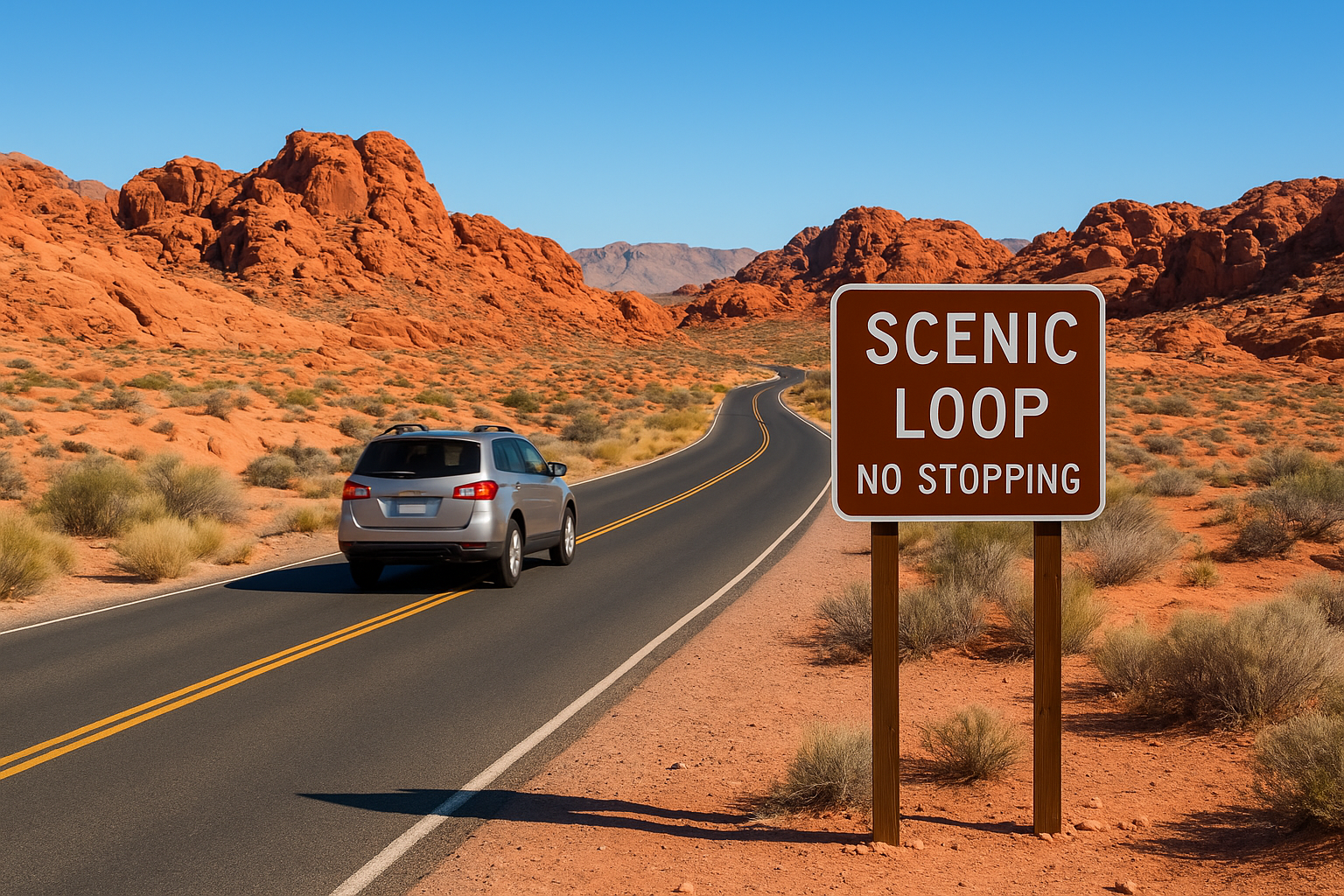
Watch your speed on the loop road. The posted limit is 35 mph, and wildlife frequently crosses without warning. Bighorn sheep and desert tortoises have both been struck by inattentive drivers. Slow down at any rocky section along the road’s shoulder and give animals space before you pull over to photograph them.
Choose the right hikes by time and difficulty
Red Rock Canyon has trails for every fitness level, but picking the wrong one for your available time or physical condition can turn a great morning into a rough one. This red rock canyon visitor guide breaks the most-visited trails down by difficulty and time commitment so you can match the hike to your schedule, not the other way around.
Hikes that work for beginners and families
The Calico Tanks Trail is the most popular short hike in the park. It runs 2.5 miles round-trip and gains about 400 feet in elevation, which is manageable for most fitness levels. At the top, you’ll find a natural water tank carved into the sandstone and views that stretch back toward the Las Vegas skyline. Allow 90 minutes to complete it comfortably with time to look around at the summit.
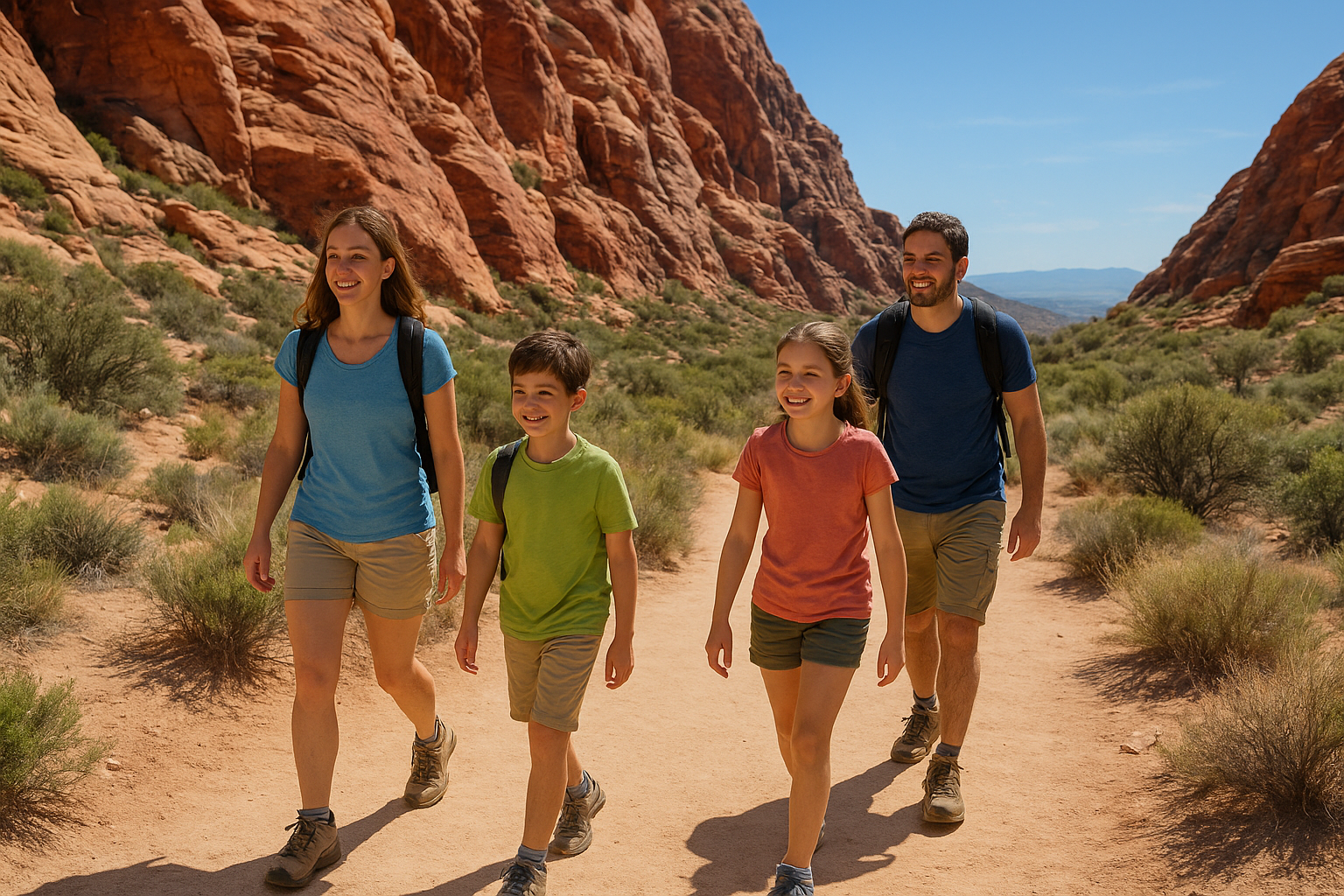
The Children’s Discovery Trail near the visitor center works well for families with young kids. It’s a 1-mile paved loop with interpretive signs explaining desert ecology without requiring serious footwear or fitness.
Hikes for intermediate hikers with half a day
Turtlehead Peak is the standout choice if you want elevation and panoramic views. The trail covers 4.2 miles round-trip and climbs 1,962 feet to the summit. Plan for 3 to 4 hours and start before 8:00 a.m. in summer. The scramble near the top requires using your hands in a few spots, so skip this one if rocky terrain makes you uncomfortable.
Ice Box Canyon Trail runs 2.6 miles round-trip and drops into a narrow canyon with towering walls and seasonal waterfalls. Difficulty is moderate, and the terrain involves boulder hopping. Budget about two hours and wear shoes with ankle support since the footing is uneven throughout.
Full-day hikes for experienced hikers
Pine Creek Canyon Trail covers 6 miles round-trip and passes through a forest of ponderosa pines that feels removed from the desert floor below. The elevation gain is gradual at around 500 feet, making the trail long but not punishing. Bring at least 3 liters of water per person and a packed lunch since there are no services anywhere on the route.
| Trail | Distance (RT) | Elevation Gain | Time Estimate | Difficulty |
|---|---|---|---|---|
| Children’s Discovery Trail | 1 mile | Minimal | 30-45 min | Easy |
| Calico Tanks | 2.5 miles | 400 ft | 90 min | Easy-Moderate |
| Ice Box Canyon | 2.6 miles | 500 ft | 2 hours | Moderate |
| Turtlehead Peak | 4.2 miles | 1,962 ft | 3-4 hours | Hard |
| Pine Creek Canyon | 6 miles | 500 ft | 4-5 hours | Moderate |
Stay safe in the desert
Desert environments punish unprepared visitors faster than most people expect. Red Rock Canyon sits at elevations between 3,600 and 7,068 feet, which means UV exposure is stronger than at sea level, and temperatures can swing dramatically between morning and afternoon. Every solid red rock canyon visitor guide puts safety planning on equal footing with trail selection, and for good reason.
Hydration and heat management
The single most common reason visitors need emergency assistance at Red Rock Canyon is dehydration. Carry a minimum of one liter of water per person per hour of planned hiking, and drink before you feel thirsty. Thirst is a late signal; by the time it hits, your body is already behind on fluid intake.
Fill your bottles at the visitor center water station before entering the Scenic Drive, since there are no water sources at any trailhead or along the loop road.
Electrolyte packets or sports drink tablets extend your hydration further than water alone, especially on longer hikes like Pine Creek Canyon or Turtlehead Peak where you’re sweating for hours. Sunscreen with SPF 30 or higher, a wide-brim hat, and light-colored long sleeves reduce your heat load and cut down on sunburn risk, particularly between 10:00 a.m. and 3:00 p.m. when direct sun is at its strongest.
Watch the terrain and weather
Flash floods are a real hazard in canyon environments, even when the sky above you looks clear. Storms forming miles away over the Spring Mountains can push water through narrow slot canyons with almost no warning. Check the National Weather Service forecast for Clark County before you leave your hotel, and avoid canyon trails like Ice Box Canyon if there’s any chance of afternoon thunderstorms in the area.
Rocky trail surfaces require sturdy footwear with grip. Trail runners or low hiking boots work well for most routes. Sandals and flat-soled sneakers increase your chance of rolling an ankle on the boulder sections, particularly on Ice Box Canyon and the upper scramble on Turtlehead Peak. Watch every foot placement on descent, when most ankle injuries happen.
Tell someone your plans
Before you leave for the park, text a contact your planned trailhead, route, and expected return time. Cell service is unreliable throughout the conservation area, so if something goes wrong on the trail, that information becomes critical for search and rescue personnel to work with efficiently.
Follow Leave No Trace and protect wildlife
Red Rock Canyon sees over 2 million visitors per year, and the cumulative impact of that foot traffic shows up in eroded trails, disturbed wildlife, and damaged vegetation. Applying Leave No Trace principles is not optional etiquette here; it’s the reason the landscape stays in the condition that makes this red rock canyon visitor guide worth writing in the first place. Your behavior on the trail directly affects what the next visitor experiences and what wildlife can survive in the area long-term.
The core Leave No Trace rules that apply here
Most visitors understand the basics, but a few specific behaviors cause the most damage at Red Rock Canyon. Stay on marked trails at all times, even when the temptation to scramble up a sandstone formation looks manageable. Cryptobiotic soil crust covers much of the desert floor and looks like dark, lumpy dirt. It takes decades to form and a single footstep to destroy. That crust holds desert soil together and creates the conditions that allow vegetation to grow.
If you see dark, textured crust near a trail edge, step around it rather than over it. One boot print sets back decades of natural recovery.
Pack out everything you bring in, including food wrappers, sunscreen packaging, and fruit peels. Organic waste like orange peels introduces smells that attract wildlife to high-traffic areas, which puts animals in contact with humans more than is healthy for either party. Use the trash and recycling stations at the visitor center before you start your hike and again when you return to your vehicle.
How to handle wildlife encounters
Red Rock Canyon is home to bighorn sheep, desert tortoises, coyotes, and multiple raptor species, all of which are accustomed to the presence of people but not habituated to human food or aggressive approach distances. Keep at least 50 feet of distance from any wildlife you observe. Bighorn sheep look calm from a distance but will charge if they feel cornered, particularly during lambing season in spring.
Never feed any animal, regardless of how approachable it seems. Feeding disrupts natural foraging behavior and makes animals more likely to approach roads and parking areas, where vehicle collisions become a serious risk. If you spot a desert tortoise on a trail, observe it from a distance and do not pick it up. Handling tortoises causes them to empty their bladder, which can be fatal in dry conditions since they cannot quickly replace that water reserve.
Plan your Red Rock day with confidence
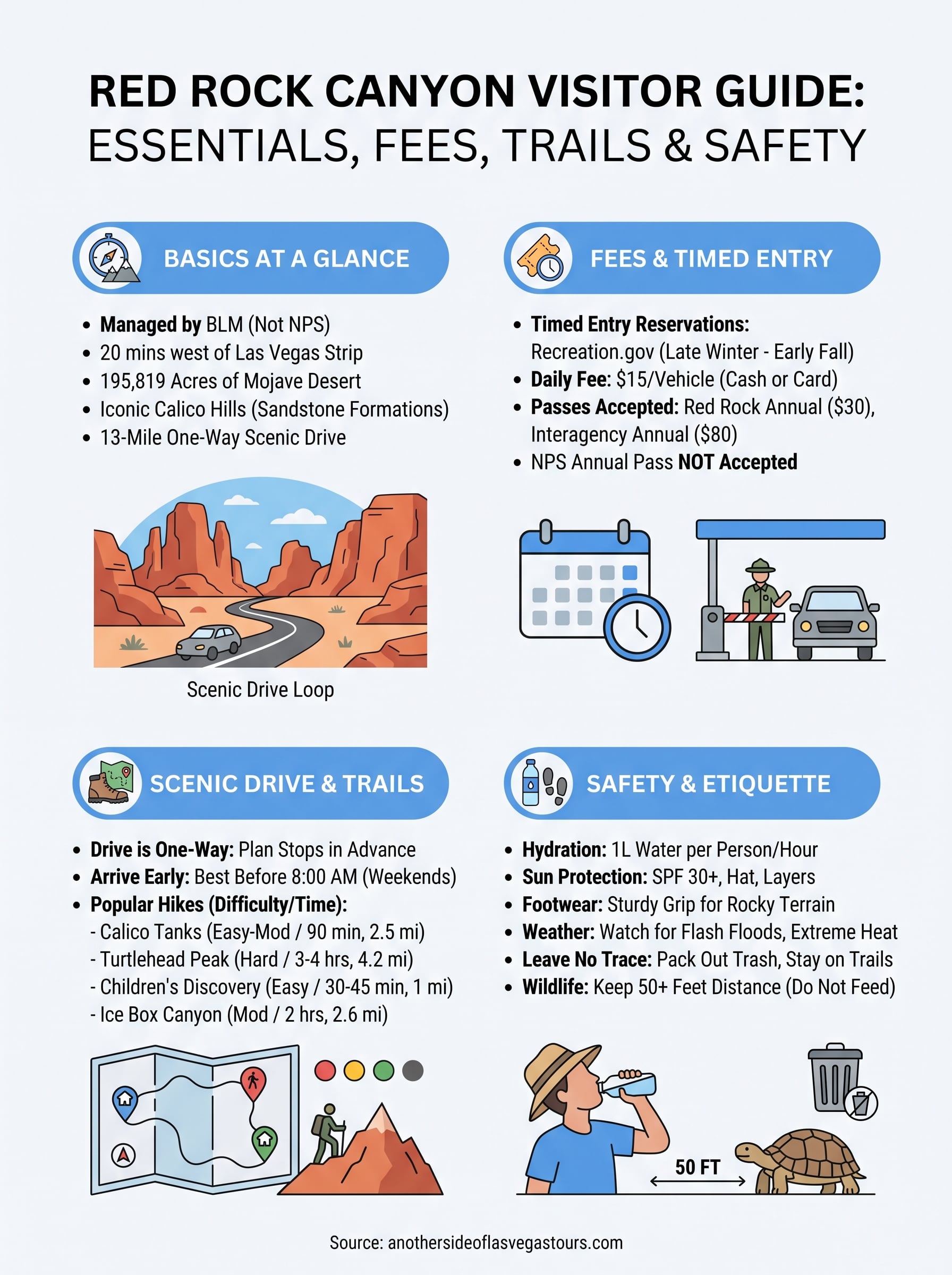
This red rock canyon visitor guide gives you everything you need to show up prepared: your reservation locked in through Recreation.gov, your fees paid, your trail matched to your fitness level, and your water bottles filled at the visitor center before you start. Arriving early, staying on trail, and carrying enough water handle the majority of problems that catch visitors off guard. The logistics are manageable once you know the system, and the payoff is a landscape that genuinely surprises most people who make the 20-minute drive from the Strip.
If you’d rather skip the planning entirely and let an expert handle the route, the trailhead decisions, and the transportation, a private Red Rock Canyon limo tour puts you in the hands of a guide who has made this trip hundreds of times. Book directly or call 1-702-819-9127 to set it up.