
Valley of Fire State Park sits about an hour northeast of the Las Vegas Strip, and it looks like nothing else in Nevada. The red Aztec sandstone formations here are over 150 million years old, shaped by wind and time into arches, waves, and towers that glow bright crimson at sunrise and sunset. If you’re searching for a valley of fire state park guide to help you plan your visit, you’re in the right place.
We’ve been running tours from Las Vegas to Valley of Fire since 2007 at Another Side Tours, and our guides know this park trail by trail. That firsthand experience is what this guide draws from, not recycled tips from other websites, but practical advice based on thousands of actual visits. We’ll cover the best hikes, current entrance fees, park hours, and the logistics that matter when you’re working with limited vacation time.
Whether you’re planning a self-guided day trip or considering a guided tour with transportation from your hotel, this guide gives you everything you need to make smart decisions before you go. From must-see stops like Fire Wave and White Domes to tips on when to arrive and what to bring, we’ll walk through it all below.
What to know before you go
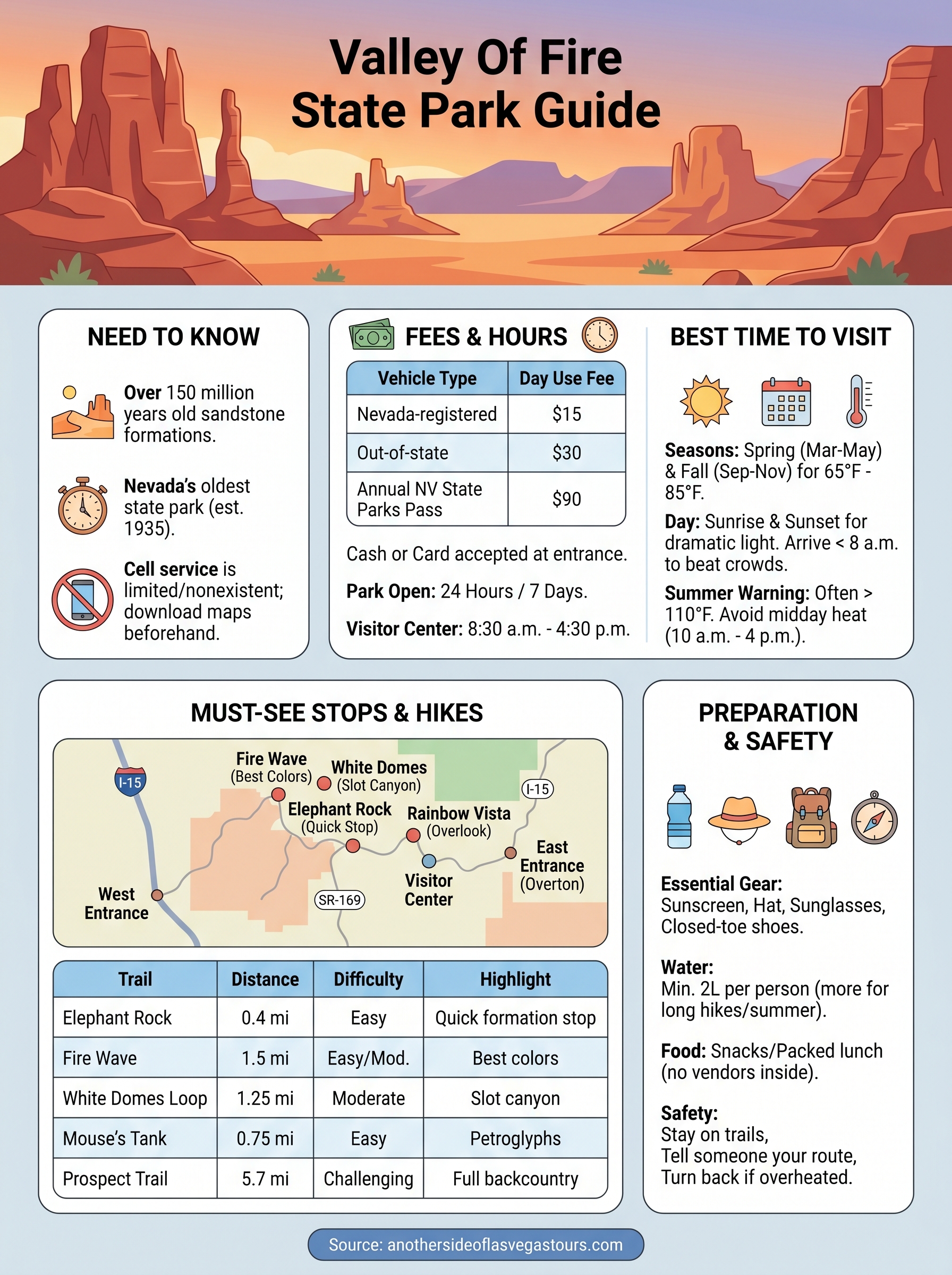
Valley of Fire is Nevada’s oldest state park, covering roughly 46,000 acres of desert landscape managed by the Nevada Division of State Parks. Before you finalize your plans, a few key details will help you avoid surprises on the day of your visit. Cell service is limited to nonexistent inside the park, so download offline maps and save this valley of fire state park guide to your phone before you leave Las Vegas.
Entrance fees and facilities
The park charges a day-use entrance fee collected at the main gate. As of 2025, Nevada-registered vehicles pay $15, and out-of-state vehicles pay $30. You can also purchase an annual Nevada State Parks pass for $90, which covers entry to all Nevada state parks for a full year. The visitor center near the east (Overton) entrance has restrooms, water refill stations, and printed trail maps, and it’s worth a stop when you first arrive.
| Vehicle Type | Day Use Fee |
|---|---|
| Nevada-registered | $15 |
| Out-of-state | $30 |
| Annual State Parks Pass | $90 |
Carry cash or a card since the entrance station accepts both, but there are no ATMs inside the park.
What the park does not have
You will not find gas stations, restaurants, or lodging inside Valley of Fire. The nearest full-service town is Overton, roughly 10 miles from the east entrance, where you can fuel up and grab food before heading in. Running low on water or fuel with no options nearby is a serious problem when summer temperatures top 100°F.
Stock up on these basics before you arrive:
- At least 1 liter of water per person per hour of hiking
- Snacks or a packed lunch (no food vendors inside)
- A full tank of gas
- Sunscreen, a hat, and closed-toe shoes
Step 1. Choose the best time and hours
Valley of Fire is open year-round, 24 hours a day, but timing your visit matters for comfort and safety. The visitor center runs from 8:30 a.m. to 4:30 p.m., so arrive early to grab a trail map and fill your water bottles before heading out to the trails.
Best season to visit
Spring (March to May) and fall (September to November) offer the most comfortable hiking temperatures, typically ranging from 65°F to 85°F. Summer regularly hits 110°F or above, making midday hikes genuinely dangerous.
If summer is your only option, keep outdoor activity to before 9 a.m. or after 4 p.m. to avoid the worst heat.
Best time of day
Sunrise and the two hours before sunset produce the most dramatic light on the red sandstone formations. This valley of fire state park guide points visitors toward Fire Wave and the main overlook at least 30 minutes before golden hour.
Weekends fill parking lots fast, so plan to arrive before 8 a.m. for better trail access and fewer crowds on the most popular routes.
Step 2. Get there, park, and pay fees
Valley of Fire sits 55 miles northeast of the Las Vegas Strip via Interstate 15 North and Nevada State Route 169. The drive takes roughly 55 to 65 minutes from the Strip, so leave early to maximize your time inside the park. Download offline maps before you go, since cell service disappears once you pass the entrance gate.
Navigating the two entrances
The park has two entry points that serve different purposes:
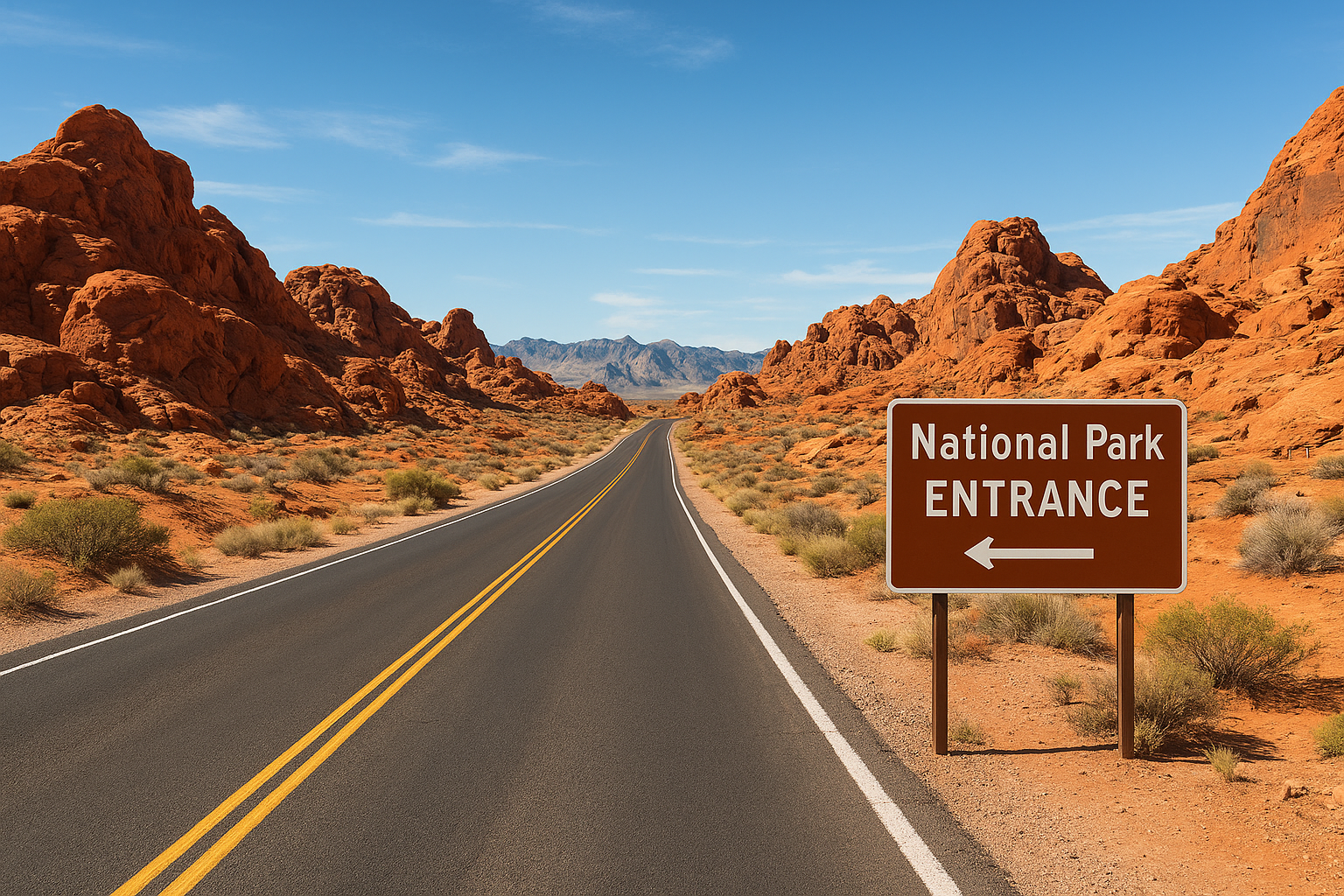
- West entrance (off I-15): Best for Fire Wave, White Domes, and most popular trailheads
- East entrance (via SR-169 near Overton): Best for the visitor center and Elephant Rock
Most visitors from Las Vegas use the west entrance for direct trail access without backtracking across the park.
Paying your fee at the gate
This valley of fire state park guide recommends arriving with a card or cash ready. Out-of-state vehicles pay $30, and Nevada-registered vehicles pay $15.
An annual Nevada State Parks pass costs $90 and covers every Nevada state park for a full year.
If you exit and re-enter the same day, keep your receipt on the dashboard to avoid paying again at the gate.
Step 3. Hit the must-see stops and viewpoints
Valley of Fire has dozens of pullouts and named formations, but a handful of stops consistently deliver the strongest experiences. This valley of fire state park guide recommends tackling these locations in a loose loop starting from the west entrance, which keeps backtracking to a minimum and lets you hit the best light at the right spots.
Fire Wave and White Domes
Fire Wave is the park’s most photographed formation, a rippled sandstone surface striped in red, pink, and cream. White Domes sits at the northern end of the main road and rewards visitors with a short slot canyon and dramatic contrast against the surrounding red rock.

Arrive at Fire Wave before 9 a.m. on weekends to secure parking at the trailhead lot.
Elephant Rock and Rainbow Vista
Elephant Rock sits right at the east entrance and takes under five minutes to reach on foot, making it a strong first or last stop. Rainbow Vista provides a wide overlook of the valley floor and works well as a midday break when the layered colors across the basin are most visible.
Step 4. Pick the best hikes for your group
Every trail in this valley of fire state park guide serves a different fitness level and time commitment, so matching the right hike to your group before you arrive saves frustration on the day. Use the table below to compare your top options at a glance.
| Trail | Distance | Difficulty | Highlight |
|---|---|---|---|
| Elephant Rock | 0.4 mi | Easy | Quick rock formation stop |
| Fire Wave | 1.5 mi | Easy/Moderate | Best sandstone colors |
| White Domes Loop | 1.25 mi | Moderate | Slot canyon section |
| Mouse’s Tank | 0.75 mi | Easy | Petroglyphs along the wash |
| Prospect Trail | 5.7 mi | Challenging | Full desert backcountry |
Short hikes for families and casual visitors
Mouse’s Tank and Elephant Rock work well for families with young children or anyone who wants a low-effort introduction to the park. Both trails stay relatively flat and finish in under 30 minutes.
Longer hikes for active groups
White Domes Loop is the strongest moderate option, combining a slot canyon, open desert, and a ruined movie set remnant in one circuit.
Prospect Trail requires a full water supply and solid navigation skills since it crosses open terrain with minimal shade.
Step 5. Pack smart and stay safe in the desert
Desert conditions at Valley of Fire can shift from pleasant to dangerous within a few hours, and preparation is the single biggest factor in whether your visit goes smoothly. Every recommendation in this valley of fire state park guide comes back to one core rule: treat the desert seriously, especially between May and September.
Essential gear to bring
Your pack should cover sun protection, hydration, and navigation as the three non-negotiable categories. Bring a minimum of 2 liters of water per person for a half-day visit and expand that significantly for longer hikes or summer outings.
- Sunscreen SPF 50 or higher
- Wide-brim hat and UV-protective sunglasses
- Closed-toe shoes with solid grip
- Offline map downloaded before you lose cell service
- Salty snacks to help maintain electrolytes
Running out of water mid-trail with no shade nearby is a medical emergency, not a minor inconvenience.
Desert safety rules to follow
Stay on marked trails at all times to protect both yourself and the fragile desert crust beneath your feet. Tell someone your planned route and expected return time before you head out, and turn back immediately if you feel dizzy or overheated rather than pushing to the next viewpoint.
End your day in Valley of Fire
Most visitors wrap up their visit by mid-afternoon, which gives you a natural window to catch the late light on the formations before heading back toward Las Vegas. The drive back along SR-169 through the Valley of Fire State Park corridor offers one last look at the red cliffs as the sun drops, and it’s worth pulling over at any unmarked pullout for a final photo stop before you hit I-15.
If you’d rather skip the logistics entirely and focus on the experience itself, a guided tour handles the driving, navigation, and route planning for you. Our guides have run this route thousands of times and know exactly where to stop and when to be there for the best light and the least crowds. Check out our private Valley of Fire tours to see what a fully supported day trip from Las Vegas looks like, and book the version of this valley of fire state park guide that comes with an expert behind the wheel.