
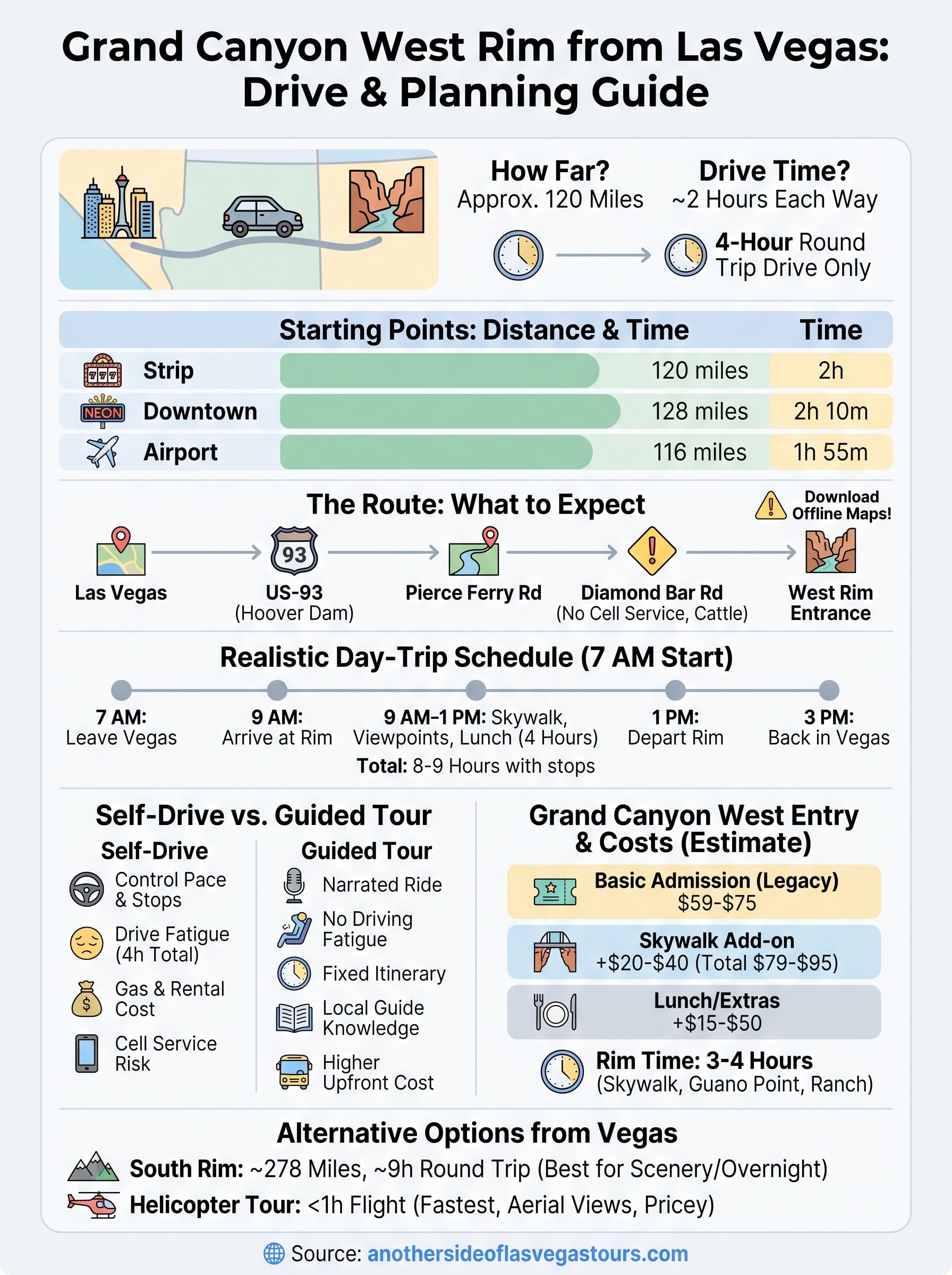
You’ve got one day, maybe less, and you’re trying to figure out if the Grand Canyon actually fits into your Las Vegas trip. It does, but only if you know the real numbers going in. How far is Grand Canyon West Rim from Las Vegas matters more than most travelers realize, because the answer changes your whole schedule, from wake-up time to whether you make it back for dinner reservations on the Strip.
The short answer: West Rim sits roughly 120 miles from Las Vegas, and the drive takes about two hours each way under normal conditions. That’s the closest of the three main Grand Canyon entry points to the city, which is exactly why so many visitors pick it for a single-day trip. But raw mileage doesn’t tell you about traffic on Highway 93, gas stops, or how long the Skywalk line runs on a Saturday in July.
This guide breaks down the actual driving distance and drive time from multiple Las Vegas starting points, what affects your travel window, and how to plan a day trip that doesn’t feel rushed. We’ll also cover when a guided tour beats driving yourself, especially if you’d rather watch the desert scenery than the GPS.
Grand Canyon West Rim distance and drive time at a glance
Numbers matter more than vibes when you’re planning a day trip, so let’s get specific. The Grand Canyon West Rim sits about 120 miles from the Las Vegas Strip, and depending on exactly where you start and how fast traffic moves on US-93, you’re looking at roughly two hours of driving each way. That’s a four-hour round trip before you’ve spent a single minute at the canyon itself, which is the number that trips up most first-time visitors who assume they can squeeze in a sunrise-to-sunset Strip schedule and a canyon visit on the same day.
Distance from common Las Vegas starting points
Where you’re staying changes your numbers slightly, but not as much as you’d think. Every route funnels onto US-93 South toward Kingman, then cuts west on Pierce Ferry Road toward the Hualapai Nation’s West Rim entrance.
| Starting point | Distance to West Rim | Typical drive time |
|---|---|---|
| Las Vegas Strip (Flamingo/Las Vegas Blvd) | 120 miles | 2 hours |
| Downtown Las Vegas (Fremont Street) | 128 miles | 2 hours 10 minutes |
| Harry Reid International Airport | 116 miles | 1 hour 55 minutes |
| Henderson | 108 miles | 1 hour 45 minutes |
The Grand Canyon West Rim is close enough to Las Vegas for a genuine day trip, but only if you treat the four-hour round-trip drive as non-negotiable, not optional.
Why this number beats the other Grand Canyon entrances
Compare that to the South Rim, the more famous entrance most people picture when they hear "Grand Canyon." That’s a 278-mile drive, roughly 4.5 to 5 hours one way from Las Vegas, which rules out a day trip entirely unless you’re comfortable with a 20-hour round trip. The North Rim runs about 270 miles and comes with seasonal road closures from mid-October through mid-May, so it’s off the table for most of the year anyway. West Rim’s proximity is the entire reason it dominates single-day Las Vegas excursions, and it’s also why operators built the Skywalk and Hualapai Ranch experiences specifically to serve travelers on tight schedules.
What these numbers don’t tell you
Here’s what the raw mileage misses: the last 14 miles from Pierce Ferry Road to the West Rim entrance run on Diamond Bar Road, a paved but winding stretch through open range land with cattle crossings and no streetlights. Speed limits drop, and rightly so. Gas stations also thin out fast once you leave the Vegas metro area, with your last reliable fill-up in Kingman or at the Dolan Springs junction. If you’re renting a car for this trip, top off the tank before you leave the Strip corridor, because running low on Highway 93 with no cell signal isn’t the adventure you’re looking for.
Also worth knowing: the two-hour estimate assumes normal daylight conditions and no major slowdowns. Add 20 to 30 minutes if you’re leaving during Friday afternoon rush hour out of Las Vegas, or if you hit the seasonal construction zones that pop up along US-93 most summers. Weekend mornings tend to run smoothest, which is also when tour vans and rental cars alike hit the road earliest to beat the Skywalk crowds.
Step 1. Map your driving route from Las Vegas
Getting your route right before you leave saves you from wrong turns out in cattle country where cell service disappears. The standard driving route runs southeast out of Las Vegas on US-93, crosses the Colorado River near Hoover Dam, then continues through the Arizona desert toward Kingman before you turn off onto Pierce Ferry Road. From there, Diamond Bar Road carries you the final stretch straight to the West Rim entrance gate.
The turn-by-turn breakdown
Punching "Grand Canyon West" into Google Maps or Apple Maps works fine, but knowing the actual turns helps you catch a wrong exit before it costs you 20 minutes.
- Head southeast from the Strip on US-93/US-95, following signs for Boulder City and Hoover Dam.
- Merge onto US-93 South after Boulder City and cross the Colorado River via the Hoover Dam Bypass Bridge.
- Stay on US-93 South through Kingman-bound desert for roughly 70 miles.
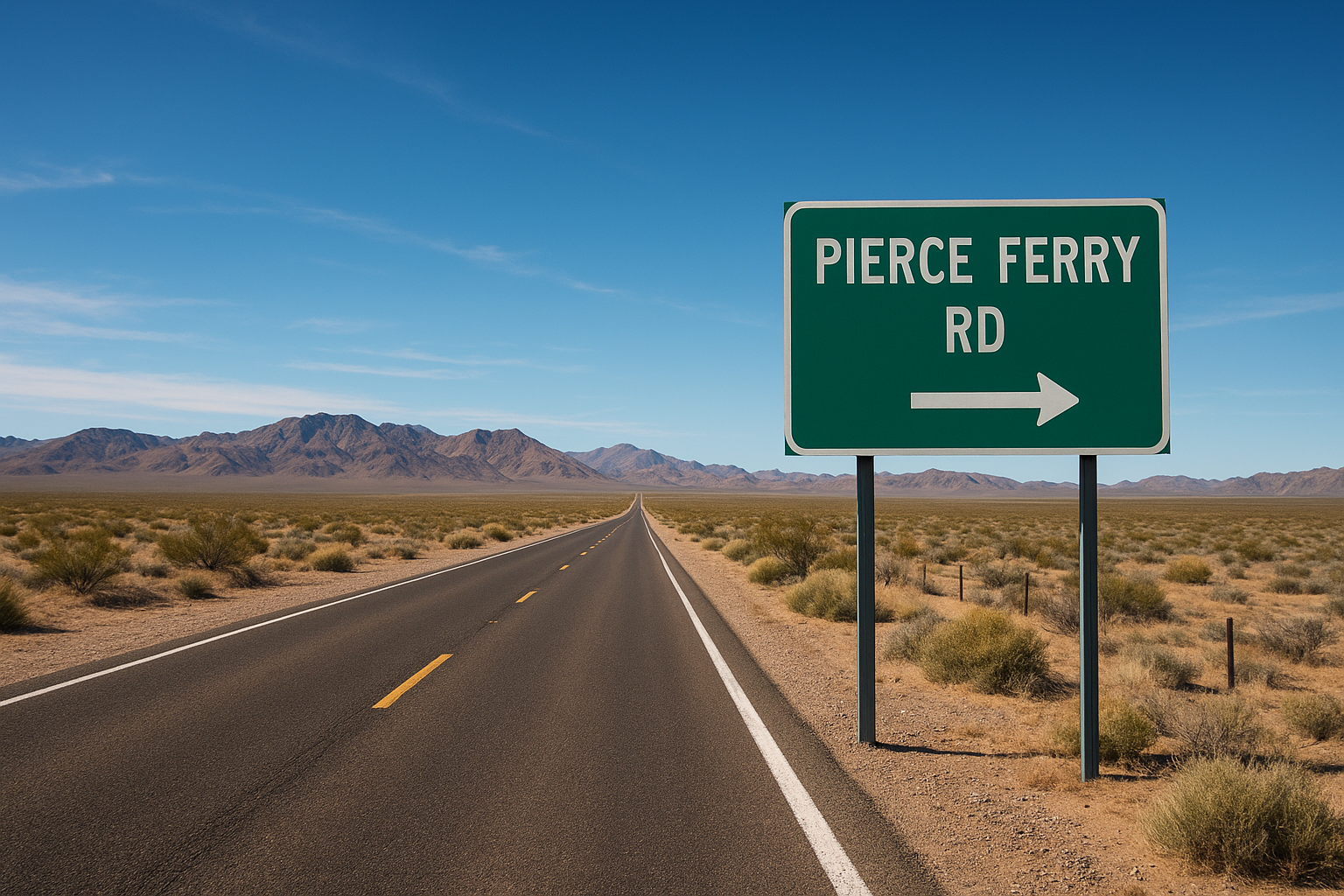
- Turn right (west) onto Pierce Ferry Road, marked clearly for Grand Canyon West.
- After about 28 miles, turn left onto Diamond Bar Road.
- Follow Diamond Bar Road for the final 14 miles to the West Rim entrance station.
Cell service and offline backup
Don’t count on a strong signal for the last 40 miles of this drive. Coverage drops off noticeably once you pass Dolan Springs, and Diamond Bar Road runs through open range with zero towers nearby. Download your route offline in Google Maps before you leave Las Vegas, since a live connection isn’t guaranteed when you need it most.
Download your route before you leave the Strip, because Diamond Bar Road has no cell signal and no room for a wrong turn.
One more practical note: this isn’t a highway built for speed. Diamond Bar Road narrows in spots, and open-range cattle wander onto the pavement without warning, especially near dawn and dusk. Rental car companies at Harry Reid airport won’t warn you about this, so plan on driving 45 to 55 mph through that final stretch rather than the 65 you were doing on US-93. It adds a few minutes to your total drive time, but it keeps the trip from ending with a dented bumper and an insurance claim.
Step 2. Time your trip and add worthwhile stops along the way
Getting your departure time right matters more than any other decision you’ll make for this trip. Leave Las Vegas by 7 a.m. if you want first access to the Skywalk before tour buses fill the parking lot, or by 6 a.m. if you’re chasing sunrise light over the canyon rim. Since Grand Canyon West sits about two hours from the Strip, an early start means you’re walking the rim by 9 a.m. with the crowds still thin and the desert heat still bearable.
Hoover Dam and other stops worth the detour
Building in a stop or two turns a straight shot into an actual road trip, and Hoover Dam sits directly on your route, so skipping it wastes an easy opportunity. A 30 to 45 minute pause at the visitor overlook costs you almost nothing in extra driving since you’re already crossing the bypass bridge. Kingman makes a sensible second stop if you need gas, food, or a bathroom break before Pierce Ferry Road, since options thin out fast after that turnoff.
- Hoover Dam overlook: 30-45 minutes, right on US-93
- Kingman rest stop: 15-20 minutes for gas and food
- Dolan Springs junction: last reliable fuel before Diamond Bar Road
Build your stops into the drive itself, not around it, or the four-hour round trip eats your entire day before you reach the rim.
Building a realistic day-trip schedule
Here’s how the hours actually break down once you factor in stops, canyon time, and the drive back:
| Activity | Time needed |
|---|---|
| Drive to West Rim (with Hoover Dam stop) | 2.5-3 hours |
| Time at West Rim (Skywalk, viewpoints, lunch) | 3-4 hours |
| Drive back to Las Vegas | 2 hours |
| Total day | 8-9 hours |
Without stops, you can shave that down to a tighter six or seven hours, but you’ll be trading scenery for speed. Timing your return matters too: leaving the West Rim after 4 p.m. on a Friday or Saturday means merging back into weekend traffic heading into Las Vegas, so aim to be back on the road by 2 or 3 p.m. if you want dinner reservations on the Strip to stay realistic.
Step 3. Decide between self-driving and a guided tour
Once you know the distance and the drive time, the real question becomes whether you want to be the one behind the wheel. Self-driving gives you control over your schedule, your stops, and your playlist, but it also means two hours of desert highway each direction after you’ve already been up since dawn. A guided tour flips that equation: you pay more, but you get a narrated ride, a driver who knows Diamond Bar Road’s blind curves, and a return trip where you can close your eyes instead of watching for open-range cattle.
Weighing the tradeoffs
Think about who’s actually on the trip with you before you decide. A solo traveler or a couple comfortable with long highway stretches might prefer the freedom of a rental car. A family with kids, a group that wants to talk through the history and geology of the canyon, or anyone who’d rather nap on the way home usually gets more value from a guided option.
| Factor | Self-driving | Guided tour |
|---|---|---|
| Cost | Gas + rental (~$60-100 round trip) | $150-350+ per person |
| Driving fatigue | High, 4 hours total | None |
| Flexibility | Full control of stops and pace | Fixed itinerary |
| Local context | None unless you research ahead | Guide narration and history |
| Cell service risk | You’re on your own | Driver knows dead zones |
A guided tour costs more upfront, but it trades four hours of desert driving for four hours you actually get to enjoy.
When a guided tour makes more sense
Certain trips practically demand a guide. If you’re traveling without a US driver’s license, unfamiliar with desert driving, or simply want someone else responsible for Diamond Bar Road’s cattle crossings, book a tour. Operators running these routes daily know exactly when the Skywalk line gets long and time entry accordingly. Another Side Tours builds West Rim excursions around that kind of insider timing, pairing the drive with context on Hoover Dam, the Hualapai Nation, and the canyon’s geology instead of leaving you to piece it together from highway signs. If your goal is a relaxed day rather than a driving challenge, that tradeoff usually pays for itself.
Step 4. Plan your hours and budget once you arrive
Getting to the entrance gate is only half the planning. Grand Canyon West charges a mandatory admission fee before you even reach the Skywalk, and most first-timers underestimate how quickly the extras add up once they’re standing at the ticket counter. Budgeting your time matters just as much as budgeting your money, since the Hualapai Nation runs this land as a working reservation, not a national park with free rim access.
What it costs to get in
Admission bundles vary by season, but the core pricing structure stays consistent enough to plan around. Skywalk access costs extra on top of the base package, and food, helicopter add-ons, and horseback rides all sit outside the standard entry fee.
| Item | Typical cost per person |
|---|---|
| Basic admission (Legacy) | $59-$75 |
| Skywalk add-on | $79-$95 total package |
| Hualapai Ranch activities | $20-$50 extra |
| Helicopter ride to canyon floor | $250-$300+ |
| Lunch at Skywalk Café | $15-$25 |
Budget an extra hour and an extra $50 per person beyond the base ticket price, because the Skywalk and lunch line rarely move as fast as you expect.
Where the hours go
Once you’re through the gate, a shuttle bus (included in admission) carries you between the three viewpoint areas, and that shuttle ride alone eats 20 to 30 minutes if you visit all three stops. Realistic time allocation looks like this:
- Eagle Point (Skywalk): 45-60 minutes, including the line
- Guano Point: 30-45 minutes for the best photo overlook
- Hualapai Ranch: 30-60 minutes if you add horseback or wagon rides
- Shuttle transit between points: 20-30 minutes total
- Lunch: 30-45 minutes
Stretch those numbers and you land at the 3-4 hours we mentioned in your day-trip schedule, which fits comfortably if you left Las Vegas by 7 a.m. Trimming to two viewpoints and skipping the ranch gets you out closer to 2.5 hours, useful if your return drive needs to start earlier than planned.
West Rim vs. other Grand Canyon options from Las Vegas
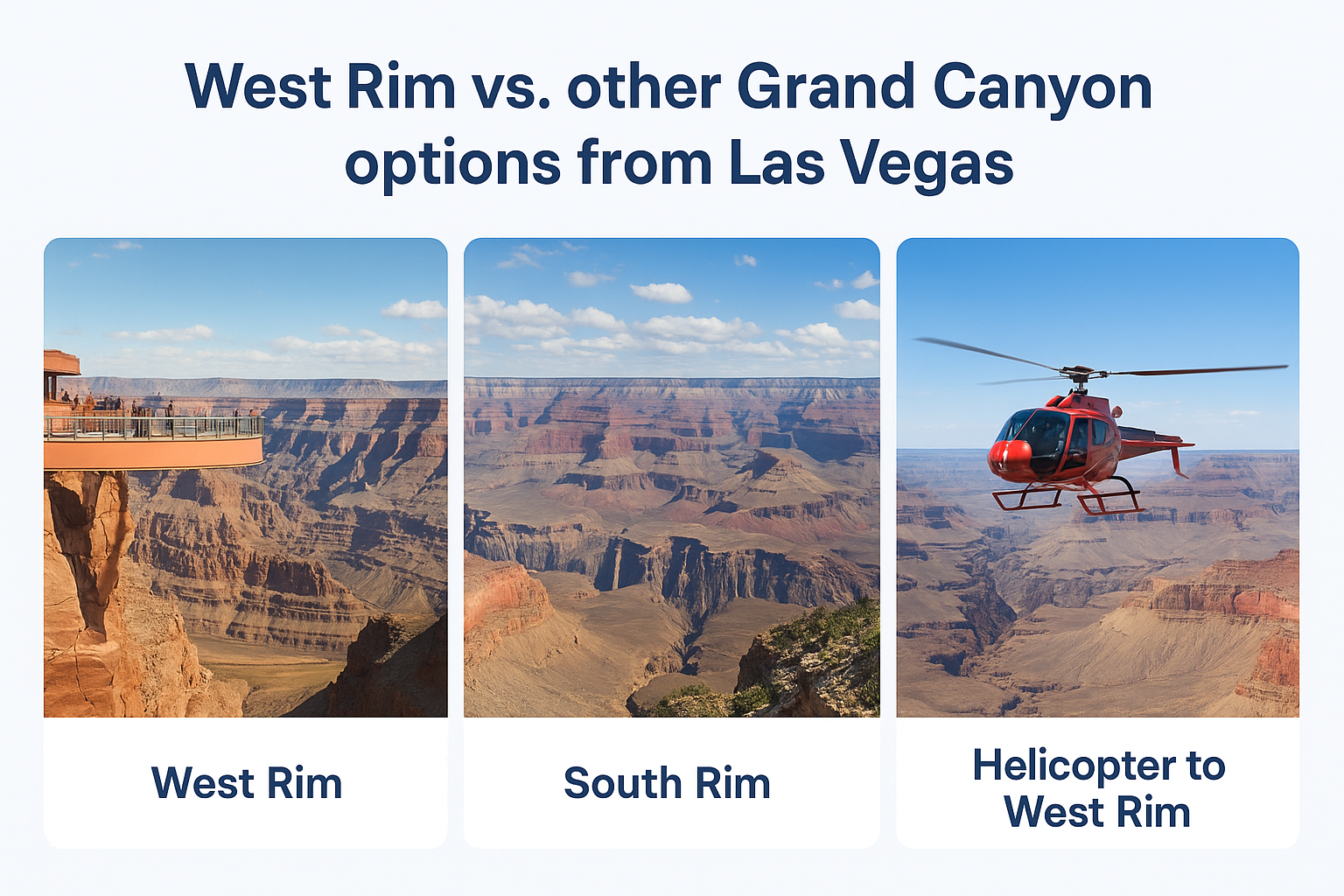
West Rim isn’t the only Grand Canyon experience sold out of Las Vegas, and picking wrong means either wasting a day on the road or missing views you actually wanted. South Rim access gets you the postcard Grand Canyon, the one with the visitor center, the historic lodges, and the view everyone pictures, but it costs you nearly 9 hours of round-trip driving. Grand Canyon Village and the South Rim’s main overlooks sit inside the actual national park boundary, run by the National Park Service rather than the Hualapai Nation, so entrance fees and rules differ too, as the National Park Service explains for Grand Canyon National Park.
Comparing your three main options
Lining up the numbers side by side makes the tradeoffs obvious fast, especially once you factor in how each option handles time versus scenery.
| Option | Distance from Vegas | Round-trip drive | Best for |
|---|---|---|---|
| West Rim | 120 miles | ~4 hours | Day trips, Skywalk, tight schedules |
| South Rim | 278 miles | ~9 hours | Classic views, full-day or overnight |
| Helicopter to West Rim | N/A (flight) | 30-45 min flight | Aerial views, time-crunched visitors |
If your schedule only allows one day, West Rim wins on distance every time; South Rim wins on scenery if you can spare two.
Helicopter tours cut the drive entirely
Skip the highway altogether and a helicopter tour gets you to the canyon rim in under an hour, landing you at the bottom for a champagne toast that no driving route offers. These tours run pricier, typically $250-$450 per person, but they solve the exact problem this whole guide addresses: the two-hour drive each way. For travelers with only a few free hours between shows or dinner reservations, flying over Red Rock Canyon en route adds scenery driving simply can’t match.
Picking the right fit for your trip
Match the option to your actual constraints, not to what sounds most impressive. Families with young kids and tight patience usually do better with West Rim’s shorter drive. Photography-focused travelers chasing the iconic South Rim shot should block a full day or stay overnight nearby. Anyone juggling a packed Vegas itinerary with limited free hours should seriously weigh the helicopter option before committing to a full driving day.
Before you hit the road
You now have the real numbers: 120 miles, roughly two hours each way, and a four-hour round trip that shapes everything else about your day. That distance is exactly why West Rim works for a single-day escape from the Strip when the South Rim simply doesn’t. Whether you map the drive yourself or hand the wheel to someone else, the goal stays the same: reach the canyon rested enough to actually enjoy Eagle Point and Guano Point instead of counting minutes back to Vegas.
If four hours of desert highway sounds like four hours you’d rather spend looking out the window than watching for cattle crossings, book a guided ride instead. Private tours handle the driving, the timing, and the Hoover Dam stop so you show up relaxed and leave with stories, not a sunburn and a parking headache. Check out private tours to Grand Canyon West Rim and lock in your seat before your Vegas dates fill up.