
You’re staring at a calendar, trying to figure out when to book your Grand Canyon West Rim trip, and every website gives you a different answer. That’s because the best time to visit Grand Canyon West Rim depends on what you actually want out of the trip, whether that’s cooler hiking weather, thinner crowds at Eagle Point, or clear skies for photos over the Colorado River. Temperatures here swing hard, from summer highs that hit triple digits to winter mornings near freezing, and that alone changes how you should pack and plan.
If you want a short answer, spring and fall give you the best mix of mild temperatures and manageable visitor numbers. But that’s only part of the story, since holiday weekends and school breaks can pack the rim regardless of season, and desert weather doesn’t always follow the calendar.
This guide walks through each season at West Rim, covering realistic temperature ranges, crowd patterns, and what activities make sense at different times of year. We’ll also point out where a guided tour from Las Vegas, just a few hours away, can help you skip the guesswork and time your visit right.
Why timing your West Rim visit matters
The West Rim sits at roughly 4,800 feet, nearly 2,000 feet lower than the South Rim, so it runs hotter and drier for more months of the year. That elevation difference matters more than most first-time visitors realize, because it means the shoulder seasons here behave differently than what guidebooks say about the park’s main entrance. Picking the wrong week can mean standing on the Skywalk in 108-degree heat with no shade, or shivering through a sunrise photo stop because you packed for a Nevada summer instead of a high-desert spring morning.
Temperature swings that can ruin a trip
Desert heat at West Rim isn’t just uncomfortable, it’s a real safety issue on exposed trails like Guano Point and Eagle Point, where there’s little shade and few places to refill water. Summer afternoons regularly top 100°F, while winter nights can drop below freezing, so the gear you bring changes completely depending on your travel month.
| Season | Typical Daytime Highs | Typical Nighttime Lows |
|---|---|---|
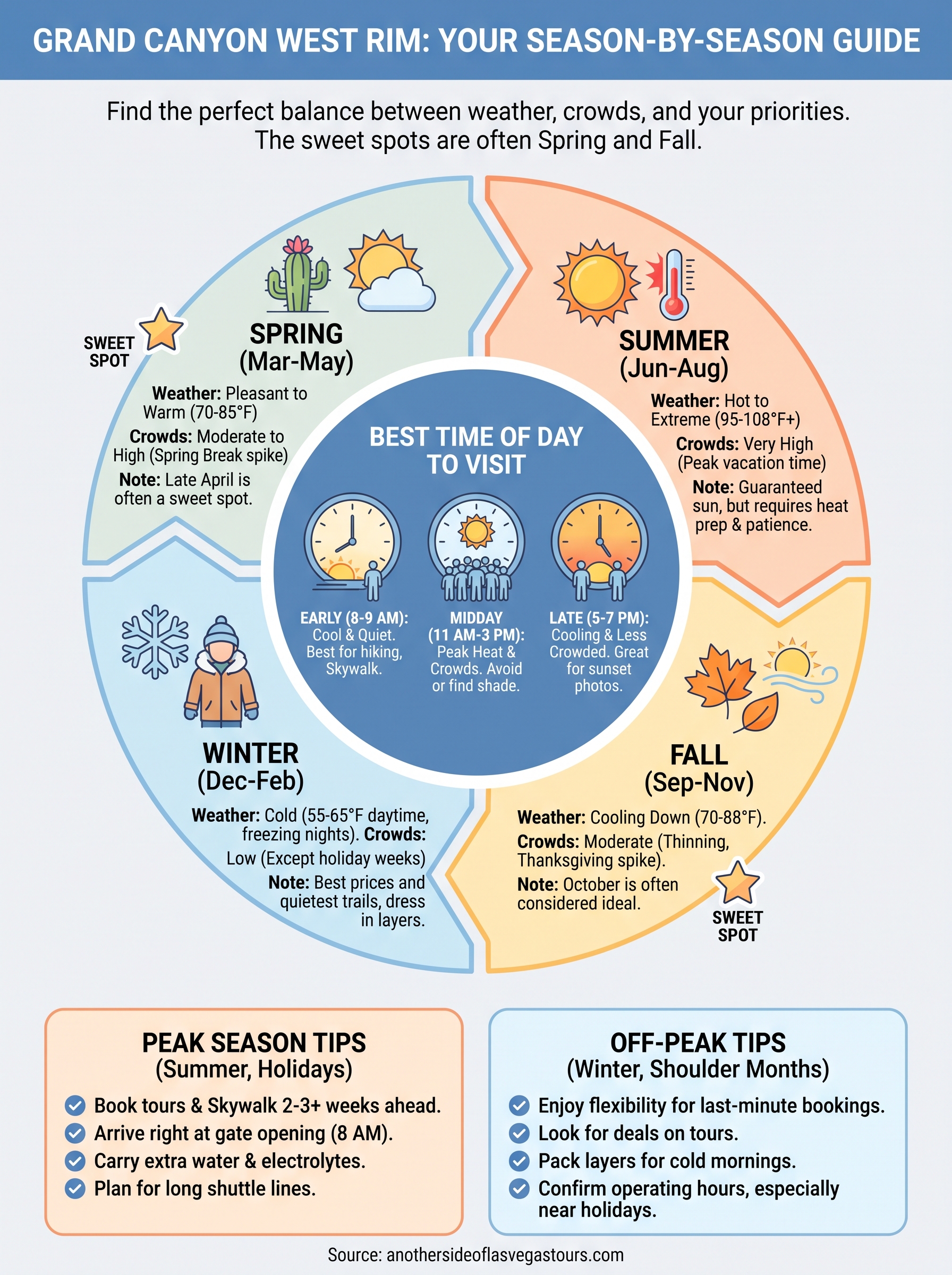
| Winter (Dec-Feb) | 55-65°F | 28-38°F |
| Spring (Mar-May) | 70-85°F | 40-55°F |
| Summer (Jun-Aug) | 95-108°F | 65-78°F |
| Fall (Sep-Nov) | 70-88°F | 42-58°F |
Getting the season wrong at West Rim doesn’t just mean bad weather, it can mean a genuinely unsafe hike.
Crowds follow the school calendar, not the weather
Visitor volume at West Rim tracks American and international school breaks more closely than temperature. Spring break weeks in March, the entire summer stretch from Memorial Day through Labor Day, and the holiday cluster from Thanksgiving through New Year’s all bring dense crowds to the Skywalk and shuttle lines, regardless of how pleasant the weather happens to be. Waiting an extra 45 minutes for a shuttle or a photo spot on Eagle Point isn’t unusual during these windows, and it eats into time you could spend actually enjoying the canyon.
Timing affects your budget and your options
Booking during peak weeks also limits your choices. Helicopter tour slots, Skywalk passes, and guided transportation from Las Vegas fill up fast in June and July, and last-minute travelers often get stuck with pricier packages or less flexible schedules. Visiting in a quieter stretch, like a Tuesday in late April or a weekday in October, usually means shorter lines, more availability for add-ons like a Colorado River rafting excursion, and guides who have more time to actually share the history and geology of the area instead of rushing groups through checkpoints. That difference alone is often worth planning around.
How to choose the best season for your trip
Picking a season for the Grand Canyon West Rim isn’t about finding some universal "best" month, it’s about matching the trip to your personal priorities. Someone chasing cool morning hikes and thin crowds wants a different window than someone who only cares about clear skies for photos or the lowest possible price on a helicopter add-on. The shoulder seasons of spring and fall satisfy the most priorities at once, but they’re not automatically right for everyone, especially if your travel dates are fixed by school breaks or work schedules.
Decide what matters most to you
Start by ranking your top two priorities, since trying to optimize for all of them at once usually leads to disappointment. Use this quick checklist to point yourself toward a season:
- Mild temperatures for hiking: aim for March, April, October, or November
- Smallest crowds possible: target weekdays in late April or mid-October, avoiding spring break and Thanksgiving week
- Guaranteed sunny skies: summer offers the most consistent clear days, despite the heat
- Lower prices on tours and add-ons: look at January, February, or early December
- Best photo lighting over the canyon: early spring and late fall give softer, lower-angle light
Weigh weather against crowd size
Heat and crowds don’t move together the way you’d expect. July delivers brutal afternoon temperatures but also long daylight hours for early starts, while December stays cooler but brings holiday travelers packing the Skywalk between Christmas and New Year’s. Balancing these two factors, rather than treating one as the deciding vote, usually produces a better trip than optimizing for weather alone.
The right season is the one that matches your priorities, not the one everyone else recommends.
Consider your budget and flexibility
Flexible travelers save real money by shifting even a week or two outside peak windows. A guided tour booked from Las Vegas in late September, for example, often costs less and moves faster than the same tour booked over Labor Day weekend, simply because demand drops off once summer ends.
Month-by-month weather and crowd breakdown
Breaking the year into individual months gives you a clearer picture than lumping everything into four broad seasons. Grand Canyon West Rim weather shifts noticeably from one month to the next, and crowd levels don’t always move in step with the thermometer. The table below covers what you can realistically expect for daytime highs and visitor traffic throughout the year.
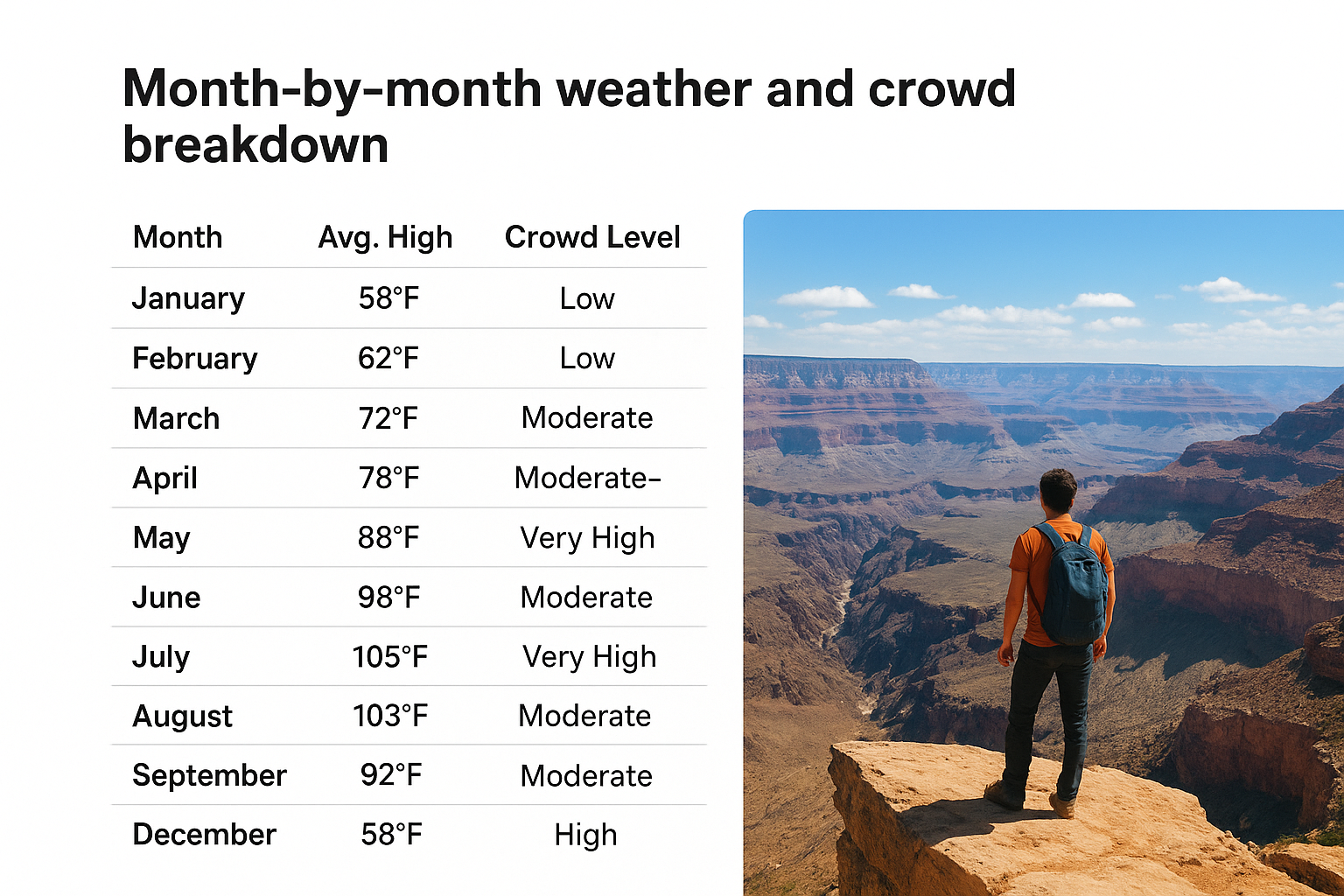
| Month | Avg. High | Crowd Level | Notes |
|---|---|---|---|
| January | 58°F | Low | Coldest month, best rates |
| February | 62°F | Low | Quiet, occasional cold fronts |
| March | 72°F | High | Spring break surge |
| April | 78°F | Moderate-High | Great weather, busy weekends |
| May | 88°F | Moderate | Heat climbing, fewer crowds |
| June | 98°F | High | Summer vacation begins |
| July | 105°F | Very High | Peak heat, peak visitors |
| August | 103°F | Very High | Still brutal, still busy |
| September | 92°F | Moderate | Heat easing, crowds thinning |
| October | 80°F | Moderate | Ideal balance of both |
| November | 68°F | Moderate-High | Thanksgiving spike |
| December | 58°F | High | Holiday travel week |
October consistently offers the closest thing to a perfect month at West Rim, mild days without the summer crush.
Winter months bring the thinnest crowds
January and February stand out as the quietest stretch of the year, with shuttle lines that move fast and Skywalk tickets available even a day or two out. Mornings dip near freezing, so layers matter, but the trade-off is real savings on tours and none of the elbow-to-elbow photo spots you’ll fight through in July.
Late spring and early fall hit the sweet spot
October and late April deliver the best overall combination, since temperatures stay comfortable for walking the rim trails while visitor numbers haven’t yet spiked. September comes close too, once the worst summer heat starts breaking by mid-month, making it a smart pick if your schedule only allows for early fall travel.
Best time of day to beat the crowds and heat
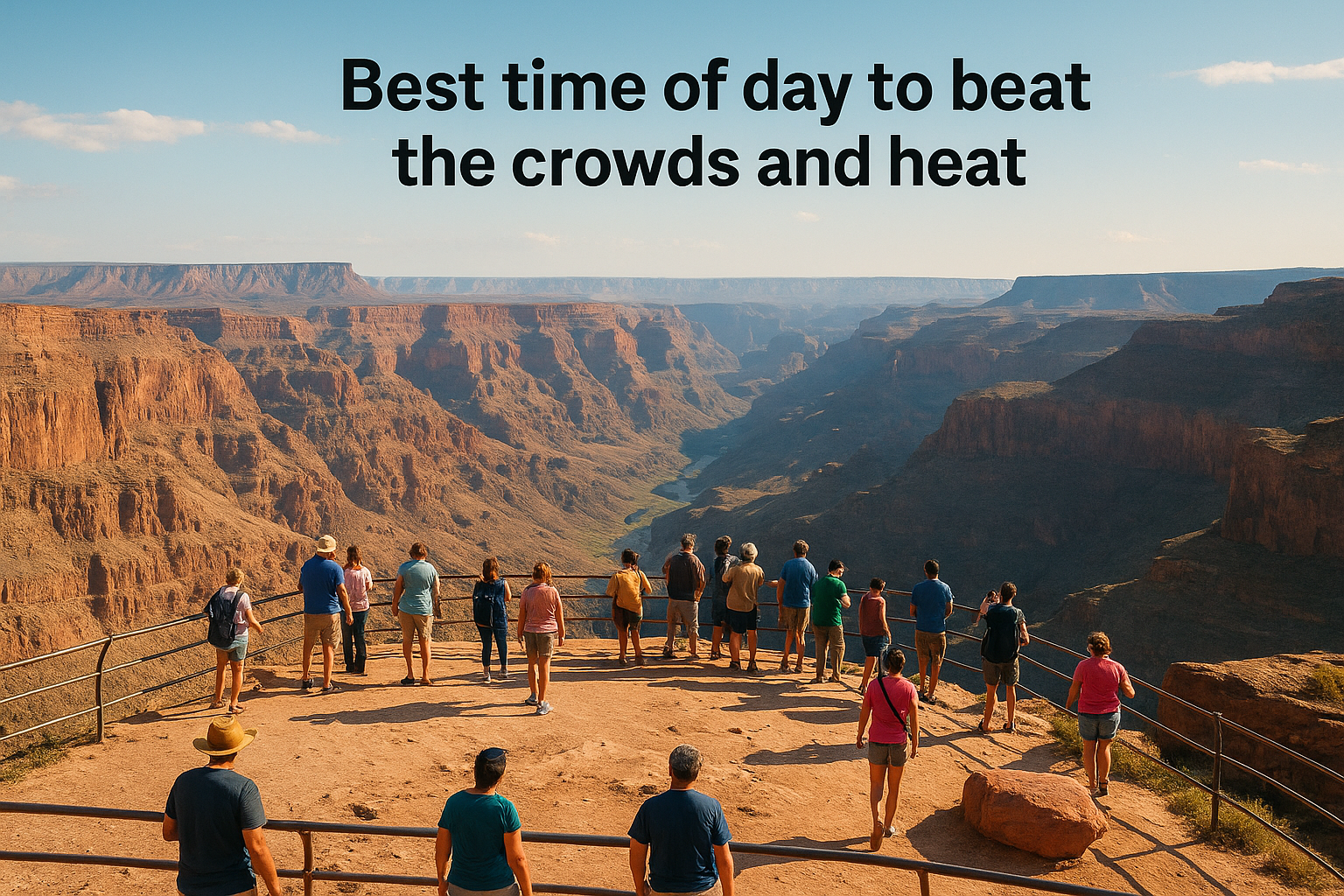
Time of day matters almost as much as time of year at West Rim, especially once summer temperatures climb past 95°F by mid-morning. Arrival timing decides whether you’re walking Eagle Point in cool shade or standing in a shuttle line under a blazing sun with everyone else who slept in. A few smart adjustments to your schedule can shave real time off waits and real degrees off your body’s exposure to heat.
Early morning arrivals win the day
Arriving right at gate opening, usually 8 a.m., gives you the best combination of light traffic and manageable heat. Morning light also photographs better, with softer shadows across the canyon walls than the flat glare of midday sun. Guests who show up before 9 a.m. routinely walk straight onto the Skywalk with little to no wait, a stark contrast to the hour-plus lines that build by early afternoon in summer.
Beating the heat and beating the crowds turn out to be the same strategy: get there early.
Midday brings the worst of both
Between 11 a.m. and 3 p.m., you’ll hit peak heat and peak crowds at the same time, particularly from June through August. Shuttle buses run at capacity, shaded seating fills up fast, and exposed viewpoints like Guano Point offer almost nowhere to cool off. Skip this window if you can, or plan it around lunch inside one of the air-conditioned buildings near the visitor areas.
Late afternoon and sunset offer a second window
Sunset visits, roughly two hours before closing, give you a second calm stretch once day-trip crowds start heading back toward Las Vegas or Kingman. Temperatures drop noticeably as the sun lowers, and the canyon takes on deep orange and red tones that outshine typical midday photos.
| Arrival Window | Crowd Level | Heat Level | Best For |
|—|—|—|
| 8-9 a.m. | Low | Cool | Skywalk, hiking |
| 11 a.m.-3 p.m. | High | Extreme | Avoid if possible |
| 5-7 p.m. | Low-Moderate | Cooling | Photos, sunset views |
Last entry rules apply, so confirm gate hours before planning a sunset arrival.
Tips for visiting during peak and off-peak seasons
Knowing the calendar only gets you halfway there. Once you’ve settled on a season, the next step is adjusting your habits to match it, since a summer visit and a January visit require almost opposite strategies. Peak season tactics focus on beating lines and heat, while off-peak tactics focus on squeezing extra value out of a quieter trip. Either way, a little prep work goes further than showing up and hoping for the best.
Surviving peak season without wasting your day
Summer weekends, spring break, and the Thanksgiving-through-New Year’s stretch demand a different playbook than the rest of the year. Book Skywalk tickets and transportation at least two to three weeks ahead, since same-week slots often sell out entirely during these windows. Carry more water than feels necessary, because dehydration sets in faster than most visitors expect at 100°F with no shade cover.
- Reserve tours and Skywalk passes early, ideally three or more weeks out
- Start your day at gate opening to dodge the worst crowds and heat
- Pack electrolyte tablets, not just water, for longer exposure on trails
- Choose a guided tour with fixed shuttle seating instead of relying on general shuttle lines
During peak months, the trip you plan two weeks ahead is almost always better than the one you improvise on arrival.
Making the most of a quiet off-peak trip
January, February, and most weekdays in October or April reward travelers willing to skip the summer window. Availability opens up dramatically, so you can often book a helicopter add-on or private guide with only a few days’ notice. Lean into that flexibility by asking about last-minute discounts, since operators frequently drop rates when demand is thin.
- Ask about weekday discounts on tours and add-ons
- Pack layers for cold mornings, even if afternoons feel mild
- Take advantage of shorter shuttle lines to add extra viewpoints to your itinerary
- Confirm hours ahead of holidays, since some services run reduced schedules in winter
Saving money during quieter months rarely means sacrificing quality. If anything, guides have more breathing room to slow down and share detail they’d otherwise rush through during a packed July afternoon.
Planning your ideal West Rim visit
Finding the best time to visit Grand Canyon West Rim comes down to matching the calendar to what you actually want: cool mornings and thin crowds in October and April, guaranteed sun in summer despite the heat, or rock-bottom prices in January and February. Arrive early, watch the shoulder seasons, and book ahead during peak weeks, and you’ll avoid the two biggest mistakes first-time visitors make: bad timing and no backup plan.
Once you’ve picked your dates, the easiest way to lock in a smooth trip is letting someone else handle the logistics. A knowledgeable guide who already knows the shuttle patterns, the shade spots, and the quietest viewpoints saves you hours you’d otherwise lose figuring it out yourself. If you’re staging your trip from Las Vegas, custom tours built around your ideal season and pace take that guesswork off your plate entirely.