
Bryce Canyon sits above 8,000 feet, which means its weather swings harder than almost any other national park in the Southwest. Pick the wrong month and you could be hiking through snowdrifts or fighting for a parking spot with a thousand other cars. Figuring out the best time to visit Bryce Canyon before you book flights or a rental car saves you from both problems.
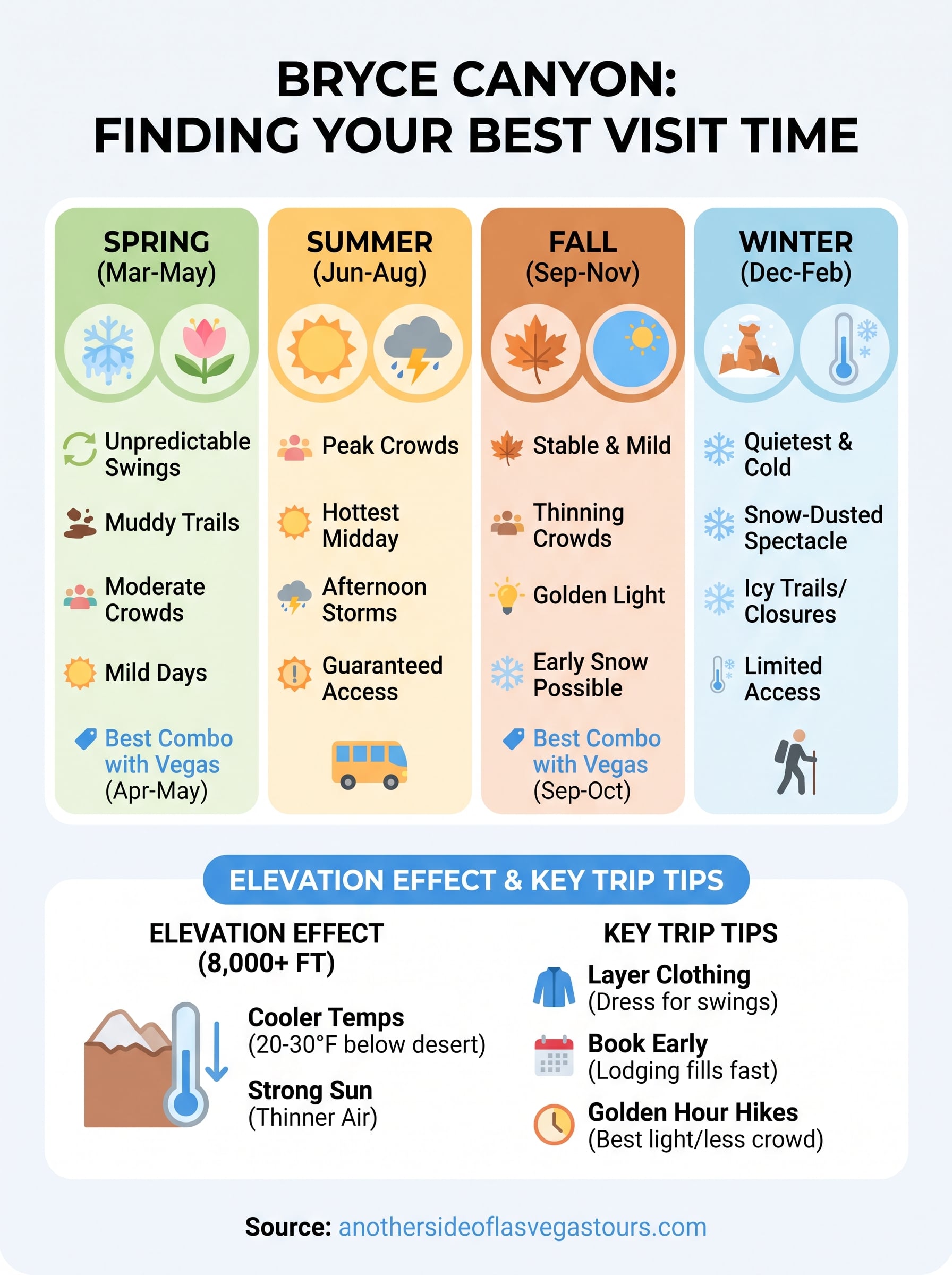
The short answer: late spring and early fall give you the best mix of mild temperatures, open trails, and manageable crowds. Summer draws the biggest numbers and the hottest midday sun on the rim, while winter turns the amphitheater into a quiet, snow-dusted spectacle that only a fraction of visitors ever see. Which season fits you depends on whether you’re chasing solitude, photography light, or guaranteed trail access.
Below, we break down what to expect month by month, from temperatures and snowpack to shuttle schedules and ranger-led programs. If Bryce is part of a bigger Southwest itinerary, we’ll also touch on how it pairs with stops like Red Rock Canyon and Hoover Dam, two spots our guides here in Las Vegas cover on nearby tours, so you can time your whole trip around the region’s best weather windows.
Why timing your visit changes the Bryce Canyon experience
Bryce Canyon’s elevation, not its latitude, drives almost every seasonal decision you’ll make here. The rim sits between 8,000 and 9,100 feet, roughly twice as high as Las Vegas, so the park runs 20 to 30 degrees cooler than the desert floor below it. That difference isn’t a minor detail. It means snow and ice can linger on the Navajo Loop and Queen’s Garden trails well into April, and afternoon thunderstorms can roll in fast during summer monsoon season. Checking the weather forecast for Bryce Canyon before you pack matters more here than at almost any other Southwest park.
The elevation effect on temperature and trail access
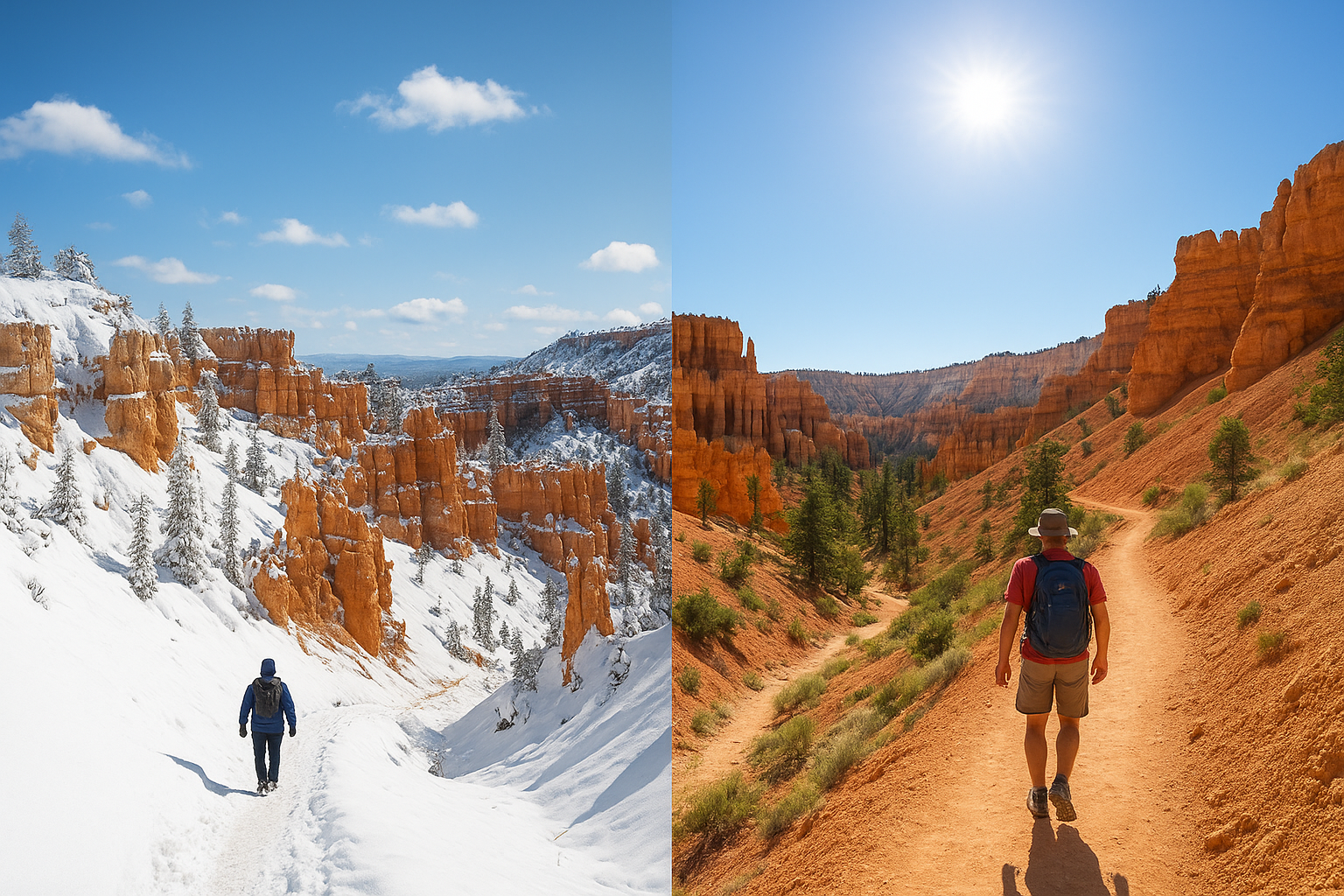
Because the amphitheater floor is roughly 1,000 feet lower than the rim, temperatures can shift by 10 degrees or more just during your hike down and back up. That swing catches a lot of visitors off guard, especially those coming from Las Vegas or Zion, where the desert heat rarely lets up. Below is a rough seasonal breakdown so you know what you’re walking into before you lace up your boots.
| Season | Rim High (°F) | Rim Low (°F) | Trail Conditions |
|---|---|---|---|
| Winter (Dec-Feb) | 35-40 | 10-20 | Icy, often requires traction devices |
| Spring (Mar-May) | 45-65 | 20-35 | Muddy, patchy snow into April |
| Summer (Jun-Aug) | 75-85 | 45-55 | Dry, dusty, afternoon storms |
| Fall (Sep-Nov) | 45-70 | 20-40 | Stable, occasional early snow |
The right month at Bryce Canyon isn’t about avoiding bad weather entirely, it’s about matching the season to the kind of trip you actually want.
Crowds, roads, and shuttle access
Crowd size at Bryce swings just as hard as the temperature does. Summer months bring the heaviest traffic, with parking lots at Sunrise Point and Sunset Point filling before 9 a.m. and the free shuttle running at full capacity. Winter, on the other hand, sees a fraction of those numbers, which means you can often walk right up to an overlook that would’ve had a line in July. A few practical differences worth knowing:
- Shuttle service typically runs only from spring through fall, so winter visitors drive their own vehicles to viewpoints.
- Ranger-led programs, including geology talks and full-moon hikes, concentrate heavily in summer and thin out by late fall.
- Road closures on the scenic drive are rare but do happen after heavy snowfall, according to the National Park Service’s Bryce Canyon page.
- Lodging inside the park, like the Lodge at Bryce Canyon, books up months ahead for summer dates but has far more flexibility in winter.
Light, photography, and the amphitheater’s mood
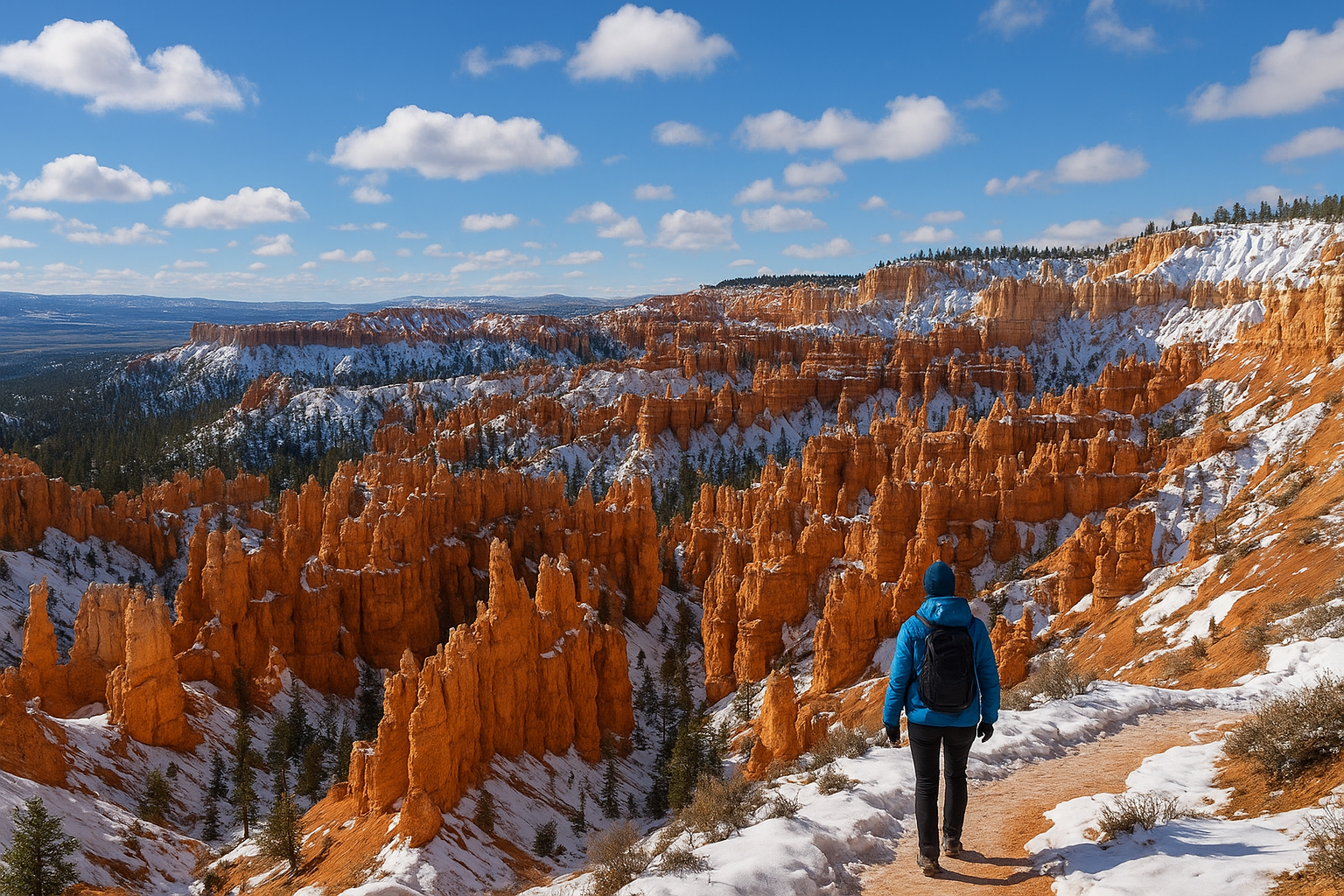
Every season changes how the hoodoos actually look, which matters if photography or simply soaking in the view is part of why you’re going. Winter dusts the orange rock with white snow, creating a contrast photographers chase specifically, while summer’s harsher midday sun flattens some of that color unless you’re shooting at sunrise or sunset. Autumn brings a softer, golden light and clearer air, since summer haze and dust tend to settle by October.
Spring splits the difference, offering decent light most days but with a higher chance of overcast skies or lingering storm clouds rolling through the amphitheater. If you’re planning your trip around a specific photo or memory, that seasonal mood should weigh just as heavily as the temperature chart above. It’s one more reason the ideal time to visit Bryce Canyon really depends on what you want to get out of the trip, not just what the thermometer says.
How to choose the right season for your trip
Picking a month at Bryce Canyon really comes down to ranking your priorities, because no single season wins on every front. Solitude, guaranteed trail access, mild weather, and dramatic photography light rarely peak at the same time, so you need to decide which one matters most before you look at a calendar. Someone chasing empty overlooks and low hotel rates will pick a different month than someone who wants every trail open and zero chance of ice.
Match the season to your travel style
Start by asking what you’re actually optimizing for on this trip. A first-time visitor who wants to hike the Navajo Loop and Queen’s Garden without worrying about crampons should lean toward late spring through early fall, when trails are dry and fully accessible. A returning visitor who’s already done the popular hikes and wants a quieter, moodier version of the park should look at December through February, accepting some closed trails in exchange for near-empty viewpoints.
| Priority | Best months | Trade-off |
|---|---|---|
| Solitude and low prices | December-February | Icy trails, some closures |
| Guaranteed trail access | June-September | Peak crowds, midday heat |
| Photography and mild weather | May, September, October | Smaller crowd windows, less lodging flex |
| Family trips with kids | June-August | Hottest days, busiest shuttle stops |
Choose your Bryce Canyon month by ranking what you want most, since chasing every advantage at once isn’t realistic.
If you’re traveling with kids or have mobility concerns
Families often do best avoiding the extremes on both ends. Winter’s ice makes the steeper switchbacks risky for young kids, and summer’s midday sun at 8,000 feet dehydrates people faster than they expect, especially children who aren’t used to the altitude. Early June or September tends to split the difference, with warm but not brutal afternoons and trails that are fully open. If anyone in your group has trouble with steep grades or uneven footing, stick to the paved rim trail sections near Sunset Point and Inspiration Point, which stay accessible in nearly any season except after fresh snow.
Combining Bryce with a broader Southwest trip
Going beyond a single destination changes the math slightly. If Bryce is one stop on a longer loop that includes Zion, the Grand Canyon, or a Las Vegas base with day trips to Red Rock Canyon and Hoover Dam, you’ll want a window when all three regions cooperate. Spring (April-May) and fall (September-October) hit that sweet spot best, since Las Vegas and Hoover Dam stay comfortable while Bryce hasn’t hit peak crowds or peak snow. Summer works too if you’re prepared for triple-digit desert heat lower down and cooler, stormier afternoons up top.
Bryce Canyon month by month: weather and crowds
Knowing what each month actually feels like on the ground helps you nail down the best month to visit Bryce Canyon for your specific trip, rather than guessing off a general season. Below is a quick month-by-month snapshot pulled from typical conditions, followed by a closer look at what changes as the calendar turns.
| Month | Avg High (°F) | Crowd Level | Notes |
|---|---|---|---|
| January | 37 | Low | Snowpack, quiet overlooks |
| February | 41 | Low | Still icy, fewer visitors |
| March | 47 | Low-Moderate | Melting snow, muddy trails |
| April | 54 | Moderate | Spring break bump |
| May | 64 | Moderate | Trails open, mild days |
| June | 77 | High | School break crowds start |
| July | 83 | Peak | Busiest month, storms |
| August | 81 | Peak | Monsoon season, heat |
| September | 73 | Moderate-High | Crowds thin, warm days |
| October | 61 | Moderate | Fall color, clear skies |
| November | 48 | Low-Moderate | First snow possible |
| December | 39 | Low | Holiday bump, then quiet |
July draws the biggest crowds of the year, while January offers some of the emptiest overlooks in the entire park.
Winter months bring solitude but limited access
December through February strip the park down to its bones. Snow blankets the hoodoos, temperatures on the rim regularly drop into the teens overnight, and several unpaved sections of trail close or require traction devices. Visitors who show up during this stretch trade convenience for near-total quiet, since crowd numbers sit at their lowest point of the year outside of a small holiday bump in late December.
Spring months swing unpredictably
March through May is the trickiest stretch to plan around because conditions can flip within days. Melting snow turns sections of the Navajo Loop into mud, then a warm week later, that same trail dries out completely. Early spring travelers should check the park’s official conditions page before locking in a hiking plan, since trail status here changes faster than the calendar suggests.
Summer months guarantee access but not comfort
June through August deliver the most reliable trail access of the year, with every major route open and the shuttle running full schedules. That reliability comes at a cost: parking lots fill by mid-morning, and afternoon monsoon storms roll in with little warning through July and August, so hikers need to plan around lightning risk on exposed rim sections.
Fall months settle into a steady rhythm
September through November calm down noticeably compared to summer, with crowds easing week by week and temperatures staying comfortable well into October. Numbers climb slightly for fall foliage seekers early in the season, then drop off fast once the first real snow hits, usually sometime in November, making this window one of the better answers to the best time to visit Bryce Canyon for travelers chasing a balance of comfort and quiet.
Tips for making the most of any season
No matter which month lands on your itinerary, a handful of habits make the difference between a smooth day at Bryce Canyon and one spent fighting the weather or the crowds. Preparation matters more than luck here, since the park’s elevation and sun exposure catch even experienced hikers off guard. Building a few of these tips into your plan works whether you’re chasing solitude in January or fighting for a parking spot in July.
A little preparation matters more at Bryce Canyon than picking the "perfect" month ever will.
Layer for temperature swings regardless of month
Rim temperatures can swing 30 degrees between sunrise and midafternoon, even in summer, so dressing in layers beats packing for a single expected temperature. A fleece or light jacket you can stuff into a daypack costs you nothing, but forgetting one on a windy October morning means cutting your hike short. Keep a simple kit ready before any Bryce Canyon trip:
- A moisture-wicking base layer, even in July
- A packable insulating layer for early mornings and sunset viewpoints
- Traction devices for boots from November through April
- Sun protection, since the thin air at 8,000 feet burns skin faster than sea level
Book lodging and shuttle passes early no matter the season
Room availability inside and near the park tightens up fast, and that’s true even outside the traditional peak months. The Lodge at Bryce Canyon and nearby Bryce Canyon City hotels fill for holiday weekends in winter and for the entire month of October, when fall color draws steady traffic. Reserving three to six months out, rather than assuming winter always means open rooms, saves you from a long drive to Panguitch or Tropic for a bed.
Time your hikes around the sun, not just the calendar
Sunrise and sunset light transform the hoodoos into something closer to what you see in postcards, and that holds true in every season of the year. Starting your hike at Sunrise Point before 8 a.m. avoids both the harshest light and the thickest crowds, since most visitors don’t move toward the trailheads until midmorning. Photographers chasing the best light at Bryce Canyon should treat golden hour as a fixed appointment, not an afterthought, since the amphitheater’s color shifts noticeably within just twenty minutes of first light.
Combining these habits with the seasonal breakdown above gives you a realistic plan rather than a guess. Understanding how temperature, crowds, and light interact at this elevation turns a rushed visit into one where you actually see the park the way it’s meant to be seen, regardless of which month you land on.
Finding your ideal window at Bryce Canyon
There’s no single best time to visit Bryce Canyon, only the season that fits what you actually want from the trip. Late spring and early fall give you the most balanced mix of open trails, mild temperatures, and manageable crowds, but winter’s solitude and summer’s guaranteed access both have real appeal depending on your priorities. Weigh trail conditions, crowd tolerance, and the kind of light you want in your photos, then pick the month that lines up with those goals rather than chasing a mythical perfect week.
If Bryce is part of a bigger Southwest loop, timing gets even more valuable. Pairing your visit with comfortable weather in Las Vegas and at Hoover Dam means one good travel window instead of three separate guesses. Once you’ve locked in your Bryce dates, round out the trip with a private tour of Hoover Dam that fits the same stretch of clear, mild days.