
Hoover Dam draws over a million visitors each year, and your experience there can vary wildly depending on when you show up. Visit on a Saturday in July, and you’re standing in 110°F heat with hundreds of other tourists packed onto the observation deck. Show up on a weekday morning in March, and you practically have the place to yourself. Knowing the best time to visit Hoover Dam makes that much of a difference, in comfort, crowd levels, and how much you actually enjoy the trip.
At Another Side Tours, we run guided Hoover Dam tours year-round from Las Vegas, so we’ve seen every season, every crowd pattern, and every weather swing the dam throws at visitors. That firsthand experience is exactly what we’ve put into this guide.
Below, we break down the dam’s weather and crowd conditions month by month, cover the best days of the week and times of day to arrive, and share practical tips that help you plan a visit worth your time. Whether you’re coming in peak summer or the quieter shoulder months, you’ll know exactly what to expect.
1. Book an Another Side Hoover Dam Tour
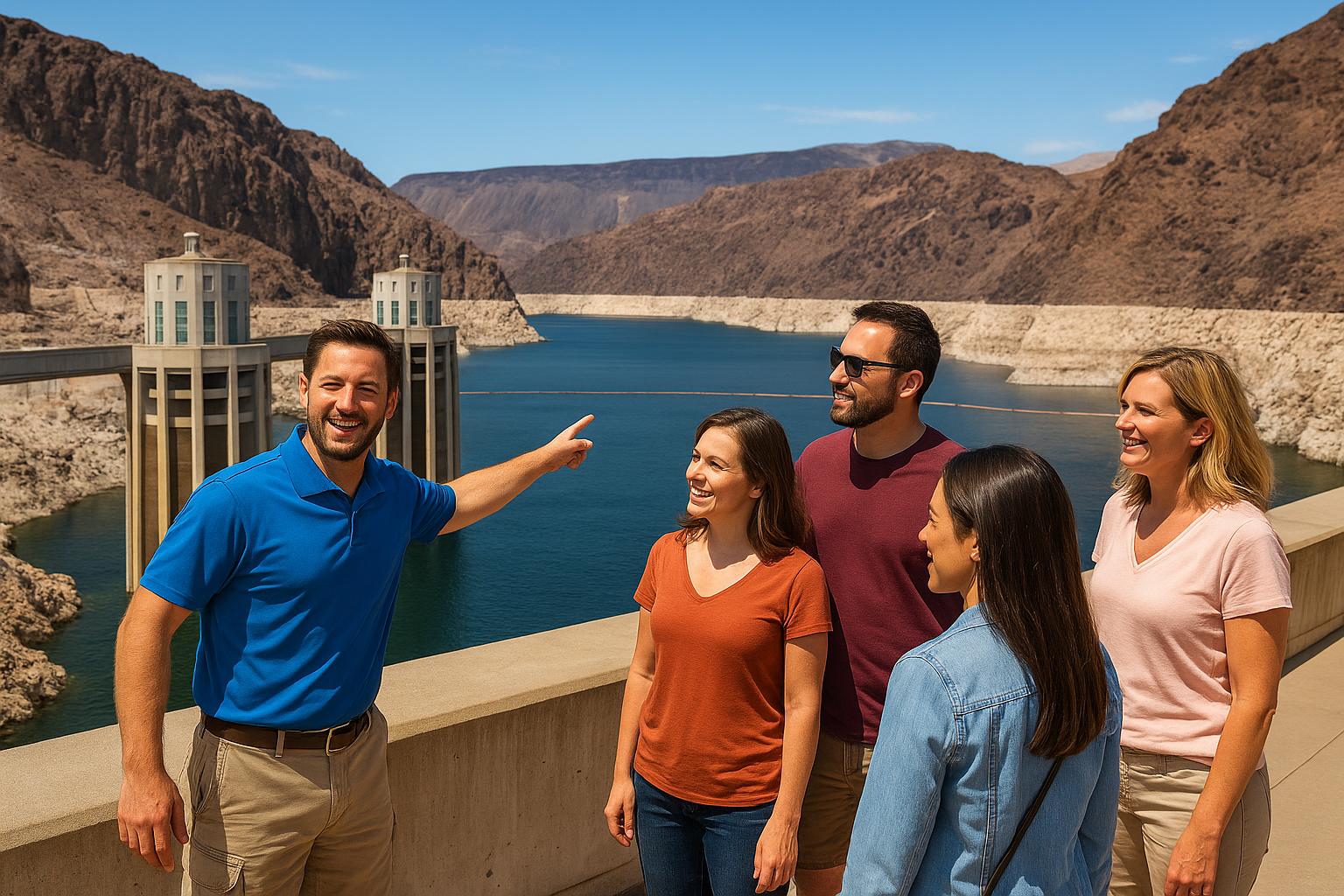
Booking a guided Hoover Dam tour through Another Side Tours removes the guesswork from your visit entirely. Instead of handling logistics yourself, you ride in comfortable transportation from Las Vegas, travel with a knowledgeable local guide, and spend your time at the dam actually learning about it rather than figuring out parking, tickets, or what order to see things in.
What to Expect
Another Side Tours runs half-day Hoover Dam tours that depart from Las Vegas and cover the dam, the visitor center, and sweeping views of Lake Mead and the Colorado River. Your guide shares the history, engineering feats, and compelling stories behind the structure in a way that makes the visit stick with you long after you leave. Tours typically run 3 to 5 hours, giving you enough time to explore without feeling rushed.
Crowds and Wait Times
On a guided tour, you skip a lot of the friction that independent visitors deal with, including hunting for parking and waiting in ticket lines without a clear plan. Your guide understands the flow of the site and times key stops to help you avoid the thickest foot traffic. Weekday departures tend to move through the dam more smoothly than weekend visits, since self-drive tourist volume is noticeably lighter Monday through Thursday.
Joining a guided tour means your time at the dam is structured, which is especially useful when crowds peak between spring break and Labor Day.
Best Time of Day
Another Side Tours departs in the morning, which puts you at Hoover Dam before midday crowds build and before desert temperatures climb to their daily peak. Morning light also produces far better photos of the dam face and the surrounding canyon walls. Arriving early consistently delivers a calmer, more comfortable experience regardless of the month you choose to visit.
Planning Tips
Book your spot in advance, particularly if you’re visiting between March and October when demand runs highest. Confirm availability and pick the date that fits your Las Vegas schedule directly through anothersideoflasvegastours.com. Wear comfortable walking shoes, apply sunscreen before you leave your hotel, and carry a full water bottle since shade at the dam site is limited even during cooler months.
2. January
January is one of the quietest months to visit Hoover Dam, making it a strong contender if you want to experience the site without fighting crowds. Daytime temperatures typically land between 40°F and 60°F, which feels cold by Las Vegas standards but remains manageable for walking the dam and the observation areas.
What to Expect
Expect cool, dry conditions throughout the day in January. Morning temperatures can dip into the upper 30s, and a sharp wind off Lake Mead makes it feel colder than the thermometer suggests. Sunshine is common, though, and clear skies give you excellent visibility across the canyon and the reservoir. Pack a jacket you can remove as the afternoon warms up.
Crowds and Wait Times
January delivers noticeably lighter foot traffic compared to spring and summer months. The holiday rush from December has cleared out, and most leisure travelers haven’t booked Las Vegas trips yet. You’ll find short or no wait times at ticket counters, and the observation deck rarely feels congested.
January is one of the best times to visit Hoover Dam if avoiding crowds is your top priority.
Best Time of Day
Aim to arrive by 9:00 AM to take full advantage of calm morning conditions. Midday in January is actually pleasant rather than punishing, so you have more scheduling flexibility than summer visitors do. Morning light still produces the best photography conditions along the dam face.
Planning Tips
Check the National Park Service forecast before you leave, since January brings the occasional cold front that drops temperatures sharply. Bring layers and closed-toe shoes, as the concrete walkways near the dam hold cold air well into the late morning.
3. February
February carries many of the same advantages as January but with slightly warmer afternoons that make the outdoor walkways and observation areas more comfortable to explore. Daytime highs typically reach the mid-50s to low 60s°F, and afternoon sunshine is reliable enough that a light jacket is usually all you need once the morning chill fades. For visitors who want thin crowds and manageable temperatures, February ranks among the best times to visit Hoover Dam.
What to Expect
Conditions at Hoover Dam in February remain dry and clear for most of the month. Morning temperatures still dip into the low 40s, so you’ll feel the cold near the water, but afternoons warm up noticeably faster than they do in January. Visibility across Lake Mead and the canyon is excellent on clear days, making February one of the better months for photography.
Crowds and Wait Times
February stays relatively uncrowded for most of the month, with one important exception: Presidents’ Day weekend. That three-day holiday in mid-February draws a significant number of travelers to Las Vegas and surrounding attractions. Weekdays in February remain quiet, but if your trip falls near Presidents’ Day, expect heavier foot traffic and longer ticket lines.
Avoid Presidents’ Day weekend at the dam if possible, or plan to arrive before 9:00 AM to get ahead of the crowds.
Best Time of Day
Morning arrivals between 8:00 and 9:30 AM give you the best combination of light crowds and comfortable temperatures. By late morning, tour groups from Las Vegas start arriving in larger numbers, so the earlier you get there, the calmer your experience will be.
Planning Tips
Double-check the Presidents’ Day holiday schedule before finalizing your February visit. If your dates are flexible, shifting your trip a few days before or after that weekend makes a real difference in how the site feels. Pack a windproof layer since the canyon channels cold air off the reservoir even on otherwise sunny afternoons.
4. March
March marks a notable shift at Hoover Dam. Temperatures climb into the mid-60s and low 70s°F during the day, and the desert landscape surrounding the dam starts showing signs of life. It sits right at the edge of when crowds begin building for the season, making early-to-mid March a sweet spot between comfortable weather and manageable visitor numbers.
What to Expect
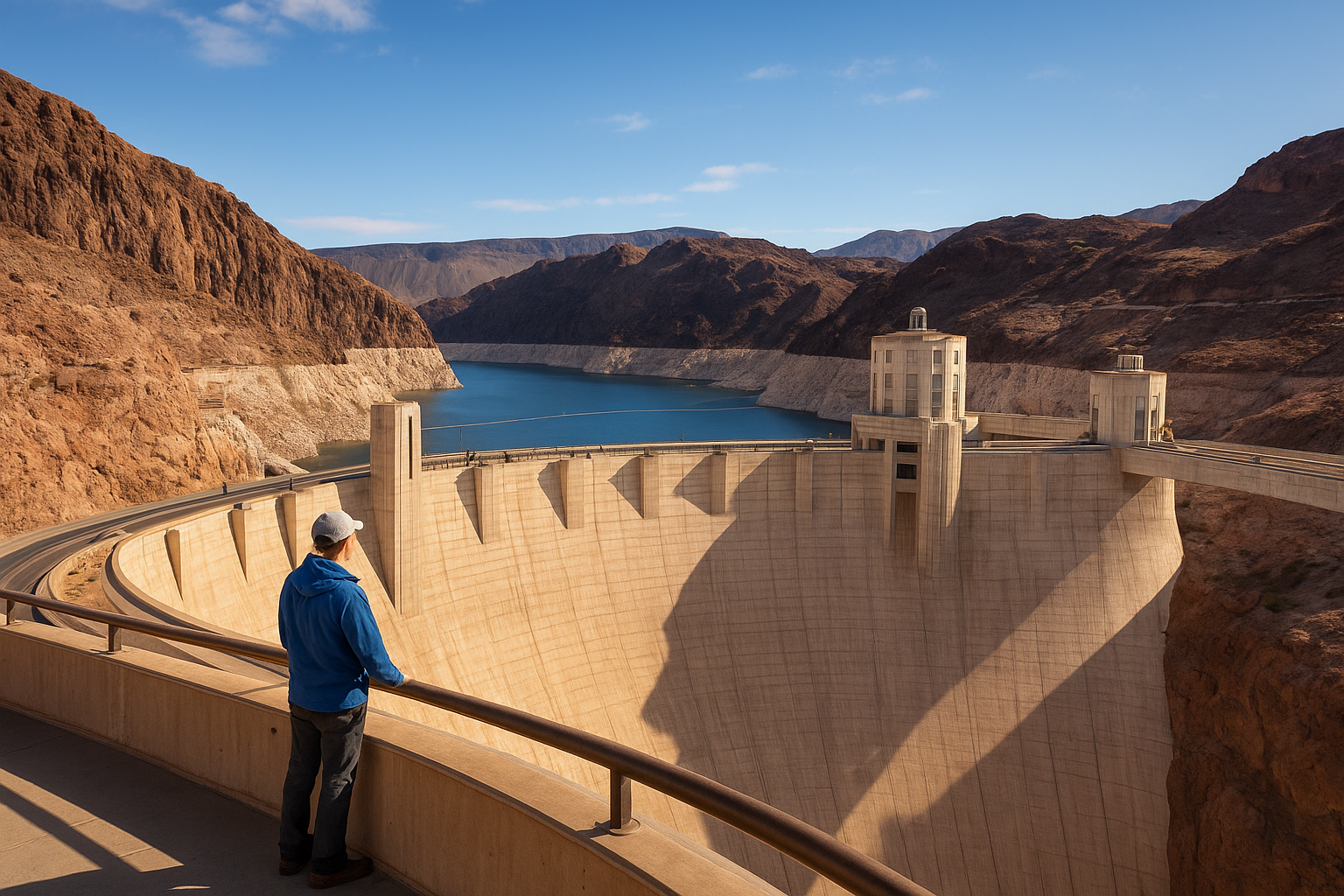
Conditions in March are reliably mild and sunny, with mornings in the upper 40s and afternoons that warm up quickly under clear desert skies. The canyon walls reflect heat on calm days, making outdoor walks along the dam surface genuinely pleasant. Wind off Lake Mead remains a factor in early March, so a light jacket still makes sense until temperatures settle later in the month.
Crowds and Wait Times
March brings spring break traffic that builds week by week, with the heaviest crowds typically landing during the last two weeks of the month. Early March stays relatively calm, but by late March you’ll notice longer lines at the visitor center and a much busier observation deck. Weekdays remain significantly quieter than weekends throughout the month.
If you’re targeting March as the best time to visit Hoover Dam, aim for the first two weeks and travel on a weekday.
Best Time of Day
Arriving before 9:00 AM puts you ahead of tour buses and day-trip groups from Las Vegas that typically roll in between 10:00 AM and noon. Morning light in March also produces some of the best photography conditions of the entire year along the dam face.
Planning Tips
Book your tickets in advance since spring break demand increases fast. Bring layers you can peel off as temperatures climb through the late morning hours.
5. April
April brings warm temperatures and a noticeable jump in visitor numbers compared to winter months. Daytime highs climb into the mid-70s to low 80s°F, and the combination of pleasant weather and spring break traffic makes April one of the busiest stretches at the dam. If this is the best time to visit Hoover Dam for your trip, planning around peak crowd patterns makes a real difference.
What to Expect
April delivers clear, sunny days with low humidity and mornings that start cool in the mid-50s before warming quickly. Afternoon temperatures stay comfortable rather than punishing, unlike the summer months ahead, so you can spend more time outdoors without heat being a major concern. Spring wildflowers add color to the surrounding desert landscape early in the month.
Crowds and Wait Times
April is significantly busier than January or February, with spring break visitors filling the early weeks and general tourist traffic building through the rest of the month. Weekend days bring the heaviest congestion at the visitor center and parking areas, with wait times that reflect the season’s popularity.
Visiting on a weekday in April cuts your wait times and gives you noticeably more room to move through the site.
Best Time of Day
Arriving before 9:00 AM is your best move in April. Tour buses from Las Vegas typically pull in between 10:00 AM and noon, so an early start puts you ahead of the busiest window and lets you explore at a comfortable pace.
Planning Tips
Book your tickets in advance since April demand stays high all month. Bring sunscreen and light, breathable layers because temperatures rise fast once the morning chill burns off, and shade on the dam surface is limited.
6. May
May sits between the comfortable spring window and the intense heat of summer, and conditions at Hoover Dam shift noticeably as the month progresses. Daytime highs climb into the upper 80s and approach the low 90s°F by late May, and temperatures on the open dam surface feel hotter than the air temperature suggests. For travelers evaluating the best time to visit Hoover Dam, early May still offers reasonable conditions, but the month demands more preparation than April.
What to Expect
Mornings in May start in the mid-60s°F and warm quickly, reaching daily peak heat by early afternoon. Low humidity keeps conditions more bearable than they would be in a humid climate, but prolonged exposure on the concrete walkways and observation areas adds up fast. Bring water and sunscreen regardless of how mild the morning forecast looks.
Crowds and Wait Times
May brings steadily growing crowds as summer travel ramps up across Las Vegas. Memorial Day weekend at the end of the month is one of the busiest periods of the year at the dam, with visitors pouring in from Las Vegas and beyond. Weekdays in early May stay manageable, but that quieter window disappears by mid-month.
If Memorial Day weekend is your only option, plan to arrive before 8:30 AM to get ahead of the rush.
Best Time of Day
Arriving before 9:00 AM is the right move throughout May. By 10:30 to 11:00 AM, the dam surface heats up significantly and tour groups from Las Vegas arrive in full force, which means both heat and crowds peak at the same time.
Planning Tips
Book your tickets well in advance if your visit falls near Memorial Day weekend. Carry a full water bottle and high-SPF sunscreen since the walkways offer almost no shade, and the reflected heat off the concrete and canyon walls drains your energy faster than you expect.
7. June
June marks the beginning of real desert heat at Hoover Dam. Daytime temperatures regularly hit the mid-90s to low 100s°F, and the open concrete surfaces amplify that heat well beyond what the air temperature alone suggests. If June is when you’re evaluating the best time to visit Hoover Dam, timing your arrival correctly is non-negotiable.
What to Expect
Mornings start in the low-to-mid 70s°F but climb fast once the sun clears the canyon walls. By 11:00 AM, the dam surface and observation areas can feel 10 to 15 degrees hotter than the recorded air temperature due to reflected heat off the concrete and surrounding rock.
Humidity stays low in June before monsoon season arrives in July, which makes the heat more manageable than it sounds. Still, prolonged midday exposure is genuinely draining, and staying hydrated goes from good advice to a real physical necessity.
Crowds and Wait Times
June delivers heavy visitor traffic as summer vacation season hits full stride. School is out across the country, and family travel to Las Vegas and surrounding attractions surges sharply. Weekend days pack the parking areas and stretch visitor center lines well beyond what you’d see in spring.
Weekday visits in June cut crowd levels noticeably, especially if you arrive before 9:00 AM.
Best Time of Day
Arriving by 8:00 AM is your strongest move in June. The dam surface stays manageable in the early morning, and you finish the main portions of your visit before peak heat between noon and 3:00 PM turns the outdoor areas uncomfortable.
Planning Tips
Carry at least two liters of water per person and apply sunscreen before leaving your hotel. Wear light, breathable clothing and a wide-brimmed hat since shade on the walkways and observation deck is minimal. Book your tickets in advance because summer demand keeps availability tight all month.
8. July
July is the hottest and most humid month at Hoover Dam, combining peak summer heat with the arrival of monsoon season in the Mojave Desert. If July is when you’re evaluating the best time to visit Hoover Dam, an early morning arrival is not a preference but a firm requirement.
What to Expect
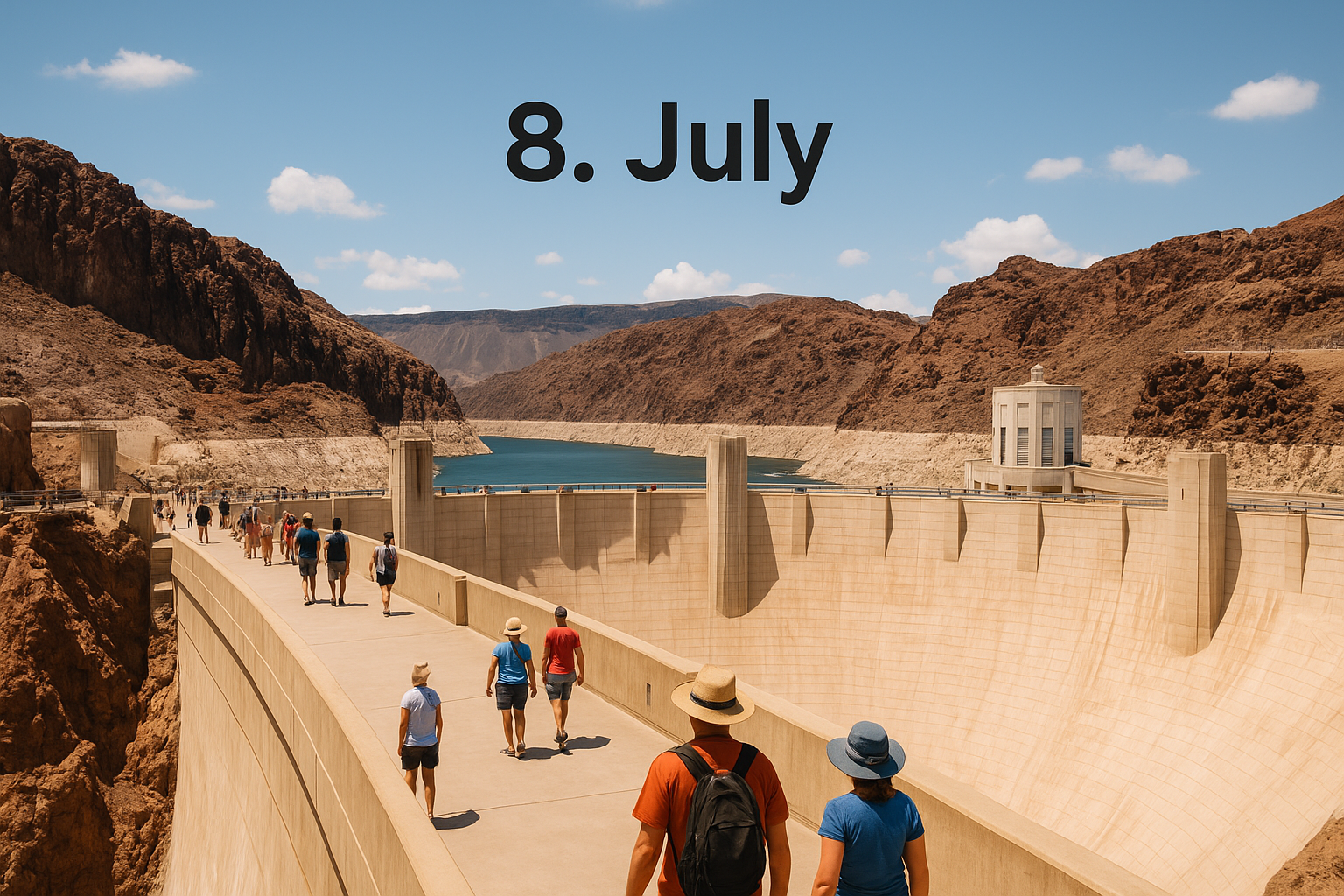
Daytime highs regularly push past 105°F, and afternoon monsoon storms can develop quickly, bringing lightning, brief heavy rain, and gusty winds to the canyon area. Morning temperatures start in the low-to-mid 80s°F, which is your safest window for walking the dam surface and observation areas. Humidity climbs noticeably compared to June, making the heat feel more draining even during the earliest hours of the day.
Crowds and Wait Times
July draws heavy visitor volume despite the extreme heat, as summer vacation schedules keep family travel high throughout the entire month. Weekend days produce the longest lines at the visitor center and the most congested parking areas of the entire year, so weekday visits offer the most practical relief.
Arriving before 8:00 AM on a weekday gives you the best chance of beating both the heat and the peak crowds at the same time.
Best Time of Day
Arriving by 7:30 to 8:00 AM is your strongest move in July. The dam surface stays tolerable before 9:00 AM, but temperatures climb sharply after that, and afternoon monsoon activity adds unpredictability to any outdoor plans you’ve made.
Planning Tips
Carry at least two to three liters of water per person and check the weather forecast for afternoon storm alerts before leaving your hotel. Wear light, breathable clothing and a wide-brimmed hat since the concrete walkways and canyon walls reflect heat intensely throughout the morning hours.
9. August
August continues the extreme heat from July while adding peak monsoon activity that makes afternoons genuinely unpredictable at the dam. Daytime highs regularly exceed 105°F, and afternoon storms roll in faster and more frequently than any other month of the year. If August is your only window for evaluating the best time to visit Hoover Dam, an early arrival stops being optional and becomes the single most important factor in your planning.
What to Expect
Morning temperatures begin in the low-to-mid 80s°F and climb sharply as the sun hits the canyon walls. Afternoon monsoon storms bring lightning, heavy rain, and sudden wind gusts that can restrict outdoor access to the dam surface and observation areas without much warning. Higher humidity during August makes the heat feel more physically draining than July’s numbers alone suggest.
Crowds and Wait Times
August sees consistent summer vacation traffic, though slightly lighter than July as some school districts return to session in the second half of the month. Weekend days still pack the visitor center and parking areas, so weekday visits deliver noticeably shorter lines throughout the month.
Arriving before 8:00 AM on a weekday gives you the best shot at managing both the heat and the crowds at the same time.
Best Time of Day
Arriving by 7:30 to 8:00 AM keeps outdoor conditions tolerable. The dam surface and walkways stay manageable before 9:00 AM, but heat and humidity climb fast after that, and afternoon monsoon storms add real unpredictability to any plans that stretch past noon.
Planning Tips
Carry two to three liters of water per person and check the weather forecast for afternoon storm alerts before leaving your hotel. Wear light, breathable clothing and apply sunscreen before you arrive since shade on the walkways and observation deck is minimal.
10. September
September marks a meaningful improvement over July and August at Hoover Dam. Daytime highs drop into the low-to-mid 90s°F, and monsoon activity begins to taper off as the month progresses, making outdoor visits far more manageable than the peak summer weeks allowed.
What to Expect
Early September still carries summer’s heat, with mornings starting in the mid-70s°F and afternoons climbing into the 90s. By late September, temperatures cool noticeably, and the oppressive humidity from monsoon season largely disappears. Clear skies and lower humidity make mid-to-late September one of the more comfortable stretches of the year, and a strong candidate for evaluating the best time to visit Hoover Dam on a tight travel schedule.
Crowds and Wait Times
September brings a gradual decline in visitor numbers as school resumes across the country and summer vacation travel winds down. Labor Day weekend at the very start of the month remains one of the year’s busiest periods, but the weeks that follow see significantly lighter foot traffic at the visitor center and parking areas. Weekdays in mid-to-late September are particularly calm compared to anything you experienced in summer.
Skipping Labor Day weekend entirely and visiting the following week cuts your wait times sharply without any tradeoff in weather conditions.
Best Time of Day
Arriving by 8:30 to 9:00 AM works well for most of September. Early in the month, morning timing still matters most, but mid-to-late September mornings become more forgiving as temperatures drop closer to comfortable levels.
Planning Tips
Check the weather forecast before your visit since early September can still bring afternoon monsoon storms. Carry sunscreen and water regardless of the forecast since the canyon surfaces and dam walkways stay warm even as overall temperatures moderate through the month.
11. October
October is one of the strongest months for visiting Hoover Dam. Temperatures drop into the low-to-mid 70s°F during the day, mornings feel genuinely comfortable, and the canyon takes on warmer light that makes the scenery look especially striking. For anyone still weighing the best time to visit Hoover Dam, October sits near the top of the list alongside March and November.
What to Expect
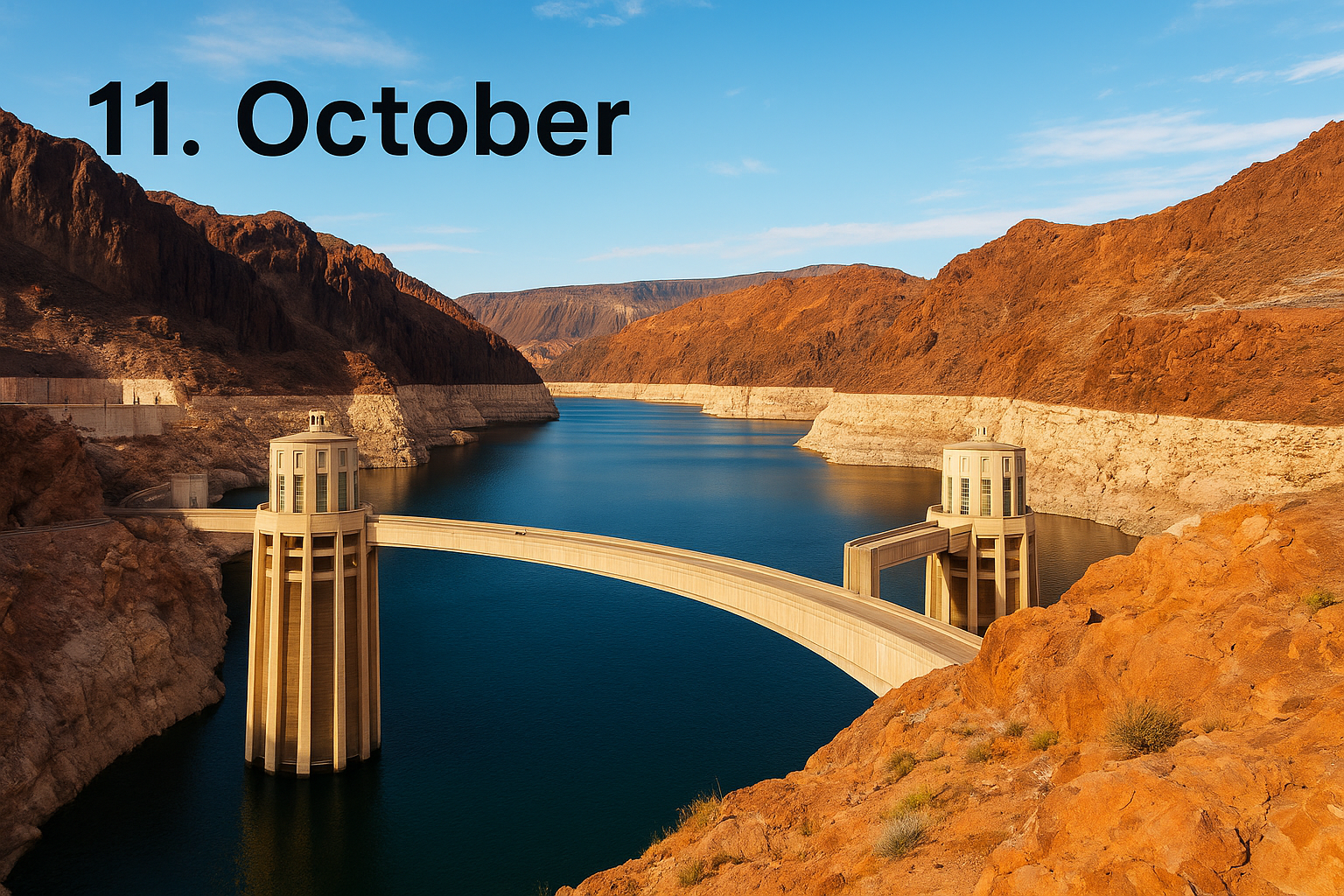
Daytime highs typically settle between 70°F and 78°F, and mornings start in the upper 50s, cool enough to make walking the observation areas and dam surface a real pleasure. Humidity is low, the sky stays clear on most days, and the surrounding canyon landscape looks noticeably different from the bleached summer palette you’d see in July or August.
Crowds and Wait Times
October draws moderate visitor numbers compared to the summer peak, but it’s not as quiet as January or February. Columbus Day weekend in early October brings a short spike in traffic, but the rest of the month stays at a manageable level. Weekday visits run noticeably smoother than weekend days throughout the month.
Mid-to-late October weekdays offer some of the best overall conditions of the entire year at the dam.
Best Time of Day
Arriving between 8:30 and 9:30 AM works well across the full month. October temperatures make midday visits far more tolerable than summer allowed, so you have more scheduling flexibility without sacrificing comfort.
Planning Tips
Bring light layers since morning temperatures cool quickly near the water. Book tickets in advance if your visit lands near Columbus Day weekend to avoid any availability gaps.
12. November
November is one of the best times to visit Hoover Dam for travelers who want comfortable temperatures without the crowds that fill the site through spring and summer. Daytime highs settle between 60°F and 68°F, and mornings stay cool without crossing into the sharp cold that January and February bring.
What to Expect
Conditions throughout November are dry, clear, and consistently pleasant. Mornings start in the mid-to-upper 40s°F and rise steadily through the day without ever reaching the extremes that defined the summer months. Low humidity and abundant sunshine make outdoor time on the dam surface and observation areas genuinely enjoyable, and the canyon light in November has a warm, low-angle quality that’s particularly good for photography.
Crowds and Wait Times
November stays relatively quiet for most of the month, with one significant exception: Thanksgiving week. The holiday brings a sharp spike in Las Vegas visitors and a corresponding jump in traffic at the dam. Outside of Thanksgiving week, foot traffic stays light and wait times at the visitor center run short.
Shifting your visit a full week before or after Thanksgiving cuts crowd exposure sharply without any penalty to weather conditions.
Best Time of Day
Arriving between 8:30 and 9:30 AM works well throughout most of November. Temperatures stay comfortable well into the afternoon, so you have more scheduling flexibility than summer visitors get at any point during their trips.
Planning Tips
Check Thanksgiving week dates before you book and avoid them if your schedule allows. Bring light layers since mornings near the water cool quickly, and the canyon channels cold air even on otherwise sunny afternoons.
13. December
December shares much of the same character as November, with cool temperatures and thin crowds defining most of the month. The exception is the final week, when the holiday rush drives a noticeable surge in Las Vegas visitors and a corresponding uptick at the dam. For travelers still sorting out the best time to visit Hoover Dam, early-to-mid December offers a genuinely overlooked window.
What to Expect
Daytime highs in December typically settle between 55°F and 63°F, and mornings near the water start in the low-to-mid 40s°F. The canyon sits in shadow longer during December than any other month due to the low winter sun angle, which keeps some sections of the walkways cool well into the morning hours. Clear skies are common, and the winter light gives the dam face and surrounding canyon a sharp, photogenic quality.
Crowds and Wait Times
December stays quiet through roughly the third week of the month, with short wait times at the visitor center and open space on the observation areas. Christmas week through New Year’s brings a sharp crowd spike that rivals Thanksgiving, so those specific days deserve the same caution you’d apply to any major holiday weekend at the dam.
Visiting in the first two weeks of December gives you near-January quiet levels with slightly warmer afternoons.
Best Time of Day
Arriving between 9:00 and 10:00 AM works well for most of December, since temperatures are cold enough that an early start doesn’t carry the same urgency it does in summer. Midday visits are actually comfortable and practical throughout most of the month.
Planning Tips
Bring a warm jacket and wind-resistant layers since the canyon channels cold air off the reservoir throughout the day. Check holiday crowd calendars before you book if your trip falls near Christmas or New Year’s, and shift your dates earlier in the month whenever your schedule allows.
Final Tips Before You Go
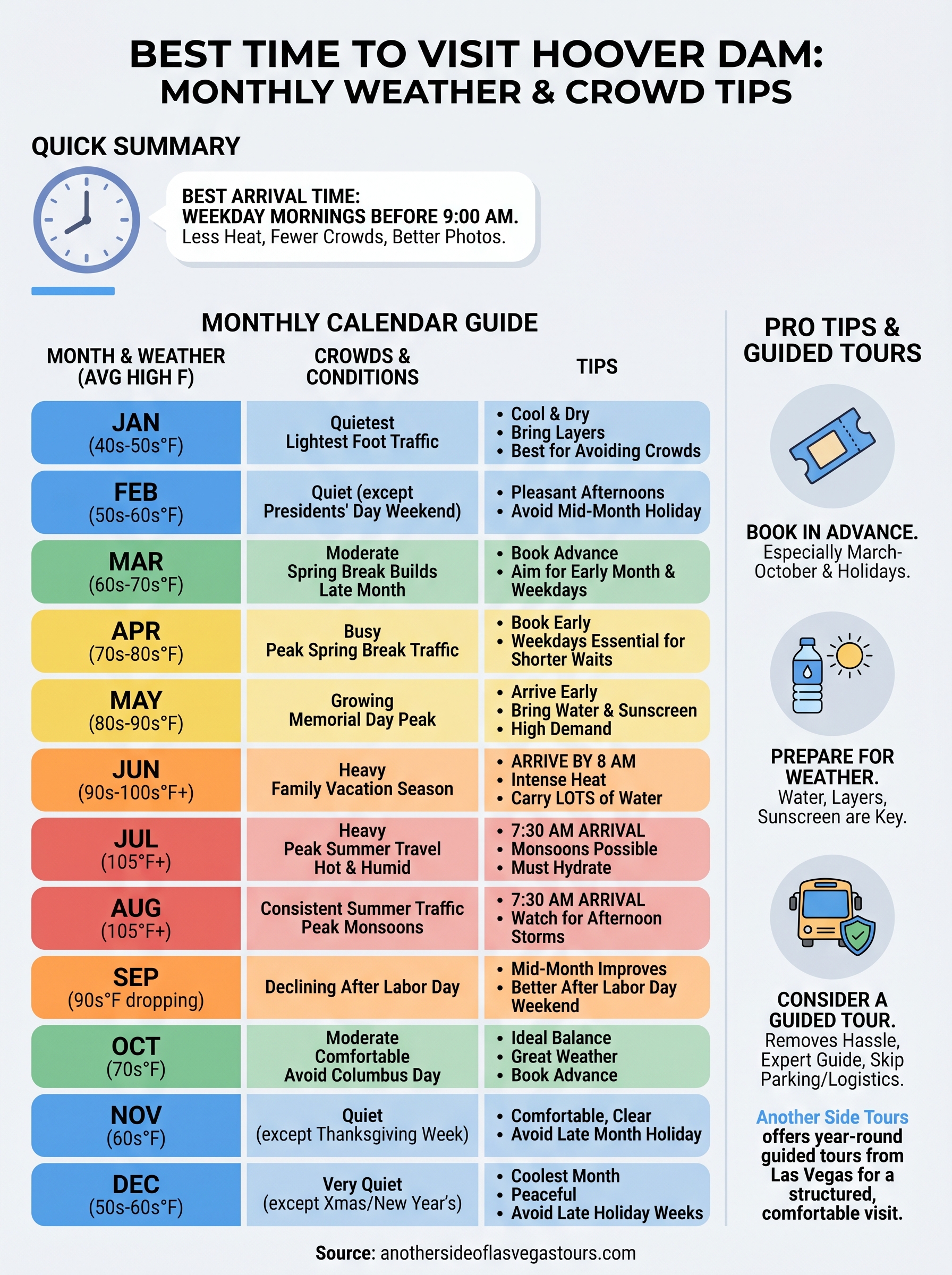
The best time to visit Hoover Dam comes down to two core factors: temperature and crowds. October through March gives you the most comfortable weather and the thinnest visitor numbers, while spring and early summer offer a balance of warmth and manageable conditions if you arrive early in the morning. July and August demand the most planning, but an early start and a full water bottle go a long way.
Regardless of the month you choose, weekday mornings before 9:00 AM consistently outperform any other arrival window at the dam. Booking in advance protects your spot during holidays and peak season, and going with a guided tour removes every logistical headache before your trip even starts. If you want a structured, expert-led visit with comfortable transportation from Las Vegas, take a look at our private Hoover Dam tours and reserve your spot today.