
Figuring out how to visit Antelope Canyon trips up a lot of Las Vegas visitors, and it’s not because the canyon is hard to reach. It’s because the booking system is confusing, tours sell out weeks ahead, and nobody explains the difference between Upper and Lower Canyon until you’re already standing in Page, Arizona wondering which ticket you bought.
This guide answers the questions that actually matter before you go: which canyon fits your photography goals and physical ability, how far ahead you need to book a guided tour, what entry fees and permit costs to expect, and how to time your visit around the light beams everyone posts about on Instagram. Antelope Canyon sits on Navajo Nation land, so every visit requires a licensed tour operator. There’s no walking in on your own, and knowing that upfront saves you from a wasted trip.
We’ll walk through trip logistics step by step, from choosing a tour slot to getting from Las Vegas to Page. If you’re already building a Southwest itinerary around Hoover Dam, Red Rock Canyon, or the Grand Canyon, this guide fits right into that bigger plan.
What to know before visiting Antelope Canyon
Antelope Canyon sits about 275 miles from Las Vegas, near Page, Arizona, on the border of the Navajo Nation. That distance matters because it shapes your whole trip: this isn’t a quick side excursion from the Strip, it’s a multi-day plan or a long day trip that eats up most of a full day of driving. Before you book anything, get comfortable with a few facts that change how you plan.
It’s tribal land, not a national park
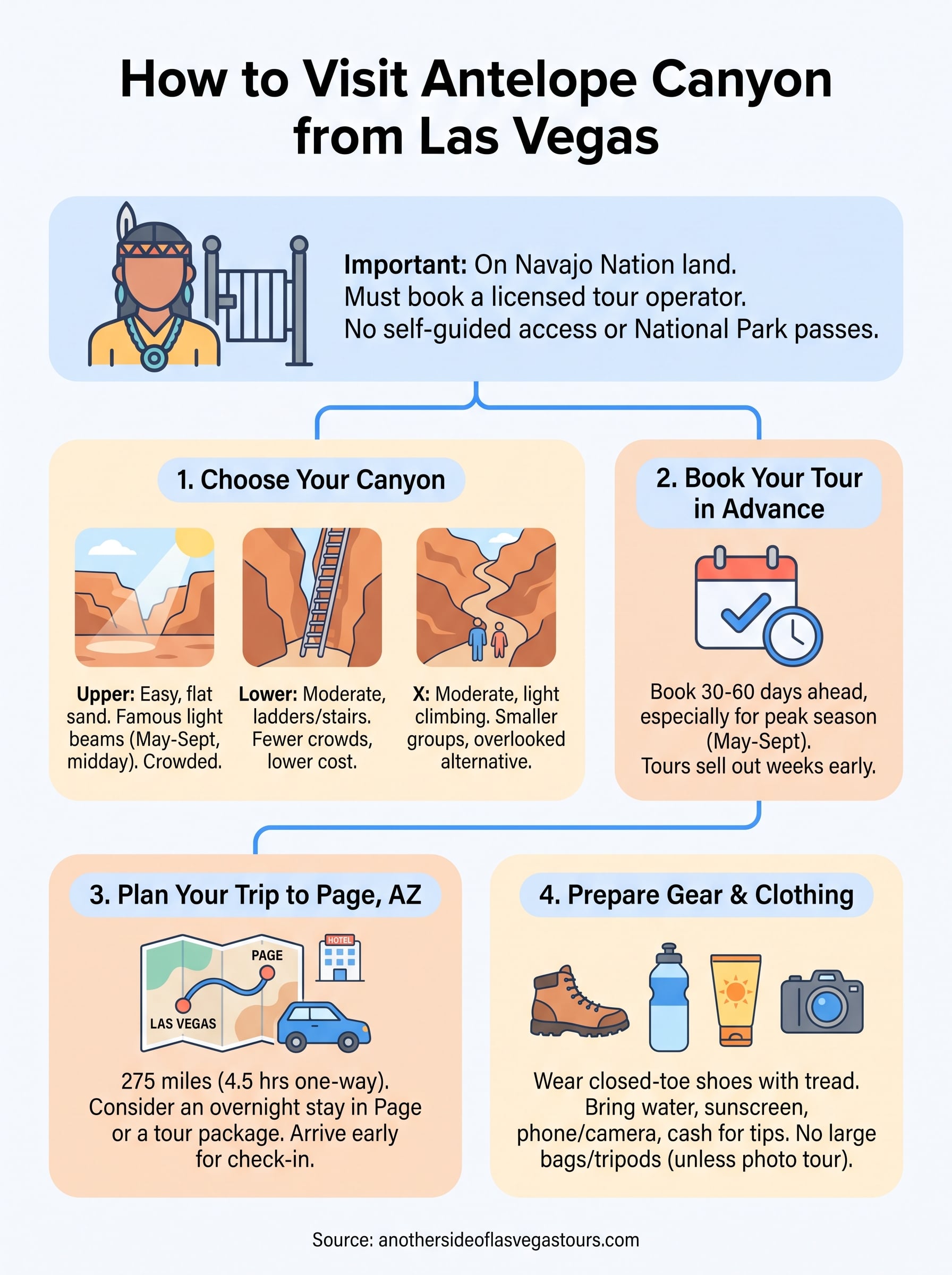
Understanding Navajo Nation land rules is the single most important thing to grasp before you book. The canyon isn’t managed by the National Park Service, so your usual national park pass or America the Beautiful card gets you nothing here. Every visitor enters through a licensed tour operator, walks the canyon with a Navajo guide, and pays a tribal entry fee built into the tour price. There’s no self-guided hiking, no showing up with your own permit, and no shortcuts around this rule.
You cannot visit Antelope Canyon without a Navajo-guided tour, no exceptions, no workarounds.
What you’ll actually pay
Pricing varies by canyon and tour length, but here’s what to expect heading into your booking:
| Item | Typical Cost |
|---|---|
| Standard guided tour (Upper or Lower) | $65-$120 per person |
| Photography tour (extended time, tripod allowed) | $150-$250 per person |
| Antelope Canyon X tour | $60-$100 per person |
| Children under 8 | Often free or discounted, confirm with operator |
Most tours run 60-90 minutes for standard visits and up to three hours for photography sessions. Prices climb during peak summer months and drop slightly in the off season.
When light beams actually happen
Seasonal timing determines whether you get those glowing light beam photos or a canyon that looks flat and shadowy. The beams show up when the sun sits high enough to shoot direct light down into the narrow slot, which happens roughly from late March through early October, peaking around midday from May through September. If a light beam photo is your whole reason for going, book a midday slot in Upper Canyon during those months. Lower Canyon rarely produces the same dramatic beams because of its narrower opening, though it still delivers striking color and texture.
Weather and closures you can’t control
Flash floods close the canyon without warning, sometimes with zero notice even on a clear day in Page, since storms miles away can send water rushing through the slot. Summer monsoon season, roughly July through September, carries the highest flood risk. Tour operators monitor conditions closely and will cancel or reschedule for safety, but that means your booked slot isn’t guaranteed if weather turns. Building a buffer day into your itinerary, especially if Antelope Canyon is the main reason for your Southwest trip, protects you from being stuck with no rebooking options.
Getting these basics straight before you start comparing tour operators saves you from booking the wrong canyon, showing up in the wrong season for photos, or assuming a national park pass will work. Now that you know the ground rules, the next step is deciding which canyon actually matches what you want out of the visit.
Step 1. Choose upper, lower, or Antelope Canyon X
Picking between Upper and Lower Antelope Canyon (plus a third option most visitors never hear about) shapes everything else about your trip, from what shoes you’ll need to how much you’ll pay. Each canyon delivers a different experience, and the wrong pick leaves photographers without their light beams or leaves someone with knee trouble stuck on a ladder they weren’t expecting.
Upper Canyon: the light beam classic
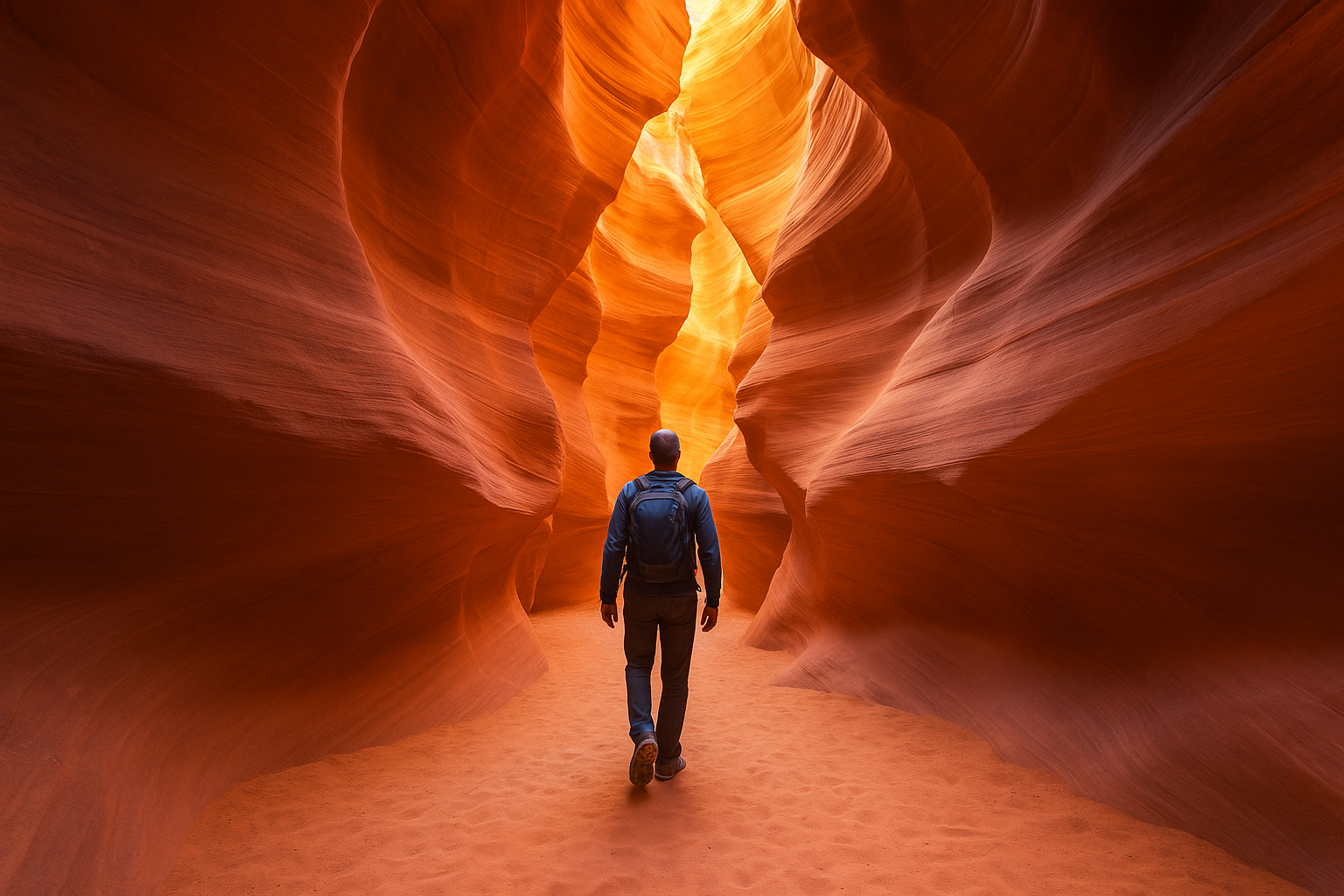
Upper Antelope Canyon is flat, wide at the entrance, and famous for the light beams that show up on every Instagram feed from Las Vegas. You walk on sand the whole way, no ladders, no stairs, which makes it the easier physical option for older visitors or anyone with mobility concerns. The tradeoff is crowding: tour groups move through in tight succession, and during peak summer months you’re often shuffled along quickly rather than lingering for the perfect shot.
Lower Canyon: fewer crowds, more climbing
Lower Antelope Canyon runs narrower and deeper, and you access it through a series of metal stairways and ladders bolted into the rock. It’s not difficult for anyone in reasonable shape, but it’s not stroller-friendly and it’s tough for visitors with knee or hip issues. What you get in exchange is a quieter, more atmospheric walk with dramatic light and color even without the midday beams, plus generally lower ticket prices than Upper Canyon.
If light beam photos are the goal, book Upper Canyon at midday between May and September; if you want a quieter walk and lower price, Lower Canyon wins.
Antelope Canyon X: the overlooked alternative
Antelope Canyon X sits a few miles from the other two and gets a fraction of the visitors, which means smaller groups and more time to actually look around instead of getting pushed forward. It’s operated by a separate Navajo family business, so tickets and tour times run independently from Upper and Lower. Expect a mix of sandy walking and light climbing, similar in difficulty to Lower Canyon but without the same crowd pressure.
| Canyon | Difficulty | Best For | Typical Price |
|---|---|---|---|
| Upper Canyon | Easy, flat sand | Light beam photos | $65-$120 |
| Lower Canyon | Moderate, ladders/stairs | Fewer crowds, lower cost | $65-$100 |
| Antelope Canyon X | Moderate, light climbing | Smaller groups | $60-$100 |
Match the canyon to your physical ability and photo priorities before you look at tour operators. Once you know which one you’re booking, the next step is locking in that reservation early enough to actually get a slot.
Step 2. Book your guided tour in advance
Reserving your slot early is the difference between getting the canyon and time you want or scrambling for leftovers. Antelope Canyon tours book up weeks in advance, especially for weekend dates and anything in the May through September light beam window. Waiting until you land in Las Vegas to sort this out almost always means settling for whatever’s left, if anything is left at all.
How far ahead to book
Generally, aim to reserve your guided tour 30 to 60 days before your trip if you’re traveling during peak season or want a specific time slot like midday for light beams. Off-season visits, roughly November through February, give you more flexibility, sometimes allowing bookings just a week or two out. Photography tours in Upper Canyon sell out fastest since operators cap group size to give photographers room to set up tripods.
Book your Antelope Canyon tour 30 to 60 days out during peak season, or you’ll be choosing from whatever time slots nobody else wanted.
What you’ll need when you book
Have a few details ready before you start the reservation process so you’re not scrambling mid-checkout:
- Preferred date and backup date, in case your first choice is full
- Time slot preference (midday for light beams, early morning or late afternoon for fewer crowds)
- Group size and ages, since children under a certain age may ride free or need a different ticket type
- Physical ability notes, especially for Lower Canyon or Antelope Canyon X, since ladders aren’t optional once you’re inside
- Payment method and a valid ID matching the name on the reservation, which guides check at the trailhead
Gathering this ahead of time speeds up the booking and cuts down on the back-and-forth that eats into your planning window.
Direct booking vs. bundled tour packages
You can book directly with the tribal-operated companies running Upper, Lower, or Antelope Canyon X, or you can go through a Las Vegas tour package that bundles transportation, other Southwest stops, and the canyon entry into one itinerary. Direct booking gives you more control over the exact time slot. Bundled packages save you the headache of arranging the 275-mile drive yourself, and they often pair Antelope Canyon with Horseshoe Bend or a Grand Canyon stop, which makes sense if you’re already treating this as a full day trip rather than a quick errand from the Strip.
Once your tour slot is locked in, the next piece of planning is figuring out how you’re actually getting to Page and where you’ll stay if your trip stretches past a single day.
Step 3. Plan your trip to Page, Arizona
Getting to Page from Las Vegas takes real planning, since it’s a 275-mile drive that runs about 4.5 hours one way, mostly through open desert on US-93 and US-89. Some travelers try to squeeze the whole thing into a single day, leaving Las Vegas before dawn and driving back after dark, but that’s a grind. Splitting the trip into two days, with a night in Page, gives you breathing room for canyon delays, food stops, and side trips to Horseshoe Bend, which sits just a few minutes from the canyon entrances.
Driving vs. joining a tour package
Renting a car and driving yourself gives you full control over your schedule and lets you stop wherever you want along the way. It also means you’re the one dealing with fatigue on a long desert highway, navigating unfamiliar roads, and coordinating gas stops in stretches where stations are sparse. A Las Vegas tour package that includes transportation removes that burden entirely, since a driver handles the route while you sleep, read, or watch the scenery change from Strip lights to red rock desert.
Driving yourself gives you flexibility, but a bundled tour package removes the fatigue of a 9-hour round trip on desert highways.
Where to stay if you’re staying overnight
Page is a small town built around tourism to Antelope Canyon, Lake Powell, and Horseshoe Bend, so lodging options are limited but functional. Booking early matters here too, especially during summer months when the town fills up fast.
| Lodging Type | Price Range | Notes |
|---|---|---|
| Budget motels | $80-$130/night | Basic, close to canyon tour meeting points |
| Mid-range hotels | $150-$250/night | Pools, breakfast included, chain brands |
| Vacation rentals | $150-$300/night | More space, good for families or groups |
Timing your day around the tour
Whichever way you get to Page, build your day around your tour reservation rather than the other way around. Most operators require you to check in 15 to 30 minutes before your slot, and being late can mean losing your spot entirely with no refund. Leave extra buffer time if you’re driving from Las Vegas the same day, since desert traffic, construction, or a wrong turn near Page can eat up the cushion you thought you had.
Once your route and lodging are settled, the last piece of planning is making sure you’re dressed and equipped for what the canyon actually demands once you’re inside.
Step 4. Prepare what to wear and bring
Getting your gear and clothing right matters more at Antelope Canyon than at most tourist stops, since sand gets everywhere and the desert sun doesn’t let up even inside the slot. What you pack changes depending on which canyon you booked, but a few basics apply no matter which tour you’re on.
What to wear
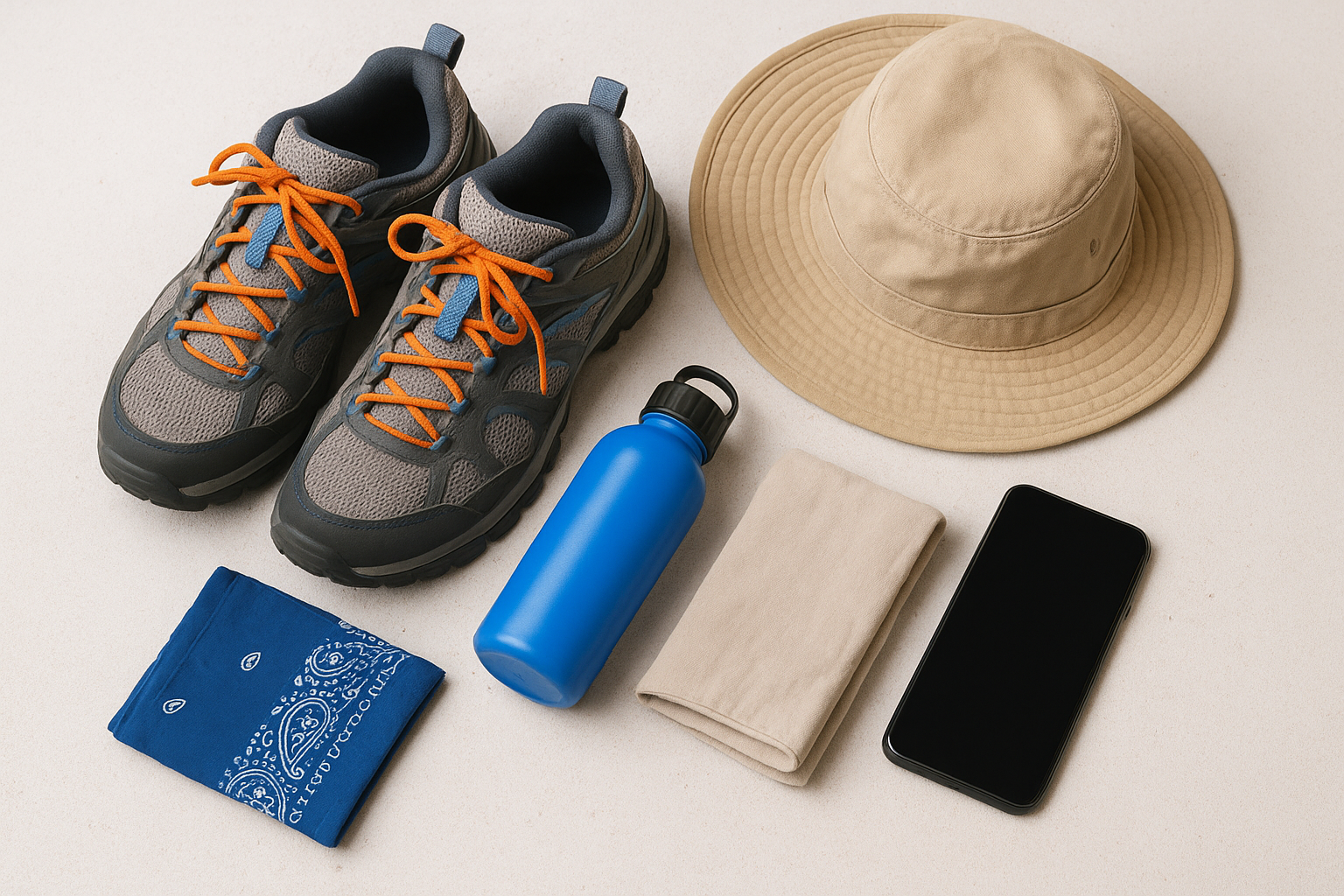
Closed-toe shoes with good tread are non-negotiable, especially for Lower Canyon or Antelope Canyon X, where you’re climbing metal stairs and ladders bolted into rock. Sandals slip on sand-covered metal, and flip-flops will get lost the first time you step wrong. Loose, breathable clothing works best since desert temperatures swing from cool mornings to hot afternoons, and you’ll want fabric that shakes sand off easily rather than trapping it.
Wear closed-toe shoes with real tread, sand and metal ladders don’t mix well with sandals.
What to bring
Pack light, since most operators restrict bags inside the canyon for safety and space reasons. Here’s what actually earns a spot in your pockets or small daypack:
- Water bottle, since Page sits at elevation in open desert and dehydration sneaks up fast
- Sunscreen and a hat for the walk between the parking area and canyon entrance
- Phone or camera with a full battery, since there’s no charging once you’re inside
- Small towel or bandana to wipe sand off hands and gear
- Cash for tips, since guides work hard for those photo stops and appreciate it
Camera and tripod rules
Standard tours generally limit you to phones and small cameras carried by hand, no tripods, no bags, no backpacks. If a light beam photo with a tripod is your goal, book a dedicated photography tour instead, since those allow tripods and give you extra time to set up shots that standard groups can’t stop for. Check your specific operator’s policy before you go, since rules shift between Upper, Lower, and Antelope Canyon X.
A few things to leave behind
Skip large backpacks, drones (banned tribe-wide), and anything you’d hate to lose in deep sand. Guides move groups steadily through narrow sections, so anything bulky just slows you down and risks getting scratched against sandstone walls. Traveling light through the canyon keeps you focused on the experience instead of managing gear, and it’s the final piece of prep before you actually step into the slot.
Getting the most from your visit
Antelope Canyon rewards travelers who plan ahead and punishes anyone who tries to wing it. Booking your slot early, picking the right canyon for your ability and photo goals, and giving yourself a buffer day against weather closures turns a potentially stressful drive into one of the best days of a Southwest trip. Once you’ve handled the canyon itself, the smartest move is folding it into a bigger Las Vegas itinerary rather than treating it as an isolated errand.
If you’re already building out stops like Hoover Dam, Valley of Fire, or Red Rock Canyon around your Page trip, a private guided experience takes the same planning headache off your plate that this guide just walked you through for Antelope Canyon. Skip the spreadsheet juggling and let a local expert handle the logistics with private tours built around what you actually want to see.