
Death Valley earns its name for a reason. Summer temperatures regularly hit 120 degrees, and every year visitors underestimate just how brutal this park can be. If you’re trying to figure out the best time to visit death valley, timing isn’t a minor detail. It’s the difference between a stunning desert adventure and a genuinely dangerous trip.
The short answer: late fall through early spring gives you the safest temperatures and the best light for photography, but that window also brings bigger crowds and higher hotel rates around Furnace Creek and Stovepipe Wells. Each season trades off comfort against solitude, and knowing those tradeoffs before you book makes all the difference.
This guide breaks down what to expect month by month, from the mild days of November through the scorching stretch of July and August. We’ll cover weather patterns, wildflower bloom timing, road conditions, and the crowd levels you’ll encounter at popular spots like Badwater Basin and Zabriskie Point. If you’re pairing Death Valley with a Las Vegas trip, which most travelers do given the short drive, this same seasonal logic applies to timing your visit right.
Why timing your Death Valley visit matters
Death Valley holds the record for the hottest air temperature ever recorded on Earth, 134 degrees Fahrenheit at Furnace Creek back in 1913. That’s not a marketing gimmick, it’s a physical reality that shapes every part of your trip planning. Choosing the wrong month doesn’t just mean a sweaty afternoon. It can mean a car that overheats on a remote road, a hike that turns into a heat emergency, or a visitor center that’s closed because rangers pulled staff off exposed trails for safety reasons. The National Park Service treats summer heat here as a life-safety issue, not an inconvenience, and that alone tells you how seriously you need to take your timing.
Safety is the biggest factor, not comfort
Understanding park temperatures matters more here than at almost any other national park in the country. Between June and August, daytime highs at low elevations routinely climb past 115 degrees, and ground temperatures on the valley floor can exceed 200 degrees. Several tourists die in Death Valley every year, often after their vehicle breaks down or they attempt a short hike without enough water. Search and rescue teams in the park specifically warn against midday hiking in summer, and popular trails like Golden Canyon or Mosaic Canyon become genuinely dangerous rather than just uncomfortable. You can verify current conditions and any heat advisories directly through the National Park Service’s Death Valley page before you go.
In Death Valley, the wrong month can turn a scenic drive into a medical emergency.
Crowds and prices swing hard by season
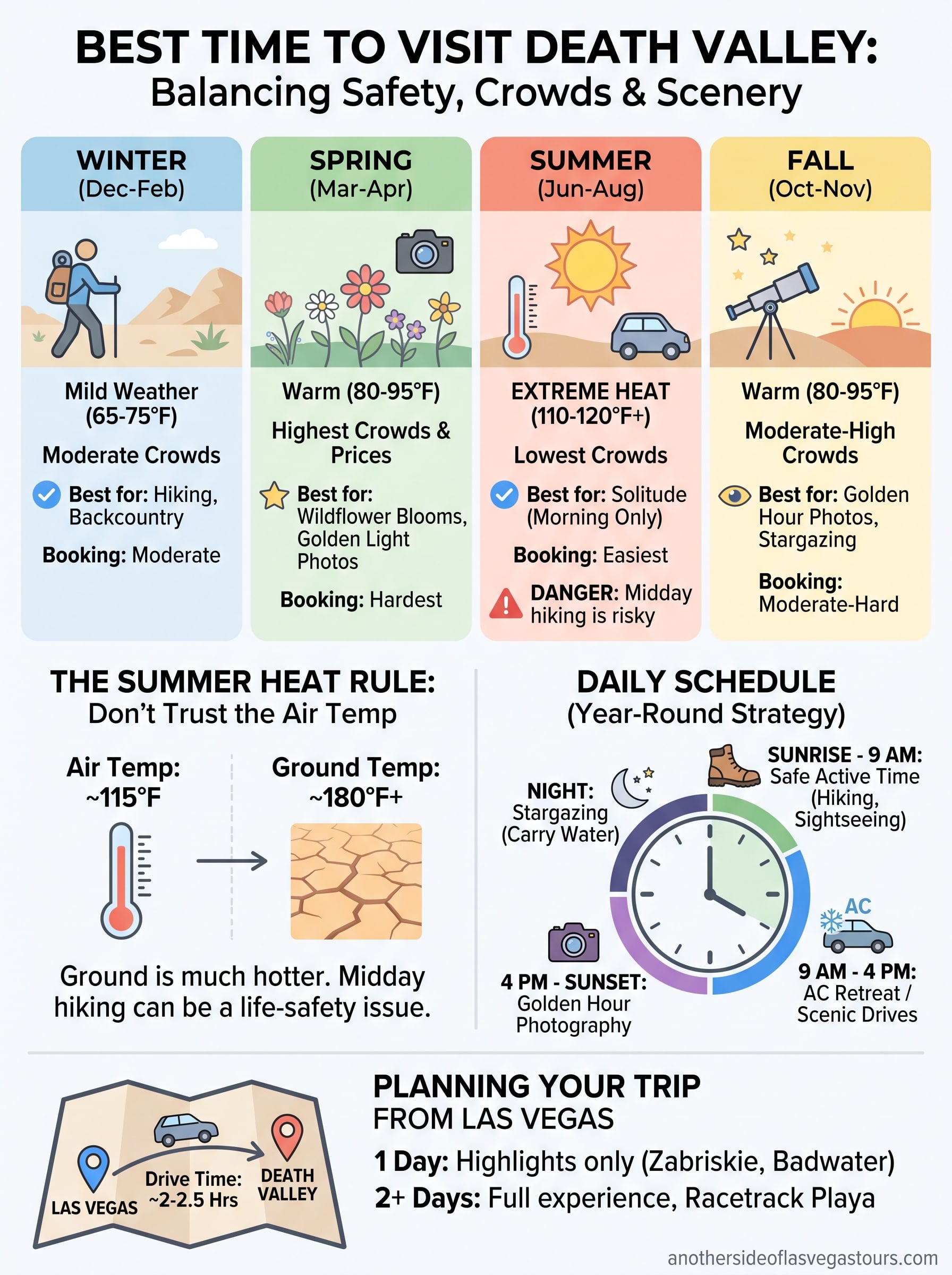
After safety, the next thing timing controls is how crowded and expensive your trip will be. The park’s mild season, roughly November through March, draws the vast majority of annual visitors, which means fuller parking lots at Zabriskie Point and Badwater Basin, and higher room rates at the handful of lodges inside and near the park. Summer, by contrast, sees a steep drop in visitation, so you’ll have iconic viewpoints nearly to yourself if you’re willing to brave the heat and travel smart, sticking to early mornings or air-conditioned driving loops. Here’s a quick snapshot of how the tradeoffs stack up:
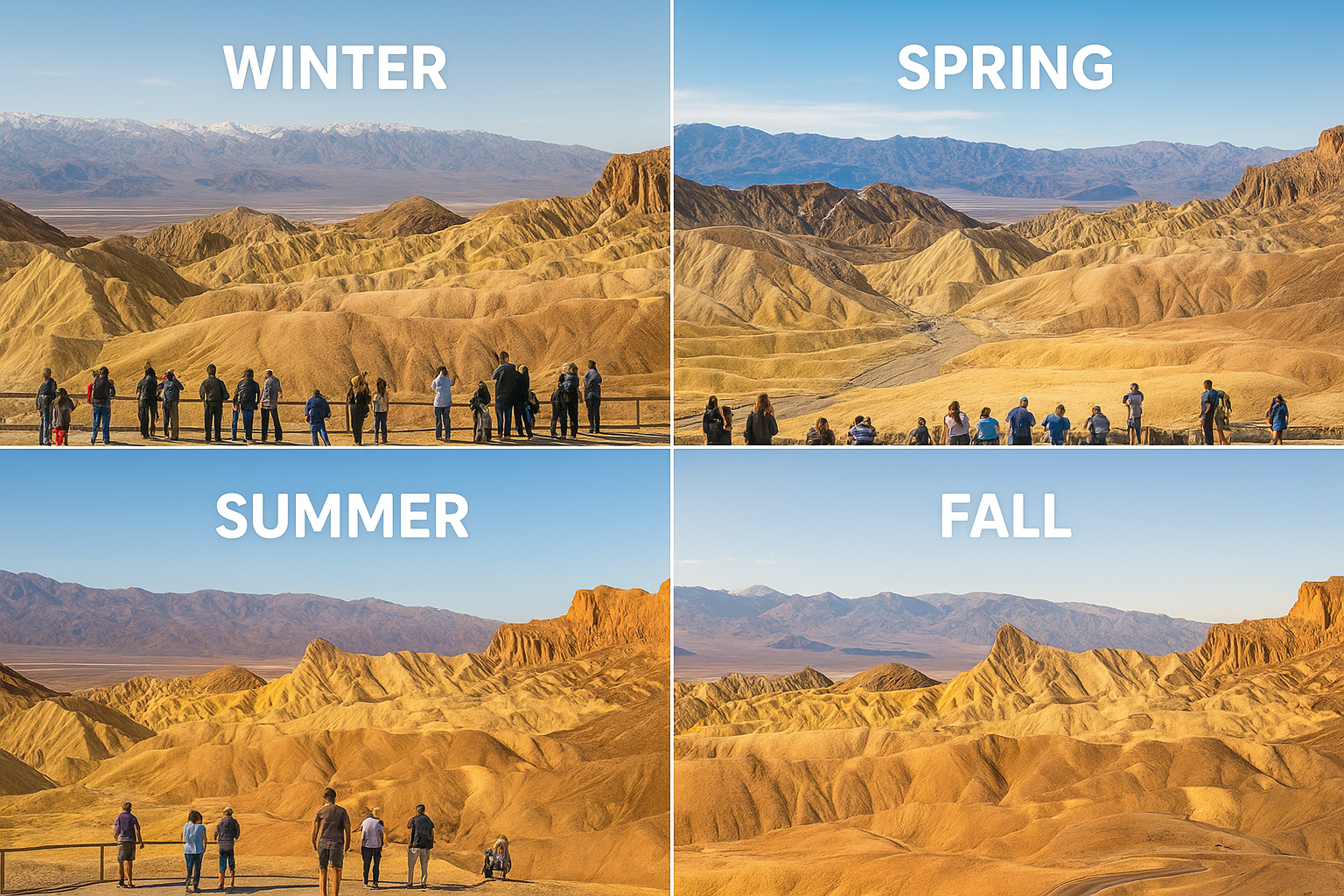
| Season | Visitor Volume | Typical Daytime Highs | Booking Difficulty |
|---|---|---|---|
| Winter (Dec-Feb) | Moderate | 65-75°F | Moderate |
| Spring (Mar-Apr) | Highest | 80-95°F | Hardest |
| Summer (Jun-Aug) | Lowest | 110-120°F | Easiest |
| Fall (Oct-Nov) | Moderate-High | 80-95°F | Moderate-Hard |
Seasonal changes affect what you can actually do
Beyond heat and crowds, timing determines which experiences are even available to you. Wildflower blooms, when they happen, are tied tightly to winter rainfall and typically peak in a narrow window between February and April, sometimes not at all in dry years. Road conditions shift too. Some backcountry routes, like those leading to Racetrack Playa, become more accessible in cooler months when flash flood risk drops, while certain trails and ranger-led programs simply don’t run during peak summer heat because it’s not safe for staff or visitors. Sunrise and sunset also shift meaningfully across the year, which changes your golden-hour photography window at spots like Zabriskie Point or Dante’s View.
Your travel style should guide the calendar
Visiting Death Valley isn’t a one-size-fits-all decision, and the right month depends heavily on what you’re prioritizing. A photographer chasing dramatic light and wants fewer tourists in the frame will make different choices than a family trying to avoid both extreme heat and holiday crowds. Weighing these factors against your own trip goals, rather than just picking a generically "good" month, is what actually gets you the experience you’re after. The next section breaks down exactly how to match your priorities, whether that’s mild weather, low crowds, wildflowers, or budget, to the calendar month that delivers it.
How to choose the best time for your trip
Picking a month for Death Valley comes down to ranking your own priorities, because no single window checks every box. Someone chasing mild hiking weather and wildflowers will land on a different month than someone who wants rock-bottom hotel rates and doesn’t mind heat. Start by asking yourself what matters most on this trip: comfortable temperatures, low crowds, budget, or photography conditions. Once you know that, the calendar decision gets a lot simpler.
If mild weather and outdoor activity matter most
Go with November through February if you want to hike, bike, or explore the backcountry without heat risk. Daytime highs in this stretch typically sit in the 60s and 70s, cool enough for full-day excursions to Golden Canyon, Mosaic Canyon, or even a longer trek toward Telescope Peak. Nights get cold, sometimes dropping near freezing at higher elevations like Dante’s View, so pack layers even though you’re standing in a desert.
If you’re chasing wildflowers or dramatic photography light
February through April gives you the best odds at catching a wildflower bloom, assuming winter rainfall cooperated, plus warmer daytime temperatures than deep winter. This window also lines up with longer daylight hours, giving photographers more flexibility around sunrise and sunset at Zabriskie Point and Dante’s View. Just know you’re trading solitude for it, since spring break and Easter travel push visitation to its yearly peak.
If budget and solitude matter more than comfort
Summer is the clear answer if saving money and avoiding crowds outweighs your tolerance for heat. Hotel rates near Furnace Creek and Stovepipe Wells drop noticeably from June through August, and you’ll often have entire overlooks to yourself in the early morning hours. This only works if you commit to a strict schedule: sightsee before 9 a.m., retreat to air conditioning midday, and never plan a hike that puts you far from your vehicle in the afternoon heat.
If you have to pick just one factor to plan around, make it safety, not scenery.
A quick decision checklist
Use this list to match your priority to a season fast:
- Mild hiking weather: November to February
- Best wildflower odds: late February to April
- Lowest crowds and prices: June to August (with strict heat precautions)
- Balance of comfort and manageable crowds: October or late April
- Best golden-hour photography light: March, April, October, November
Factor in your Las Vegas travel window
Because Death Valley sits roughly two hours from Las Vegas, most visitors tack it onto a Vegas trip rather than booking a standalone visit. That means your Death Valley timing often gets decided by when you’re already flying into Nevada for other reasons. If your Vegas dates land in July or August, plan a sunrise-only excursion or shift the desert leg to early morning rather than skipping it entirely, since a well-timed few hours still delivers the views without the risk.
What each season is really like in Death Valley
Numbers on a chart only tell part of the story. Standing at Badwater Basin in January feels nothing like standing there in July, even though both are technically valid times to visit. Walking through what each season actually delivers, sight, sound, and feel, helps you picture your trip instead of just reading a temperature range.
Winter: crisp mornings and quiet grandeur
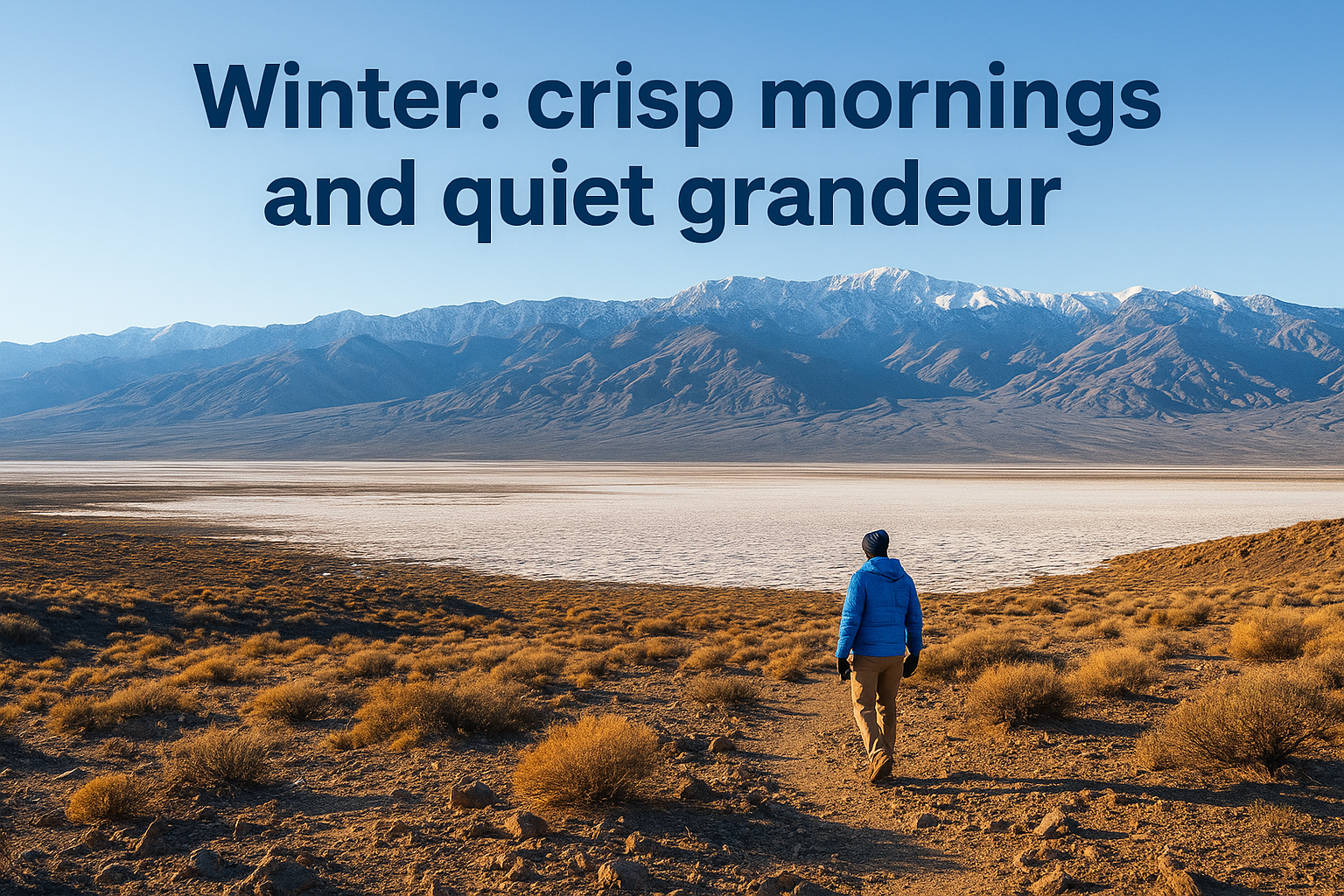
Winter in Death Valley runs cool and clear, with daytime highs in the 60s and 70s and nights that can dip close to freezing at elevation. Mornings often start with a light chill that burns off fast once the sun clears the Panamint Range, leaving you with comfortable hiking conditions most of the day. Crowds thin out compared to spring, though holiday weeks around Christmas and New Year’s bring a noticeable bump at Furnace Creek. This is the season for long drives to Racetrack Playa and full-day exploration without watching the clock for heat.
Spring: peak beauty, peak crowds
Spring is when Death Valley shows off. Warmer days combine with the chance of a wildflower bloom, and the desert floor can turn gold and purple in a good rain year, though it’s never guaranteed. Visitation spikes hard in March and April, so expect full parking lots at Zabriskie Point and Dante’s View, along with booked-out lodging near the park entrances. Golden light stretches longer into the evening too, which is a real perk if photography drives your itinerary.
Spring gives you the park’s best face, but you’ll share it with everyone else who noticed the same thing.
Summer: brutal heat, empty overlooks
Heat defines summer here in a way that shapes literally every decision you make. Daytime highs regularly exceed 110 degrees, sometimes topping 120, and the valley floor radiates heat back up at you well after sunset. Fewer visitors show up during these months, so you’ll often find yourself alone at spots that were packed in April. Only attempt this season if you’re strict about early starts, constant hydration, and staying near air conditioning through the afternoon.
Fall: the underrated middle ground
Fall quietly offers the best balance of the four seasons. Temperatures cool off noticeably by October, landing in the comfortable 80s and low 90s, while crowds haven’t yet reached spring-break levels. Nighttime skies turn especially clear this time of year, making fall a strong pick if stargazing at Harmony Borax Works or Ubehebe Crater is on your list. Visitors who want mild weather without spring’s congestion consistently rate October and early November among their favorite windows to go.
Death Valley weather and temperatures by month
Numbers make the seasonal differences concrete in a way that words like "hot" or "mild" can’t. Looking at average monthly temperatures side by side shows you exactly how narrow the comfortable window really is, and how fast things swing once you leave it. Below is a breakdown pulled from long-term averages recorded at Furnace Creek, the park’s lowest and hottest location, so mountain areas like Dante’s View or Wildrose will run noticeably cooler.
Month-by-month averages at Furnace Creek
| Month | Avg High (°F) | Avg Low (°F) | Notes |
|---|---|---|---|
| January | 67 | 40 | Cool, clear, comfortable hiking |
| February | 73 | 46 | Wildflower season begins |
| March | 82 | 55 | Peak crowds start |
| April | 90 | 62 | Warm, still hikeable early |
| May | 100 | 71 | Heat rising fast |
| June | 110 | 80 | Dangerous by midday |
| July | 116 | 88 | Hottest month, extreme risk |
| August | 114 | 86 | Nearly as brutal as July |
| September | 106 | 76 | Still risky, cooling begins |
| October | 92 | 63 | Comfortable again |
| November | 77 | 50 | Mild and quiet |
| December | 65 | 40 | Cold nights, calm days |
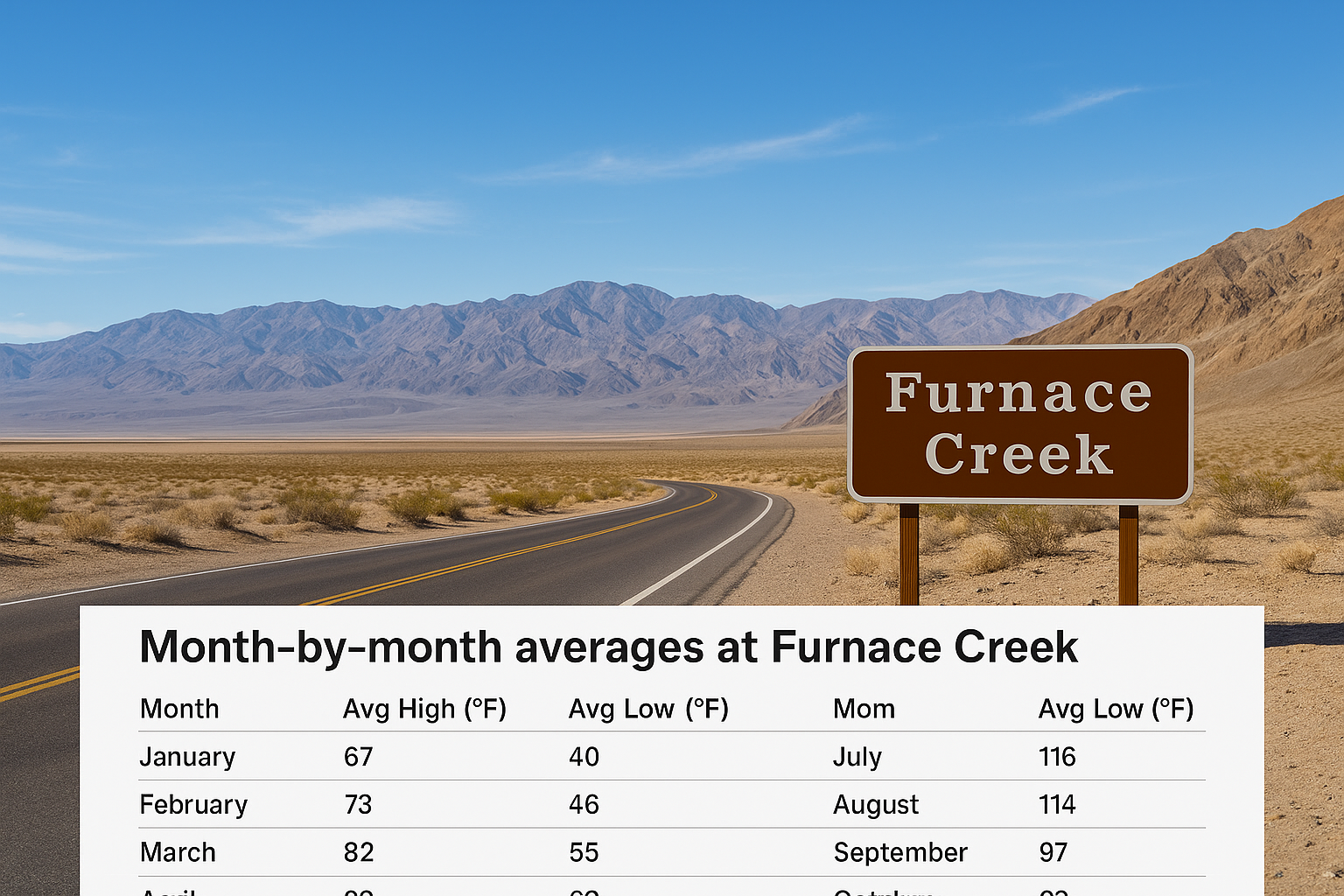
Source: National Park Service climate data for Death Valley
What the numbers actually mean for planning
Once you see the full table, the pattern jumps out immediately: only about six months, November through April, keep daytime highs under 95 degrees. Everything else pushes into territory where a car breakdown or a delayed hike stops being an inconvenience and starts being a real emergency. Ground temperature adds another layer most travelers miss, since the desert floor routinely runs 30 to 40 degrees hotter than the air temperature reported in forecasts. That gap explains why rangers close certain trails in summer even when the air temperature alone might look survivable on paper.
A forecast of 115 degrees in the air can mean pavement hot enough to burn skin on contact.
Covering doesn’t stop at daytime highs, either. Overnight lows matter just as much for trip planning, especially if you’re camping or staying somewhere without reliable air conditioning. December and January nights can dip into the 30s, cold enough to catch underprepared visitors off guard in a place they associate with heat. Meanwhile, summer nights rarely drop below 80 degrees, which means there’s no real relief once the sun goes down, and even a nighttime stargazing session requires the same water and heat precautions you’d use at noon.
Why summer is the worst time to visit
Summer isn’t just uncomfortable in Death Valley, it’s the season the park itself warns you against. From June through August, the combination of extreme heat, minimal shade, and vast distances between services turns routine activities into genuine hazards. If you’re weighing whether summer travel fits your Death Valley plans, the honest answer is that it rarely does unless you’re prepared to build your entire day around avoiding the sun.
The math behind the danger
Numbers explain why rangers take this season so seriously. Daytime highs regularly clear 115 degrees, and the valley floor itself can hit temperatures 30 to 40 degrees hotter than the air reading on your phone. That means asphalt and rock surfaces easily reach 180 degrees or more, hot enough to blister skin in seconds. Air conditioning failure in a parked car isn’t a minor annoyance here, it’s a survival situation, and vehicle breakdowns account for a meaningful share of the emergency calls rangers respond to each summer.
A broken-down car in July isn’t an inconvenience in Death Valley, it’s an emergency.
Real risks beyond discomfort
Fatalities happen almost every summer, often tied to underestimating water needs or attempting a hike during midday hours. Popular routes like Golden Canyon or Mosaic Canyon, easy and scenic in winter, become genuinely risky when there’s no shade and temperatures stay above 110 well past noon. Even short walks from the parking lot to an overlook can trigger heat exhaustion in visitors who don’t carry enough water or underestimate how fast dehydration sets in. The National Park Service publishes current heat advisories and safety guidance on its Death Valley conditions page, and checking it before you drive in is worth the two minutes it takes.
If you absolutely must visit in summer
Sometimes a Vegas itinerary only leaves room for a summer stop, and that’s manageable if you follow strict rules rather than treating it like any other season. Use this checklist before you commit to a summer visit:
- Carry at least one gallon of water per person, more if hiking
- Finish any walking or sightseeing before 9 a.m.
- Never venture more than a short walk from your air-conditioned vehicle
- Fill your gas tank fully before entering the park, services are sparse
- Tell someone your route and expected return time
- Skip narrow canyon hikes entirely, shade is nonexistent and heat traps easily
Planning around these limits doesn’t eliminate summer’s risk, but it shrinks it to a level most healthy adults can manage for a short visit. Still, if your schedule has any flexibility at all, shifting your trip even a few weeks toward October or April buys you dramatically safer conditions for the same views.
The best time of day to explore the park
Timing your day matters almost as much as timing your trip, especially outside the mild winter months. Death Valley’s heat builds fast once the sun climbs, so the hours you choose to be outside can make the same month feel completely different depending on when you show up at the trailhead. Building your daily schedule around the sun rather than your own convenience is one of the simplest ways to stay safe and still see everything on your list.
Morning: your safest window year-round
Sunrise through mid-morning is the best stretch to explore no matter what season you’re visiting. Light hits Zabriskie Point and the Mesquite Flat Sand Dunes at a low angle that makes the landscape look genuinely dramatic, and temperatures haven’t climbed into risky territory yet. Hiking Golden Canyon or Mosaic Canyon before 9 a.m. lets you finish before the heat sets in, even in shoulder-season months like April or October. Rangers consistently point to this window as the safest time for any physical activity in the park.
Whatever season you visit, do your hiking before 9 a.m. and thank yourself later.
Midday: when to retreat indoors
Between roughly 11 a.m. and 4 p.m., your best move is getting off your feet and into air conditioning, particularly from May through September. Furnace Creek Visitor Center works well for this, offering exhibits and a cool break without losing sightseeing time entirely. Scenic drives with the AC running, like the loop to Artist’s Palette or Dante’s View, let you keep covering ground without exposing yourself to peak heat. Skipping this retreat is exactly how visitors end up needing rescue, so treat it as non-negotiable rather than optional.
Golden hour: the payoff for planning around light
Evening light rewards patience more than almost any other time of day here. As the sun drops toward the Panamint Range, Zabriskie Point and Dante’s View turn shades of gold and rust that flat midday light simply can’t produce. Photographers plan entire trips around this window, and it doubles as a second safe activity slot once the day’s heat starts easing. Checking sunset times through the National Park Service’s Death Valley page before you head out helps you arrive with enough daylight left to set up.
Nighttime: stargazing without the risk
Death Valley’s remote location and lack of light pollution make it one of the best stargazing spots in the country, and cooler months turn a night walk into a genuine highlight. Summer nights, though, rarely drop below 80 degrees, so bring water and a flashlight even after dark. A quick daily rhythm to keep in mind:
- Sunrise to 9 a.m.: hiking and active sightseeing
- 9 a.m. to 4 p.m.: scenic drives, visitor centers, air conditioning
- 4 p.m. to sunset: golden-hour photography
- After dark: stargazing, with water on hand regardless of season
How many days to plan and getting there from Las Vegas
Most visitors treat Death Valley as a day trip from Las Vegas, but rushing it shortchanges what the park actually offers. The drive time from Las Vegas runs about two to two and a half hours each way depending on your route, which means a single day leaves you with maybe five or six real hours inside the park once you subtract driving. If you want to see Badwater Basin, Zabriskie Point, and Artist’s Palette without sprinting between them, plan on at least one overnight stay, either at Furnace Creek or back in Pahrump on the return leg.
One day versus multiple days
A single day works fine if your goal is hitting the greatest hits: Zabriskie Point at sunrise, Badwater Basin midday, and Artist’s Palette on the way out. Two days opens up Racetrack Playa, Ubehebe Crater, and a proper sunset session at Dante’s View without feeling rushed. Three days lets you add Telescope Peak or a slower pace through the backcountry roads that a rental sedan usually can’t handle in a single afternoon anyway.
Give Death Valley at least one overnight if you want more than a highlight reel.
The drive from Las Vegas
Two main routes get you there, and picking the right one depends on which side of the park you want to enter first.
| Route | Distance | Drive Time | Best For |
|---|---|---|---|
| Via Pahrump (NV-160 to CA-190) | ~120 miles | ~2 hours | Entering near Furnace Creek |
| Via Beatty (US-95 to NV-374) | ~130 miles | ~2.5 hours | Entering near Scotty’s Castle area |
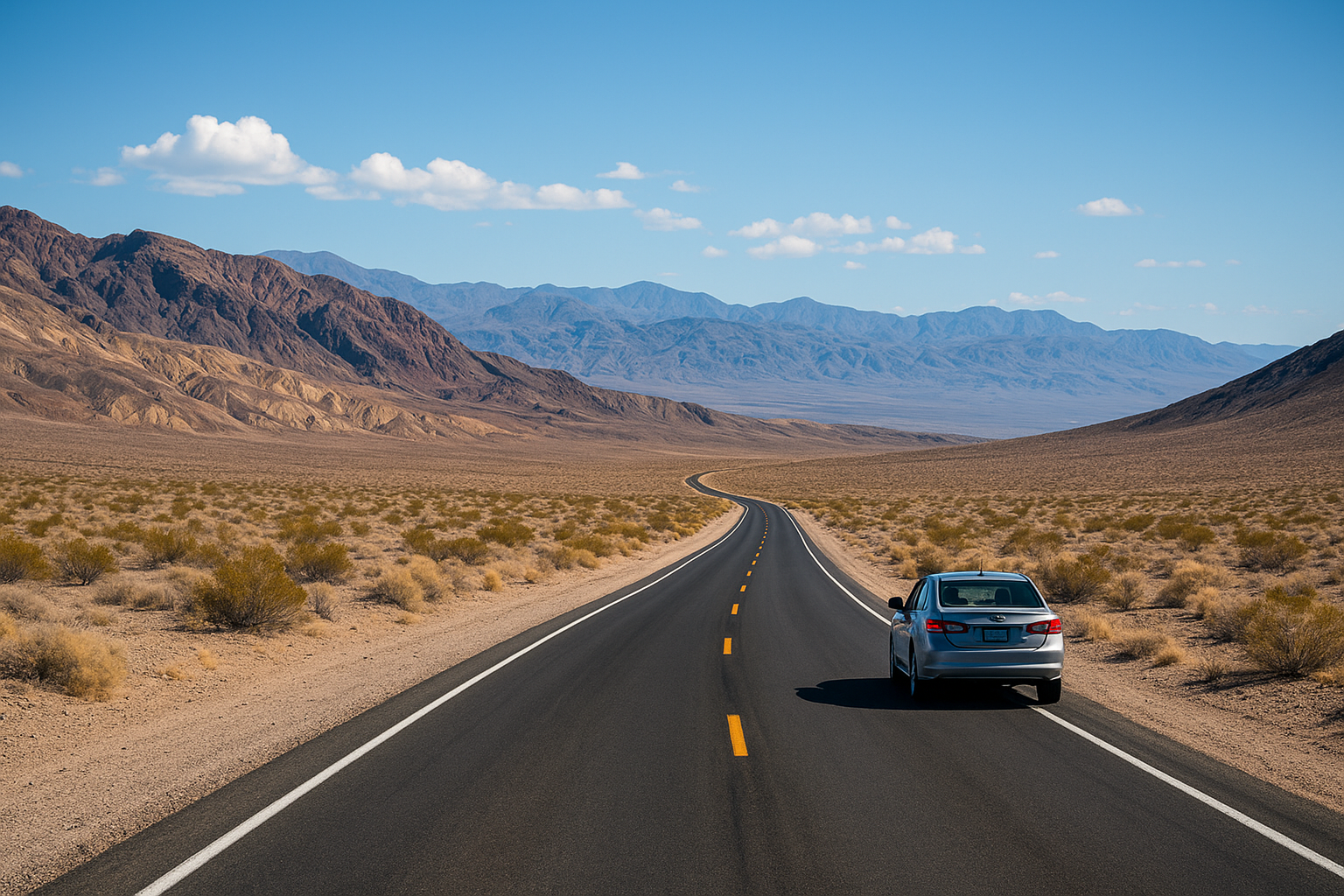
Both routes are paved the whole way and manageable in a standard rental car, though gas stations thin out fast once you leave Pahrump or Beatty. Fill your tank before entering the park either way, since prices inside Death Valley run noticeably higher and stations are far apart.
Timing your departure from Vegas
Leaving Las Vegas before sunrise puts you at Zabriskie Point for that first light without wasting your morning on the road, which matters most from May through September when you want your outdoor time finished before the heat climbs. In cooler months, a slightly later start still leaves plenty of daylight for a full loop through the park’s main overlooks. Checking current road conditions through the National Park Service’s Death Valley alerts page before you leave is worth doing year-round, since flash flooding or construction can close sections of CA-190 with little warning.
A simple planning checklist
- One day: hit Zabriskie Point, Badwater Basin, Artist’s Palette
- Two days: add Racetrack Playa, Ubehebe Crater, Dante’s View sunset
- Three-plus days: include Telescope Peak and slower backcountry routes
- Always fill your gas tank in Pahrump or Beatty before entering the park
Finding your perfect Death Valley window
The best time to visit Death Valley comes down to what you’re willing to trade. Fall and winter give you comfortable temperatures and manageable crowds, spring hands you wildflowers and photography light at the cost of packed parking lots, and summer offers empty overlooks if you’re strict about heat safety. None of these choices is wrong. What matters is picking the tradeoff that fits your priorities, then building your schedule around morning activity and midday shade regardless of which month you land on.
If Death Valley is part of a bigger Las Vegas trip, which it is for most visitors, pair your desert timing with a well-planned itinerary rather than squeezing it in as an afterthought. A guide who knows the roads, the light, and the heat can turn a rushed day trip into the kind of outing you actually remember. Check out private tours to build a Death Valley excursion around your exact travel dates.