
Valley of Fire State Park sits about an hour northeast of the Las Vegas Strip, and it looks like nothing else in Nevada. Red sandstone formations twisted by 150 million years of geological forces, ancient petroglyphs carved by early inhabitants, and desert vistas that stretch to the horizon, there’s a reason it’s Nevada’s oldest and most visited state park. But knowing what to see at Valley of Fire can be the difference between a quick photo stop and a trip you actually remember. With nine standout stops spread across 40,000 acres, a little planning goes a long way.
At Another Side Tours, we’ve been guiding visitors through Las Vegas and its surrounding natural attractions since 2007, and Valley of Fire is one of the places our guests consistently call a highlight. Our expert-led tours give you the context and stories behind what you’re seeing, so the park’s formations and history come to life rather than blending into a blur of red rock. Whether you visit on your own or join one of our guided experiences, this list will help you hit the spots that matter most.
Here are nine must-see stops at Valley of Fire State Park, organized to help you make the most of your time.
1. Book a Guided Valley of Fire Day Trip From Las Vegas
Before getting into the individual stops, it’s worth pointing out that the single best way to experience the park is with a knowledgeable guide. Valley of Fire covers 40,000 acres of terrain, and without context, even the most dramatic formations can feel like a backdrop rather than a story. A guided tour from Las Vegas solves the logistics, the navigation, and the interpretation all at once.
Why a Guide Helps in Valley of Fire
The park has no shortage of signs and trail markers, but signs can’t tell you why the rock turned red, which angle to photograph Elephant Rock from, or why the petroglyphs at Atlatl Rock meant what they meant to the people who made them. A local expert with real knowledge of the geology, history, and culture of the Mojave Desert fills those gaps in real time. You spend less time guessing and more time actually absorbing what you’re looking at.
A great guide doesn’t just point things out, they change how you see everything after.
What a Well-Planned Tour Should Include
When you’re evaluating a guided day trip, look for a tour that covers the key formation areas alongside the petroglyph sites, not just one or the other. The best itineraries balance driving scenic routes with time on foot at specific stops. You should also expect comfortable, climate-controlled transportation, since summer temperatures in the park regularly push past 110°F. Entrance fees, water, and a clear start-to-finish schedule are also markers of a tour operator who takes the experience seriously.
Another Side Tours runs a structured Valley of Fire day trip from Las Vegas that hits the park’s standout landmarks with an experienced local guide. The tour is designed for visitors who want more than a self-drive pass-through and handles all the logistics so you can focus on the experience itself.
Who This Option Fits Best
If you’re visiting Las Vegas for a few days and want to spend one of them outside the city without the stress of planning every detail, a guided tour is the right call. It works especially well for first-time visitors, families, and travelers who don’t have a rental car. Solo travelers and couples looking for a deeper, more curated experience also consistently rate guided tours higher than going it alone when it comes to places like this.
2. Elephant Rock
Elephant Rock sits just inside the eastern entrance of Valley of Fire, making it one of the easiest formations to reach in the entire park. The natural sandstone arch resembles a massive elephant in profile, complete with a trunk that curves toward the ground, and it consistently ranks as one of the top answers when visitors ask what to see at Valley of Fire for the first time.
What Makes It a Must-See
The formation stands roughly 6 to 7 feet tall and required no hiking trail to access, which means almost any visitor can see it up close. What sets it apart is how complete the resemblance is. The shape reads clearly from multiple angles, and the surrounding red and orange sandstone gives it a dramatic backdrop that photographs far better in person than it looks on a map.
The simplicity of the stop is exactly what makes it memorable. You see it, and you immediately get it.
Best Viewpoints and Photo Angles
Position yourself slightly to the north and back about 20 feet to capture the full elephant silhouette against the sky. Morning light hits the eastern face well, which brings out the deeper red tones in the rock. If you visit later in the day, the low afternoon sun creates long shadows that add texture and depth to your shots.
How Much Time to Budget
You can comfortably see Elephant Rock in 10 to 15 minutes. The parking area is right off the road, the walk is short, and the formation is visible immediately. Budget a bit more time if you plan to photograph it thoroughly, but this stop works well as a quick first impression of the park before moving deeper into the formations.
3. Beehives Rock Formations
The Beehives are a cluster of rounded sandstone mounds located near the west entrance of Valley of Fire, and they reward visitors who pause and look closely. The formations get their name from the way erosion has sculpted the rock into smooth, dome-like shapes that resemble a row of old-fashioned beehives. They’re quieter than some of the park’s more famous landmarks, which makes them worth adding to your list of what to see at Valley of Fire.
What You’ll See and Why It’s Unique
These formations stand out because the weathering pattern here differs from the angular, jagged shapes you’ll find elsewhere in the park. Wind and water have carved the rock into soft, curved surfaces with a honey-colored warmth that contrasts against the deeper reds nearby. Layers of cross-bedded sandstone are visible on the faces of each mound, giving you a clear visual record of ancient sand dunes that hardened into rock over millions of years.
Few formations in the park show desert geology as clearly and accessibly as the Beehives do.
Where to Park and How to Walk It
A pullout sits directly off the main park road, less than a mile past the west entrance. You can park here and walk a short, informal path around the base of the formations in under ten minutes. No maintained trail is required, and the terrain stays mostly flat, making this stop accessible for most visitors including those with limited mobility.
Best Time of Day for Photos
Early morning gives you the warmest, most saturated tones on the Beehives because the low eastern light rakes across the curved surfaces and pulls out the layering in the rock. Late afternoon works as a solid second option if your schedule doesn’t allow an early start, though midday sun flattens the texture and washes out the color.
4. Atlatl Rock and Mouse’s Tank Petroglyphs
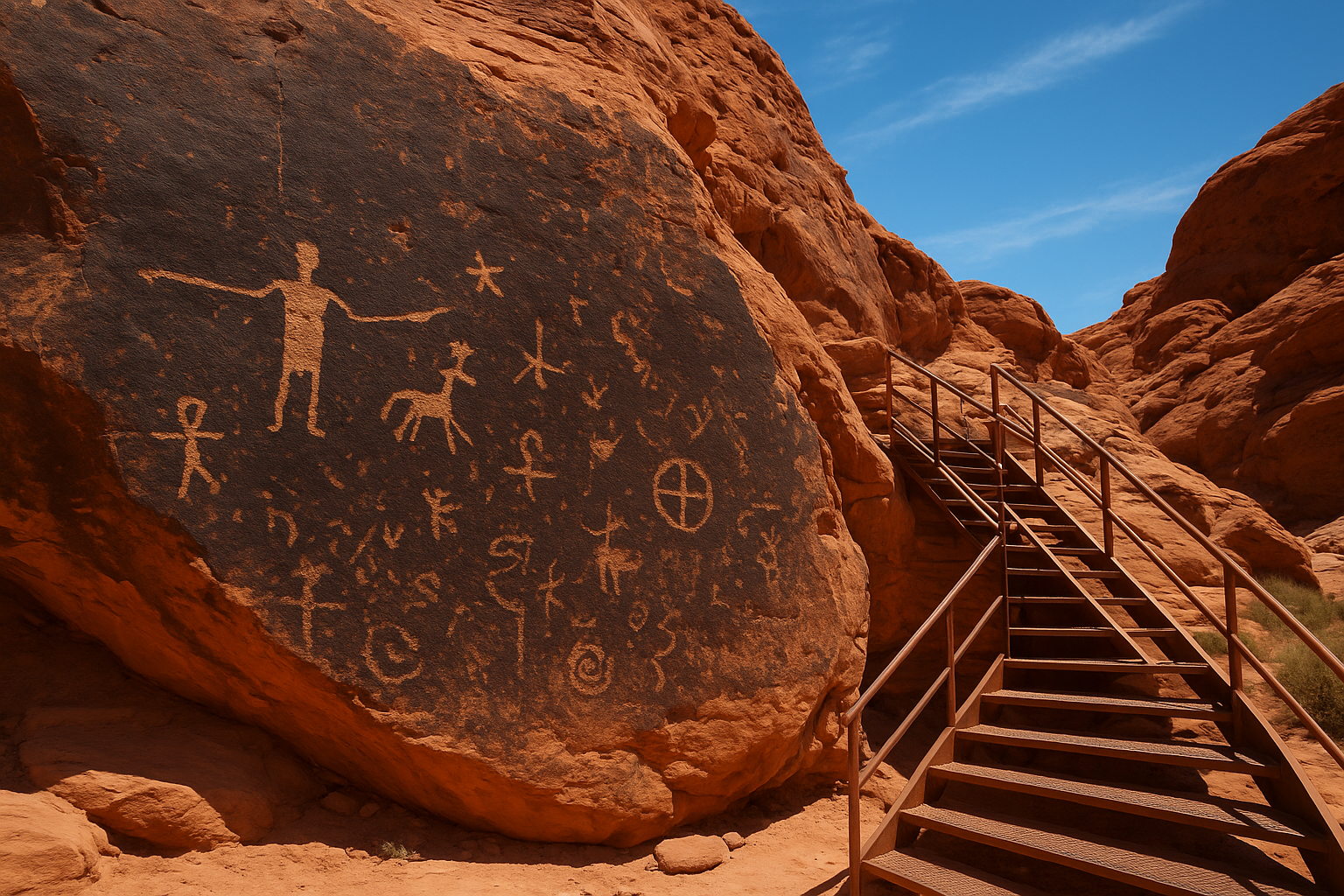
These two petroglyph sites rank among the most culturally significant places on any what to see at Valley of Fire list. Both locations preserve ancient images carved into the dark desert varnish coating the sandstone, left behind by Ancestral Puebloan people who passed through this region as far back as 3,000 years ago.
What You’ll See at Each Petroglyph Site
Atlatl Rock features a steep metal staircase that climbs directly to a large panel of carvings, including depictions of the atlatl, a prehistoric spear-throwing device the site is named after. You’ll also spot human figures, animals, and abstract symbols etched into the darkened rock face. Mouse’s Tank is a natural basin carved into the sandstone that held rainwater, making it a reliable water source for early travelers. The short half-mile trail to the tank passes dozens of smaller petroglyph panels along the canyon walls, giving you a more immersive and extended experience with the rock art.
Mouse’s Tank delivers more petroglyphs per step than almost anywhere else in the park.
How to Visit Both Stops Efficiently
Both sites sit along the main park road within a few miles of each other, so you can visit them back to back without backtracking. Plan roughly 20 minutes at Atlatl Rock and 30 to 40 minutes for the Mouse’s Tank trail. Go to Atlatl Rock first, since the staircase climb works better earlier in the day before temperatures climb.
Etiquette and Protection Tips for Rock Art
These carvings are irreplaceable and federally protected, so keep your hands off the rock surfaces entirely. Even skin oils accelerate deterioration. Stay on marked paths near the panels, and avoid using flash photography directly on the images.
5. Fire Wave and Seven Wonders Loop
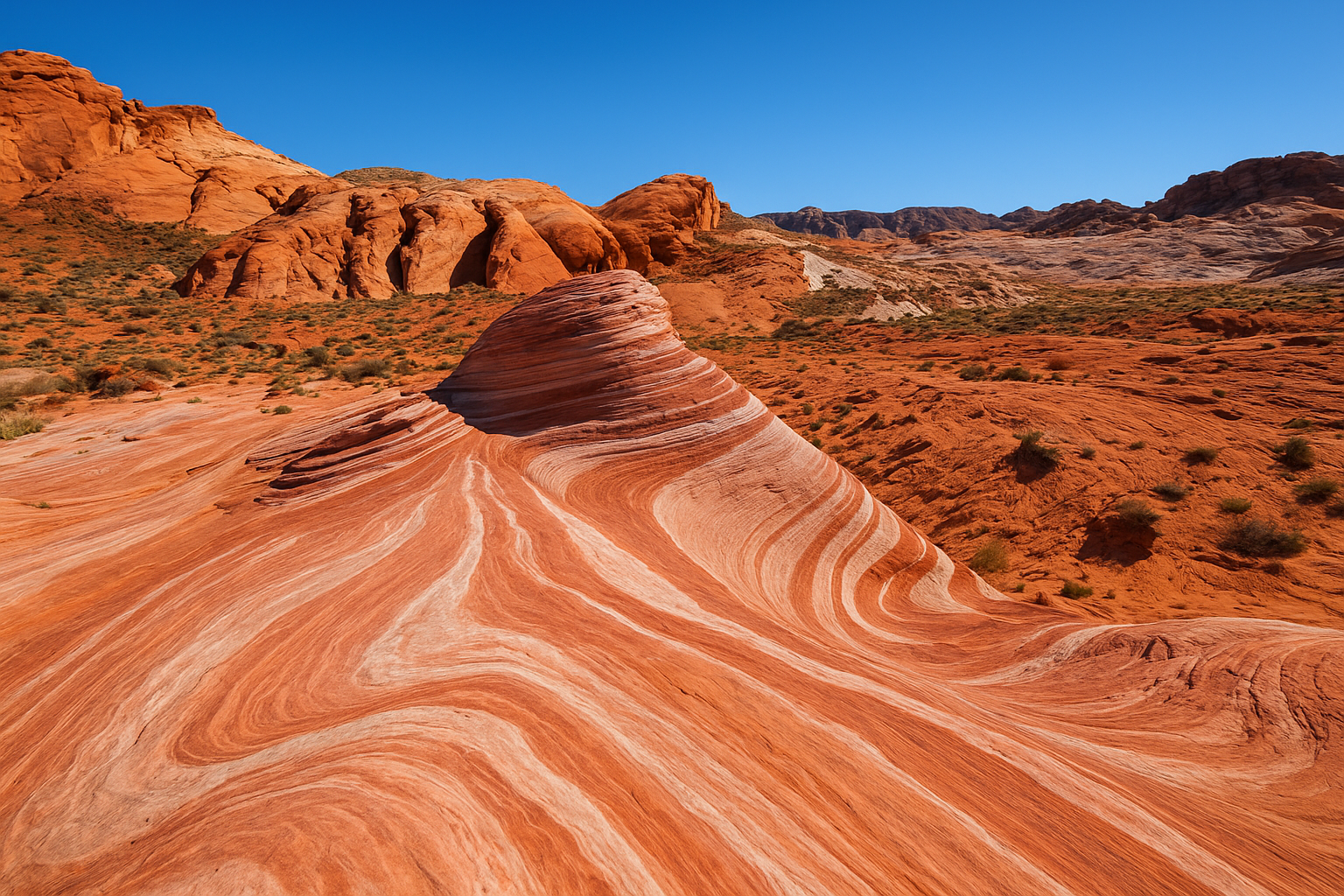
Fire Wave is the most photographed formation in Valley of Fire, and the geology behind it is genuinely striking. Swirling bands of pink, red, and white sandstone ripple across the rock surface, created by iron oxide deposits and wind erosion working together over millions of years. This stop appears on nearly every what to see at Valley of Fire itinerary, and it consistently delivers.
What You’ll See Along the Route
At the center of the route, you’ll find a wide, curved expanse of layered sandstone where color bands ripple across the surface like frozen waves. The Seven Wonders Loop extends the experience by connecting several additional formations, including eroded fins, shallow caves, and open terrain that shifts in tone as the light changes through the day.
Route Options and How to Follow the Trail
The trailhead sits at the Fire Wave parking area off the main park road. The direct out-and-back to Fire Wave runs about 1.5 miles round trip. Adding the Seven Wonders Loop brings the total to roughly 3 miles, circling through additional terrain before returning to the trailhead. Trail markers here use cairns rather than painted blazes, so keep them in sight as you navigate.
Missing a cairn on the Seven Wonders Loop is easier than it sounds, especially in midday glare.
Heat, Shade, and Seasonal Access Tips
This trail offers almost no shade from start to finish, which makes timing critical. Start before 8 a.m. in summer and carry at least two liters of water per person. Spring and fall give you the most comfortable hiking conditions and the best light for photographing the wave patterns at their most vivid.
6. White Domes Loop
The White Domes Loop sits at the northern end of Valley of Fire and packs more variety into a single trail than almost anywhere else in the park. The 1.2-mile loop takes you through a slot canyon, past a crumbling movie set, and across open terrain where white, cream, and red sandstone formations create a striking contrast. If you’re working through what to see at Valley of Fire and want one trail that delivers multiple experiences, this is it.
Slot Canyon, Film Set, and Scenery Highlights
The trail’s most dramatic stretch runs through a narrow slot canyon where the walls close in and light filters down from above. Beyond the canyon, you’ll pass the remnants of a 1960s film set used for the movie "The Professionals," now sitting in photogenic decay against the sandstone backdrop. The surrounding formations shift from deep red to pale cream as you complete the loop, so the scenery keeps changing throughout.
Trail Direction Choices and Footing
Most hikers run the loop counterclockwise, which puts the slot canyon early when energy is highest. The footing alternates between packed sand and uneven sandstone slabs, so wear closed-toe shoes with solid grip. A few short sections require stepping over low rock ledges, but nothing technical.
Running the loop counterclockwise also keeps the best morning light behind you during the first half, which improves photos considerably.
Tips for Families and First-Time Hikers
The modest distance and limited elevation change make this trail accessible for most fitness levels, including older children. Bring at least one and a half liters of water per person and start early, since shade is sparse throughout the entire loop.
7. Rainbow Vista
Rainbow Vista is a scenic overlook near the center of Valley of Fire that gives you one of the broadest unobstructed views in the entire park. The panorama stretches across a wide basin of multicolored sandstone, where reds, oranges, pinks, and whites spread across the open desert floor in a way that earns the name.
What the Overlook Shows You
From the parking area, you look out over a vast, bowl-shaped valley filled with layered sandstone formations in several distinct colors. The variation comes from different mineral compositions in each rock layer, and the effect is more dramatic than most first-time visitors expect. If you’re building a list of what to see at Valley of Fire, this overlook belongs near the top for sheer visual range and scale.
The color spread visible from Rainbow Vista is wider than at almost any other single viewpoint in the park.
Quick Walk Details and Accessibility Notes
The overlook requires almost no hiking. A short, flat path from the parking area reaches the main viewpoint in under five minutes. The surface stays paved and wide for most of its length, making this one of the more accessible stops in the park for visitors with mobility limitations or those traveling with young children.
How to Pair It with Nearby Stops
Rainbow Vista sits close to Fire Canyon and the Silica Dome overlook, making the two a natural back-to-back combination. You can also connect it with the White Domes trailhead, which sits a short drive north. Budget 15 to 20 minutes here, then move directly to your next stop without backtracking along the main road.
8. Fire Canyon and Silica Dome Overlook
Fire Canyon and Silica Dome sit close together near the southern section of the park and deliver two distinct visual experiences within a short drive of each other. Fire Canyon drops into a deep, rugged gorge carved through layers of red sandstone, while Silica Dome rises as a pale, almost white formation that stands in sharp contrast to the surrounding terrain. Both stops belong on any serious list of what to see at Valley of Fire.
Best Viewpoints and What to Look For
The primary overlook for Fire Canyon sits at the end of a short path from the parking area, where the canyon floor drops away below you and the red walls extend in both directions. From this vantage point, look for the natural arch visible on the canyon’s far wall because it blends into the rock and is easy to overlook if you don’t know where to focus. At Silica Dome, the pale silica-rich rock creates a strong visual anchor that helps you frame the surrounding red terrain in photos.
When to Go for Color and Contrast
Late afternoon produces the most saturated reds in Fire Canyon, as the low sun angles directly into the gorge and deepens the color on the canyon walls. Silica Dome photographs best in morning light, when the pale surface catches the early sun without washing out or losing definition against the sky.
The combination of deep red canyon and white dome makes this pairing one of the most visually dramatic stops in the entire park.
Safety Tips Around Cliffs and Slickrock
The canyon overlook has no guardrails, so keep a safe distance from the edge, especially with children nearby. Silica Dome’s surface becomes slippery when wet, so avoid stepping onto it after rain and wear closed-toe shoes with solid grip regardless of conditions.
Put It All Together
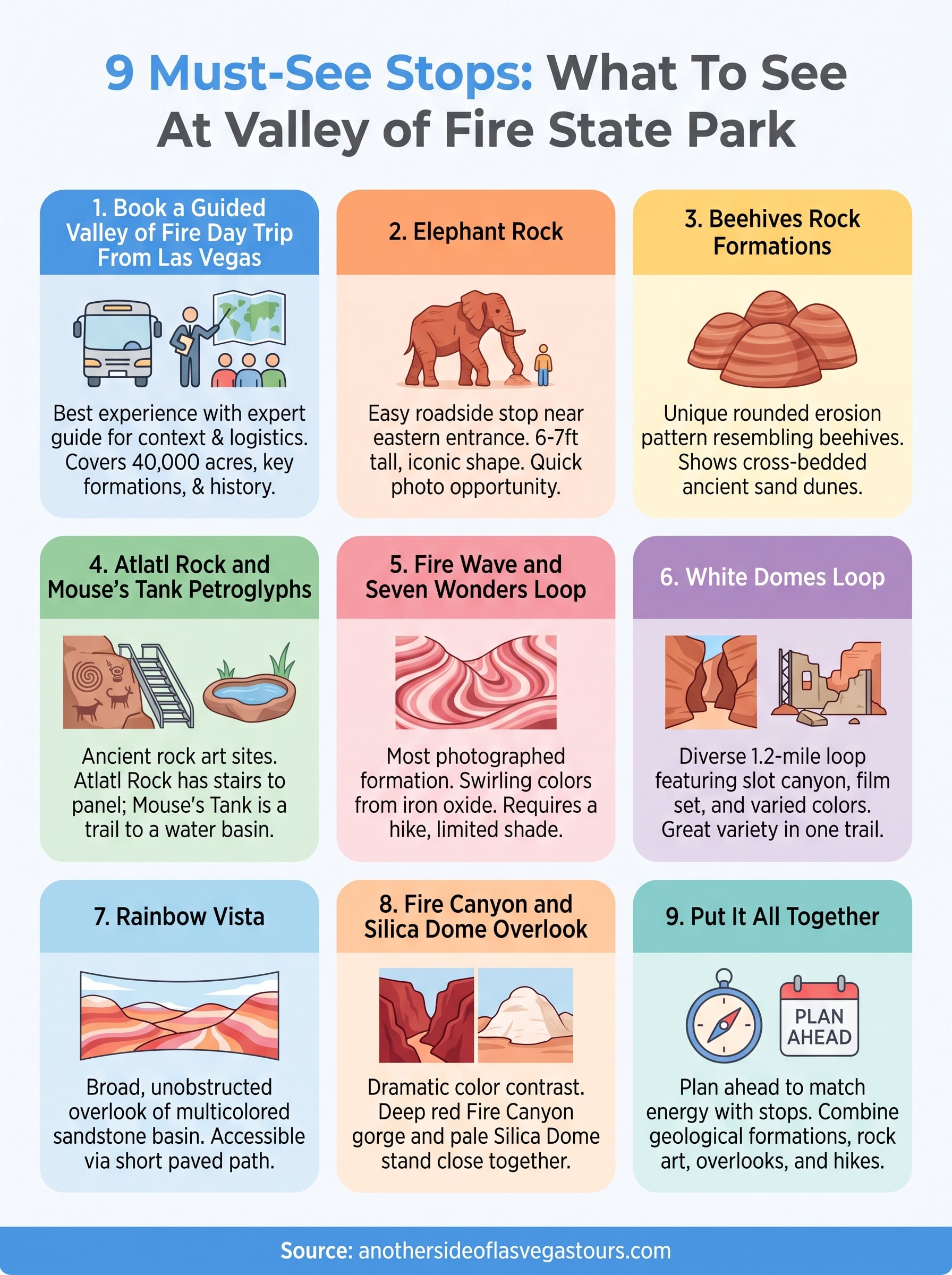
Valley of Fire rewards visitors who plan ahead, and this list covers the full range of what to see at Valley of Fire from easy roadside stops to short hikes with serious payoff. You have geological formations, ancient rock art, dramatic overlooks, and a slot canyon all within one park, and the stops covered here give you a clear route through the best of it. The key is matching your time and energy to the right combination of stops, rather than trying to rush through everything in a single afternoon.
If you want to skip the guesswork entirely, let an expert handle the logistics. Another Side Tours runs a private Valley of Fire day trip from Las Vegas that covers the park’s standout landmarks with a local guide who knows the stories behind what you’re seeing. Book your Valley of Fire tour and spend your day focused on the park, not the planning.