
Valley of Fire State Park sits about an hour northeast of the Las Vegas Strip, and its red sandstone formations look completely different depending on when you show up. Visit during the wrong month or at the wrong hour, and you’re dealing with 115°F heat, washed-out colors, and crowds at every trailhead. Time it right, and you get comfortable hiking temps, dramatic golden-hour light, and stretches of trail practically to yourself. Knowing the best time to visit Valley of Fire comes down to three factors: weather, crowd levels, and lighting conditions.
Our guides at Another Side Tours have been leading trips to Valley of Fire and other natural attractions outside Las Vegas since 2007. That means thousands of visits across every season, watching how the park changes month to month and hour to hour. We’ve learned exactly when the sandstone glows its deepest red, when bighorn sheep are most active, and which months let you actually enjoy a hike instead of just surviving one.
This guide breaks down the best months, days, and times of day to visit Valley of Fire so you can plan around the weather, dodge the biggest crowds, and catch the park at its most photogenic. Whether you’re booking a guided tour or exploring on your own, this is the timing advice that will shape your entire experience out there.
Valley of Fire basics to know before you go
Valley of Fire State Park covers about 46,000 acres of ancient red sandstone formations in Overton, Nevada, roughly 55 miles northeast of the Las Vegas Strip. The drive takes about an hour via I-15 North and Highway 169, and there’s no bus or transit service to the park, so you need a vehicle or a guided tour to get there. The park has a west entrance off Highway 169 and an east entrance near Overton, both staffed and collecting the entry fee: $15 per vehicle for out-of-state visitors, $10 for Nevada residents.
No reservations are required to enter Valley of Fire, but arriving early on busy weekends is the single easiest way to avoid a wait at the gate.
Trails, terrain, and trail prep
The most-visited routes are short by hiking standards, but the uneven sandstone and reflected heat make every mile harder than it looks on a map. Wear closed-toe shoes with grip since sandals lead to twisted ankles on this surface, and bring more water than you think you need.
| Trail | Distance | Difficulty |
|---|---|---|
| Elephant Rock | 0.5 miles | Easy |
| Rainbow Vista | 1.0 miles | Easy |
| White Domes Loop | 1.25 miles | Moderate |
| Fire Wave | 1.5 miles | Moderate |
Carry at least one liter of water per mile per person in cooler months, and bump that to two liters when temperatures climb above 90°F. Dehydration in the desert moves fast, and the nearest urgent care is back in the Las Vegas area.
Facilities and cell service
Inside the park, you’ll find two campgrounds (Atlatl Rock and Arch Rock), a visitor center near the west entrance, and basic restrooms at major trailheads. The visitor center staff can give you current trail conditions before you head out, which is worth a five-minute stop.
Cell service is unreliable throughout most of the park, so download an offline map before leaving Las Vegas. Google Maps lets you save areas for offline use, and that saved map could matter if you take a wrong fork on a remote trail.
Wildlife and safety habits
Bighorn sheep, roadrunners, kit foxes, and chuckwalla lizards all live in the park. You’ll most often spot bighorn sheep near rocky ridgelines in the early morning hours before the heat pushes them into shade.
Rattlesnakes are present year-round, so watch where you place your hands and feet around boulders and brush. Always share your planned route and expected return time with someone before heading in, especially if you’re exploring solo.
Step 1. Choose the best month for your priorities
The best time to visit Valley of Fire depends on what you’re optimizing for: comfortable hiking, wildflower blooms, wildlife sightings, or smaller crowds. No single month wins on every front, but knowing the trade-offs lets you pick a date that matches your priorities instead of leaving it to chance.
October through April: the prime window
These seven months give you the most comfortable conditions for actually moving around the park. Daytime temperatures stay between 50°F and 80°F across most of this window, which means you can hike midday without risk. March and April add a bonus: desert wildflowers appear after winter rains, and the contrast between orange sandstone and purple blooms is worth planning around.
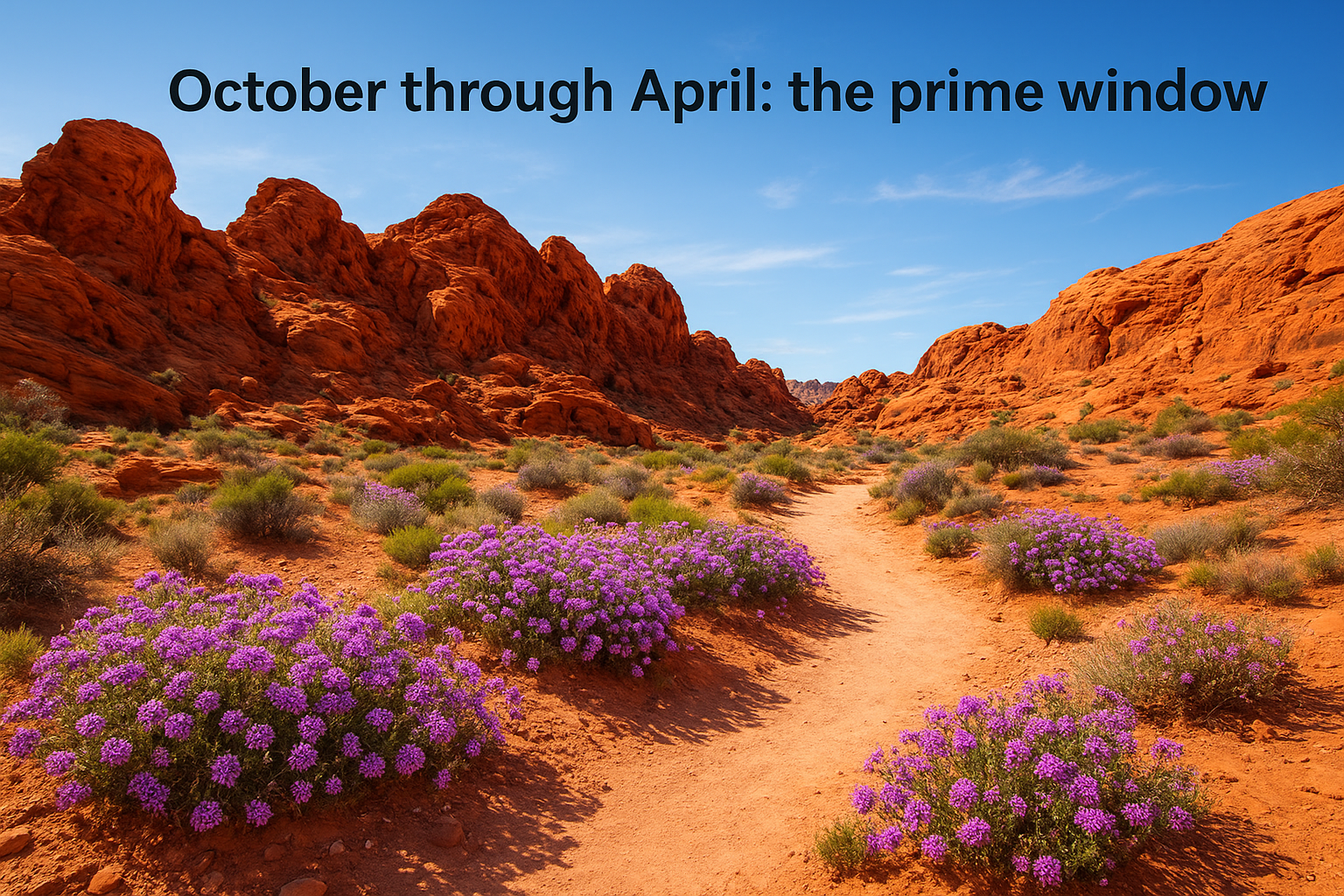
November through February offers the coolest temps and thinnest crowds, making it the strongest overall window if you have scheduling flexibility.
| Month | Avg High (°F) | Crowd Level | Notes |
|---|---|---|---|
| October | 78 | Moderate | Great light, warm afternoons |
| November | 62 | Low | Comfortable all day |
| December | 54 | Low | Cold mornings; bring layers |
| January | 52 | Low | Coldest month, clear skies |
| February | 58 | Low-Moderate | Wildflowers possible late month |
| March | 67 | Moderate | Peak wildflower season |
| April | 78 | High | Spring break crowds spike |
May through September: proceed with caution
Summer temperatures at Valley of Fire regularly hit 110°F to 120°F, and the park service has issued heat advisories that close trails by mid-morning on the hottest days. If summer is your only option, plan to arrive before 7 a.m., stick to short paved routes, and treat the visit as a sunrise-only outing rather than a full day in the park.
Step 2. Pick the best time of day for light and heat
The month you choose sets the stage, but the time of day determines whether you get a memorable experience or an exhausting one. Valley of Fire’s sandstone shifts color dramatically based on sun angle, and the heat builds fast enough that a 9 a.m. arrival feels completely different from an 11 a.m. one.
Sunrise and the golden hour window
Arriving at or just before sunrise gives you two advantages at once: the best photography light and the coolest temperatures of the day. The sandstone turns a deep, saturated red during the first hour after sunrise, and trails like Fire Wave and White Domes look completely different at 6:30 a.m. than they do at noon. Plan to be parked and walking by the time the sun clears the ridgeline, not still pulling into the lot.
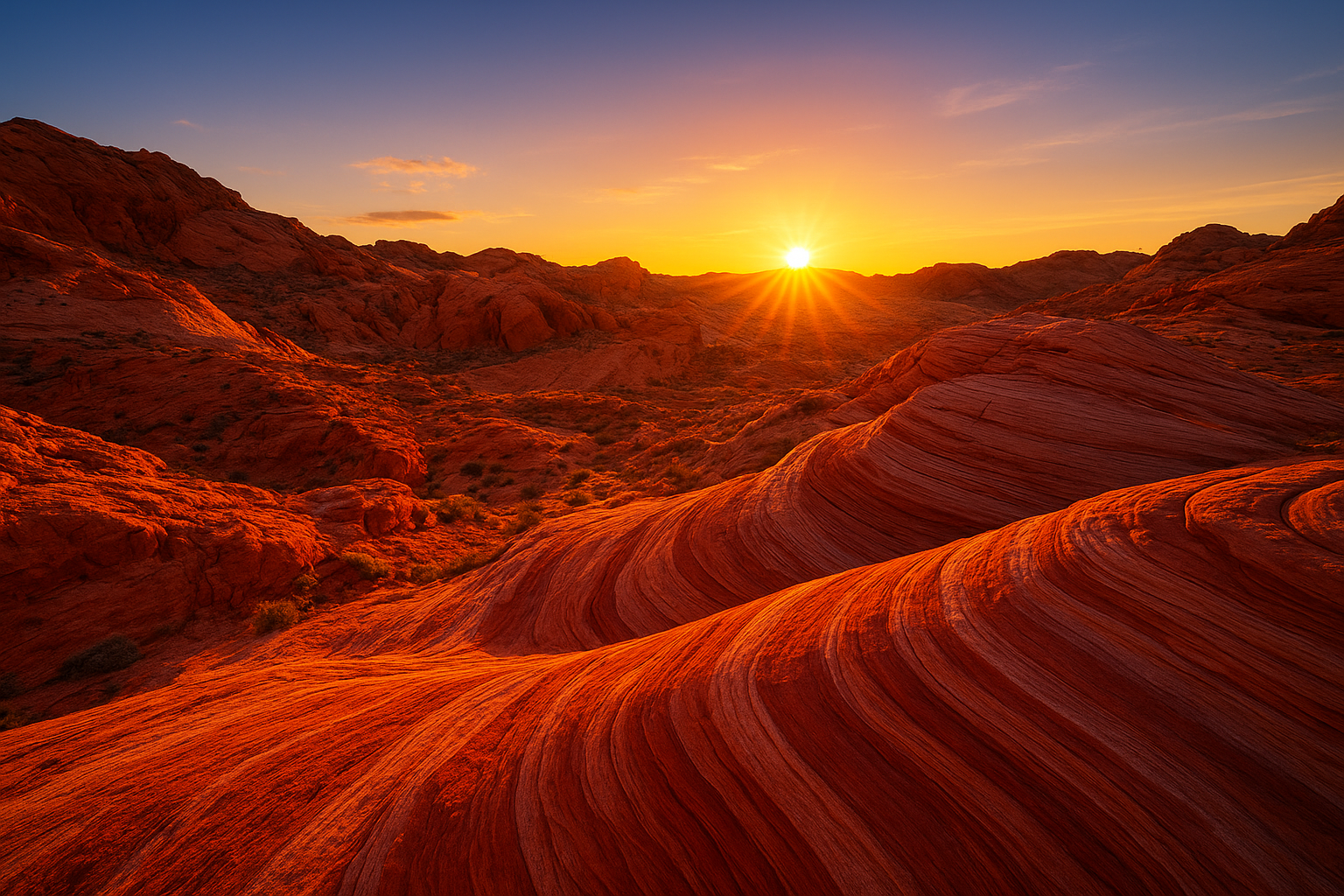
Sunrise timing shifts throughout the year: in December it arrives around 7:00 a.m., while in June it comes closer to 5:30 a.m., so check the exact time before you go.
| Season | Sunrise | Ideal Arrival |
|---|---|---|
| Winter (Dec-Feb) | 6:50-7:10 a.m. | 6:30 a.m. |
| Spring (Mar-May) | 5:30-6:30 a.m. | 5:15 a.m. |
| Summer (Jun-Aug) | 5:15-5:45 a.m. | 5:00 a.m. |
| Fall (Sep-Nov) | 6:00-7:00 a.m. | 5:45 a.m. |
Midday and afternoon hours
From roughly 10 a.m. onward, reflected heat from the sandstone adds to air temperature and makes even short trails uncomfortable. If part of your research into the best time to visit Valley of Fire is about fitting a full morning in, plan to finish hiking by 10:30 a.m. during warmer months. Sunset is worth returning for, but bring extra water and keep any evening trail to a half-mile or less.
Step 3. Avoid crowds and get through the gate fast
Crowds at Valley of Fire follow predictable patterns, and once you know them, avoiding the busiest windows is straightforward. The park sees its highest visitor volume on Saturday and Sunday mornings between 9 a.m. and 11 a.m., particularly during spring break (late March through mid-April) and holiday weekends like Memorial Day and Thanksgiving. If you’re figuring out the best time to visit Valley of Fire from a crowd perspective, weekdays in November through February are your strongest option.
When crowds peak at the park
The busiest trailhead is Fire Wave, which fills its small parking lot fast on weekend mornings. Overflow visitors sometimes wait 20 to 30 minutes just to find a spot. Knowing which periods draw the biggest numbers lets you schedule around them rather than into them.
| Period | Crowd Level | Notes |
|---|---|---|
| Spring break weekends | Very High | Mid-March through mid-April |
| Summer weekdays | Low to Moderate | Most visitors skip extreme heat |
| Fall weekends | Moderate | October draws photographers |
| Holiday weekends | High | Memorial Day, Labor Day, Thanksgiving |
| Winter weekdays | Low | Best window for crowd avoidance |
Arriving on a Tuesday, Wednesday, or Thursday during November through February gives you the lowest foot traffic of the entire year.
Gate and parking tips
Pull into the park before 8 a.m. on any weekend, and you’ll clear the entrance gate with little wait. Bring exact cash or a card since both methods work at the gate, but fumbling with payment slows the line behind you. Park at Atlatl Rock first if Fire Wave is your main goal, since many visitors skip Atlatl Rock entirely and that lot stays open far longer into the morning. Checking the Nevada State Parks website before your trip also gives you alerts on temporary closures or fee changes.
Step 4. Build a simple itinerary that fits daylight
Knowing the best time to visit Valley of Fire only matters if you translate it into an actual plan. A loose outline built around daylight hours keeps you on the right trails at the right times and prevents you from scrambling once you’re inside the park with no cell service.
Half-day itinerary for cool months (Oct-Apr)
This template works for any weekday visit between October and April, when you have comfortable conditions from sunrise through late morning. Adjust start times forward or back by 15 minutes depending on the exact sunrise time for your date.
| Time | Activity |
|---|---|
| 6:15 a.m. | Leave Las Vegas, drive Highway 169 to west entrance |
| 7:00 a.m. | Enter park, stop at visitor center for trail conditions |
| 7:15 a.m. | Fire Wave trailhead: 1.5-mile loop in golden light |
| 8:45 a.m. | Drive to White Domes, complete 1.25-mile loop |
| 10:00 a.m. | Atlatl Rock petroglyphs, short staircase climb |
| 10:45 a.m. | Rainbow Vista overlook before heat builds |
| 11:15 a.m. | Exit park, drive back to Las Vegas |
Finishing your last trail by 11:00 a.m. keeps you ahead of the midday heat spike and gives you the afternoon free in Las Vegas.
Adjusting the plan for summer visits
Summer changes the schedule significantly. Arrive by 5:30 a.m. and limit yourself to one or two short routes before the heat becomes dangerous. Swap White Domes and Rainbow Vista for the paved overlook near the visitor center, which gives you strong views without committing to a full loop in rising temperatures. Skip any trail over a mile entirely until fall.
Final takeaways
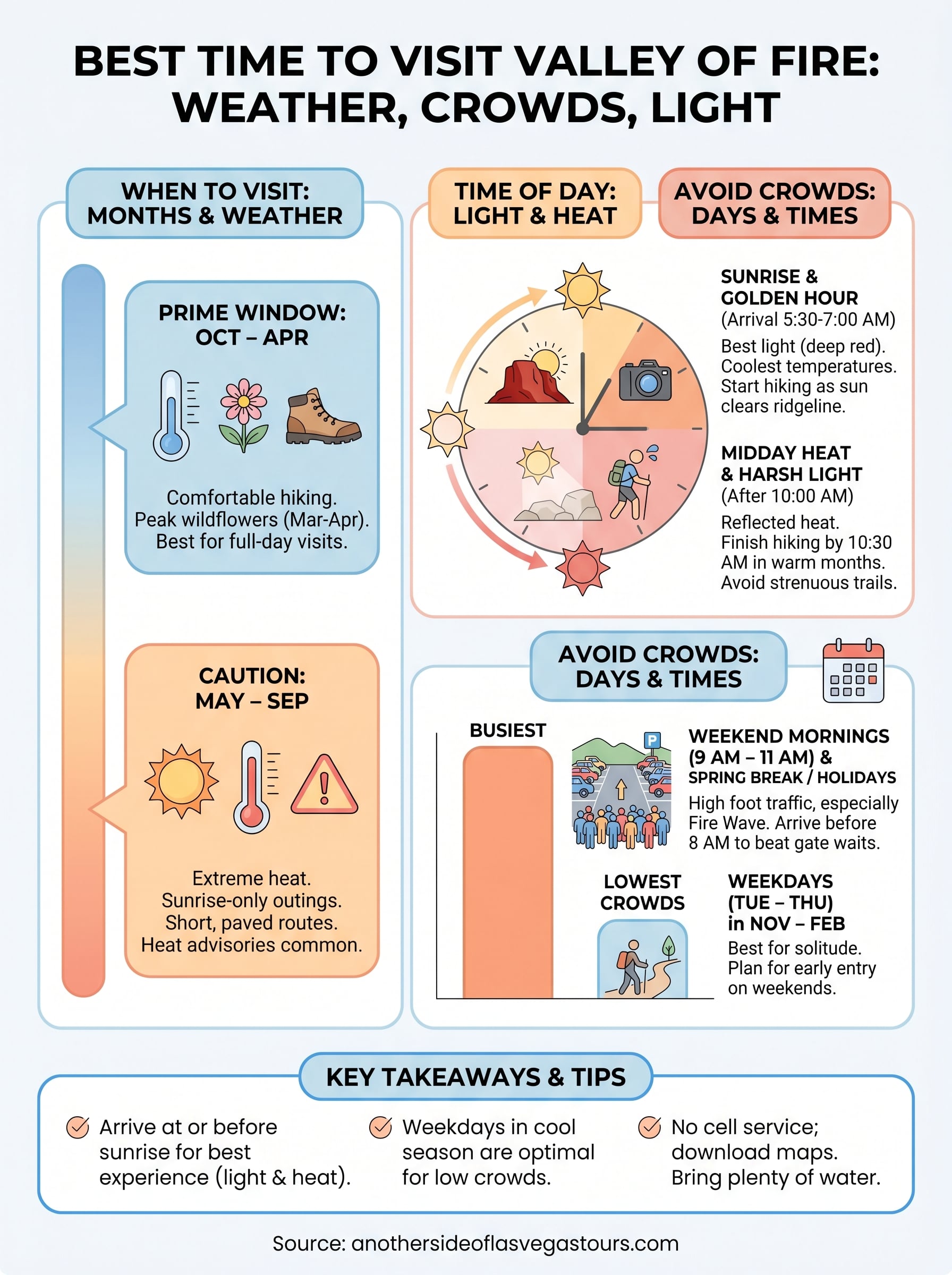
The best time to visit Valley of Fire comes down to three decisions: the right month, the right hour, and the right day of the week. October through April gives you the most comfortable hiking conditions, with November through February offering the lowest crowds and the most manageable temperatures. Arrive at or before sunrise to catch the deepest red on the sandstone, and finish your last trail by 10:30 a.m. on any warm-weather visit. Weekday mornings in the cool season remain your strongest overall option if you can get flexible with your schedule.
Planning around these windows removes most of the frustration that first-time visitors run into at the park. If you want a guide who already knows the best spots and the right timing, Another Side Tours has been running trips here since 2007. Book one of our private Valley of Fire tours and we handle the navigation, timing, and local knowledge so you can focus on the experience.