Most visitors to Las Vegas spend their entire trip on the Strip and never realize what they’re missing a few miles north. Downtown is where the city actually started, and if you’re looking for a solid downtown Las Vegas guide, you’ve landed in the right spot. This is the part of town where neon history meets dive bars, world-class restaurants sit next to vintage casinos, and the energy feels completely different from the megaresorts to the south.
At Another Side Tours, we’ve spent years guiding guests through Downtown’s best streets, stories, and hidden corners. Our local guides know this neighborhood block by block, and we’ve watched it evolve from an overlooked district into one of the most exciting areas in the city. That firsthand experience is exactly what shaped this guide, everything here comes from boots-on-the-ground knowledge, not a Google Maps screenshot.
Below, you’ll find eight must-do ideas for exploring the Fremont Street area, from iconic attractions and late-night spots to dining picks and practical tips for getting around. Whether you’re planning your first trip downtown or looking to go deeper on a return visit, this list will help you spend your time on what actually matters.
1. Take a guided Downtown and Fremont Street tour
Starting on your own is fine, but a professional guide changes the experience entirely. Downtown has layers of history, architectural details, and neighborhood context that you’ll walk right past without knowing what you’re looking at. A guided tour gives you structure and storytelling that turns a casual stroll into something you’ll actually remember.
What you’ll cover and why a guide helps
A Downtown and Fremont Street tour typically covers the Fremont Street Experience canopy, the historic casino corridor, and the surrounding neighborhood blocks where the city’s oldest stories live. Your guide will point out vintage neon signs, landmark buildings, and spots connected to Las Vegas history that most visitors never notice. Instead of scrolling through a generic downtown Las Vegas guide on your phone while walking, you get real context delivered in real time by someone who knows every corner of the neighborhood.
A knowledgeable local guide cuts through the noise and shows you what actually matters, saving you hours of trial and error on a short trip.
Tours with Another Side Tours run 2 to 4 hours and cover both the famous stretch under the canopy and the surrounding streets that reveal a completely different side of the city.
Who this works best for
Guided tours work especially well for first-time visitors who want to get oriented fast and make the most of limited time. If you’ve already been to Las Vegas and only saw the Strip, this is also a strong pick because you’ll experience the city from a completely different angle with stories and context that no casino floor can give you.
Families, couples, and small groups all benefit from having a single expert who can answer questions, set the pace, and handle the logistics so you can focus on actually enjoying what you’re seeing.
Timing, pricing, and how to book
Tours run throughout the week, with evening departures being particularly popular because the Fremont Street Experience lights up after dark and the entire neighborhood takes on a different energy. Pricing starts at $169 per person, with options depending on group size and tour length.
Booking with Another Side Tours is simple. Reserve your spot online or call 1-702-819-9127 to talk through your options before you commit.
2. Walk the Fremont Street Experience and catch Viva Vision
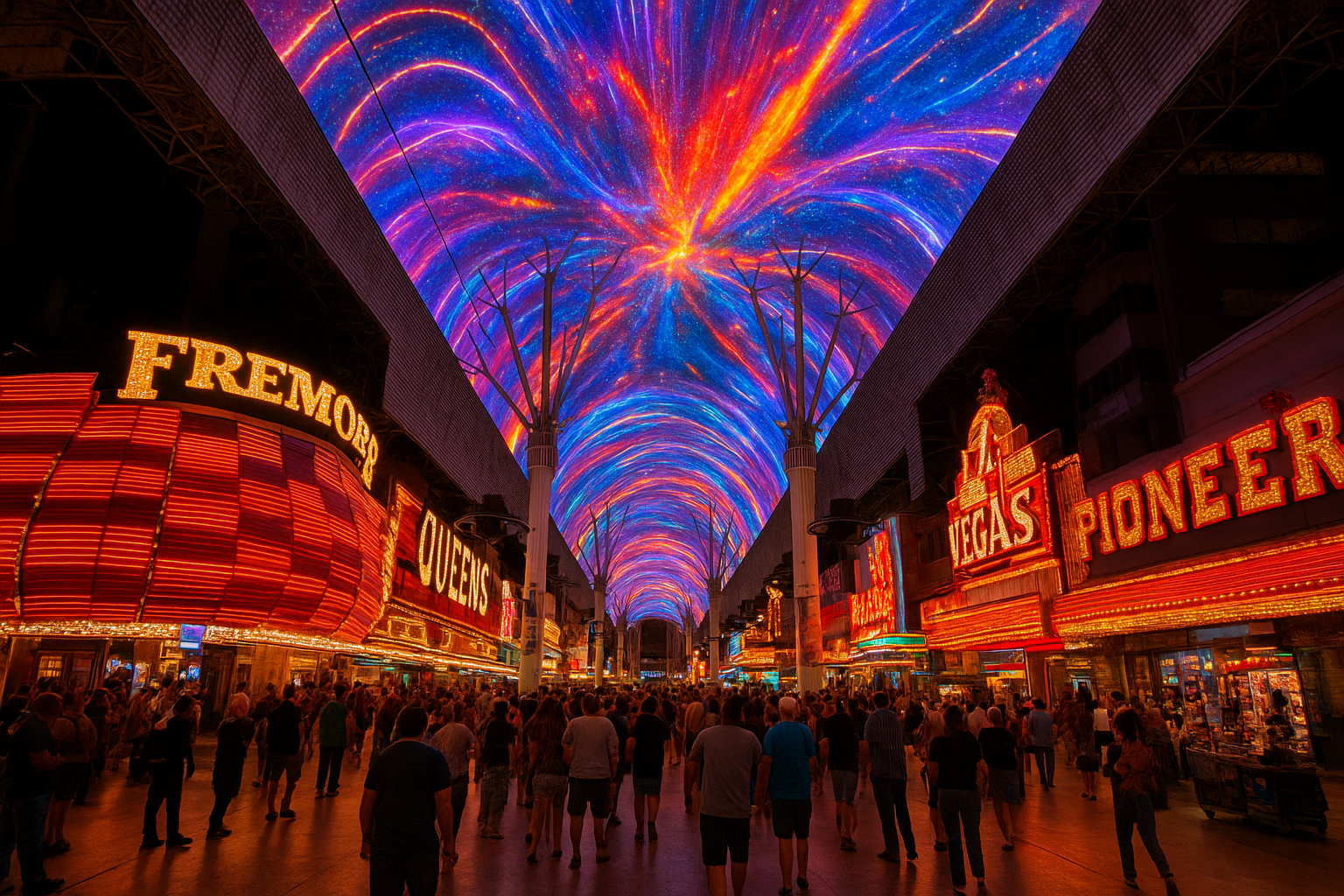
Even if you’ve seen photos, walking under the Fremont Street Experience canopy in person hits differently. The structure stretches 1,500 feet long and covers four city blocks, making it one of the most recognizable landmarks in any solid downtown Las Vegas guide. It’s free to enter, open daily, and anchored by an LED ceiling display called Viva Vision that runs shows throughout the evening.
What to see under the canopy
The canopy itself is worth your time during the day, but Viva Vision is the main event. The LED display system uses over 16 million pixels to project music-driven light shows above your head, loud enough and bright enough to stop you mid-step. Beneath it, you’ll find live street performers, souvenir vendors, and the entrances to several historic casinos that have been operating since the early days of Las Vegas.
Best times to go and what to expect after dark
Shows start at dusk and run every hour on the hour until around midnight, with some nights extending later on weekends. The canopy transforms after dark into something that feels entirely separate from a daytime visit. Crowds peak between 9 PM and 11 PM, so arriving just before a scheduled show gives you a good position without a long wait.
If you can only visit once, go after dark. The difference between a daytime and nighttime experience here is significant.
Practical tips for comfort, photos, and safety
Wear comfortable shoes because the pavement sees heavy foot traffic. For photos, shoot upward during a show rather than trying to capture the crowd, and turn your flash off entirely. Keep your belongings close in dense sections near the casino entrances.
3. Ride the SlotZilla zipline
SlotZilla sits at the east end of the Fremont Street Experience and sends riders flying above the crowd at speeds that make the canopy feel completely different from ground level. If you’ve already covered the walking portions of your downtown Las Vegas guide to-do list and want a shot of adrenaline, this is the obvious next step.
Two ride options and what the experience feels like
You get two distinct choices when you step up to SlotZilla: the lower Zipline and the upper Zoomline. The Zipline launches you at roughly 77 feet above ground in a seated position, carrying you about 850 feet down the canopy. The Zoomline puts you in a Superman-style horizontal position at 114 feet and covers the full length of the Experience, giving you a completely different view of the lights and crowd below.
The Zoomline is the stronger pick if you want the full aerial experience, though the Zipline delivers plenty of thrills for most riders.
Who should skip it and easier alternatives
Riders with significant fear of heights or weight restrictions should check the posted limits before buying tickets. If either option feels like too much, simply watching launches from the ground while grabbing a drink at one of the nearby bars is genuinely entertaining on its own.
Ticket costs, lines, and best time slots
Zipline tickets start around $25 and Zoomline tickets run higher. Lines build fast after 9 PM on weekends, so booking ahead online and arriving during early evening on a weeknight saves you real wait time.
4. Explore Fremont East for nightlife and late-night bites
Step one block east of the canopy and the character of the neighborhood shifts completely. Fremont East is the stretch of East Fremont Street between Las Vegas Boulevard and 8th Street, and it runs on a completely different frequency from the tourist-heavy canopy corridor. This is where locals actually go, and no honest downtown Las Vegas guide leaves it out.
How Fremont East differs from the canopy blocks
The canopy section is loud, packed, and built around spectacle. Fremont East trades the light show for smaller venues, neon-lit dive bars, independent restaurants, and crowds that feel more neighborhood than theme park. You’ll notice fewer souvenir shops and more places where someone is clearly a regular. The street has a walkable layout, so moving between spots takes minutes rather than planning.
Fremont East rewards slow walkers who actually stop and look up, because the old neon signage alone is worth the detour.
Go-to bar styles, vibes, and casual stops
The block holds a solid mix of craft cocktail bars, dive-style spots, and casual food stops that stay open late. You’ll find everything from small-batch whiskey menus to no-frills beer bars with pool tables. Late-night food options range from tacos to loaded fries, and most kitchens push past midnight on weekends.
How to plan a low-stress night out
Start your evening before 9 PM to grab a seat before the crowd builds. Move between three or four spots rather than committing to one, and wear comfortable shoes because you’ll cover more ground than you expect.
5. Visit the Mob Museum
The Mob Museum sits on Stewart Avenue in Downtown Las Vegas, and it earns its place near the top of any serious downtown Las Vegas guide. The official name is the National Museum of Organized Crime and Law Enforcement, and it fills three floors of a historic federal courthouse with exhibits covering decades of mob activity, law enforcement battles, and true crime stories that reach far beyond Las Vegas city limits.
What you’ll see inside and how long to budget
Exhibits cover bootlegging, the rise of organized crime, FBI investigations, and the Senate hearings that changed how the country viewed the mob. The courthouse itself adds real weight to the experience since actual hearings took place inside those walls. Budget two to three hours if you want to move through at a reasonable pace without skipping the deeper exhibits on the upper floors.
The building alone is worth a visit, but the depth of the exhibits is what keeps most people longer than they planned.
Tips for choosing exhibits and pacing your visit
Start on the upper floors and work your way down so you follow the timeline in order rather than jumping between eras. If your time is tight, prioritize the courtroom and law enforcement sections, which hold the strongest material. Save the basement for last since it features a working distillery where you can sample spirits in a Prohibition-era setting.
Tickets, hours, and pairing it with nearby stops
Tickets run around $30 for adults, and the museum stays open daily. Booking online in advance saves you time at the door. After your visit, the Fremont Street canopy is a short walk west, making this a natural first stop before spending your evening under the lights.
6. Tour the Neon Museum at night
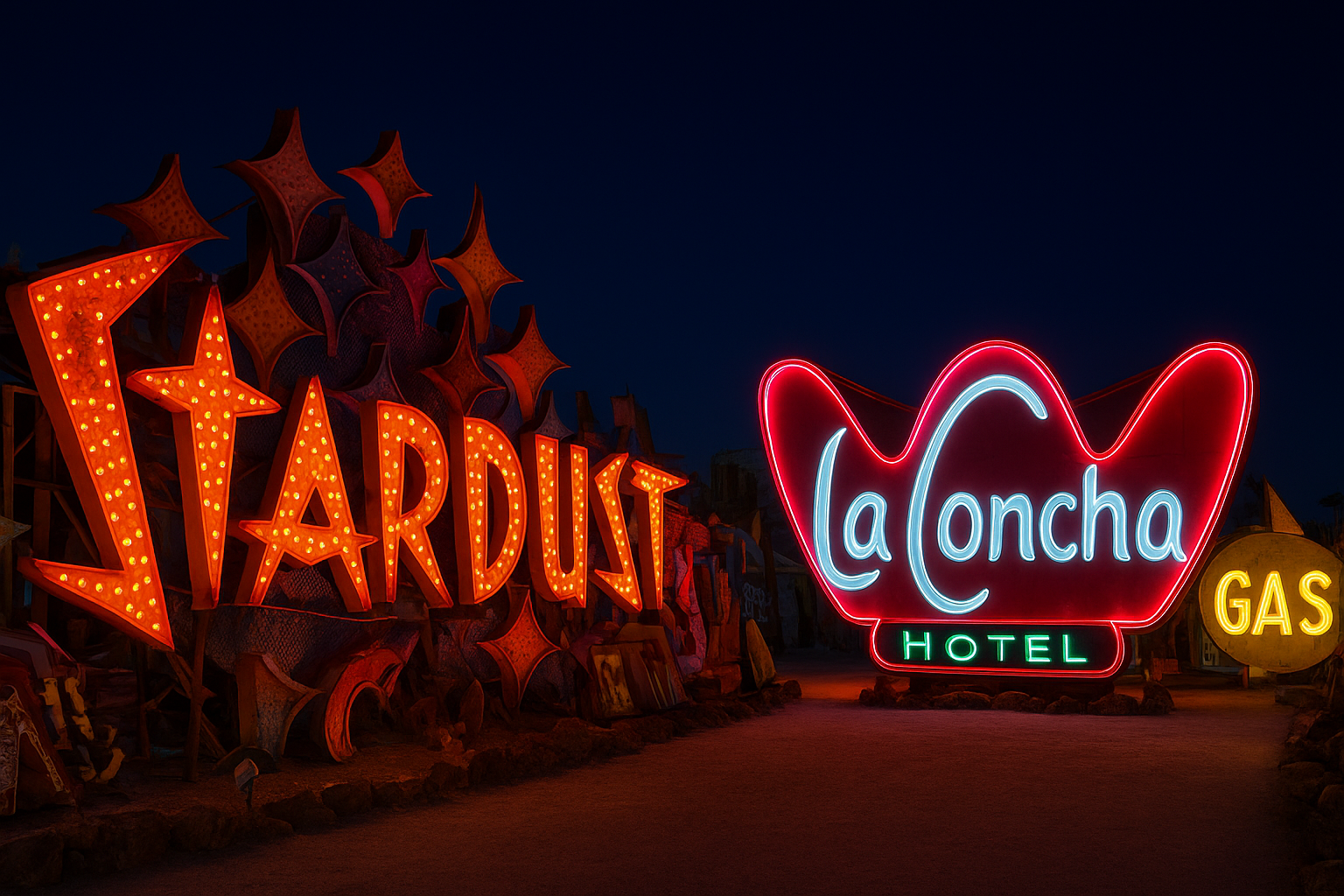
The Neon Museum is one of the most visually distinctive stops in any downtown Las Vegas guide, and it earns that status without much effort. The outdoor collection holds dozens of retired signs from casinos, hotels, and businesses that shaped the city’s visual identity over the past century.
What the Neon Boneyard is and why it’s iconic
Salvaged neon signs fill a roughly one-acre outdoor lot called the Boneyard, arranged across open ground where you can walk between them up close. These are not replicas. Each sign is an original piece from a real Las Vegas location, and many come from properties that no longer exist. Walking through puts you in direct contact with the visual history of the city in a way that no indoor gallery can replicate.
Night vs day visits and photo expectations
Night tours are the standard recommendation because illuminated signs against a dark sky create photos that actually capture what the collection feels like in person.
Daytime visits give you better detail on sign construction and weathering, but the lighting works against photography. Night tours use programmed lighting to highlight individual signs, which makes the space feel intentional rather than like a storage yard.
Tickets, tour format, and getting there from Fremont
Tickets range from $20 to $28 depending on the tour type, and booking in advance online is strongly recommended since tours sell out regularly. The museum sits on North Las Vegas Boulevard, about a 10-minute walk or a short rideshare ride from the Fremont Street canopy.
7. Stop by Downtown Container Park
Downtown Container Park is one of those stops that every solid downtown Las Vegas guide should include because it genuinely surprises people who walk in without knowing what to expect. Built from repurposed shipping containers and Xtreme Cubes, this open-air shopping and entertainment complex sits on East Fremont Street and offers a completely different atmosphere from the casinos and bars surrounding it.
What’s inside and what makes it different
The park holds a rotating mix of local boutiques, restaurants, and bars across two levels of stacked containers arranged around a central courtyard. Stacked metal shipping containers housing jewelry shops and food vendors is not something you see in most cities, which makes the design itself worth a look even before you step inside anything. Live entertainment and events run regularly in the courtyard, ranging from local bands to outdoor movie screenings.
Best for families, daytime breaks, and shopping
Families benefit most from the dedicated children’s play area at the center of the courtyard, which gives kids somewhere to burn energy while adults browse the surrounding shops. The open-air layout also makes it a natural midday reset when you need a break from the intensity of the surrounding Fremont blocks.
Container Park works best as a mid-afternoon stop before you move into evening plans along Fremont East.
Entry details, hours, and nearby walking route
Entry is free, and the park stays open daily from late morning through late evening. Getting there from the Fremont Street canopy takes under five minutes heading east along East Fremont Street.
8. Pop into classic casinos and quick free sights
No downtown Las Vegas guide is complete without pointing you toward the historic casinos that put this neighborhood on the map. You don’t need to gamble to get value from stepping inside, because the architecture, vintage interiors, and free entertainment make each property worth a quick visit on their own.
A short list of can’t-miss casinos near Fremont
Binion’s, the Golden Nugget, and the Four Queens sit within easy walking distance of the canopy and all carry decades of Las Vegas history inside their walls. The Golden Nugget houses the "Hand of Faith" gold nugget, the largest such nugget on public display in the world, and entry costs you nothing.
Walking through these properties costs nothing and rewards you with details that most people speed past on their way to the next stop.
Free and quirky photo ops worth a detour
The Vegas Vic neon cowboy mounted above the Pioneer Club on Fremont Street is one of the most photographed signs in the city, and it takes thirty seconds to stop and shoot. The surrounding block holds several other restored neon installations that reward anyone willing to look up and slow down.
Where to stay nearby and how to get around
The Golden Nugget and the D Las Vegas both place you within steps of the main attractions. For getting around, rideshare apps and the free Downtown Loop shuttle handle most of what you’ll need without requiring a rental car or complicated planning.
Quick wrap-up
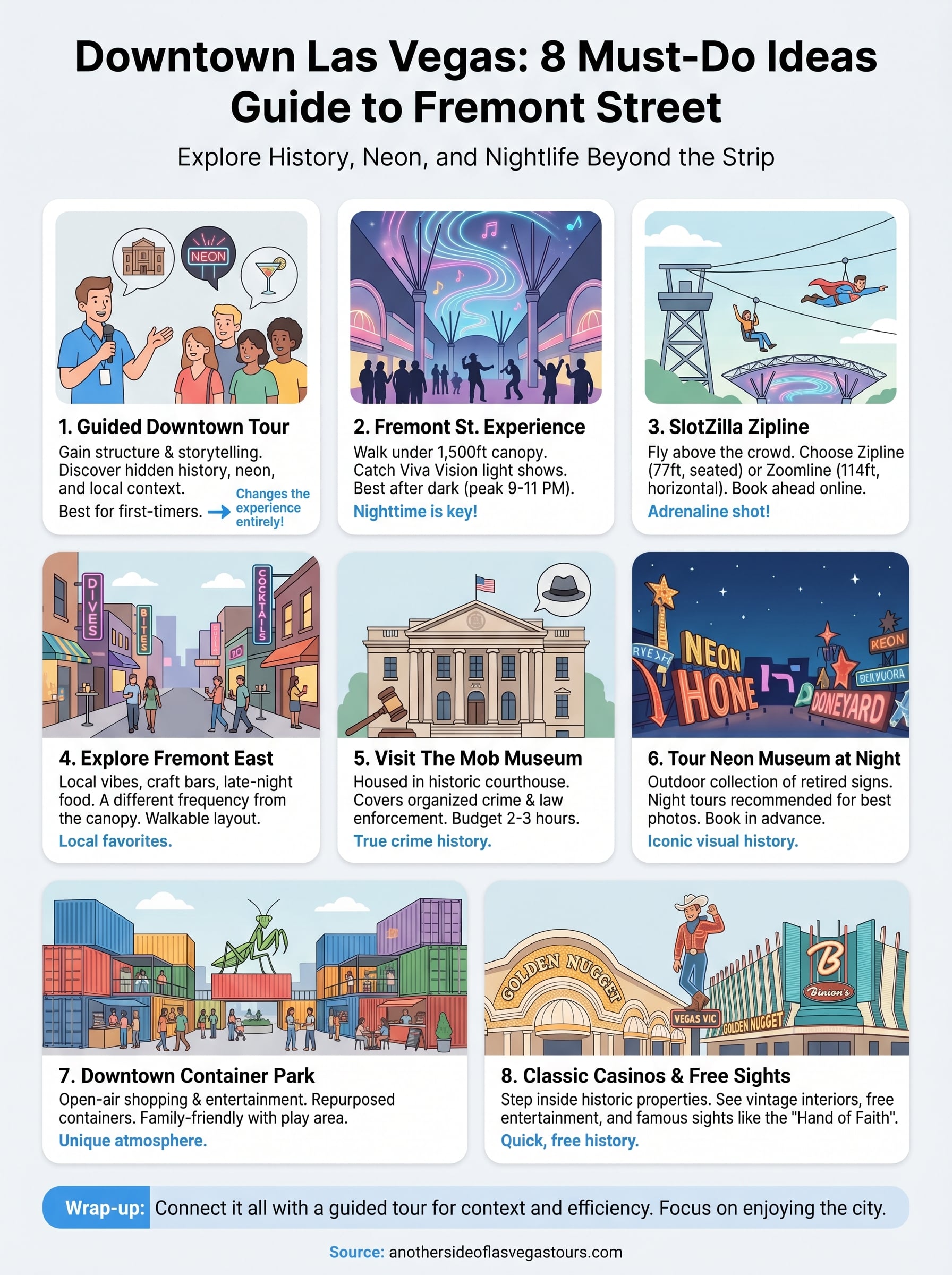
This downtown Las Vegas guide covers eight experiences that give you a real foundation for exploring the neighborhood, from the canopy on Fremont Street to the neon signs, mob history, and late-night blocks that most visitors never reach. Each stop on this list rewards you with something specific, whether that’s context, adrenaline, history, or just a great photo.
The fastest way to connect all of it is to go with someone who already knows the stories behind every block. A guided tour cuts the guesswork entirely and puts you in front of the right things at the right times, without wasting an hour figuring out what to skip. If you want that kind of experience without the planning headache, book a private Downtown Las Vegas tour with Another Side Tours and let a local expert handle the details while you focus on enjoying the city.