
You’ve got one shot at the Neon Museum, and you don’t want to waste it showing up at the wrong hour. Figuring out the best time to visit Neon Museum Las Vegas matters more than most visitors realize, because this outdoor collection of vintage signs looks like a completely different place depending on when you walk through the gate.
Here’s the short answer: daytime visits show you the rust, the peeling paint, and the real history baked into every sign, while nighttime tours bring the neon and LED bulbs back to life for a glow you simply can’t get under the sun. Neither time is objectively wrong, but each delivers a distinct experience worth planning around, especially if photography is your main goal.
In this guide, we’ll break down what you’ll actually see and feel during a morning visit versus an evening one, how lighting conditions affect your photos, when the museum tends to be less crowded, and how to time your trip around Las Vegas heat and sunset schedules. By the end, you’ll know exactly which slot fits your trip, and if you’d rather skip the guesswork entirely, a guided evening tour can handle the timing for you.
…
How to decide between a day or night visit
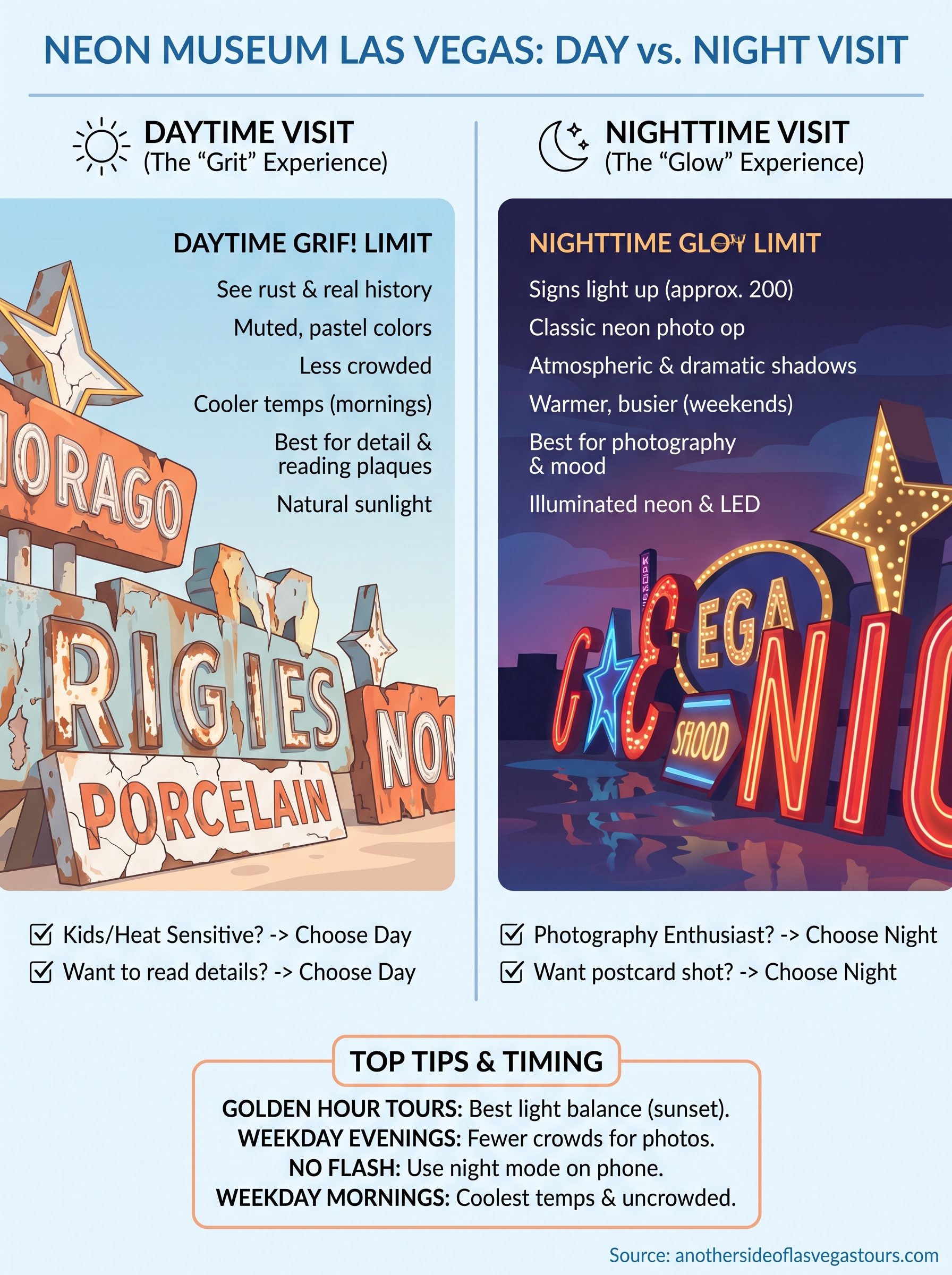
Picking a slot comes down to what you value most on this particular trip. Photography enthusiasts chasing that classic neon glow almost always lean toward evening, since the signs are lit and the sky provides a dark backdrop that makes colors pop. Families with young kids or visitors managing Las Vegas heat often prefer mornings, when temperatures sit 15 to 20 degrees cooler and the exhibit feels less like a sauna. History buffs who want to read every plaque and study the wear on each sign without rushing tend to do better in daylight too, since detail is easier to see without a flash washing everything out.
If you only get one visit, let your camera roll decide: shoot for glow at night, shoot for grit by day.
A quick checklist to settle it
Run through these questions before you book:
- Do you want photos that look like postcards, with saturated neon against a dark sky? Choose night.
- Are you traveling with kids or anyone sensitive to heat? Choose morning.
- Do you want to actually read the historical context on each sign without glare? Choose day.
- Is your trip during summer, when afternoon temps regularly top 100 degrees? Avoid midday entirely.
- Do you have flexibility for only one visit and want the
Day versus night: what you’ll actually see
Walk through the gate at 10 a.m. and you’ll notice the weathered signage first. Sun hits the rusted metal of the old Stardust letters and the cracked porcelain on vintage motel signs, showing decades of desert exposure that neon lighting simply hides after dark. Colors look muted, almost pastel, and you can study the brushstrokes and welding seams up close. Guides during daytime tours also tend to slow down more on the historical details, since there’s no rush to catch a specific glow before it’s gone.
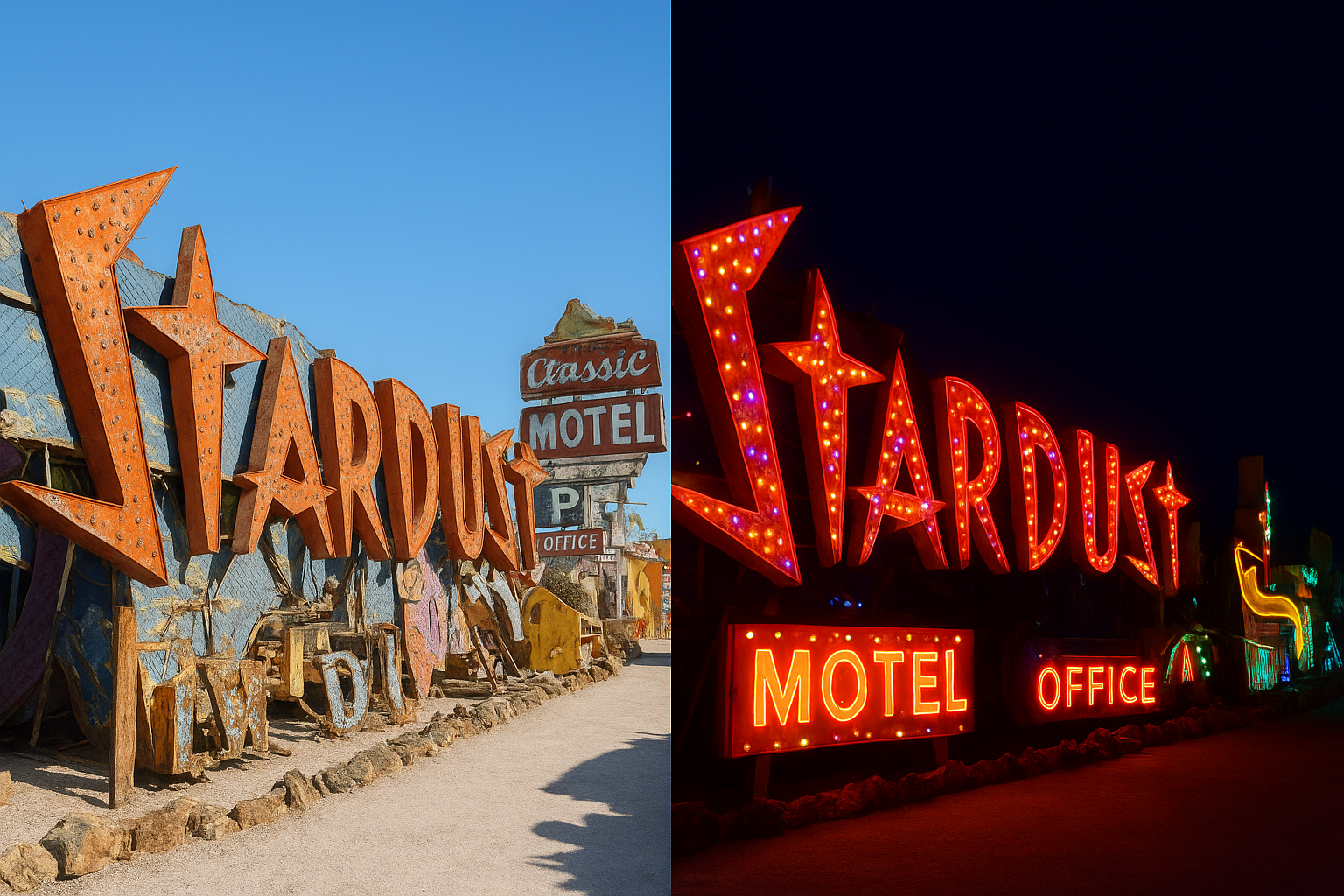
Nighttime flips that script entirely. Once the sun drops, roughly 200 signs in the collection light up, and the North Gallery turns into a wall of color against the dark sky. The Boneyard becomes moody rather than sun-bleached, and shadows stretch across signs in ways that add drama you won’t see at noon. Reflections off the pavement and glass double the visual impact, which is exactly why photographers and first-time visitors chasing that classic Vegas postcard shot favor evening slots.
| Factor | Daytime Visit | Nighttime Visit |
|---|---|---|
| Best for | History, texture, detail | Photography, atmosphere |
| Lighting | Natural sunlight | Illuminated neon and LED |
| Temperature | Cooler, especially morning | Warm but comfortable evenings |
| Crowd level | Generally lighter | Busier, especially weekends |
| Signature view | Rust and restoration work | Glowing Boneyard skyline |
Neither version is a lesser experience, they’re just built around different senses. Daytime rewards patience and curiosity about Las Vegas history, while nighttime rewards anyone hoping to leave with photos worth framing. If you can only pick one, think about what you’ll actually remember a year from now: the texture of a hand-painted sign or the way the whole yard glowed against a desert sky.
Tips for timing your visit and taking great photos
Booking the right slot only gets you halfway there. The rest comes down to small decisions that separate a rushed snapshot from a shot worth printing. Golden hour tours, the ones that start about 30 minutes before official sunset, give you a window where natural light and neon overlap, so you get warm sky color behind fully lit signs before true darkness sets in. That overlap lasts maybe 15 minutes, so arrive early and stake out your spot near the Boneyard entrance rather than wandering when the light hits its peak.
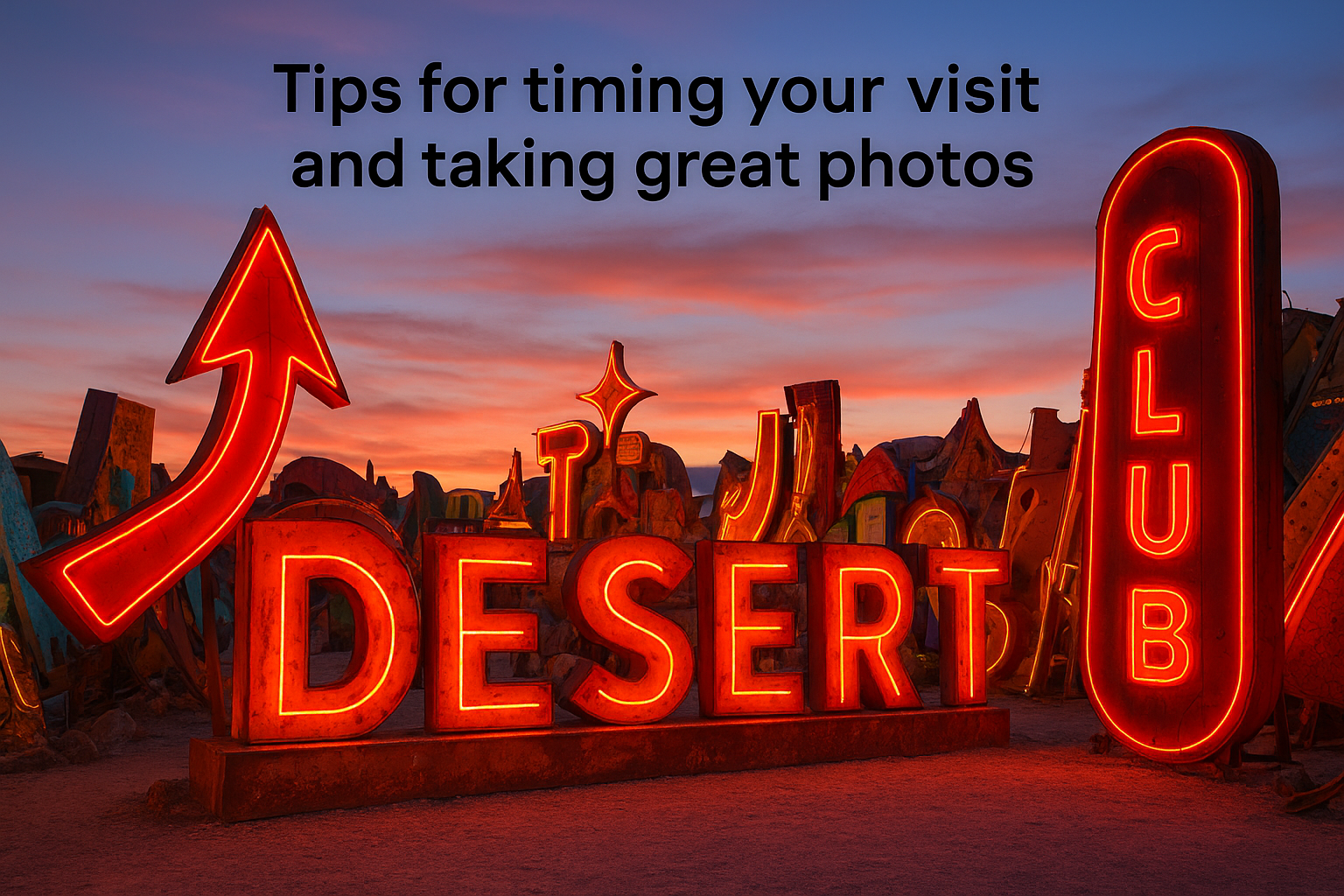
The best neon photos happen in the ten minutes when the sky still has color and the signs are already lit.
Best time slots to book
Weekday evenings tend to run thinner on crowds than weekend nights, which matters when you’re trying to frame a shot without a stranger’s elbow in it. Consider these booking windows:
- Sunset tours (best overall balance of light and glow, sells out fastest)
- Last tour of the night (darkest sky, fewest people, but no twilight color)
- Weekday mornings (best for uncrowded daytime shots and cooler temps)
Camera settings and gear tips
Smartphones handle the Neon Museum lighting reasonably well if you turn off the flash and use night mode, since flash only flattens the colors and creates glare on glass and metal. For DSLR or mirrorless shooters, a fast lens around f/2.8 and ISO 800 to 1600 usually captures the glow without needing a tripod, though tripods are allowed and worth bringing if you want long exposures of the whole Boneyard skyline. Either way, shoot wide first, then move in for texture shots of individual bulbs and rust, since both perspectives tell a different part of the story.
Finding your perfect neon moment
There’s no wrong hour at the Neon Museum, only a better one for what you actually want. Choose daytime hours if texture and history matter more to you than a postcard shot, and choose evening if you want that classic glowing Boneyard photo everyone posts from Vegas. The real answer to the best time to visit Neon Museum Las Vegas depends on your priorities, not some universal rule, so pick based on your camera roll and your tolerance for desert heat.
Still unsure which slot fits your trip, or want someone else to handle the timing, transportation, and photo spots? Skip the guesswork and let a local expert build your evening around it. Book a private tour and see the Boneyard light up exactly when it should, with a guide who knows every angle worth shooting.