You’ve got your camera charged and your phone storage cleared, but Las Vegas is a big, bright maze, and you don’t want to waste your trip shooting the same tired Welcome sign photo everyone else has. Finding the best photography spots in Las Vegas takes more than a quick Google search of tourist landmarks. It takes knowing which angles actually work, what time of day the light cooperates, and which locations get overcrowded by 10am.
This guide skips the generic "visit the Strip" advice and gets specific. We’re covering five locations that consistently produce standout shots, from neon-soaked streets downtown to dramatic desert landscapes just outside the city limits. Each spot earns its place because of lighting, composition potential, or a backdrop you genuinely can’t find anywhere else.
Whether you’re a hobbyist chasing that perfect Instagram shot or a serious photographer building a portfolio, you’ll walk away knowing exactly where to point your lens next. We’ve guided over a million visitors around this city since 2007, and these are the same insider locations our guides point out on tours, the ones that separate a forgettable snapshot from a photo people actually stop scrolling to look at.
1. Valley of Fire State Park
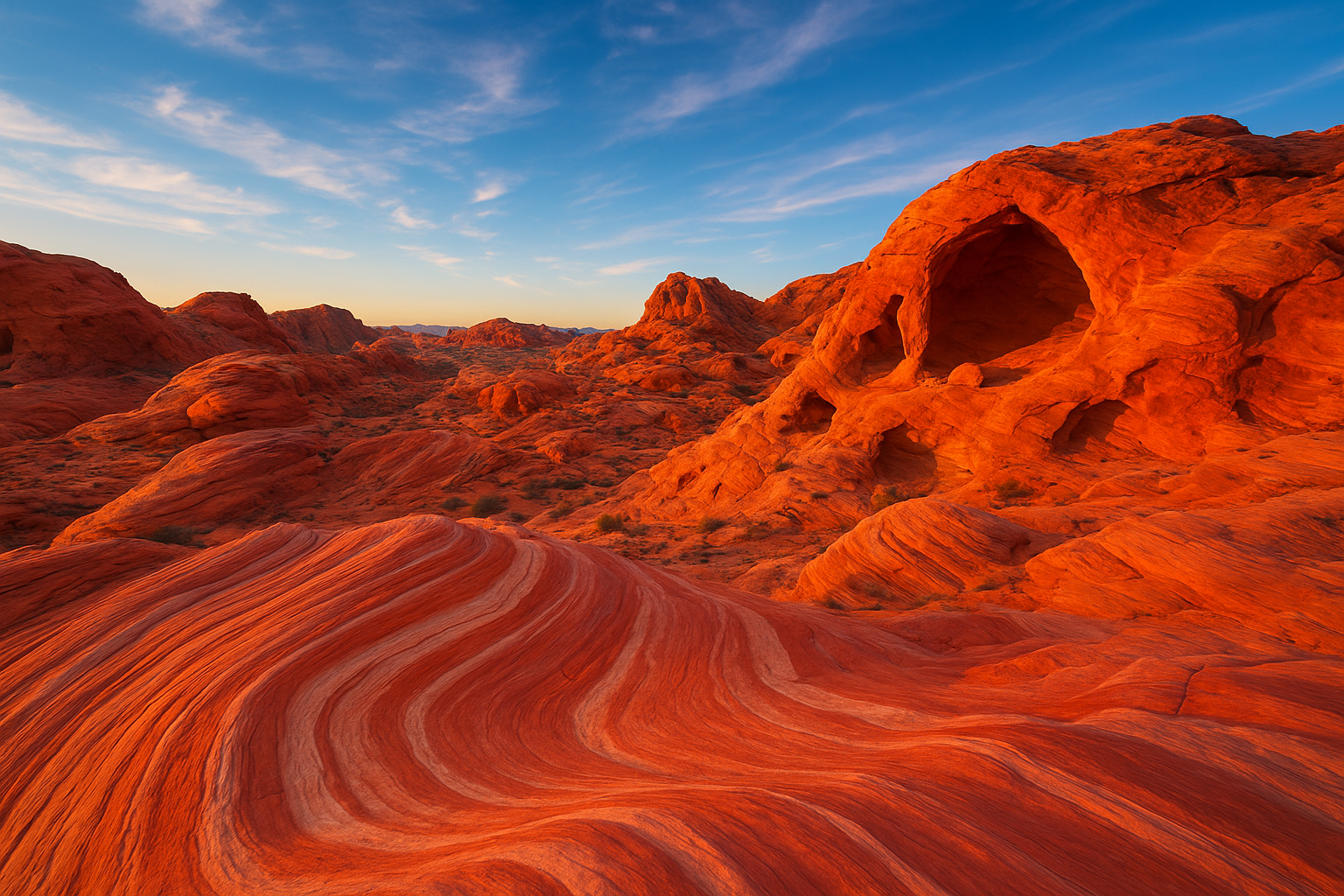
About an hour northeast of the Strip, Nevada’s oldest state park delivers the kind of scenery that makes people stop mid-scroll. Red sandstone formations, twisted rock arches, and sand dunes glow like they’re lit from within, especially against a blue desert sky. Valley of Fire isn’t a secondary stop tacked onto a Hoover Dam trip. It deserves its own dedicated visit if photography is the goal.
Why it stands out
Nowhere else near Las Vegas gives you this combination of color and texture in one place. The Fire Wave, Elephant Rock, and White Domes all offer distinct compositions within a short drive of each other, so you’re not stuck shooting one formation from every angle. Layered rock colors shift from orange to pink to white depending on where you stand, which means the park rewards photographers who explore rather than park at the first pullout.
Best time to shoot
Sunrise and the hour before sunset produce the richest color saturation on the sandstone. Midday sun flattens everything and washes out the reds, so plan around it.
Shoot Valley of Fire at golden hour or don’t bother shooting it at all.
How to get there
Take I-15 North to Valley of Fire Highway (Exit 75), then follow signs into the park. Expect roughly 50 minutes from the Strip with light traffic, longer on weekends.
Permits and fees
Standard entry runs a per-vehicle day-use fee, payable at the entrance station. Commercial or large-crew shoots require a separate permit arranged in advance through Nevada State Parks. Personal and hobbyist photography doesn’t need special paperwork, just the entry fee.
Pro tips for photographers
- Bring extra water; there’s no shade at most formations
- Pack a wide-angle lens for the Fire Wave’s sweeping curves
- Arrive before 7am on weekends to beat both crowds and harsh light
- Cell service is spotty, so download offline maps beforehand
2. Seven Magic Mountains
South of the Strip near Jean, Nevada, seven towering boulders stacked in neon colors rise straight out of the desert floor. Artist Ugo Rondinone’s land art installation looks like nothing else near Las Vegas, and that contrast between raw desert and painted stone makes it one of the most photographed roadside spots in the state.
Why it stands out
Color is the whole draw here. The bright pigments against tan sand and empty sky create a graphic, almost surreal composition that photographs well in any light, though it photographs best in specific conditions.
Best time to shoot
Golden hour still wins, but Seven Magic Mountains also shoots well after dark. The rocks glow under starlight with minimal light pollution, so bring a tripod if night sky shots interest you.
A boulder stack this bold barely needs good light to look good, but great light makes it unforgettable.
How to get there
Drive south on I-15 toward Jean, about 25 minutes from the Strip. Exit at Sloan Road and follow signage to the small dirt parking lot.
Permits and fees
The installation is free and open to the public, no reservation or fee required. Commercial shoots should check current guidelines through the Bureau of Land Management, which manages the surrounding land.
Pro tips for photographers
- Visit on a weekday to avoid tour bus crowds
- Use a person or car for scale in wide shots
- Watch footing near the boulders, the base gets uneven
3. Downtown Las Vegas and Fremont Street
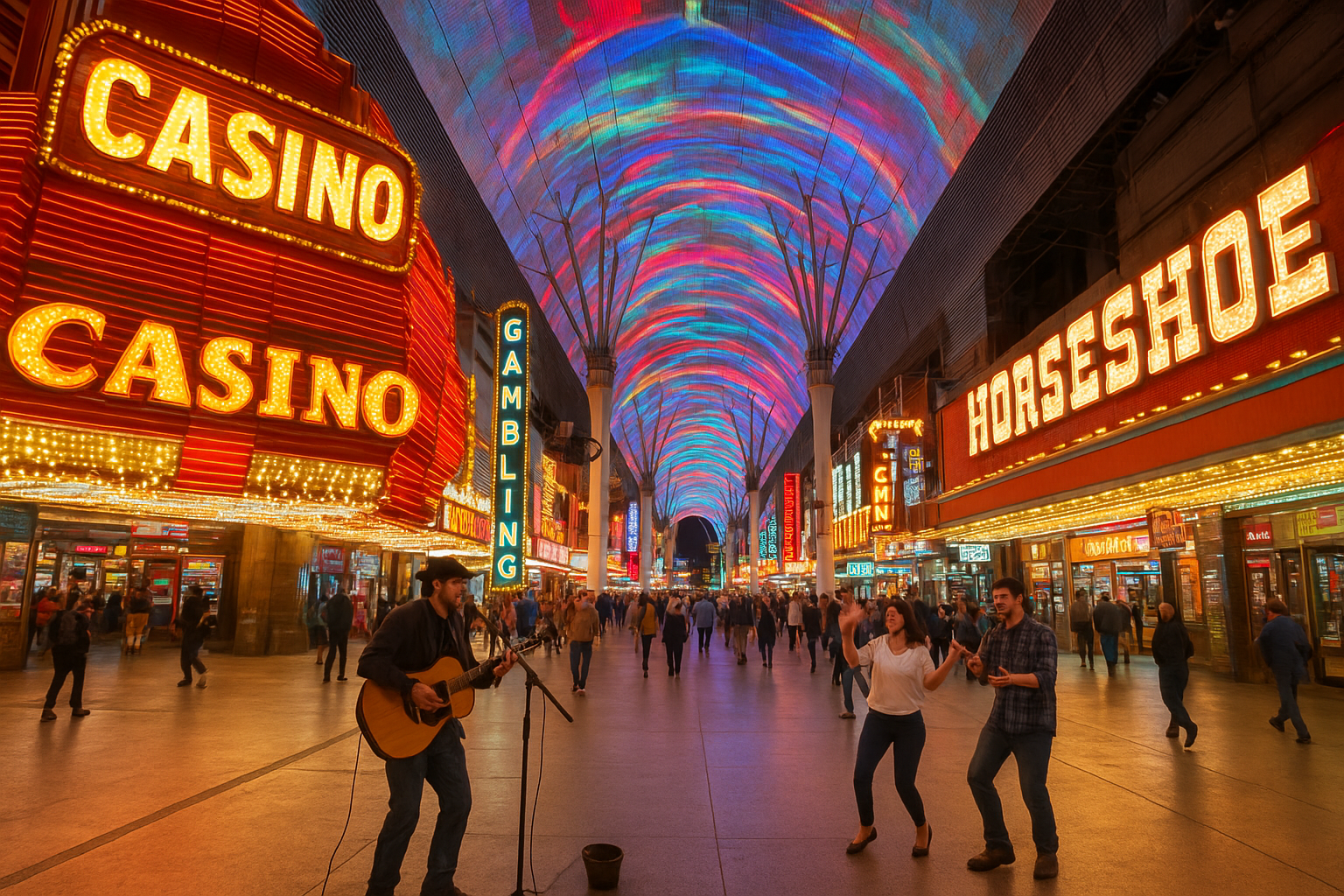
Glitz gets old fast on the Strip, but downtown Las Vegas trades polish for grit and neon history that photographs with more personality. Fremont Street’s canopy of lights, vintage casino signage, and street performers give you a completely different visual story than the mega-resorts a few miles south, and it’s one of the best photography spots in Las Vegas for anyone chasing authentic character over glossy postcards.
Why it stands out
Old Vegas charm lives here. Faded neon signs, retro motel marquees, and the Fremont Street Experience’s overhead LED canopy create layered, colorful frames you won’t find elsewhere downtown.
Best time to shoot
Evening delivers the payoff. Once the sun drops and the canopy lights kick on, roughly 8pm to midnight, the whole street turns into a moving light show.
Downtown Vegas doesn’t wake up for photographers until the neon does.
How to get there
Downtown sits about 15 minutes north of the Strip by car or rideshare, with the Deuce bus also running that route directly.
Permits and fees
Street photography is free. Tripods and organized shoots on Fremont Street require a permit through the City of Las Vegas.
Pro tips for photographers
- Shoot handheld since tripods draw attention from security
- Bump your ISO instead of relying on flash
- Capture the canopy show, it runs on the hour after dark
4. The Neon Museum
Tucked behind downtown, the Neon Museum is the closest thing Las Vegas has to an outdoor photography studio. Retired casino signs, from the Stardust to the Golden Nugget, sit stacked in the open-air Boneyard, giving you decades of design history in one compact lot. If you want the best photography spots in Las Vegas for storytelling shots rather than just pretty backdrops, this is it.
Why it stands out
Nowhere else lets you stand next to signage this iconic without a casino floor behind it. The rusted metal textures and layered typography make every frame feel like a piece of Vegas history rather than a generic tourist photo.
Best time to shoot
Book the evening "Brilliant!" projection tour when signs light up against the dark sky. Daytime visits work for texture and detail shots, but the color really pops after sunset.
A sign that’s been dark for decades looks better lit up than it ever did on the Strip.
How to get there
The museum sits at 770 Las Vegas Blvd North, about 10 minutes from the Strip by car or rideshare.
Permits and fees
General admission runs around $20-$30 depending on tour type. Photography passes cost extra and require advance booking through the Neon Museum.
Pro tips for photographers
- Book the photography-specific tour slot, not general admission
- Bring a fast lens for low evening light
- Shoot close-up details, not just wide shots
5. The Las Vegas Strip
You can’t write about the best photography spots in Las Vegas without circling back to the Strip itself. It’s the obvious choice for a reason: no other 4-mile stretch on earth packs in this much scale, light, and spectacle. The trick isn’t finding the Strip, it’s finding the angle nobody else is shooting.
Why it stands out
The skyline density here is unmatched. Fountains, towers, and marquees stack on top of each other, giving you foreground, midground, and background elements in a single frame without moving your feet.
Best time to shoot
Blue hour, the 20 minutes after sunset, is the sweet spot. The sky still holds color while the building lights fully switch on, balancing exposure between sky and neon.
The Strip rewards patience for blue hour more than any other spot on this list.
How to get there
Walking covers most of it, but a rideshare or the monorail saves time between Bellagio and the Sphere.
Permits and fees
Sidewalk photography is free. Tripods on public walkways are generally tolerated in quick bursts, but formal shoots need permits through individual resort properties.
Pro tips for photographers
- Shoot the Bellagio fountains on the hour
- Use a polarizer to cut glare off glass towers
- Cross to the pedestrian bridges for elevated angles
Finding your next great shot in Vegas
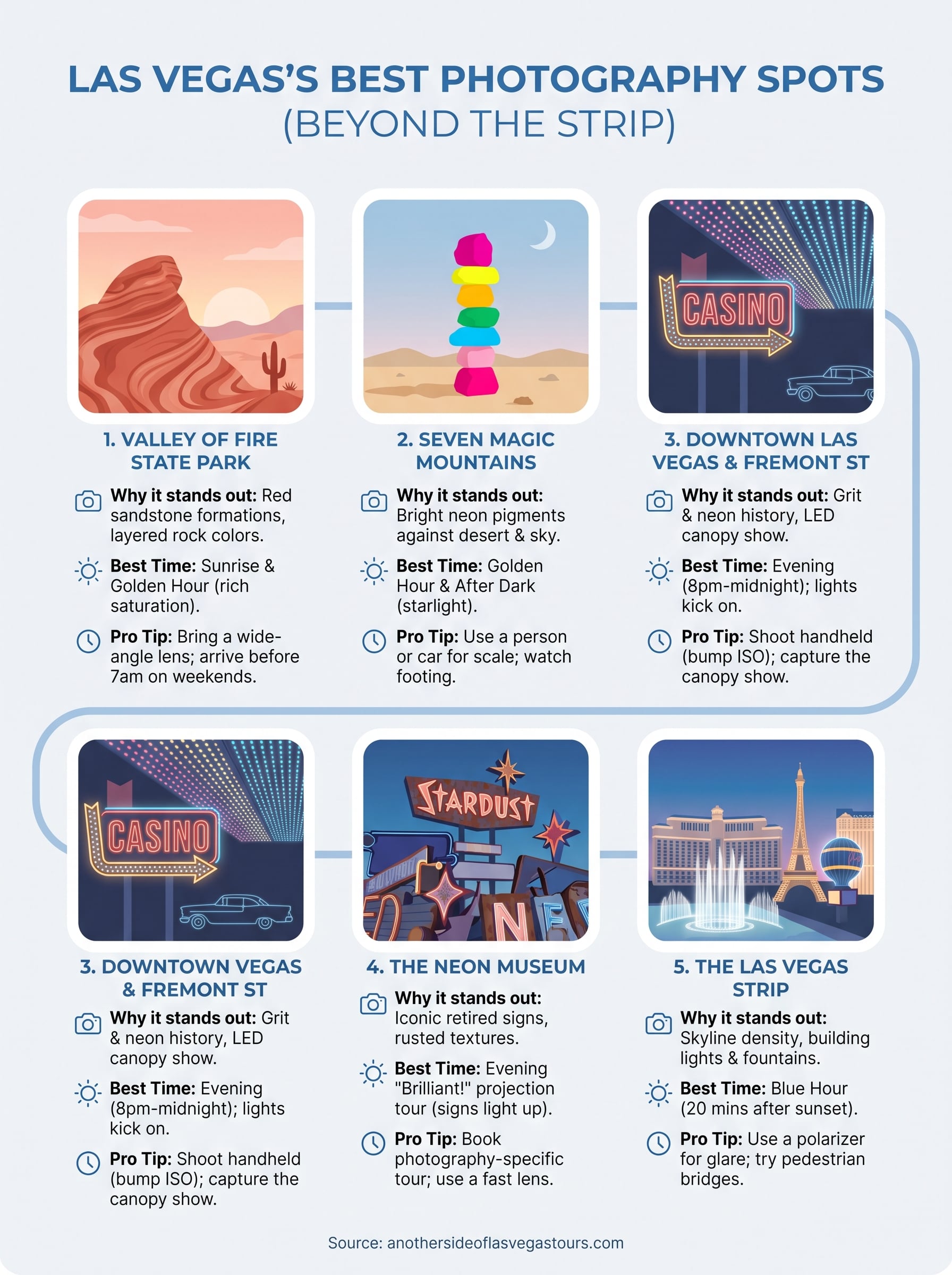
Five locations, five completely different moods. The desert light at Valley of Fire won’t look anything like the neon glow on Fremont Street, and that variety is exactly what makes Las Vegas worth photographing beyond the standard skyline shot. Chase golden hour at the boulders, blue hour on the Strip, and after-dark projections at the Neon Museum, and you’ll come home with a portfolio that actually shows range instead of five versions of the same postcard.
Getting to Valley of Fire on your own timeline is doable, but the drive, permit questions, and timing around light can eat into a short trip fast. If you’d rather skip the logistics and let someone who knows the exact pullouts and angles drive you there, book a private Valley of Fire tour and spend your time shooting instead of navigating.