
Standing at the edge of two rims and one big decision: that’s the reality for most Grand Canyon first-timers. The grand canyon south rim vs north rim question comes up constantly because the two sides feel like different parks entirely, with different roads, seasons, and even different elevations. Pick wrong for your schedule and you could spend hours driving when you should be looking at rock layers a billion years old.
Here’s the short answer: the South Rim is open year-round, has far more amenities, and sits close to Las Vegas, which is why it draws about 90% of park visitors. The North Rim closes for winter, feels remote and quiet, and rewards travelers who want fewer crowds over convenience. Neither is objectively better; it depends on your dates, your patience for driving, and what kind of view you want to wake up to.
Below, we break down actual travel times, viewpoint comparisons, lodging and dining options, and seasonal closures for both rims. We’ll also flag which side makes more sense if you’re coming from Las Vegas, since that drive shapes the whole decision for many visitors.
Why your rim choice shapes your grand canyon experience
Most visitors are shocked to learn the South Rim and North Rim sit only 10 miles apart as the crow flies, yet driving between them takes over four hours and covers 215 miles around the canyon itself. That single fact explains almost everything about this decision. You’re not choosing between two viewpoints in the same park; you’re choosing between two separate ecosystems, road networks, and travel seasons that happen to share a name. Get this part wrong and you’ll waste half a vacation day driving in circles instead of standing at the edge.
Elevation, climate, and what you’ll actually see
The North Rim sits roughly 1,000 feet higher than the South Rim, at about 8,000 feet compared to 7,000 feet. That difference sounds small on paper, but it changes everything on the ground: cooler temperatures, thicker forest, and a view that feels like you’re peering down into the canyon from a treetop rather than standing at its lip. The South Rim’s views are broader and more open, with iconic overlooks like Mather Point and Yavapai Point offering sweeping panoramas that photograph well from almost any angle. The North Rim’s views feel more intimate and dramatic, framed by ponderosa pine and aspen, which is why photographers and repeat visitors often prefer it despite the extra effort to get there.
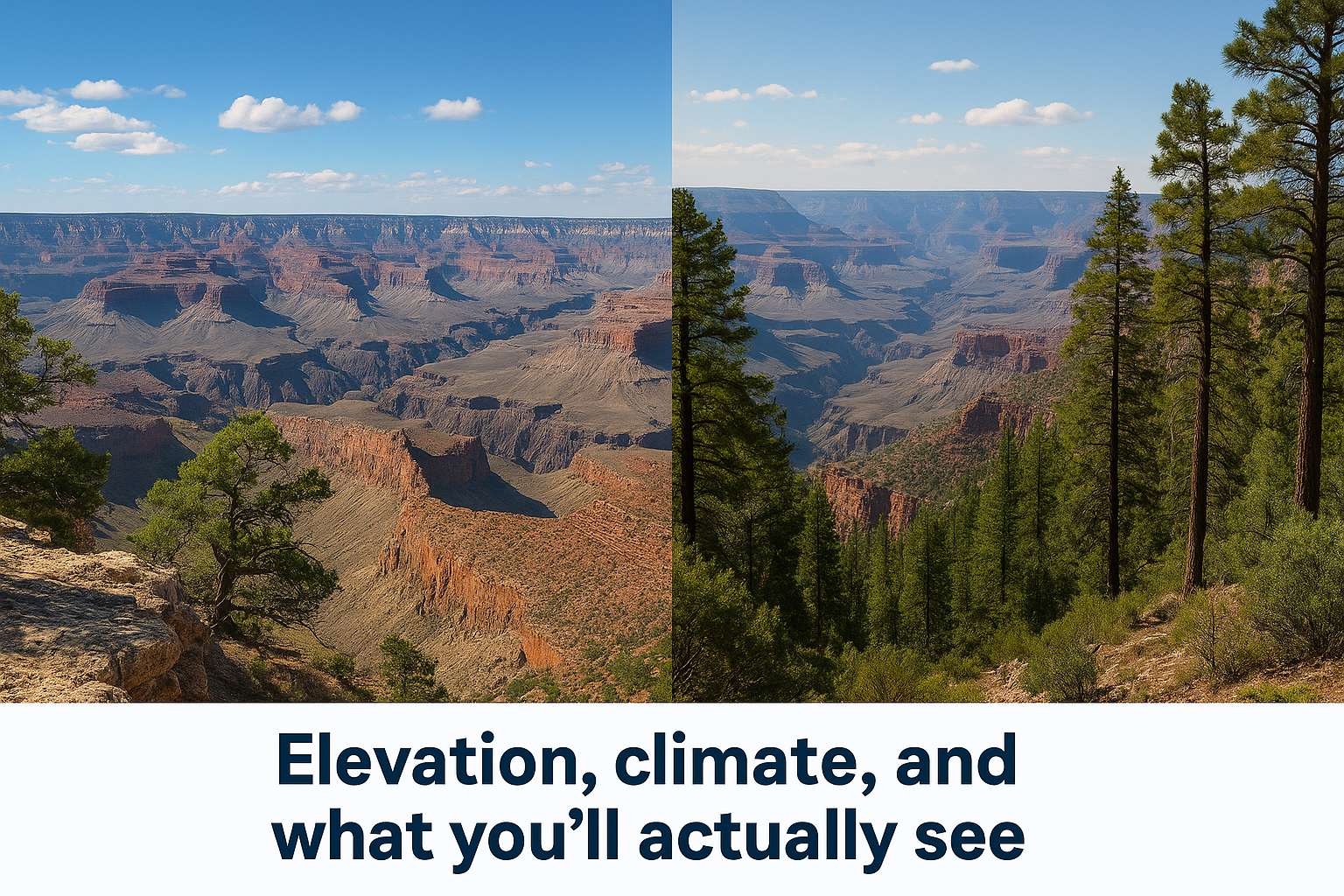
The South Rim gives you the classic postcard view; the North Rim gives you the view most tourists never see.
Distance, seasons, and closures
Season matters just as much as geography here. The North Rim’s facilities close from mid-October through mid-May because heavy snowfall makes the roads impassable, while the South Rim stays open all year, snow or not. This single scheduling detail eliminates the North Rim as an option for roughly half the calendar year, which is why so many trip-planning searches default to the South Rim without a second thought.
| Feature | South Rim | North Rim |
|---|---|---|
| Elevation | ~7,000 ft | ~8,000 ft |
| Open season | Year-round | Mid-May to mid-October |
| Distance from Las Vegas | ~275 miles (4.5 hrs) | ~270 miles (5+ hrs, longer routes) |
| Share of park visitors | ~90% | ~10% |
| Typical crowd level | Busy, especially spring/summer | Quiet, low-traffic |
Amenities and traveler experience
Think about what kind of trip you actually want before you commit to a rim. The South Rim functions almost like a small town, with multiple lodges, restaurants, a visitor center, shuttle buses, and a train depot. Visitors who want convenience, food options, and easy access to ranger programs lean South every time. The North Rim, by contrast, has one lodge, one general store, and a handful of dining options, all of which close for the season along with the roads.
Understanding these tradeoffs upfront saves you from a common mistake: booking a North Rim stay without realizing how limited services are, or driving to the South Rim expecting the quiet, forested feel that only the North Rim delivers. Whichever side you pick, knowing these differences ahead of time means you’ll spend your limited hours enjoying the canyon instead of scrambling to adjust plans once you arrive.
How to decide which rim fits your trip
Ask yourself three questions before you book anything: when are you traveling, how much driving are you willing to do, and what do you actually want out of the visit. These three answers eliminate one rim almost every time, so don’t skip this step even if you think you already know your answer.
Start with your travel dates
Check your calendar first, because it makes the decision for you more often than you’d think. If you’re visiting between mid-October and mid-May, the North Rim is closed, full stop, and the South Rim is your only choice. The National Park Service confirms these seasonal closures every year on its official Grand Canyon hours and seasons page, so it’s worth a quick check before you build an itinerary around a rim that won’t be open. Even during the open season, late spring and early fall bring smaller crowds to the North Rim compared to peak summer weeks.
Weigh convenience against crowds
Consider how much you value ease versus solitude, because that tradeoff drives most rim decisions. Travelers who want restaurants, a visitor center, ranger talks, and shuttle service without much planning should pick the South Rim visitor experience every time. Those who’d rather trade amenities for quiet trails and fewer selfie sticks at the overlook tend to walk away from the North Rim calling it the better trip, even with the extra driving.
If your dates fall outside May through October, the North Rim isn’t even on the table.
Run through this checklist
Use this quick checklist to settle the decision fast:
- Traveling November through April? Choose the South Rim; it’s your only option.
- Want lodges, restaurants, and shuttle buses nearby? Choose the South Rim.
- Coming from Las Vegas with a single day available? Choose the South Rim for shorter, more reliable drive times.
- Want fewer people at the overlook and don’t mind a longer drive? Choose the North Rim.
- Traveling with photographers or repeat visitors chasing a different angle? Choose the North Rim.
- Booking last minute during peak summer? South Rim has far more lodging inventory to fall back on.
Going through this list takes five minutes and prevents the far more common mistake: picking a rim based on photos alone, then discovering it’s closed for the season or a five-hour drive from where you’re actually staying.
What to see and do at each rim
Once you’ve picked a side, the next question is how to spend your hours there, since each rim rewards a different pace. Both offer overlooks, hiking trails, and ranger programs, but the specific highlights and the effort required to reach them differ enough that you should plan around your rim’s strengths rather than trying to replicate a South Rim itinerary on the North Rim or vice versa.
South Rim highlights
Desert View Drive and Hermit Road give you two separate corridors of overlooks, connected by free shuttle buses that run so frequently you rarely wait more than fifteen minutes. Mather Point sits closest to the main visitor center and gets crowded fast, while Yavapai Point offers a quieter angle with geology exhibits inside its observation station. Grand Canyon Village anchors the whole area with the historic El Tovar Hotel, the Bright Angel Trailhead, and the Grand Canyon Railway depot, which runs a scenic train from Williams, Arizona if you’d rather skip driving altogether. Families often combine a short walk along the Rim Trail with a stop at the Yavapai Geology Museum, since both require little effort but deliver serious payoff.
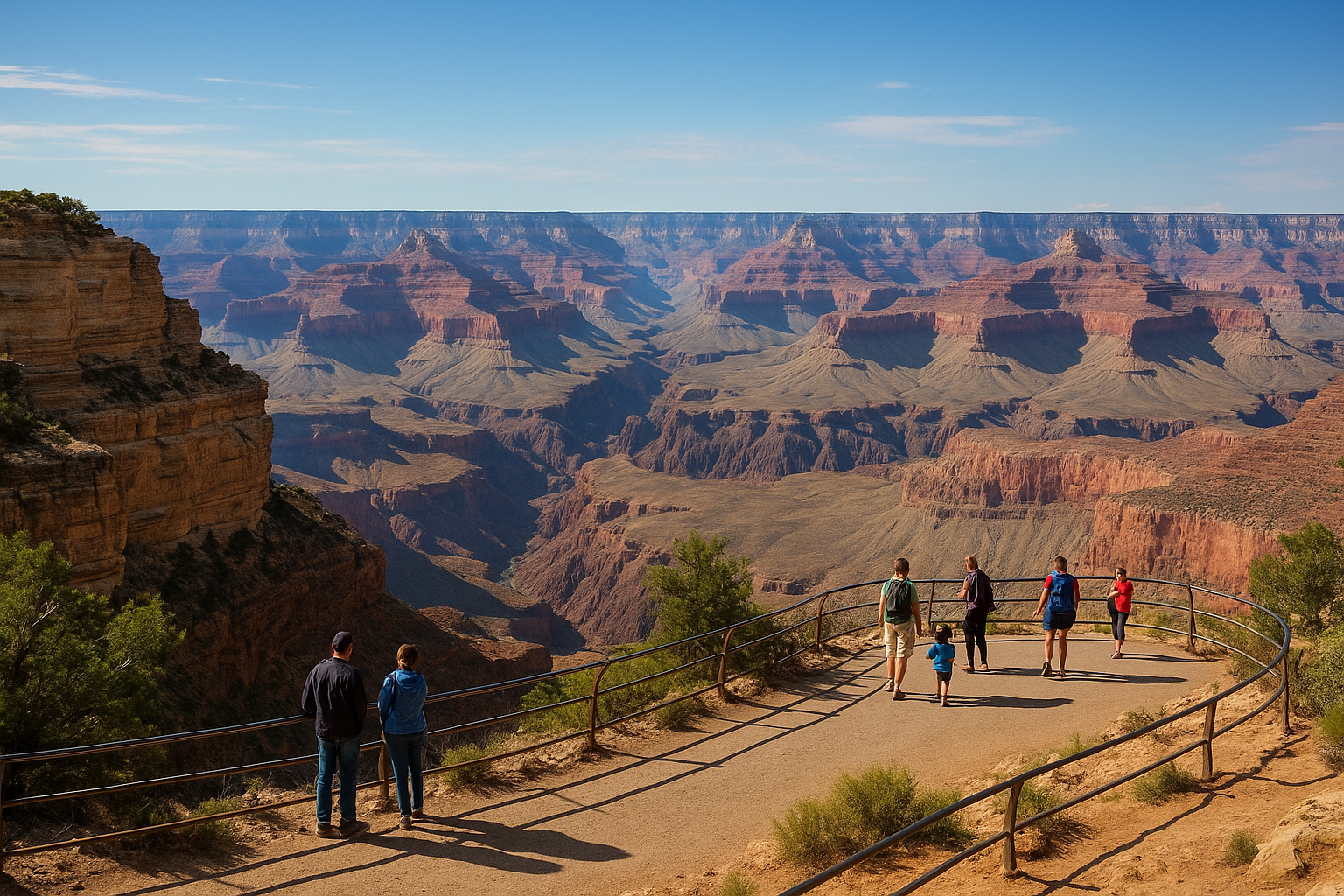
The South Rim rewards visitors who want maximum sights with minimum walking.
North Rim highlights
Bright Angel Point delivers the North Rim’s signature view, reachable via a short, paved half-mile walk from the Grand Canyon Lodge, making it accessible even for visitors short on time. Point Imperial and Cape Royal sit further down the park’s only paved road on this side, each offering a different angle on the canyon’s inner gorge and the Colorado River far below. Hikers with more stamina head down the North Kaibab Trail, the only maintained trail descending from this rim, which connects eventually to the canyon floor and the South Rim trails on the opposite side.
Comparing the experience side by side
| Activity type | South Rim | North Rim |
|---|---|---|
| Signature overlook | Mather Point | Bright Angel Point |
| Easiest walk | Rim Trail (paved) | Bright Angel Point Trail |
| Longer hike | Bright Angel Trail | North Kaibab Trail |
| Historic lodging | El Tovar Hotel | Grand Canyon Lodge |
| Unique transport | Grand Canyon Railway | None, drive-in only |
Whichever rim you choose, build in time to simply sit at an overlook rather than rushing between them, since the canyon’s scale rewards patience more than checklist-style sightseeing.
Getting from las vegas to the south or north rim
Location matters if you’re basing your trip out of Las Vegas, since neither rim sits close enough for a casual afternoon visit. Las Vegas to Grand Canyon distances run long no matter which side you pick, but the routes, road conditions, and realistic drive times differ enough to affect your itinerary. Knowing these numbers before you book a rental car or a tour saves you from underestimating how much of your day disappears behind the wheel.
Driving to the South Rim
Most travelers heading to the South Rim from Las Vegas drive roughly 275 miles, a trip that takes about four and a half hours each way on well-maintained highways through Arizona. The route runs through Kingman and Williams, with gas stations, restaurants, and rest stops along the way, which makes it manageable even with young kids in the car. Round-trip drive time alone eats up nine hours, so most visitors treat the South Rim as either a long day trip or, better, an overnight stay near the park.
Driving to the North Rim
Reaching the North Rim takes even longer despite the shorter straight-line distance, since the route swings north through Utah before crossing back into Arizona. Expect a drive of about 270 to 280 miles that stretches past five hours, longer if you hit construction or slow down for wildlife crossing the highway near the Kaibab Plateau. Nobody should attempt this drive as a same-day round trip from Las Vegas; the North Rim works far better as part of a multi-day loop that includes an overnight stay.
If you only have one day to spare from Las Vegas, the South Rim is the only realistic choice.
Skipping the drive with a guided tour
Handling that drive yourself means renting a car, navigating unfamiliar highways, and missing commentary on the landscape you’re passing through. A guided tour solves all three problems at once, pairing knowledgeable narration with transportation that lets you actually look out the window instead of watching the road. Another Side Tours runs Grand Canyon and Hoover Dam tours departing directly from Las Vegas, built around the South Rim’s shorter, more reliable travel time so you spend your day at the canyon instead of on the interstate.
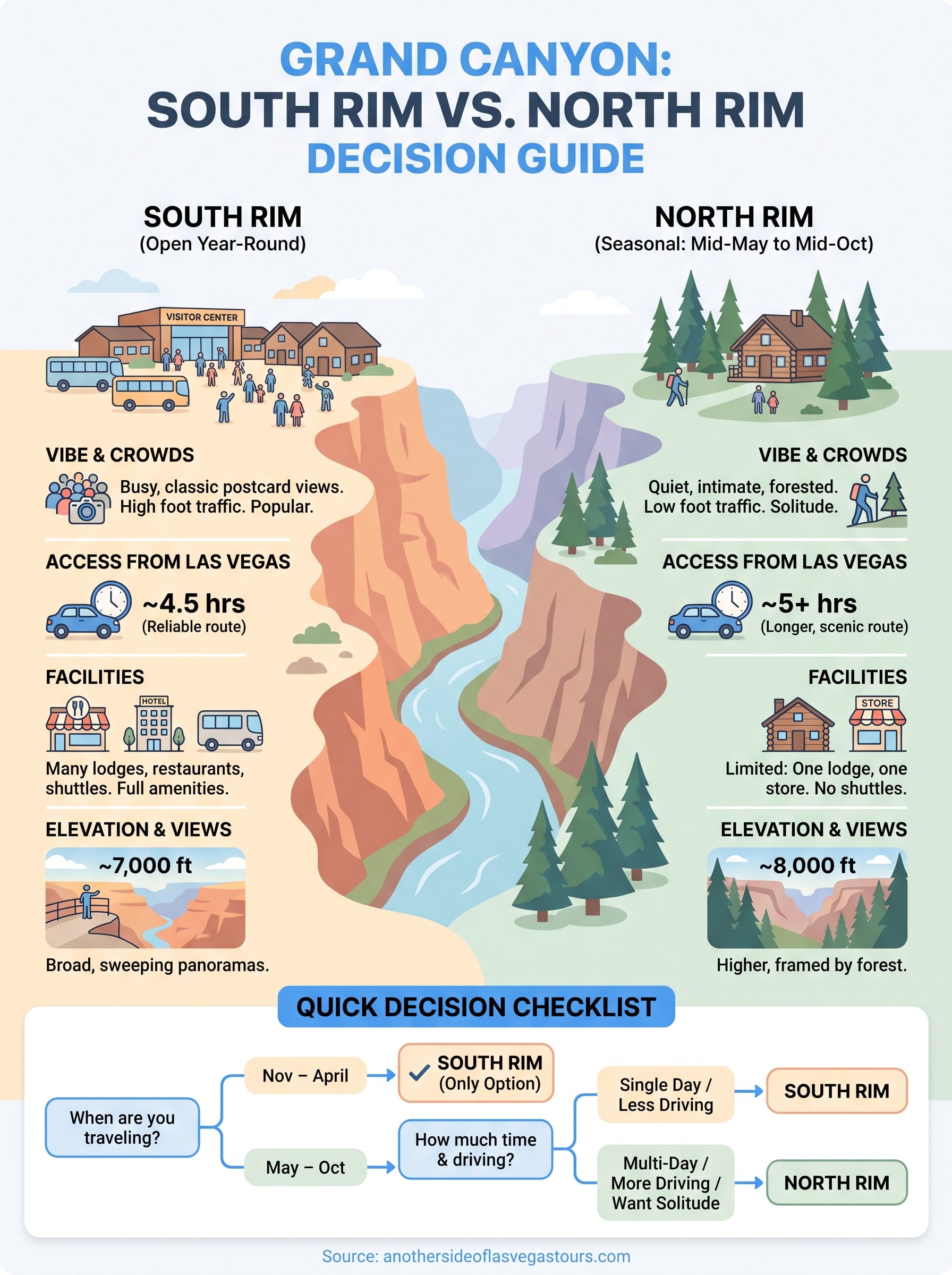
Choosing the rim that’s right for you
The grand canyon south rim vs north rim debate really comes down to your calendar and your tolerance for driving. Traveling outside the May-to-October window, staying near Las Vegas, or working with a single free day means the South Rim wins by default. Chasing solitude, forested overlooks, and a slower pace matters more to you than convenience, the North Rim delivers an experience most visitors never see, provided your dates allow it.
Either way, don’t let the drive eat your vacation. Renting a car and navigating unfamiliar Arizona highways adds stress and hours you could spend at the rim itself. Booking a seat on a guided trip removes that guesswork entirely and pairs the drive with commentary that makes the landscape make sense. If the South Rim fits your dates, check out Grand Canyon tours from Las Vegas and let someone else handle the highway while you handle the views.