
Most visitors to Las Vegas don’t realize that one of the world’s most iconic natural wonders sits just a few hours away. But once you start planning a trip to the Grand Canyon, you hit an immediate fork in the road: Grand Canyon South Rim vs West Rim, two very different experiences that attract very different visitors. Picking the wrong one for your trip can mean wasted hours in a car and missed opportunities you didn’t know existed.
The South Rim is the classic national park experience, massive panoramic views, established hiking trails, and a sense of scale that’s hard to process. The West Rim is closer to Las Vegas, home to the famous Skywalk, and operated by the Hualapai Tribe on tribal land. Each rim has real trade-offs in terms of distance, cost, crowd levels, and what you’ll actually get to do once you’re there. Neither is universally "better", it depends entirely on what matters most to you.
At Another Side Tours, we’ve guided over a million guests through Las Vegas and its surrounding natural attractions, including full-day trips to the Grand Canyon. That experience has given us a sharp sense of what visitors love, what catches them off guard, and which rim tends to be the right fit for different types of travelers. This guide breaks down every major factor, from drive times and entrance fees to views, activities, and logistics, so you can make the call with confidence.
Why the rim choice changes your whole trip
The rim you pick doesn’t just determine which canyon overlook you stand at. It shapes how long you spend in the car, what type of experience you return home talking about, and how much money you spend before you even arrive. Understanding this early in your planning saves a lot of frustration later.
It’s not just a location decision
When visitors search for information on the grand canyon south rim vs west rim, they often assume the main difference is distance. Distance matters, but it’s only one layer of a much larger decision. The South Rim sits inside Grand Canyon National Park, a federally managed area with ranger programs, multiple visitor centers, free shuttle buses, and hundreds of miles of maintained trails. The West Rim sits on Hualapai Tribal land, which means it operates under a completely different set of rules, access policies, and pricing structures.
That distinction changes what you can do once you arrive. At the South Rim, you can walk to dozens of overlooks without paying anything beyond the park entrance fee. At the West Rim, access to most viewpoints requires purchasing a package, and the famous Skywalk costs extra on top of that. You’re not comparing two versions of the same park. You’re comparing a national park to a privately managed tribal attraction, and those two things feel very different on the ground.
The rim you choose determines the entire structure of your day, from the moment you leave to the moment you return.
The logistics ripple effect
Your rim choice also determines what kind of trip is actually realistic. The South Rim sits roughly 277 miles from Las Vegas, which translates to about four to five hours of driving each way under normal conditions. That makes a self-drive day trip exhausting and leaves you very little time at the canyon itself. The West Rim, at roughly 125 miles from Las Vegas, is far more manageable as a day trip, especially when you go by tour or bus with someone else handling the driving and navigation.
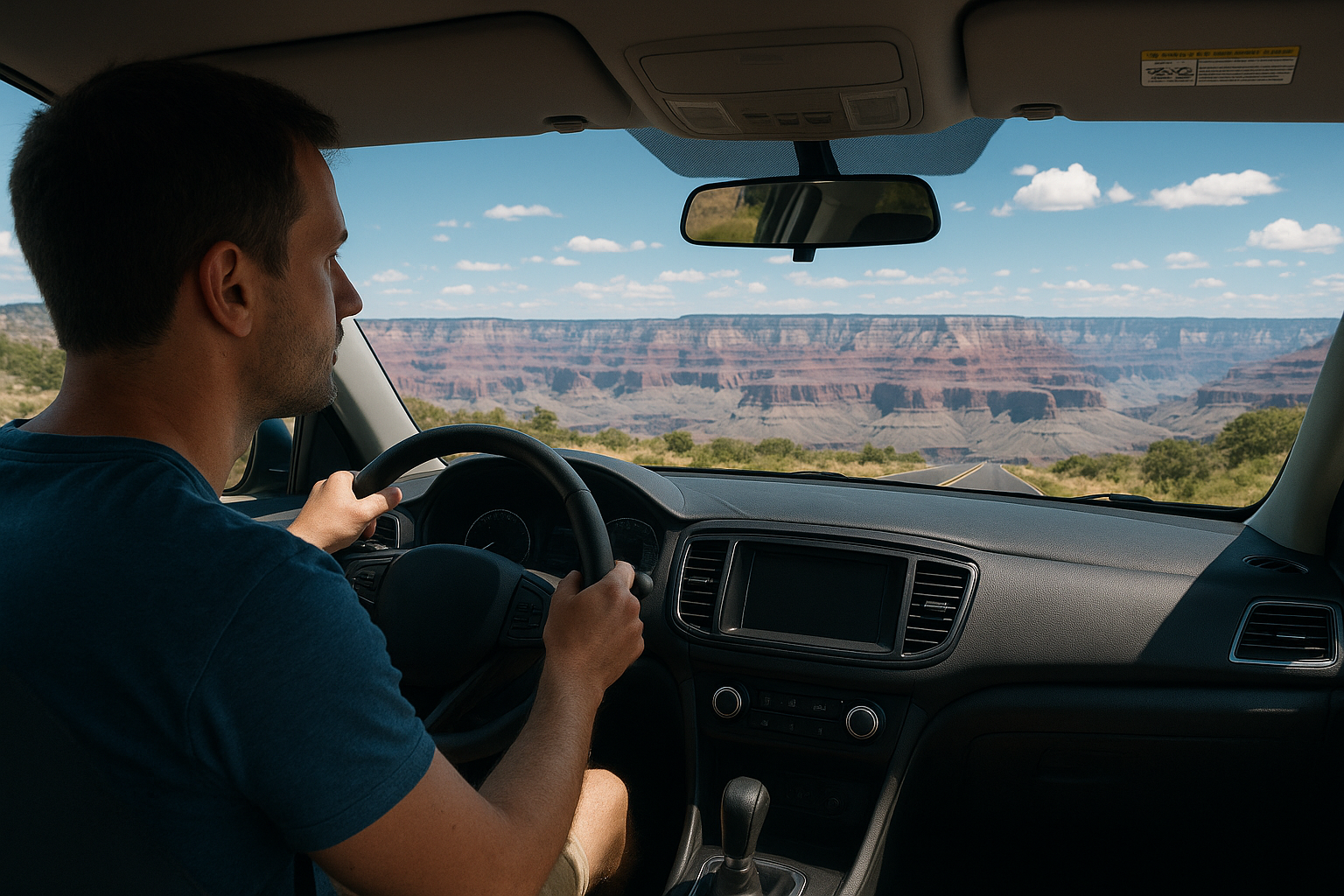
This matters more than most people realize. If you drive to the South Rim and spend close to five hours in a car, you might arrive tired, spend two or three hours at the rim, and drive back drained. That’s a very different experience from spending four focused hours at the West Rim with a knowledgeable guide managing the logistics. Overnight stays at the South Rim change the equation entirely, giving you time to hike into the canyon, watch a sunrise, and experience the park without a countdown clock running.
Matching the rim to your actual schedule is the move that most visitors miss. A first-time Las Vegas visitor on a tight two-day schedule will almost always have a better time at the West Rim, simply because the shorter drive leaves more energy for the experience itself. A traveler who has dedicated specific time to the Grand Canyon, planned an overnight stay, and wants classic hiking and panoramic scale will find the South Rim worth every extra mile.
Quick pick guide for common trip styles
Not every visitor needs to read a full comparison before deciding. If you already know your schedule, your budget range, and what kind of experience you’re after, this section gives you a fast, honest answer matched to the most common types of Grand Canyon visitors. Use this as your starting point, then dig into the sections that matter most to your specific situation.
| Trip Style | Best Rim | Primary Reason |
|---|---|---|
| Las Vegas day trip | West Rim | Shorter drive, more energy at the canyon |
| Dedicated canyon trip with overnight | South Rim | Full park access, hiking, sunrise views |
| Traveling with kids or older adults | West Rim | Compact access points, easier logistics |
| Serious hiker | South Rim | Established trails descending into the canyon |
| Budget-conscious traveler | South Rim | Lower per-person cost after the entrance fee |
| Luxury or VIP experience | Either | Helicopter options available at both rims |
If you’re on a Las Vegas-centered trip
Most people wrestling with the grand canyon south rim vs west rim question are primarily visiting Las Vegas and want to add one major natural attraction to an already packed itinerary. For this group, the West Rim wins on logistics alone. A 125-mile drive from the Strip means you arrive with energy to spare, and a guided tour eliminates every navigation headache from your day. You get the canyon, the Skywalk, and still make it back to Las Vegas in time for dinner.
If the Grand Canyon is your main destination
When the canyon itself is the central reason you made the trip, the South Rim earns the longer drive without question. You gain access to over 200 miles of maintained trails, multiple developed viewpoints, ranger-led programs, and a sense of scale that the West Rim simply cannot match. Plan at least one overnight to make the distance worthwhile and avoid spending most of your day in a car.
Booking a single overnight stay at the South Rim turns a grueling round trip into the foundation of a genuinely memorable trip.
If you’re traveling with a group or family
Mixed groups that include children, older adults, or anyone with limited mobility tend to have a smoother experience at the West Rim. The viewpoints are concentrated and accessible, the Skywalk gives everyone a shared highlight, and guided packages handle all the logistics so no one in your group is stuck navigating unfamiliar roads or managing timing on their own.
South Rim basics and what it feels like
The South Rim is Grand Canyon National Park in the form most people picture when they imagine this place. It sits at roughly 7,000 feet in elevation on the canyon’s south side, and the developed area known as Grand Canyon Village serves as the central hub for visitors. When comparing the grand canyon south rim vs west rim, the South Rim stands out immediately for sheer scale and infrastructure depth. You’re not just looking at a canyon here. You’re stepping into one of the most well-developed natural park systems in the country.
What the national park infrastructure gives you
The National Park Service manages everything at the South Rim, and that shows in the range of resources available to you. Free shuttle buses run along multiple routes connecting major overlooks, trailheads, and visitor centers, so you don’t need to drive between viewpoints once you arrive. The infrastructure removes a significant layer of stress from your day and lets you focus on the experience rather than logistics.
Here’s what that infrastructure includes in practical terms:
- Multiple visitor centers with ranger-led programs and exhibits on canyon geology and history
- Free shuttle routes covering Hermit Road, Village Route, and Kaibab Trail Route
- Maintained hiking trails ranging from easy rim walks to strenuous descents into the canyon
- Lodging, dining, and camping options within or adjacent to the park
- Accessibility-friendly overlooks at multiple points along the rim
The feeling of standing at the rim
Nothing fully prepares you for your first view from the South Rim. The canyon stretches 10 miles across at its widest point in this area, and the Colorado River sits roughly a mile below your feet. The scale produces a specific kind of silence in most visitors. You look out, you understand intellectually what you’re seeing, and then your brain takes a few extra seconds to actually process it.
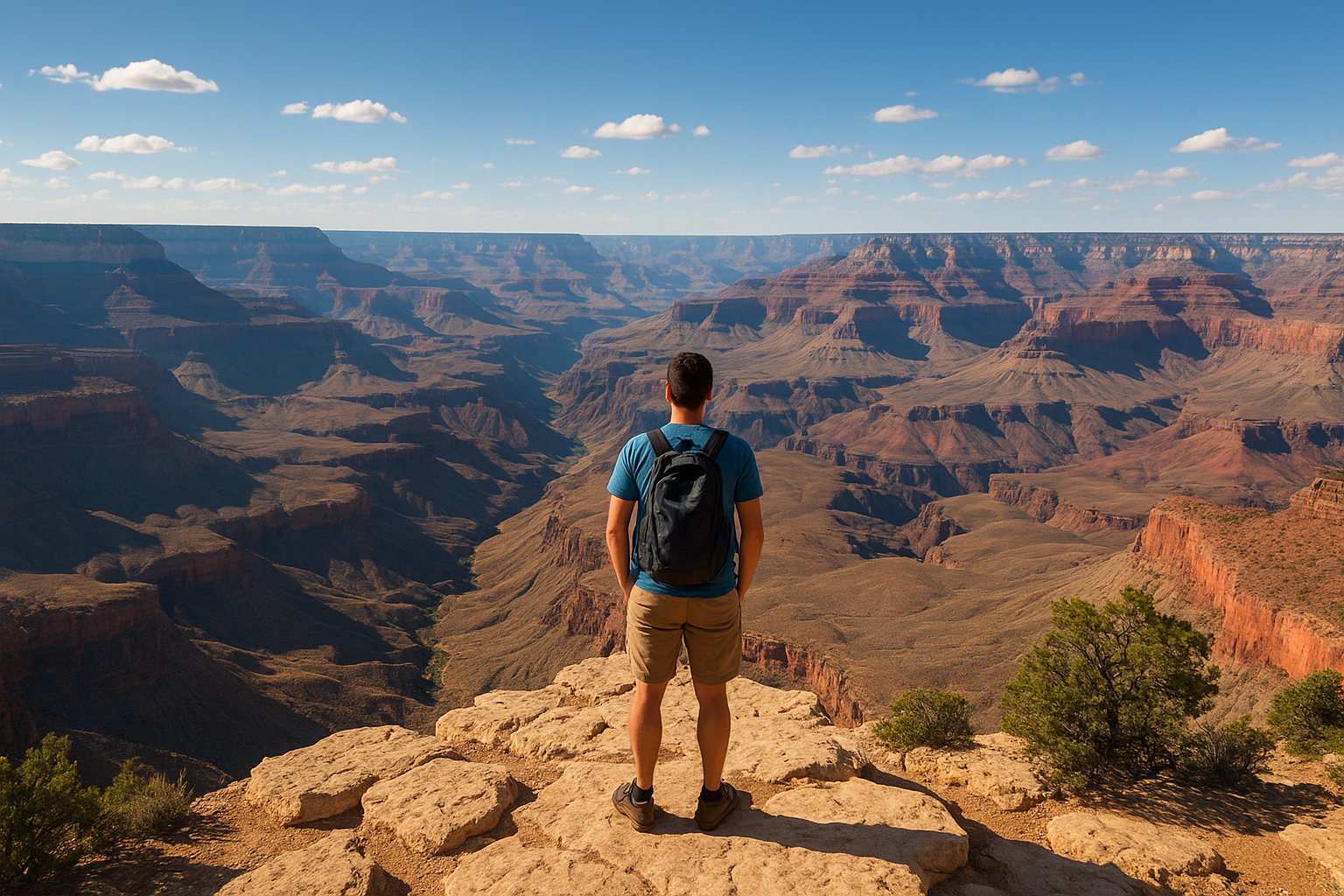
The South Rim doesn’t just show you the canyon. It forces you to reckon with how large the world actually is.
What makes the South Rim feel different from the West Rim is time and depth. Visitors who stay overnight or spend a full day here often describe the experience as something that keeps revealing itself. The light changes the canyon’s color every hour. Trails descend into the canyon walls, letting you go from observer to participant in a way that no overlook platform can replicate.
West Rim basics and what it feels like
The West Rim sits roughly 125 miles east of Las Vegas, making it the closer of the two options and the one most Las Vegas visitors end up choosing simply on drive time alone. Unlike the South Rim, this area is Hualapai Tribal land, which means the Hualapai Nation operates and controls access, sets pricing, and determines what visitors can and cannot do on arrival. That setup creates a fundamentally different kind of experience than a national park, and understanding it before you go shapes your expectations in a useful way.
What the Hualapai Tribe manages here
The Hualapai Nation has developed the West Rim into a curated visitor destination, and the experience reflects that. Access to most viewpoints requires purchasing a package that typically includes a bus shuttle from the terminal to the rim viewpoints, a meal, and entry to Eagle Point and Guano Point. The Skywalk, the glass-bottomed horseshoe bridge that extends 70 feet out over the canyon, carries an additional fee on top of that package. Many visitors are surprised by this pricing structure when they arrive, so knowing it in advance helps you budget realistically.
The viewpoints at the West Rim are concentrated and accessible, which works in your favor if you’re visiting with a mixed group or anyone who has difficulty with uneven terrain. You’re not walking miles between overlooks. Instead, a short bus route connects the main points, and the entire visit stays compact and manageable.
For the grand canyon south rim vs west rim comparison, the West Rim’s strength lies in accessibility and proximity, not breadth.
The feeling of standing at the rim here
The West Rim canyon views are genuinely impressive, but they feel contained compared to the South Rim. The canyon is narrower at this location, and the depth is striking without producing that particular sense of overwhelming scale that visitors describe at the South Rim. What the West Rim delivers instead is a sharper, more structured highlight: the Skywalk puts you physically over the canyon in a way no overlook platform anywhere else can replicate.
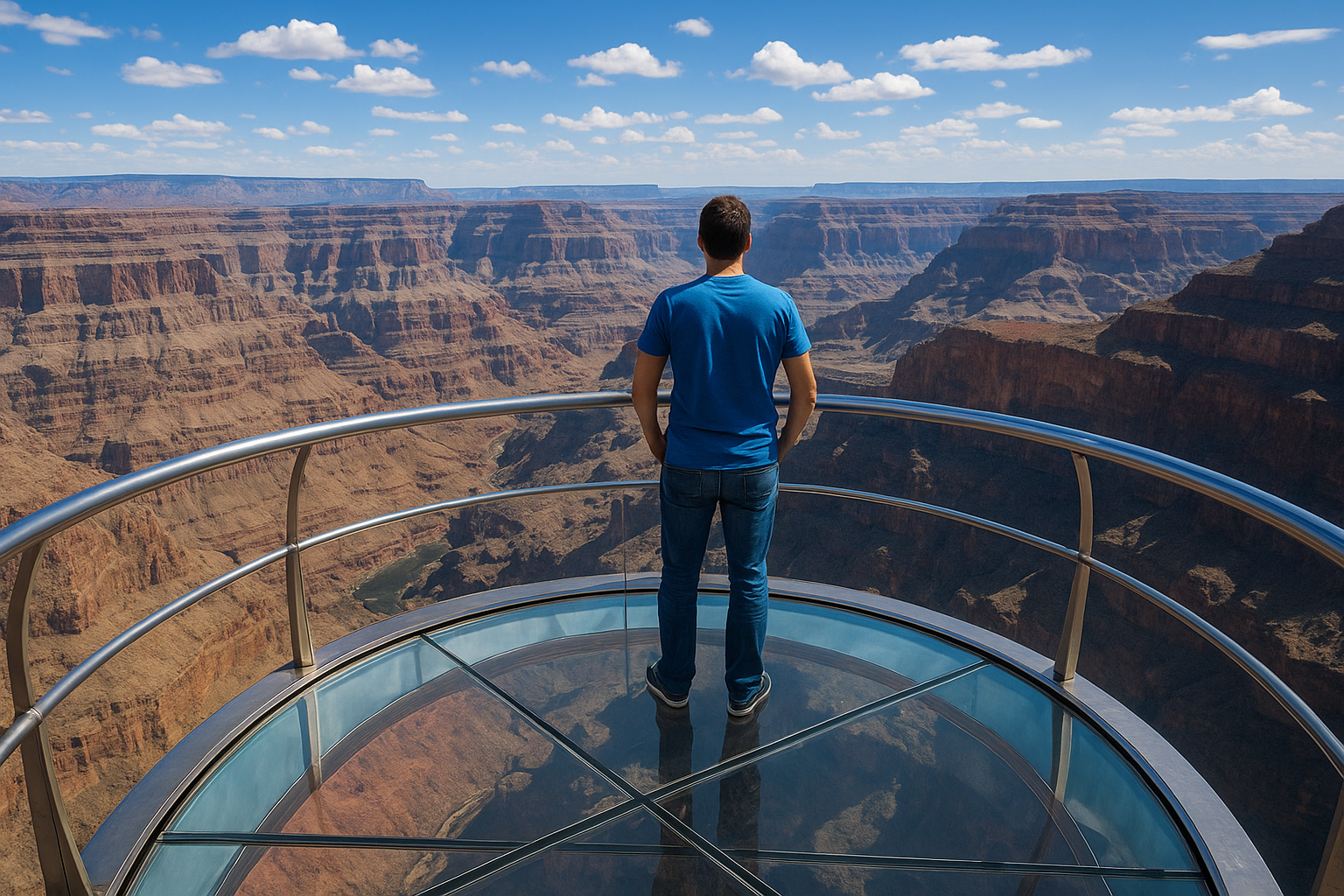
Standing on the Skywalk with nothing but glass beneath your feet and the canyon floor over 4,000 feet below produces a specific kind of adrenaline response. Most visitors grip the railing instinctively, even when they know the glass is engineered to hold the weight. That’s the moment the West Rim is built around, and for many visitors, it’s enough.
Views and photo spots compared
When you’re deciding between the grand canyon south rim vs west rim, the quality and variety of viewpoints often become the deciding factor. Both rims deliver genuine canyon views, but the character of what you see, and where you can stand to photograph it, differs significantly between the two locations.
South Rim viewpoints and photography
The South Rim gives you continuous rim access across miles of developed overlooks, each offering a slightly different angle on the canyon. Mather Point is where most visitors take their first look, and it earns its popularity with a broad panorama that captures the canyon’s full width and the Colorado River threading far below. Hopi Point on Hermit Road is the go-to sunset spot, where the canyon’s layered rock walls catch warm light in a way that rewards any camera. Yavapai Point adds a geology museum nearby, so you can look at the canyon and then immediately understand what you’re seeing.
The South Rim’s depth of viewpoints means you can spend an entire day shooting the same canyon from a dozen different perspectives and return with a genuinely varied set of images.
Lipan Point on the East Rim Drive captures a wide bend in the Colorado River that most visitors never reach, which makes it one of the less crowded and more dramatic spots on the entire rim. Desert View Watchtower, the historic stone structure near the eastern entrance, gives you elevated views from a man-made vantage point that frames the canyon in a way flat overlooks simply can’t replicate.
West Rim viewpoints and photography
The West Rim concentrates its photography around two primary viewpoints: Eagle Point and Guano Point. Eagle Point sits directly above the Skywalk and gives you a clear look at a natural rock formation shaped roughly like an eagle with wings spread. Guano Point offers the most open panoramic view at the West Rim, with a wider field of vision and fewer structures in your frame than you get near the Skywalk itself.
The Skywalk creates a unique photography challenge: personal cameras and phones aren’t permitted on the walkway itself, so your only Skywalk photos come from the official photographers stationed there. You can purchase those images on-site. What you can photograph freely from the rim edge near Eagle and Guano Points still captures striking canyon depth, though the narrower canyon width at this location means your shots feel more vertical than expansive.
Activities and tours compared
The activity gap between the grand canyon south rim vs west rim is one of the most significant differences between the two locations, and it’s one that many visitors underestimate when planning their trip. What you can actually do once you arrive shapes the quality of your day far more than any view from a parking lot overlook.
What you can do at the South Rim
The South Rim gives you the widest range of activities of any canyon destination in the region. Hiking into the canyon is the signature experience here, with the Bright Angel Trail and the South Kaibab Trail both descending from the rim in stages, letting you go as deep as your fitness and time allow. Ranger-led programs run throughout the day covering canyon geology, wildlife, and Native American history, and these programs are included with your entrance fee at no additional cost.
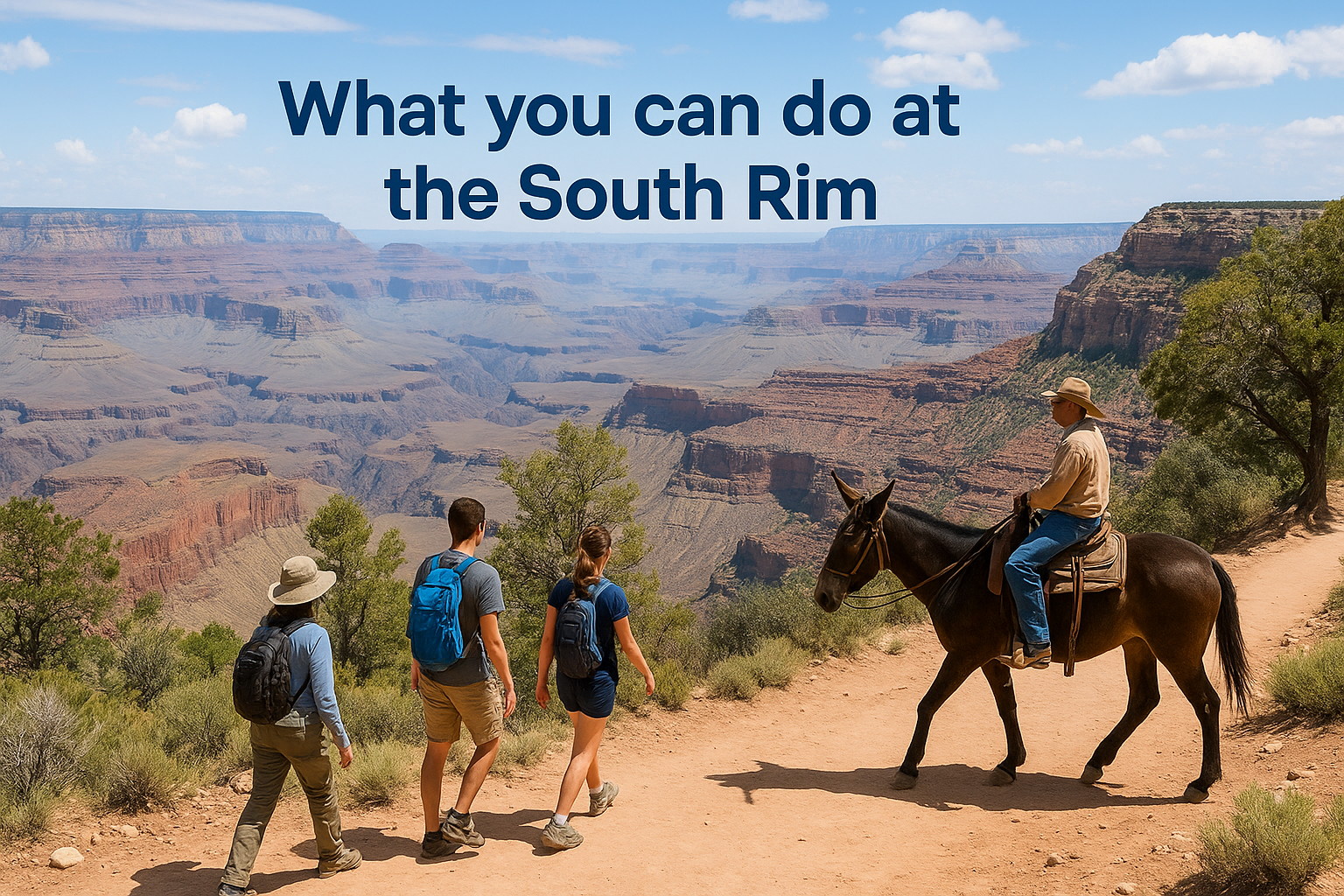
The South Rim’s trail system lets you shift from observer to participant in a way that no other canyon destination can match.
Beyond hiking, you can join mule rides that descend into the canyon, take guided geology walks, or simply spend hours moving between overlooks on the free shuttle system. For visitors who want air access, helicopter tours operating from Grand Canyon Airport near Tusayan provide aerial views of the inner canyon from above.
What you can do at the West Rim
The West Rim builds its activity list around a smaller set of sharper highlights. The Skywalk is the centerpiece, and for most visitors it delivers a genuine physical reaction that no hiking trail replicates. Beyond the Skywalk, you can take a zipline over a side canyon, ride an open-air vehicle along rim viewpoints, or book a helicopter ride that descends all the way to the canyon floor for a boat ride on the Colorado River. That river experience is only available at the West Rim and stands as one of the most memorable add-ons any canyon visitor can book.
Activities at the West Rim are packaged and priced individually, so your total cost depends on how many you add. Guided tours departing from Las Vegas often bundle several of these into a single package, which simplifies logistics and pricing. For visitors who want a concentrated set of memorable moments rather than a full day of exploration, the West Rim’s activity structure works well.
Drive times, day trips, and overnights
Distance is the single most practical factor in the grand canyon south rim vs west rim decision, and it affects everything from how tired you feel at the overlook to whether a day trip is even realistic. The West Rim sits roughly 125 miles from the Las Vegas Strip, which translates to about two to two and a half hours each way under normal traffic. The South Rim stretches to approximately 277 miles, putting your one-way drive somewhere between four and five hours depending on conditions and your starting point.
West Rim: built for the Las Vegas day trip
The West Rim fits a single day cleanly. You leave Las Vegas in the morning, arrive with energy left, spend three to four solid hours at the rim, and return in the early evening without feeling wrecked. A guided tour makes this structure even smoother because you hand off the driving entirely and spend both legs of the trip relaxing rather than navigating.
If you have one free day in Las Vegas and want the Grand Canyon on your itinerary, the West Rim is the only rim that realistically delivers.
The compact geography of the West Rim works in your favor on a tight schedule. The main viewpoints at Eagle Point and Guano Point sit close together, and the shuttle system connects them quickly. You won’t lose an hour walking between highlights, which matters when your window at the canyon is limited.
South Rim: the case for staying overnight
A self-drive day trip to the South Rim is technically possible but rarely satisfying. You spend roughly nine to ten hours in a car for a visit window that shrinks to two or three hours once you account for stops and fatigue. The canyon deserves more than that, and so do you.
Booking one night at Grand Canyon Village changes the math completely. You arrive in the afternoon with time to reach a sunset overlook, wake up early for the rim at sunrise, and spend the morning hiking before heading back. That structure gives you a genuinely different relationship with the canyon rather than a rushed glance from a parking lot. Lodging inside the park books up months in advance, so plan that overnight as early as possible if the South Rim is your target.
Costs, fees, and what’s included
The cost structure for the grand canyon south rim vs west rim comparison surprises most visitors because the two rims operate under completely different pricing systems. Understanding what you actually pay for before you book prevents the frustration of arriving and discovering that the experience you expected costs significantly more than you planned.
South Rim fees and what they cover
The South Rim charges a standard National Park entrance fee of $35 per vehicle, which covers every person in your car and remains valid for seven consecutive days. That single fee unlocks full access to every overlook, all shuttle bus routes, ranger programs, and hiking trails on the rim. No additional charges apply for walking to Mather Point, riding the Hermit Road shuttle, or joining any ranger-led interpretive program. If you visit multiple national parks in a year, the America the Beautiful Annual Pass at $80 covers entrance to all of them, making the South Rim effectively free if you already hold one.
The South Rim’s flat entrance fee is one of the best values in the national park system once you account for everything it covers.
Overnight lodging inside the park adds to your total, with rooms at Bright Angel Lodge and other in-park options ranging from roughly $100 to $300 per night depending on room type and season. These book months in advance, so budget for this early.
West Rim fees and what they cover
The West Rim uses a package-based pricing model that works differently from any national park. A standard entry package covering bus access, Eagle Point, Guano Point, and a meal typically runs $50 to $75 per person, depending on the operator and season. The Skywalk costs an additional $30 or more on top of that package, and any add-ons like the zipline, helicopter descent, or Colorado River boat ride carry separate fees that stack quickly.
Your total West Rim spend can range widely based on what you select. A visitor who buys the base package and skips the Skywalk spends less than the South Rim entrance fee. A visitor who adds the Skywalk, helicopter, and river experience can spend several hundred dollars per person before accounting for transportation. Guided tours from Las Vegas often bundle several West Rim elements into a single price, which simplifies the math and typically delivers better value than purchasing each piece individually on arrival.
Weather, crowds, and best seasons
Timing your visit affects the quality of your experience at both rims far more than most trip planners expect. The grand canyon south rim vs west rim comparison shifts depending on the month you visit, because each location has its own crowd patterns, temperature ranges, and seasonal trade-offs that can make or break a day trip.
South Rim weather and crowd patterns
The South Rim sits at roughly 7,000 feet in elevation, which keeps summer temperatures significantly cooler than the desert floor below. Rim temperatures in July and August typically stay in the 70s to low 80s Fahrenheit, while the inner canyon can exceed 110 degrees. That elevation also brings afternoon thunderstorms in July and August, which roll in quickly and can make rim walks uncomfortable for an hour or two before clearing. Winters bring real cold to the South Rim, with snow common from November through March, and some roads temporarily close after heavy snowfall.
Spring and fall deliver the best overall conditions at the South Rim: moderate temperatures, drier skies, and noticeably thinner crowds than the summer peak.
Peak season runs from Memorial Day through Labor Day, when the park draws its largest crowds and parking fills early at Mather Point and the main village area. If you visit in summer, plan to arrive before 9 a.m. or rely on the free shuttle system rather than driving between overlooks yourself.
West Rim weather and crowd patterns
The West Rim sits at a lower elevation than the South Rim, which pushes temperatures higher in summer. July and August highs regularly reach the mid-90s Fahrenheit at the rim and climb well above 100 degrees in the canyon below. If you’re visiting in summer, start your day as early as your tour or drive allows to avoid peak afternoon heat at the viewpoints. Winter at the West Rim stays mild compared to the South Rim, with daytime temperatures often ranging from 50 to 65 degrees Fahrenheit, making it a reasonable year-round destination.
Crowds at the West Rim concentrate heavily on weekends and holidays when Las Vegas visitor volume peaks. Weekday visits during spring or fall offer noticeably shorter wait times at the Skywalk and less congestion at Eagle Point. If the Skywalk experience matters to you, a Tuesday or Wednesday visit in April or October gives you the best combination of comfortable weather and manageable crowds without sacrificing any of the views.
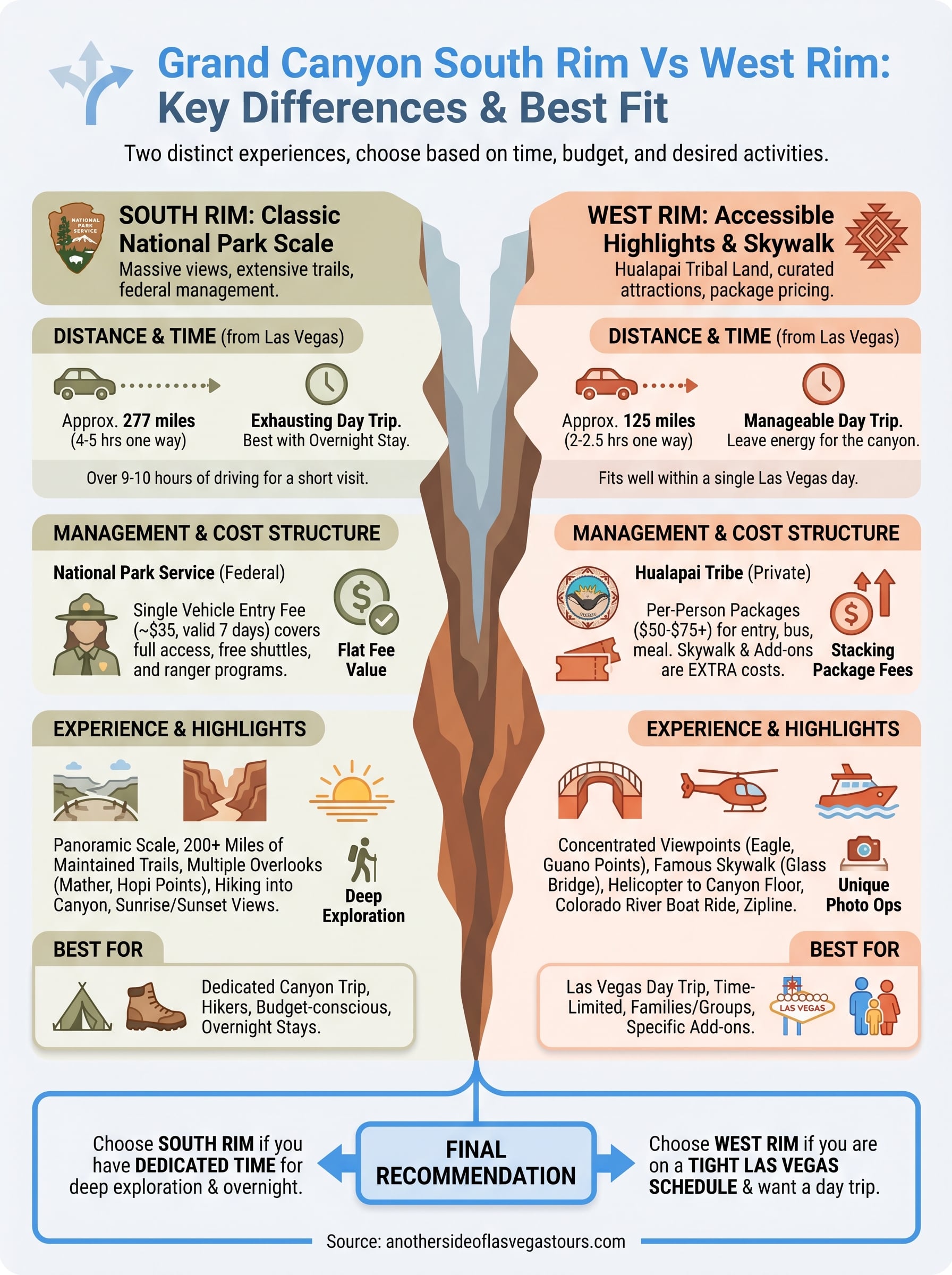
Final recommendation
The grand canyon south rim vs west rim decision comes down to one honest question: how much time do you actually have? If Las Vegas is your home base and you have one day to work with, go to the West Rim. The shorter drive preserves your energy, the Skywalk delivers a moment you won’t forget, and a guided tour handles every logistical detail. If you’ve carved out dedicated time for the canyon itself, the South Rim earns the extra miles through sheer scale, trail access, and a depth of experience that stays with you long after you leave.
Neither rim disappoints a visitor who shows up knowing what to expect. Pick the one that fits your schedule, not the one that sounds more impressive on paper. When you’re ready to plan your trip with expert guidance, book a private Las Vegas tour and let us help you make every hour count.