
If you’re planning a trip to Vegas, one of the first questions you’ll ask is how long to walk the Las Vegas Strip. It’s a fair question, and the answer surprises most people. The Strip stretches 4.2 miles from end to end, and walking the full length takes roughly 90 minutes to two hours at a steady pace. But nobody walks at a steady pace on the Strip. Stops for photos, crowds, crosswalks, and casino detours add up fast.
At Another Side Tours, we’ve spent nearly two decades guiding visitors through Las Vegas on foot, by van, and from the air. We know exactly where the Strip slows you down and where most people run out of steam. That firsthand experience is baked into everything below.
This guide breaks down the real time and distance you should plan for, section by section, with practical tips to help you decide how far to walk, and when it makes more sense not to.
Step 1. Define what you mean by the Strip
The term "Las Vegas Strip" gets thrown around loosely, and that vagueness can throw your planning off by an hour or more. Before you calculate how long to walk the Las Vegas Strip, you need to decide which version of the Strip you’re actually planning to cover. The distance changes significantly depending on where you start and where you stop.
Most visitors assume the Strip is a single walkable stretch, but it has three distinct sections with very different time commitments.
The official boundaries
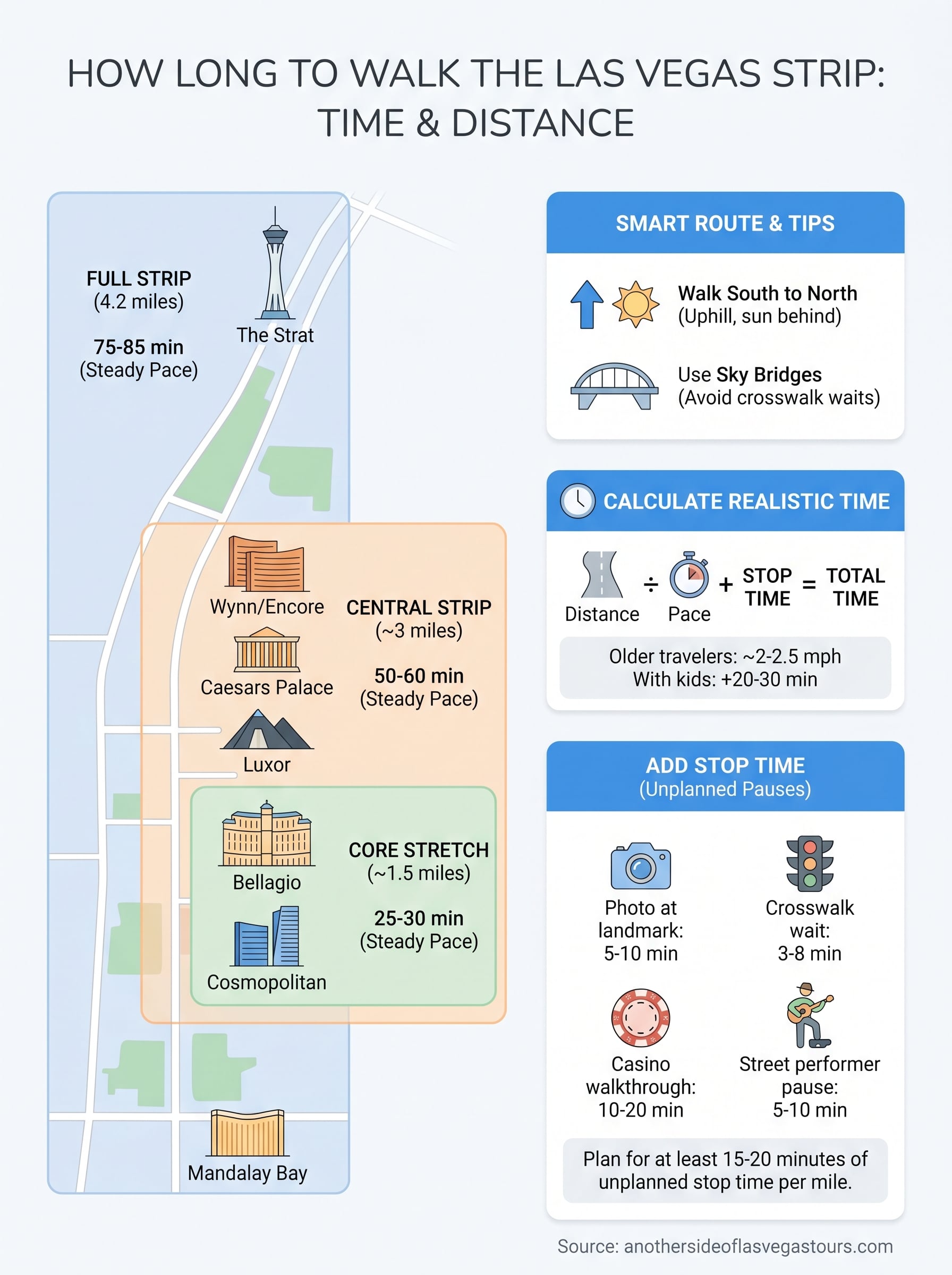
The official Las Vegas Strip runs along Las Vegas Boulevard South from Mandalay Bay in the south to the Strat Hotel at the north end. That total distance is 4.2 miles. This is the benchmark most guides use when they give you a walking time estimate, and it includes every major resort casino along the boulevard.
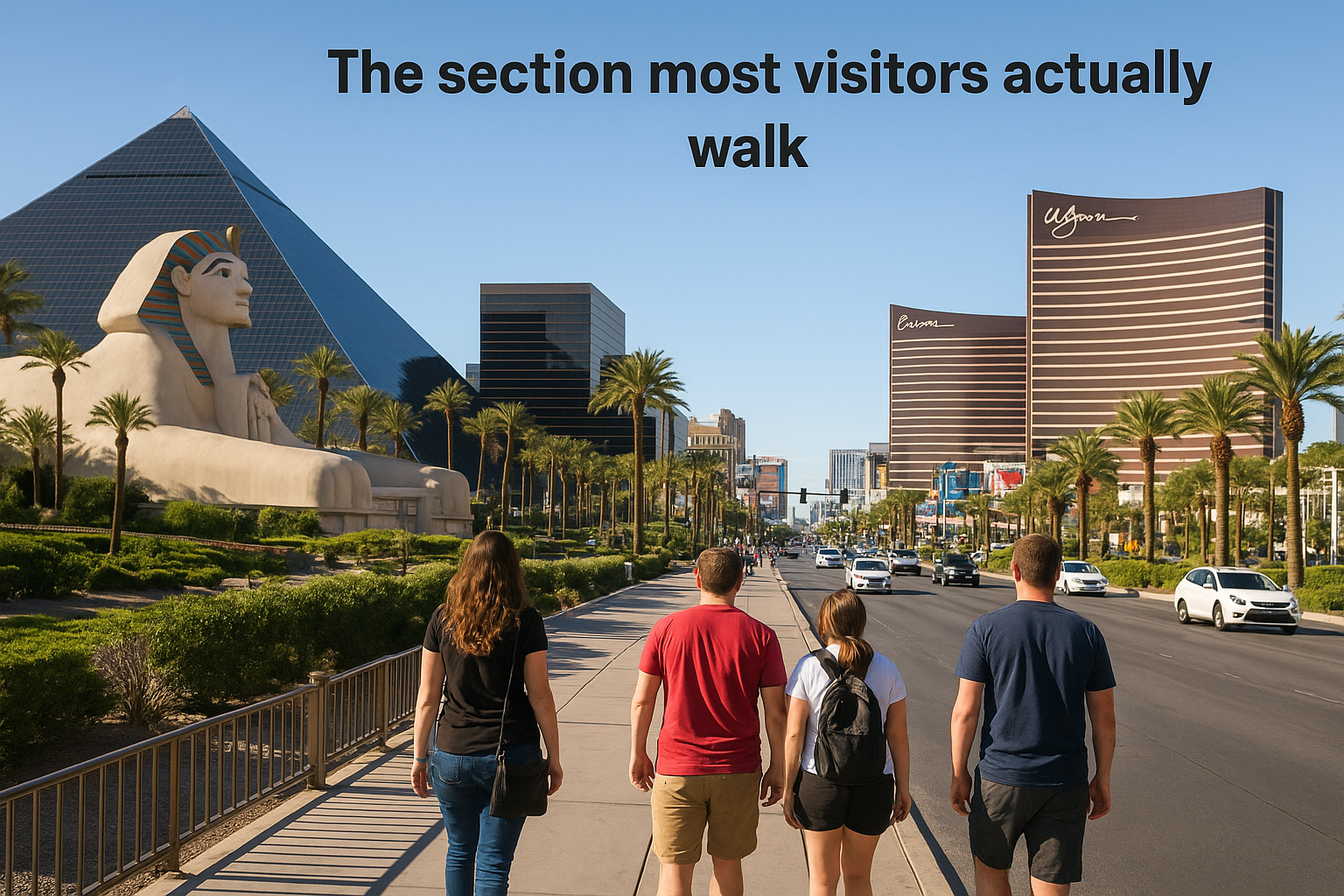
The section most visitors actually walk
Most people focus their time on the central Strip, which runs from around the Luxor or Mandalay Bay up to Wynn and Encore at the north end of the main resort cluster. This section covers roughly 3 miles and holds the highest density of hotels, restaurants, attractions, and entertainment options.
Below that, you have the core walkable stretch around the Bellagio, Caesars, and the Cosmopolitan, which is only about 1.5 miles but takes longer per block because of crowds and crosswalk waits.
| Strip Section | Approximate Length | Key Landmarks |
|---|---|---|
| Full Strip | 4.2 miles | Mandalay Bay to The Strat |
| Central Strip | ~3 miles | Luxor to Wynn/Encore |
| Core walkable stretch | ~1.5 miles | Bellagio to Caesars area |
Picking your version before you leave your hotel saves you from planning a 4-mile walk and running low on energy before you reach the places that matter most to you.
Step 2. Calculate your walking time
Once you know which section you’re walking, you can put a number on it. The standard adult walking pace is 3 to 3.5 miles per hour, which means a fit adult covering the full 4.2-mile Strip would finish in about 75 to 85 minutes if nothing stopped them. On the Strip, something always stops you.
Use pace and distance together
A simple formula works well here: divide your planned distance by your expected pace, then add buffer time. If you’re covering the central 3-mile section, that’s roughly 50 to 60 minutes of pure walking. The core 1.5-mile stretch between Bellagio and Caesars runs about 25 to 30 minutes at a brisk pace.
If you’re walking with kids, add 20 to 30 minutes to any of these estimates before you account for stops.
| Strip Section | Walking Distance | Time at Steady Pace |
|---|---|---|
| Full Strip | 4.2 miles | 75-85 minutes |
| Central Strip | ~3 miles | 50-60 minutes |
| Core stretch | ~1.5 miles | 25-30 minutes |
Factor in age and fitness level
Your personal pace matters as much as the distance when you’re figuring out how long to walk the Las Vegas Strip. Older travelers or anyone with mobility concerns should plan for a slower pace, closer to 2 to 2.5 miles per hour. That bumps the full-Strip walk to well over two hours of movement alone, before any stops.
Step 3. Choose a route and direction
The direction you walk matters more than most people expect when planning how long to walk the Las Vegas Strip. Starting at the wrong end can leave you depleted before you reach the spots you most wanted to see, and picking a smart route front-loads your energy where it counts most.
Walk south to north
Starting at Mandalay Bay in the south and walking north toward Wynn works in your favor for a few reasons. The Strip runs slightly uphill from south to north, which is barely noticeable for the first mile but adds up by mile three. Walking north also means you finish closer to the Fremont Street area if you plan to extend your day, giving you a clear endpoint instead of turning around and retracing your steps.
Starting south also puts the afternoon sun behind you, which matters a lot when temperatures in Las Vegas regularly hit the 90s and above.
Use the sky bridges
The Strip’s pedestrian sky bridges at major intersections are worth your attention. Crosswalk waits at ground level can stretch 5 to 10 minutes at busy intersections during peak afternoon hours. Using the bridges at Tropicana, Flamingo, and Spring Mountain Road keeps your pace consistent and your total walking time far closer to what you planned before you left the hotel.

Step 4. Add realistic stop time
Pure walking time tells you the floor, not the ceiling. Every stop you make on the Strip adds minutes that stack up faster than you expect, and failing to account for them is the main reason visitors feel rushed or end up skipping the spots they most wanted to see. Knowing how long to walk the Las Vegas Strip means building stop time into your plan before you leave your hotel, not hoping it works out on the day.
What eats your time on the Strip
The biggest time consumers are rarely the ones you planned for. Photos at landmarks and crosswalk waits pull you off pace constantly, but casino lobbies, street performers, and outdoor attractions like the Bellagio fountains are easy 10 to 20 minute pauses you never see coming.
Plan for at least 15 to 20 minutes of unplanned stop time for every mile you walk.
| Type of Stop | Estimated Time |
|---|---|
| Photo at a landmark | 5-10 minutes |
| Crosswalk wait | 3-8 minutes |
| Quick casino walkthrough | 10-20 minutes |
| Street performer pause | 5-10 minutes |
Build a stop budget into your plan
Add your planned stops to your base walking time before you head out. If you want to see three or four specific attractions, block 20 to 30 minutes each, then add 15 minutes of buffer per mile for unplanned pauses. A three-mile central Strip walk with four planned stops realistically takes closer to three hours, not one.
Step 5. Use smart walking tips
A few practical adjustments can shave time off your walk and keep you moving comfortably for longer. Knowing how long to walk the Las Vegas Strip is only useful if your body holds up for the full distance, and the Strip’s environment works against you in ways that aren’t obvious until you’re already out there.
Dress and hydrate for the conditions
Wear cushioned, broken-in shoes and carry water, even if the weather looks mild. Las Vegas pavement radiates heat in summer, and the combination of sun, dry air, and concrete drains your energy faster than comparable walks at home. A small backpack with water, sunscreen, and a light layer for air-conditioned casino interiors covers most situations without adding bulk.
Skipping proper footwear is the single most common reason visitors cut their Strip walks short.
Time your walk around the crowds
The Strip is most congested between 7 PM and midnight, when foot traffic at crosswalks and casino entrances slows everyone down. If you want a faster, more predictable walk, start before noon or after 9 AM on weekdays to avoid the thickest crowds. Morning walks also give you cooler temperatures and better photo lighting at outdoor landmarks like the Bellagio fountains.
Ready to See It Without the Guesswork
Now you have a clear picture of how long to walk the Las Vegas Strip and what actually drives that number up. The full 4.2-mile route takes well over two hours once you account for stops, crowds, and crosswalk waits. Breaking the Strip into sections and building stop time into your plan before you head out makes the difference between a walk that feels manageable and one that leaves you worn out before you reach the spots you came to see.
Walking the Strip on your own is absolutely doable, but sometimes you want someone else to handle the route, the timing, and the insider context so you can focus on enjoying it. That’s exactly what our guides do. If you’d rather move through the city with expert narration and a stress-free itinerary, check out our private Las Vegas tours and see which experience fits your trip.