
Planning a trip to one of Nevada’s most stunning natural landmarks? The Valley of Fire State Park entrance fee is one of those small details that’s easy to overlook until you’re pulling up to the gate. As of 2026, the cost depends on whether you’re a Nevada resident or an out-of-state visitor, and there are a few extra charges worth knowing about before you go.
At Another Side Tours, we’ve driven thousands of guests through Valley of Fire as part of our guided Las Vegas tours. We’ve watched people fumble for cash at self-pay stations, miss out on annual pass savings, and show up without knowing what payment methods actually work. This guide pulls from that hands-on experience to give you every fee, tip, and workaround you need.
Below, you’ll find the current admission prices for vehicles, bikes, and camping, along with practical advice on how to pay, who qualifies for discounts, and whether a Nevada State Parks pass is worth the investment. We’ll also cover a few things that catch first-time visitors off guard, so you can spend less time at the entrance and more time inside one of the most photogenic parks in the Southwest.
2026 entrance fees at a glance
The valley of fire state park entrance fee breaks down into four main categories: day-use vehicles, bicycles, camping without hookups, and camping with hookups. Nevada separates resident from non-resident pricing for vehicle entry, so your license plate actually matters when you pull up to the booth or self-pay station. Every other fee category charges a flat rate regardless of where you’re from.
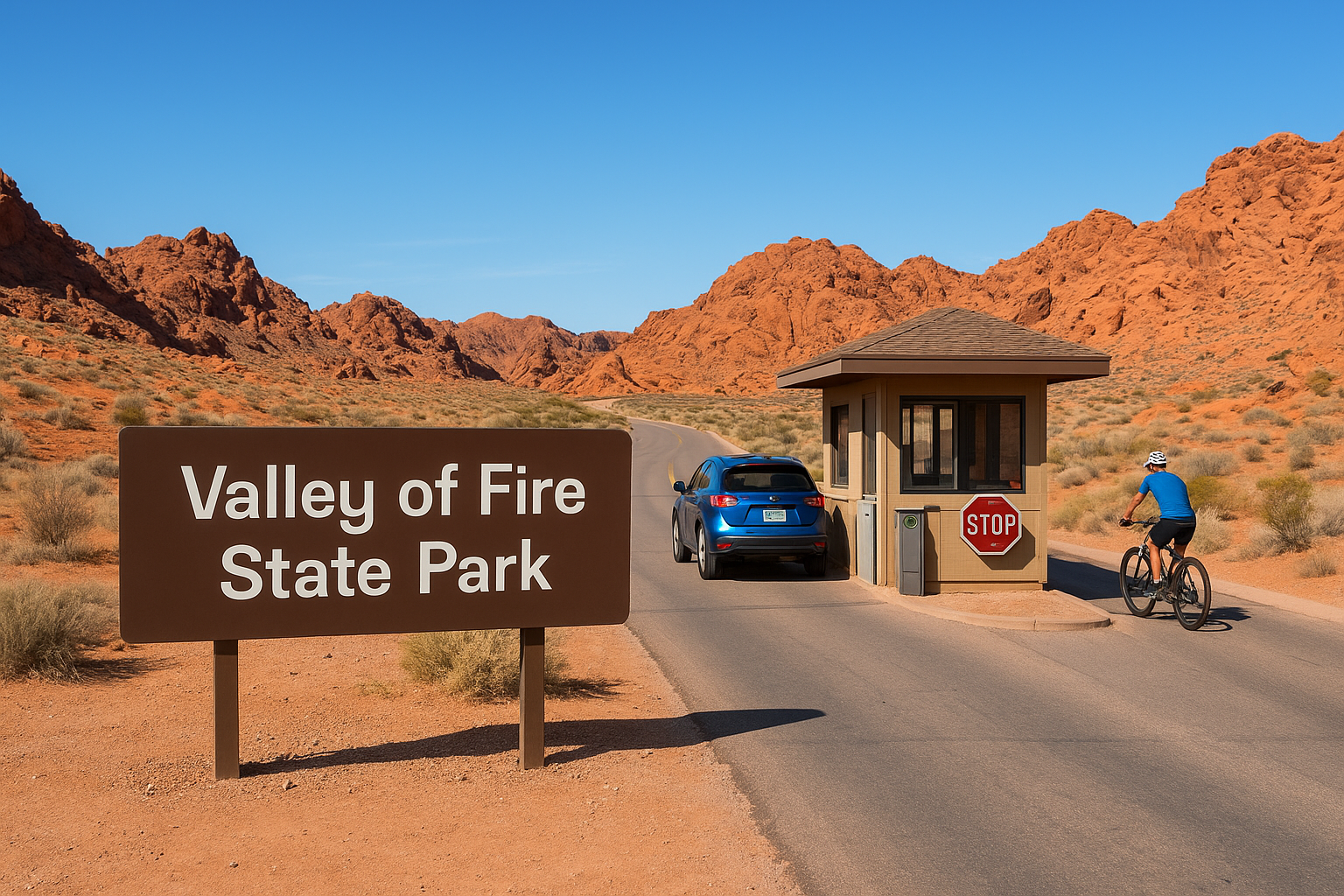
Always carry both cash and a card. Some self-pay kiosks accept credit cards, but not all units are reliable, and having exact change prevents delays when the booth is unstaffed.
Day-use vehicle fees
Your vehicle class and Nevada residency status set the base cost for entry. The table below shows what you can expect to pay at the gate in 2026.
| Vehicle Type | Non-Resident Fee | Nevada Resident Fee |
|---|---|---|
| Standard passenger vehicle | $15 | $10 |
| Motorcycles | $15 | $10 |
| Commercial vehicles / buses | Contact park directly | Contact park directly |
Nevada residency is verified by a current Nevada-issued license plate on your vehicle. If you’re renting a car in Las Vegas and the rental has Nevada plates, you may qualify for the resident rate, though this is not guaranteed and the booth attendant makes the final call. Out-of-state plates pay the non-resident rate without exception.
Bicycle and pedestrian entry fees
Cyclists and pedestrians entering on foot pay a flat fee of $5 per person regardless of residency. This applies to anyone arriving at the park boundary without a motor vehicle. If you’re part of an organized cycling group, each rider pays separately. There is no group rate for non-motorized entry.
Bicycles are not permitted on hiking trails inside the park, only on paved roadways. If you plan to ride and then hike, factor in where you’ll secure your bike before heading off-road, since there are no staffed bike storage areas inside the park.
Camping fees
Camping at Valley of Fire adds a nightly fee on top of the standard vehicle day-use charge. The park offers two main campgrounds: Atlatl Rock Campground and Arch Rock Campground. Each has both hookup and non-hookup sites.
| Campsite Type | Nightly Fee |
|---|---|
| Standard site (no hookups) | $20 |
| Site with electrical hookup | $35 |
| Site with full hookups | $40 |
Reservations are strongly recommended from February through May and again in October and November, which are the park’s peak seasons. You can book through the Nevada State Parks reservation system. Walk-in availability exists but fills quickly on weekends and holidays. If you arrive without a reservation and the campground is full, you’ll still owe the day-use vehicle fee even if you turn around and leave.
Annual pass options
Nevada State Parks offers an annual day-use pass for $75, which covers vehicle entry at all state parks including Valley of Fire for 12 months from the date of purchase. If you plan to visit more than five times in a year, or if you’re combining Valley of Fire with visits to other Nevada parks like Berlin-Ichthyosaur or Cave Lake, the annual pass pays for itself quickly.
The pass does not cover camping fees, which you still pay per night. It also does not apply to commercial vehicles or group tours booked through outside operators. If you’re visiting as part of a guided tour, your operator handles the entry cost separately, so check with them before purchasing a pass for a single guided visit.
What changes the price you pay
Three main factors determine how much you’ll spend on the valley of fire state park entrance fee: your license plate’s state of registration, what you’re driving, and whether you add camping to your visit. Understanding each one before you arrive helps you avoid surprises at the gate and budget your trip accurately.
Your license plate and residency status
The most significant price variable is Nevada residency, which the park verifies directly through your vehicle’s license plate. If your car displays a current Nevada plate, you qualify for the resident rate of $10. If your plate is from any other state, you pay the non-resident rate of $15 without exception. This distinction applies only to motorized vehicles. Cyclists and pedestrians pay a flat $5 per person regardless of where they live or what state issued their driver’s license.
Rental cars with Nevada plates may qualify for the resident rate at the attendant’s discretion, but you should budget for the non-resident rate so you’re not caught short.
Vehicle type and group size
Passenger vehicles and motorcycles are charged identically under Nevada State Parks pricing, so the specific type of car or bike you arrive in doesn’t shift your fee within those categories. What does matter is whether you arrive in a commercial or charter vehicle. Buses and commercial operators do not use the standard per-vehicle rate and must contact the park directly before arrival to confirm current group pricing. If you’re traveling with a guided tour company, your operator typically handles entry costs as part of the overall package, so confirm that detail when you book rather than assuming it’s included.
Camping additions
Adding a night at either of the park’s two campgrounds stacks a separate nightly camping fee on top of your vehicle day-use cost. Choosing a hookup site versus a standard site creates the largest single cost difference within camping, with full hookup sites running $40 per night compared to $20 for a basic site. Your day-use vehicle fee still applies on arrival, which means a single overnight trip with a full hookup site costs $55 total for a non-Nevada resident vehicle. Deciding whether you actually need electrical access or water connections before you make a reservation keeps you from paying for amenities you won’t use.
Step 1. Pick the right entry and vehicle option
The first decision you make before you even reach the gate determines your base cost for the day. Your vehicle type and the state that issued your license plate are the two data points that set your entry fee, so confirm both before you leave Las Vegas. Getting this right takes about 30 seconds and prevents any confusion when you pull up to the booth.
Check your license plate before you leave Las Vegas
If you’re driving your own car with a Nevada-issued plate, you qualify for the $10 resident rate. If your plate is from any other state, the non-resident fee of $15 applies and the booth attendant will not make exceptions. Rental cars add a small wrinkle: many Vegas rental lots issue vehicles with Nevada plates, which could qualify you for resident pricing, but the attendant decides on the spot. Budget for $15 per vehicle to be safe, and treat any resident-rate savings as a bonus rather than a guarantee.
If you’re renting a car specifically to visit Valley of Fire, ask the rental counter which state the vehicle is registered in before you leave the lot.
Match your vehicle to the right fee category
Passenger cars and motorcycles fall under the same pricing tier, so it doesn’t matter whether you drive a sedan or a bike to the park. The rate is the same. Where the fee structure changes is if you arrive in a commercial vehicle, charter bus, or large van operated by a tour company. Those vehicles do not use the standard $10 or $15 entry rate, and the park requires operators to confirm pricing in advance. Use the table below to match your situation quickly.
| Arrival Method | Fee (Non-Resident) | Fee (Nevada Resident) |
|---|---|---|
| Passenger car or motorcycle | $15 | $10 |
| Bicycle or on foot | $5 per person | $5 per person |
| Commercial / charter vehicle | Contact park directly | Contact park directly |
Know what your tour operator covers
If you’re visiting Valley of Fire through a guided tour package, ask your operator directly whether the park entry fee is included in the overall price. Some tour companies build entry costs into the booking total, while others list it as a separate cost you handle at the gate. Confirming this before your departure date means you arrive with the right amount of cash or a card ready, rather than scrambling at the pay station.
Step 2. Plan your timing around hours and heat rules
Knowing when to arrive affects more than your comfort. The Valley of Fire State Park entrance fee stays the same regardless of what time you show up, but heat-related restrictions can close specific trails and areas without warning, which means poor timing can limit what you’re actually allowed to do once you’ve paid your entry fee. A few minutes of planning before you leave saves you a wasted trip.
Park hours and visitor center access
The park road and main entrance are accessible 24 hours a day, seven days a week, year-round. The visitor center, however, operates on a reduced schedule and typically closes in the early afternoon on some days, so if you want to pick up a trail map, ask a ranger a question, or use the exhibits inside, plan to arrive before 4:30 PM. The visitor center is located near the western entrance off Nevada State Route 169.
If the visitor center is your first stop, aim to arrive before noon in peak season so heat doesn’t force you to cut the visit short before you’ve had time inside.
| Location | Typical Hours |
|---|---|
| Park road and entrance | Open 24 hours |
| Visitor center | 8:30 AM – 4:30 PM (confirm with park before visit) |
| Campground check-in | Varies by reservation |
Heat restrictions and what they close
Valley of Fire sits in the Mojave Desert, and summer temperatures routinely exceed 110°F between June and September. Nevada State Parks issues heat advisories that can close designated hiking trails when conditions become dangerous. The most commonly affected routes include White Domes Trail and Fire Wave, both of which involve open exposed terrain with no shade. If you visit in summer, start hiking before 8 AM or wait until after 5 PM when temperatures drop enough to make trail walking safer.
Spring and fall offer the most reliable conditions for a full day of activity. February through April and October through November are peak months for a reason: temperatures stay between 60°F and 85°F, and trail closures are rare. Booking your visit during these windows gives you access to every area of the park without heat-related limitations cutting your itinerary short.
Step 3. Pay the fee at the entrance or self-pay
Once you know what you owe for the valley of fire state park entrance fee, the actual payment process is straightforward, but it depends on whether a ranger is staffing the main booth when you arrive. The park uses two payment methods: a staffed booth at the western entrance on Route 169 and self-pay kiosks for times when the booth is unstaffed. Knowing how each one works before you pull up keeps the line moving and gets you inside faster.
At the staffed entrance booth
When the main entrance booth is staffed, a ranger collects your fee directly and hands you an entry receipt to display on your dashboard. You can pay with cash or a credit or debit card at the staffed booth, which makes it the easier of the two options if you’re unsure about your exact change. Tell the ranger your license plate state upfront so they can assign you the correct resident or non-resident rate without needing to check themselves.
Keep your payment receipt visible on your dashboard for the duration of your visit, since rangers patrol inside the park and may ask to see it.
Using the self-pay kiosks
Self-pay kiosks are positioned at the entrance for times when no ranger is on duty, which happens most often during early morning arrivals or late evenings. Some kiosks accept credit cards and cash, but card reader reliability varies, so treating cash as your backup is smart. Feed the correct amount into the machine, select the appropriate vehicle category, and take the printed receipt before you drive through.
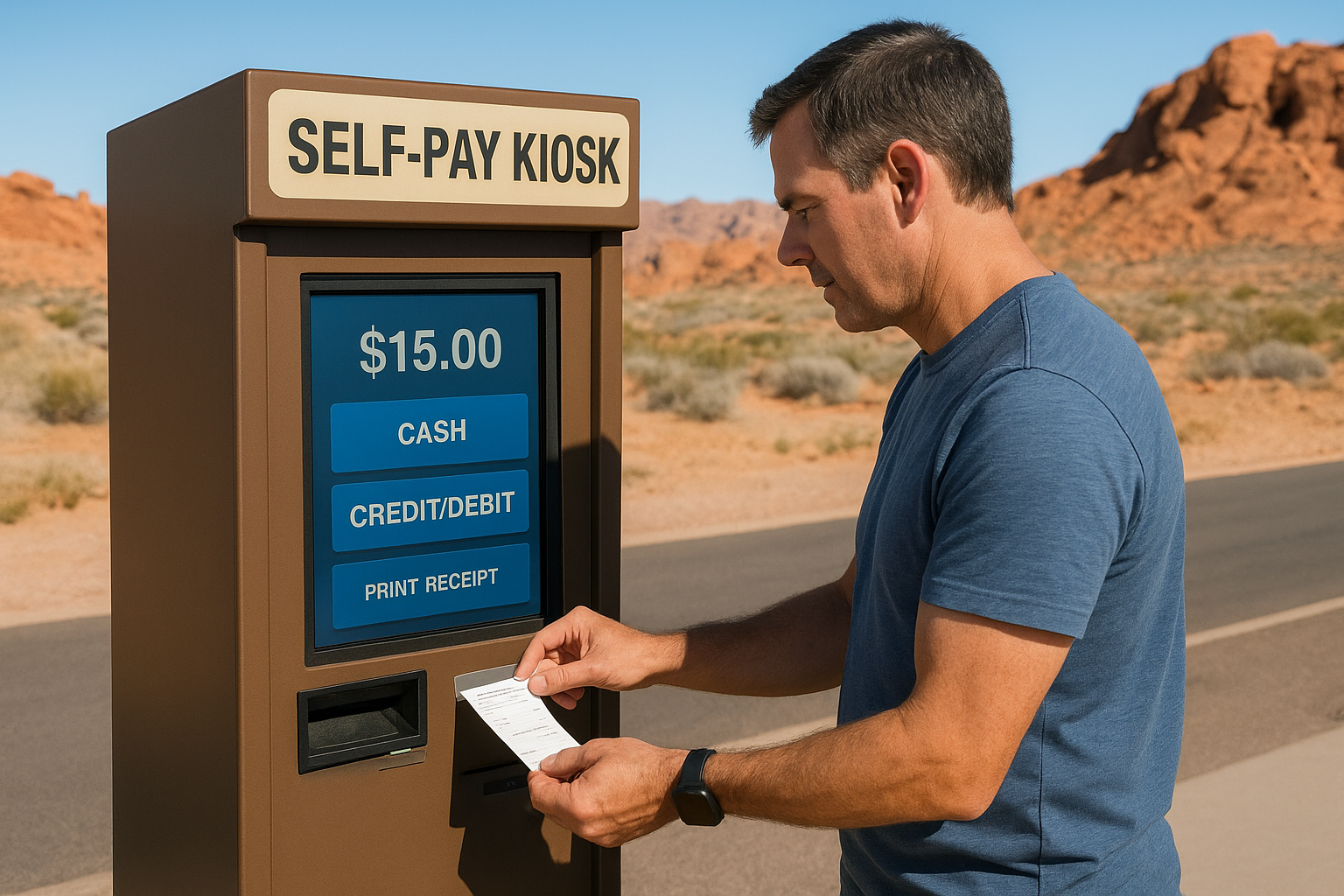
| Payment Method | Staffed Booth | Self-Pay Kiosk |
|---|---|---|
| Credit or debit card | Yes | Sometimes |
| Cash | Yes | Yes |
| Exact change required | No | Recommended |
What to prepare before you leave Las Vegas
Arriving prepared cuts your time at the gate to under two minutes. Run through this quick checklist before you head out:
- Confirm your license plate state to know whether you owe $10 or $15
- Bring exact cash ($10, $15, or $5 per cyclist) in case the card reader is offline
- Have a secondary card ready if your primary one doesn’t read on the kiosk
- Plan to display your receipt on the dashboard immediately after paying
Step 4. Add camping, hookups, and bicycle fees
The valley of fire state park entrance fee covers your vehicle’s day-use access, but it does not automatically include overnight stays or non-motorized entry. If you plan to camp or arrive by bicycle, you’re looking at separate fees stacked on top of your base vehicle charge, and knowing the exact amounts before you book prevents budget surprises on the day you arrive.
Camping fees by site type
Choosing the right campsite comes down to what amenities you actually need. The park operates two campgrounds: Atlatl Rock and Arch Rock, both of which offer standard and hookup sites. Standard sites with no electrical or water connections cost $20 per night, while sites with electrical hookups run $35. Full hookup sites, which include both electrical and water connections, cost $40 per night. Use this table to match your setup to the right nightly rate before you make a reservation.
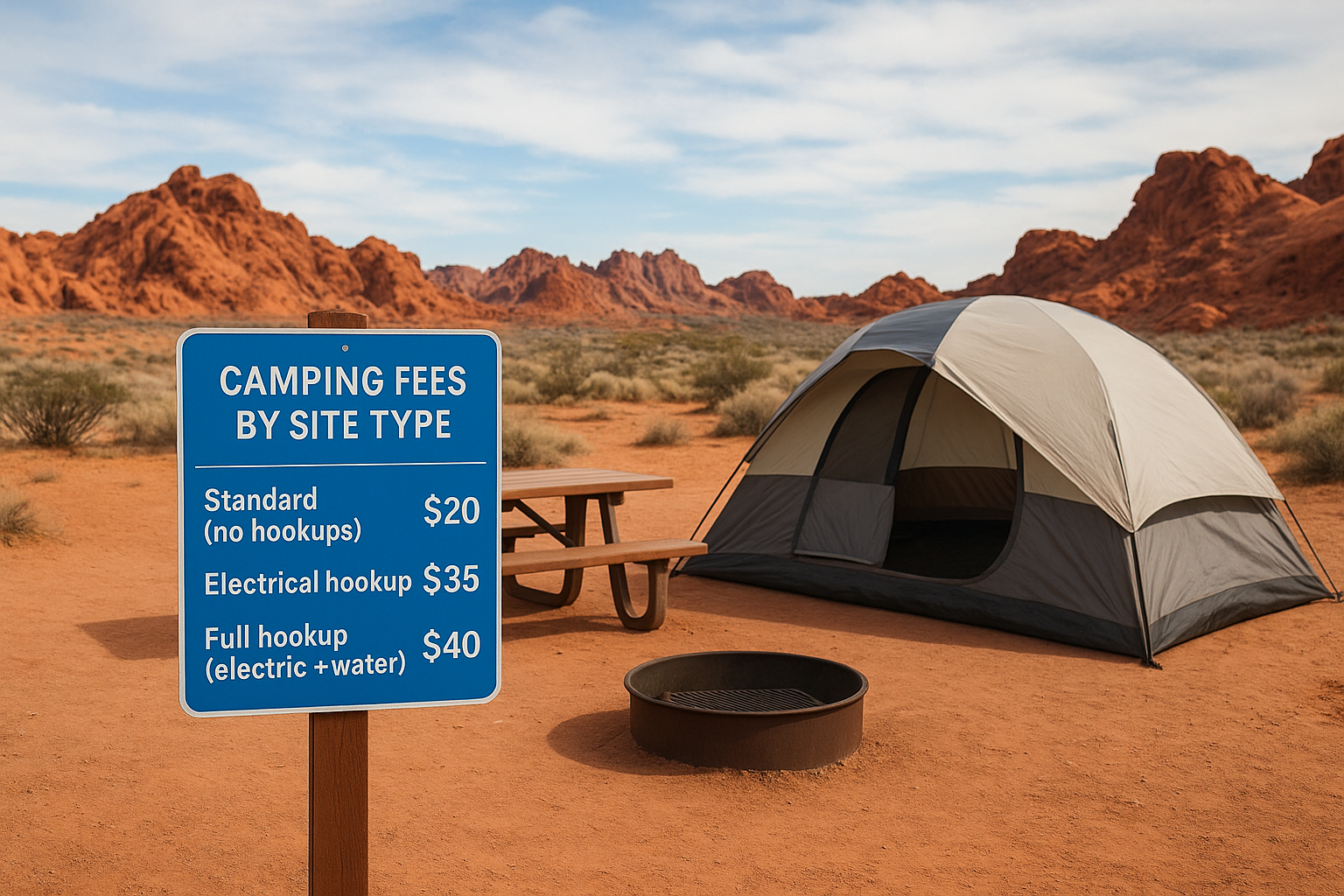
| Site Type | Nightly Fee |
|---|---|
| Standard (no hookups) | $20 |
| Electrical hookup | $35 |
| Full hookup (electric + water) | $40 |
Add your vehicle entry fee to the nightly camping cost to get your true total for any overnight trip: a non-resident in a full hookup site pays $55 on arrival night.
How to book a campsite
Reservations go through the Nevada State Parks online reservation system. Pull up the reservation portal, search for Valley of Fire, and select your campground, site type, and dates. The system shows real-time availability, so you can confirm whether hookup sites are open before you commit. Walk-in availability exists but fills quickly on weekends between February and May. If the campground is full and you turn around without entering, you still owe the day-use vehicle fee for reaching the entrance.
Bicycle and pedestrian entry
Cyclists and anyone arriving on foot pay a flat $5 per person regardless of residency status. There is no group rate for non-motorized entry, so a group of four cyclists each pays $5 separately for a total of $20 at the gate. Bicycles are restricted to paved roadways inside the park and are not allowed on hiking trails, so factor in a secure spot to lock your bike before you head off-road. No staffed bike storage is available inside the park.
Passes and discounts that do and do not apply
Not every discount program works at Valley of Fire, and assuming the wrong one does can leave you short at the gate. Before you visit, confirm which passes are accepted at this specific park and which ones the Nevada State Parks system simply does not recognize. The valley of fire state park entrance fee has a limited set of valid discounts, and understanding the list in advance saves you from an awkward moment at the booth.
The Nevada State Parks annual pass
The Nevada State Parks Annual Day-Use Pass costs $75 and covers vehicle entry at every Nevada state park for 12 months from your purchase date. If you plan to visit Valley of Fire more than five times or combine it with other Nevada parks like Spring Valley or Cathedral Gorge, the pass pays for itself quickly. You can purchase it at the entrance booth, at the visitor center, or through the Nevada State Parks office ahead of your trip.
If you visit Valley of Fire twice and plan even one additional Nevada state park trip in the same year, the annual pass is worth buying before your second visit.
What the pass does not cover
The annual pass handles day-use vehicle entry only. It does not reduce or eliminate camping fees, so you still pay the full nightly rate for any campsite regardless of whether you hold a valid pass. The pass also does not apply to commercial or charter vehicles, which means guided tour participants cannot use a personal annual pass to offset group entry costs. Bicyclists pay the flat $5 per-person rate even if they carry a current annual pass, since the pass is tied to motorized vehicles, not individuals.
Federal passes and other discount programs
The America the Beautiful Pass and the National Parks annual pass do not apply at Valley of Fire. Nevada State Parks is a state-managed system, not a federal one, so federal recreation passes have no standing at the entrance booth. Similarly, AAA membership, senior citizen discounts, and military discounts are not part of the current Nevada State Parks fee structure at Valley of Fire. If a discount is not listed directly on the Nevada State Parks website, assume it does not apply rather than testing it at the gate.
Quick tips to avoid extra costs and hassles
A few small decisions before you leave Las Vegas can keep your valley of fire state park entrance fee experience smooth from start to finish. The park itself is straightforward, but there are specific situations that cost visitors extra money or time, and most of them are completely avoidable with a little preparation.
Prepare your payment and confirm your license plate state before you leave your Las Vegas hotel, not when you’re already in the entrance lane.
Arrive prepared to pay without delays
Bring both cash and a card every time you visit, regardless of what payment methods worked on a previous trip. Self-pay kiosks can go offline without notice, and an attendant is not always on duty to help when a card reader fails. Carry exact change in small bills so you can feed the kiosk quickly without waiting for change. A $15 non-resident fee paid in exact bills takes about 20 seconds at the kiosk. Fumbling with a non-functional card reader or waiting on a card transaction to process can hold up everyone behind you.
Skip the camping day-use fee overlap
If you arrive at the park specifically to check in to your campsite, you still owe the vehicle day-use entry fee on top of your nightly rate. You cannot offset one with the other. To avoid paying twice unnecessarily, time your arrival for the same day you plan to start camping rather than visiting for a few hours and then returning the following morning. Splitting your trip across two separate days means two separate day-use charges.
Watch the heat and trail closure windows
Showing up during a heat advisory can mean entire trails are off-limits even after you’ve already paid your entry fee. Check the Nevada State Parks website for current advisories before you leave, especially between June and September. If Fire Wave or White Domes is your primary reason for visiting, a summer afternoon arrival wastes your entry fee since those areas close under extreme heat. Visiting before 8 AM or after 5 PM during summer keeps your options open without sacrificing access to the park’s most popular destinations.
Confirm what your tour package covers
If you booked a guided tour to Valley of Fire, call or message your operator before departure to confirm whether park entry is included in the total price. Operators handle this differently, and arriving without enough cash for a $15 entry fee because you assumed it was covered is an easy mistake to avoid with one short confirmation.
Plan your Valley of Fire trip with confidence
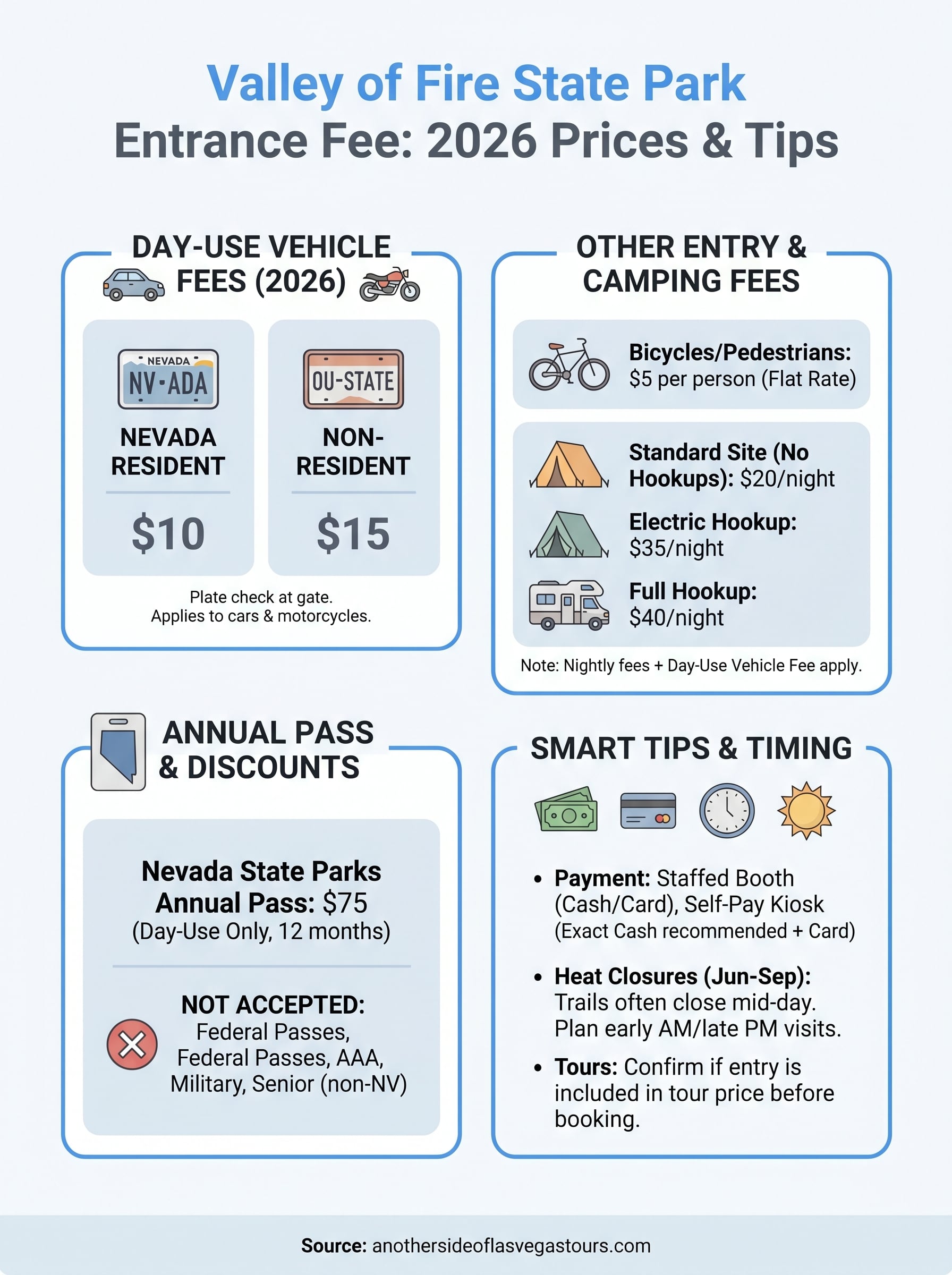
You now have every number, rule, and payment detail you need to handle the valley of fire state park entrance fee without surprises at the gate. From the $10 resident versus $15 non-resident split to camping add-ons, bicycle flat fees, and the annual pass math, the pricing structure is simple once you know what to look for. Confirm your license plate state, carry cash as a backup, and check the Nevada State Parks site for heat advisories before you head out.
If you’d rather skip the logistics entirely, let someone else handle the details. Our guides have taken thousands of visitors through Valley of Fire and know every worthwhile stop along the way. Book a private Valley of Fire tour and spend your time focused on the red rock formations instead of the entrance kiosk. Your trip starts the moment you leave Las Vegas.