
The Grand Canyon sits just a few hours from the Las Vegas Strip, making it one of the most popular day trips for visitors staying in the city. But picking the best time to visit Grand Canyon can mean the difference between a peaceful rim-side morning and a shoulder-to-shoulder shuffle along every overlook. Weather, crowds, road conditions, and costs all shift dramatically from month to month.
At Another Side Tours, we’ve been guiding guests from Las Vegas to the Grand Canyon and other surrounding natural attractions since 2007. That means we’ve seen every season up close, the blazing July heat on the South Rim, the surprise spring snowstorms, and those perfect October afternoons where the canyon walls glow copper at sunset. We use that firsthand experience to help visitors make the most of their limited vacation time.
This guide breaks down all 12 months with honest details on weather patterns, crowd levels, facility availability, and travel costs so you can choose the right window for your priorities. Whether you want solitude, warm hiking weather, or the best deal on lodging, you’ll find a clear answer below.
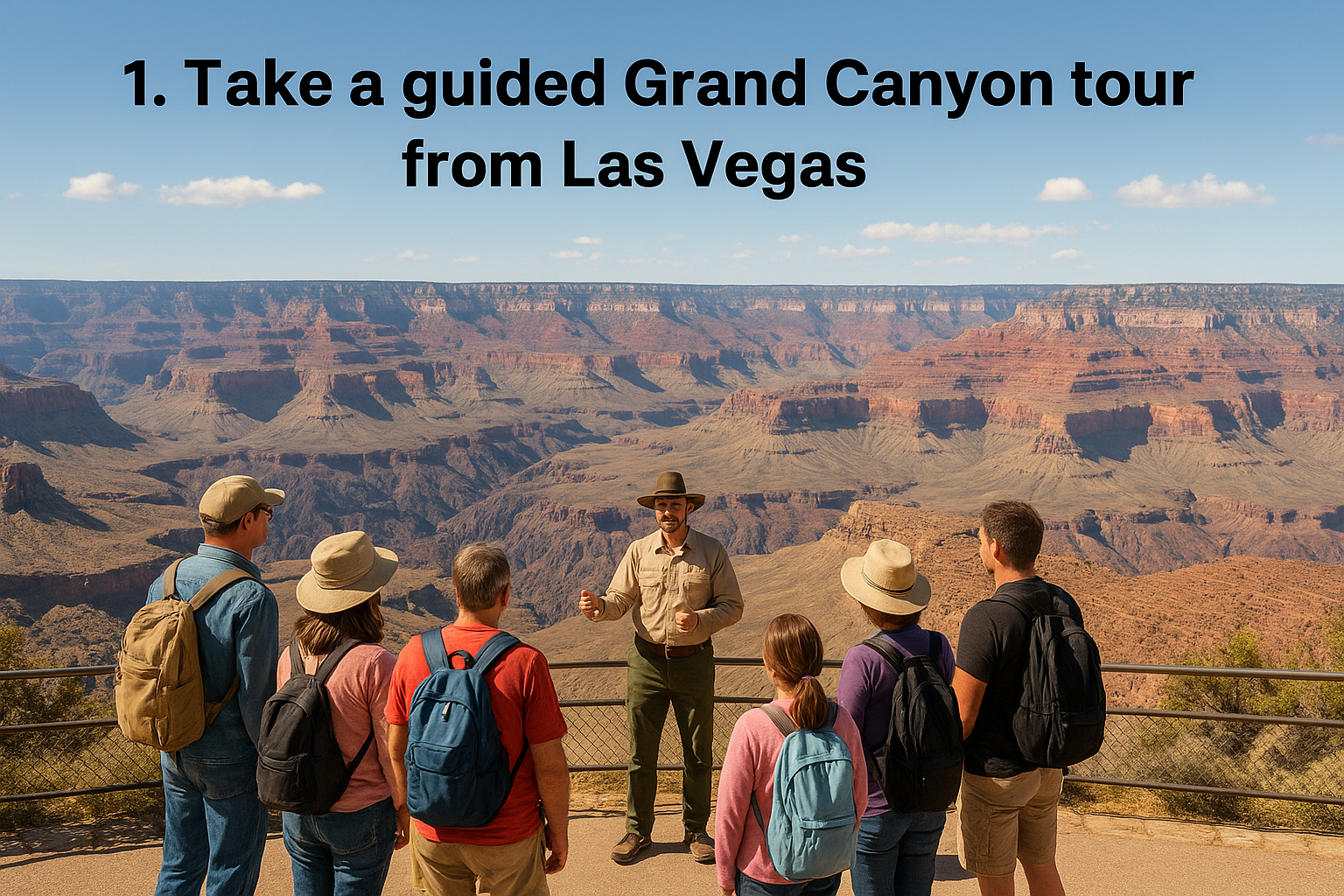
1. Take a guided Grand Canyon tour from Las Vegas
If you’re staying in Las Vegas, a guided Grand Canyon tour is the most efficient way to experience one of the world’s most remarkable natural landmarks without spending your whole trip behind the wheel. The canyon sits roughly four to five hours from the Strip, depending on which rim you visit. A guided tour handles the driving, parking, entry logistics, and narration, so you arrive informed and ready to actually look at the canyon instead of fumbling with a map.
Weather and daylight
Tours from Las Vegas run year-round, but seasonal weather conditions shape what you’ll experience at the rim. Summer tours face intense heat, especially on the drive through the Mojave Desert, while winter departures can include cold temperatures and occasional snow near the South Rim, which sits at roughly 7,000 feet in elevation. Spring and fall offer the most comfortable riding and walking conditions. Daylight hours also matter: longer summer days give you more time at viewpoints, while December tours work with shorter windows before sunset.
If you’re deciding the best time to visit Grand Canyon on a guided tour, late September through early November consistently offers the best balance of comfortable temperatures, longer daylight, and manageable crowds.
Crowds and costs
Guided tours from Las Vegas tend to book up fastest during spring break (mid-March through April) and the peak summer window of June through August. Holiday weekends around Memorial Day, Fourth of July, and Labor Day also fill quickly. Costs for group tours typically range from $249 to $399 per person, while private VIP tours in a Mercedes Limo Van run higher but give your group full flexibility on pacing and stops. Booking at least two to three weeks ahead is smart during high season.
Best things to do and planning tips
On a guided tour, you’ll typically stop at multiple South Rim viewpoints, including Mather Point and Desert View, with your guide providing historical and geological context along the way. Some tours also include stops at Hoover Dam or other landmarks on the route. A few planning tips to keep in mind:
- Wear layered clothing regardless of season, since rim temperatures can drop 20 degrees from the valley floor
- Bring at least two liters of water per person for any rim walking
- Request a morning departure to beat midday heat in summer and catch the best canyon light
2. January
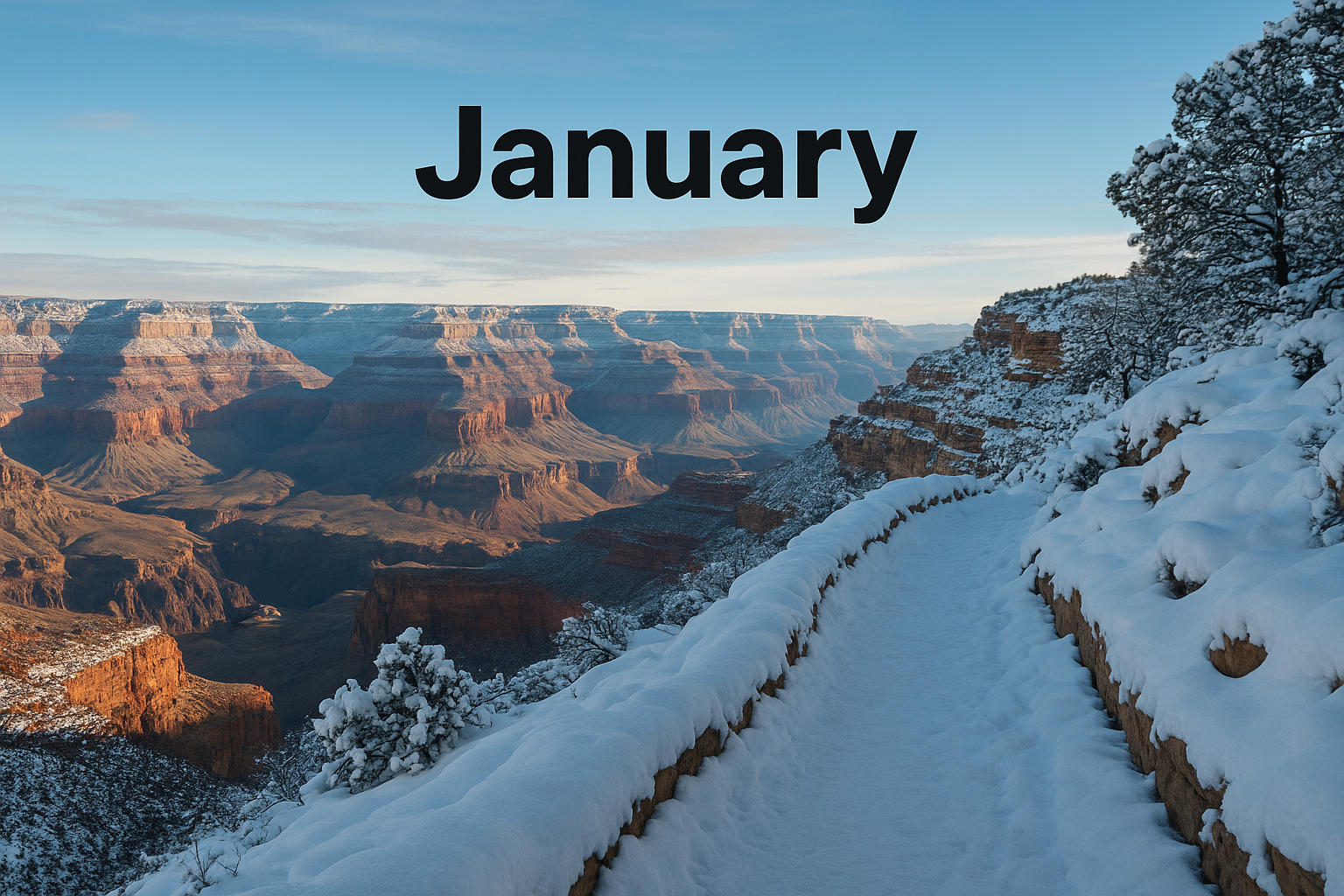
January is one of the quietest months at the Grand Canyon, and it rewards visitors who prioritize open viewpoints and reduced costs over warm temperatures. The South Rim stays open year-round, but conditions shift considerably at this 7,000-foot elevation.
Weather and daylight
The South Rim sees daytime highs around 40°F (4°C) in January, with nights regularly dropping below freezing. Snow is common, and ice forms on rim trails through the morning hours, so traction devices for your boots are worth packing.
Sunrise arrives around 7:30 AM and sunset around 5:30 PM, giving you roughly ten hours of usable daylight. Afternoon light hits the canyon walls well, so plan your best viewpoint time between 11 AM and 3 PM.
Crowds and costs
This is the least crowded month of the year at the Grand Canyon. Parking lots stay manageable, viewpoints open up, and you won’t face long lines at the visitor center or shuttle stops.
Lodging rates near the park drop noticeably compared to spring and summer pricing, and guided tours from Las Vegas typically have wide availability. Booking a few days ahead is usually enough.
January delivers some of the best time to visit Grand Canyon conditions if solitude matters more to you than warm weather.
Best things to do and planning tips
January is excellent for rim photography, especially when snow dusts the canyon walls and creates contrast with the red rock below. Desert View Drive stays open through winter, giving you access to eastern viewpoints. Keep these tips in mind:
- Wear waterproof insulated boots for icy paths
- Pack wind-resistant layers since rim exposure makes temperatures feel colder than they read
- Arrive mid-morning after overnight ice has cleared from paved surfaces
3. February
February at the Grand Canyon closely resembles January in many ways, but you’ll notice slightly milder temperatures and the first real hints that spring is on its way. The South Rim remains open throughout the month, and conditions reward visitors who pack well and plan around the lingering cold.
Weather and daylight
Daytime highs climb to around 45°F (7°C) by mid-February, though nights still dip well below freezing. Snow remains possible at the rim’s 7,000-foot elevation, and trail surfaces can stay icy through the morning. Daylight stretches a bit longer than January, with sunrise around 6:45 AM and sunset near 5:50 PM by month’s end, giving you roughly 11 hours of workable light.
Crowds and costs
February stays quiet across the park, though Presidents’ Day weekend (typically the third Monday of February) brings a noticeable bump in visitors. Outside that holiday stretch, parking lots stay manageable and shuttle lines remain short.
If you want to find the best time to visit Grand Canyon on a tight budget, February outside Presidents’ Day weekend is one of the strongest options in the entire calendar year.
Lodging near the park and guided tour availability both stay favorable in February, making it easy to book with minimal lead time for most of the month.
Best things to do and planning tips
The canyon delivers clear, crisp air in February that produces excellent visibility, often stretching all the way to the North Rim. Desert View Drive stays accessible, and the Rim Trail remains walkable with proper footwear.
- Pack microspike traction devices for any icy trail sections
- Schedule viewpoint visits between 10 AM and 3 PM for the warmest temperatures and best light
4. March
March marks the beginning of the transition from winter quiet to spring rush at the Grand Canyon. Conditions improve steadily through the month, but so does the foot traffic, making timing within March more important than you might expect.
Weather and daylight
Daytime highs climb from around 48°F (9°C) early in the month to near 57°F (14°C) by late March, though mornings at the South Rim’s 7,000-foot elevation still drop below freezing regularly. Snow remains possible through mid-March, but the rim trails dry out more reliably as the month progresses. Daylight expands noticeably, with sunrise shifting from around 6:30 AM toward 5:45 AM after the spring time change and sunset pushing past 6:30 PM by month’s end.
Crowds and costs
March brings the first significant crowd surge of the year, driven almost entirely by spring break travel. The second and third weeks of the month draw families and college-age visitors in large numbers, filling parking lots, shuttle queues, and rim overlooks well beyond what January and February see. Lodging prices near the park increase, and guided tours from Las Vegas book up faster during this window.
If March is your only option, targeting the first week of the month gives you the best time to visit Grand Canyon before spring break crowds arrive in full force.
Best things to do and planning tips
Late March offers genuinely pleasant hiking conditions on the rim and the upper sections of inner-canyon trails. The canyon walls start catching warmer afternoon light, and wildflowers begin appearing on the plateau. A few planning tips:
- Book lodging and tours at least three to four weeks ahead if you’re traveling during spring break weeks
- Bring waterproof layers for lingering morning ice or afternoon rain showers
5. April
April is the month when the Grand Canyon shifts from shoulder-season quiet to full-on spring energy. Temperatures climb, trails open up, and visitor numbers rise sharply, making it one of the most dynamic months to plan around.
Weather and daylight
Daytime highs at the South Rim reach 60°F to 65°F (15°C to 18°C) through most of April, with overnight lows staying above freezing for the first time since fall. Afternoon thunderstorms become possible toward month’s end, but conditions are generally dry and comfortable for rim walking and short inner-canyon hikes. Daylight stretches to roughly 13 hours, with sunrise around 5:30 AM and sunset pushing past 7:00 PM.
Crowds and costs
April ranks among the busiest months of the year at the Grand Canyon. Spring break traffic from March rolls directly into Easter weekend and general spring travel, keeping shuttle lines, parking areas, and popular overlooks consistently packed. Lodging near the park fills weeks in advance, and prices reflect peak demand. Guided tours from Las Vegas book up quickly, so securing your spot four to six weeks ahead is the right move.
If April is your target window, the first week of the month gives you the best time to visit Grand Canyon before Easter weekend drives the biggest crowds.
Best things to do and planning tips
April delivers ideal hiking conditions on both the Rim Trail and the upper sections of Bright Angel Trail, with comfortable temperatures and reliable daylight. Wildflowers bloom across the plateau, adding color to the canyon edges.
- Arrive at viewpoints before 9 AM to claim space ahead of the midday rush
- Carry at least two liters of water per person on any trail
- Book shuttle seats or tour slots well in advance if you’re visiting over Easter weekend
6. May
May sits in a sweet spot between pleasant spring conditions and the intense summer heat that arrives in June. Visitor numbers climb steadily through the month, but conditions on the South Rim remain genuinely enjoyable for most of May before temperatures push into uncomfortable territory.
Weather and daylight
Daytime highs at the South Rim reach 70°F to 75°F (21°C to 24°C) through most of May, with overnight lows settling comfortably above freezing. The inner canyon runs significantly hotter, with temperatures at Phantom Ranch already hitting 90°F or above by late May, so you’ll need an early start and serious hydration planning for any inner-canyon hiking. Daylight stretches to nearly 14 hours, with sunrise around 5:15 AM and sunset approaching 7:45 PM.
Crowds and costs
May ranks among the busiest months at the Grand Canyon, with Memorial Day weekend driving some of the highest single-weekend visitor counts of the entire year. Parking fills early on weekdays and reaches capacity well before noon on weekends. Lodging rates near the park peak alongside demand, and guided tours from Las Vegas book quickly throughout the month.
May offers some of the best time to visit Grand Canyon conditions in the first two weeks, before Memorial Day crowds arrive in full force.
Best things to do and planning tips
The Rim Trail and Bright Angel Trail both deliver excellent conditions in early May before heat becomes a limiting factor on the upper sections. Desert View Drive is fully open and far less congested during early morning hours, giving you clear access to eastern viewpoints.
- Start any inner-canyon hike before 7 AM to stay ahead of peak heat
- Book tours and lodging six or more weeks ahead if your trip falls over Memorial Day weekend
7. June
June marks the hard shift from spring into full summer at the Grand Canyon. Visitor numbers spike to their highest levels of the year, and heat becomes the dominant planning factor for any inner-canyon activity. The South Rim stays manageable, but the canyon floor turns genuinely dangerous by midday.
Weather and daylight
Daytime highs at the South Rim reach 80°F to 85°F (27°C to 29°C), while the inner canyon regularly hits 100°F to 110°F (38°C to 43°C) near the floor. Afternoon thunderstorms increase toward the end of the month as monsoon season approaches. Daylight stretches to nearly 14.5 hours, with sunrise around 5:15 AM and sunset near 7:55 PM, giving you the widest light window of the year to work with at viewpoints.
Crowds and costs
June ranks among the busiest and most expensive months to visit. School letting out drives a massive surge in family travel, and parking lots hit capacity before 10 AM on most days. Lodging near the park books out weeks in advance, and guided tours from Las Vegas fill quickly throughout the month.
If June is your only option, the first two weeks offer the best time to visit Grand Canyon before peak summer crowds fully settle in.
Best things to do and planning tips
Rim viewpoints remain excellent in June, especially during the early morning hours when light hits the canyon walls at low angles and temperatures stay tolerable. Desert View Drive gives you quieter access to eastern overlooks than the main visitor area.
- Start rim walking before 8 AM to beat the worst heat
- Carry at least three liters of water per person on any trail
- Book tours and lodging six to eight weeks ahead for June travel
8. July
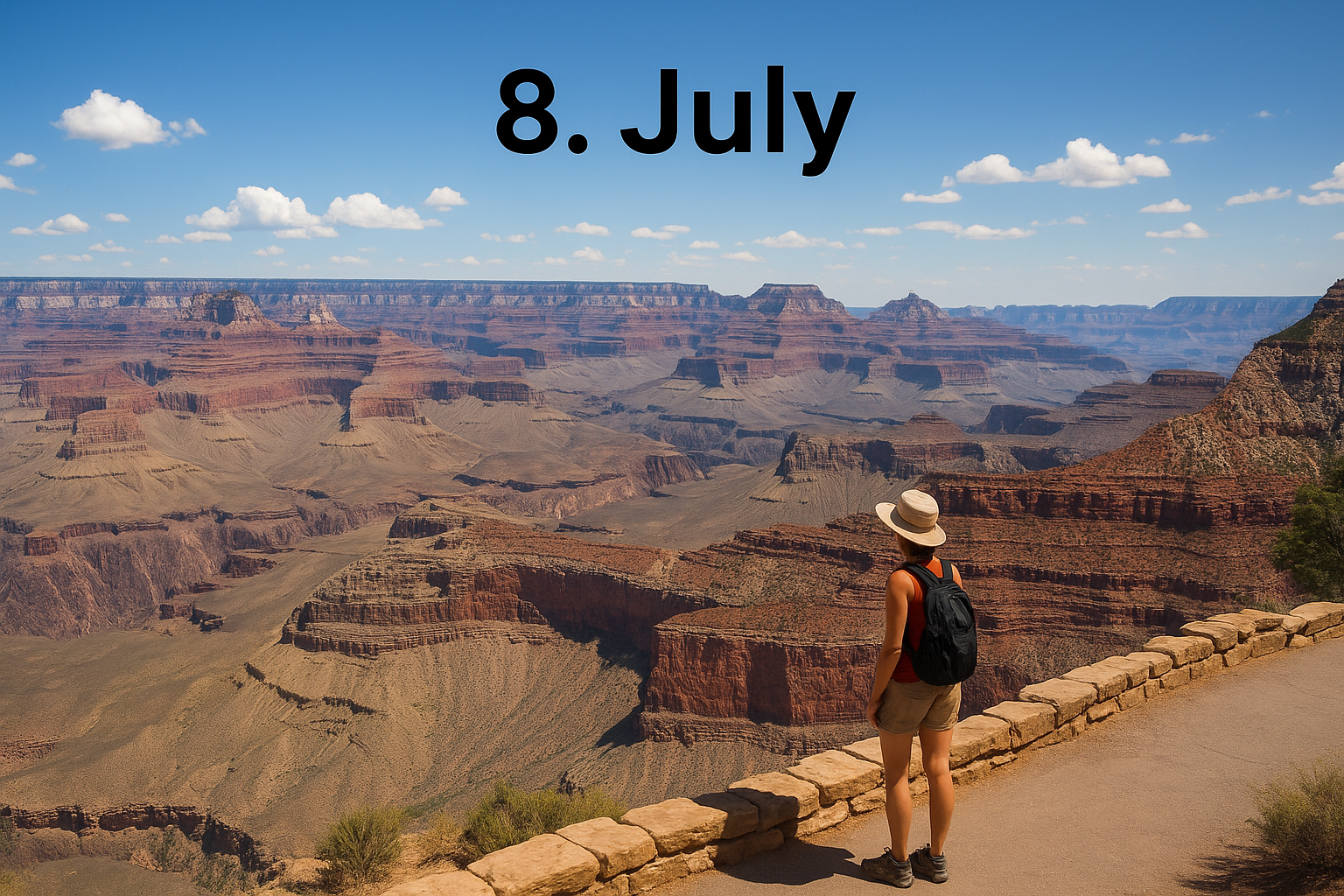
July is the peak of summer at the Grand Canyon, and it comes with a clear trade-off: you get maximum daylight and a fully operational park, but you also face the most intense heat, largest crowds, and highest prices of the entire year. Planning carefully makes the difference between a rewarding visit and a miserable one.
Weather and daylight
Daytime highs at the South Rim hover around 84°F to 88°F (29°C to 31°C), while the inner canyon floor regularly climbs past 110°F (43°C) by mid-afternoon. July also marks the height of monsoon season, which brings afternoon and evening thunderstorms that roll in fast and can make rim trails slippery within minutes. Daylight peaks at roughly 14 hours, with sunrise near 5:20 AM and sunset around 7:50 PM.
Crowds and costs
July consistently ranks as one of the two or three busiest months the park sees all year. Parking fills before 9 AM on most days, shuttle lines stretch long, and popular viewpoints like Mather Point stay packed through late afternoon. Lodging near the park commands premium rates, and guided tours from Las Vegas book out well in advance.
July is rarely the best time to visit Grand Canyon if crowds and heat are concerns, but early mornings before 8 AM give you a genuinely different experience at the rim.
Best things to do and planning tips
Rim viewpoints and Desert View Drive remain worthwhile in July if you front-load your schedule and arrive early. Skip any inner-canyon hiking unless you have a permit and overnight plan.
- Carry at least three liters of water per person
- Book tours six to eight weeks ahead
- Watch the sky after noon for incoming storm clouds
9. August
August continues the peak summer pattern established in July, with monsoon storms becoming more frequent and crowds remaining at or near their highest levels of the year. The month rewards visitors who plan around the weather patterns and keep expectations realistic about rim conditions.
Weather and daylight
Daytime highs at the South Rim stay in the 82°F to 87°F range (28°C to 31°C), and the inner canyon floor pushes past 110°F (43°C) during midday hours. Monsoon activity peaks in August, bringing afternoon thunderstorms that arrive with little warning and can drench rim trails within minutes. Daylight begins pulling back slightly, with sunrise around 5:45 AM and sunset near 7:30 PM, giving you roughly 13.5 hours of usable light.
Crowds and costs
August stays consistently busy through most of the month, though you’ll notice a slight drop in family traffic during the final week as school sessions resume across much of the country. Parking fills early, lodging rates near the park remain at peak levels, and guided tours from Las Vegas book out well in advance for the first three weeks of the month.
The last week of August gives you the best time to visit Grand Canyon in summer, with slightly thinner crowds and the same long days.
Best things to do and planning tips
Rim viewpoints and Desert View Drive both deliver strong experiences in August if you stay on the South Rim and avoid inner-canyon descents during midday. Morning hours between 5:30 AM and 9 AM give you the best light and the most tolerable temperatures before afternoon storms build.
- Keep rain gear accessible at all times on the rim
- Carry three liters of water per person for any walking
10. September
September is the month where the Grand Canyon pulls back from its summer extremes in a meaningful way. Monsoon storms taper off, temperatures drop to more comfortable levels, and the crowds that defined July and August begin to thin noticeably. It’s one of the strongest months on the calendar for visitors who want solid weather conditions without the peak-season pressure.
Weather and daylight
Daytime highs at the South Rim drop to around 73°F to 78°F (23°C to 26°C) through most of September, with overnight lows cooling into the low 50s°F (around 11°C). Early September still carries some monsoon activity, with afternoon storms possible through the first two weeks, but conditions stabilize considerably by mid-month. Daylight pulls back to roughly 12.5 hours, with sunrise around 6:10 AM and sunset near 6:45 PM.
Crowds and costs
Visitor numbers drop sharply after Labor Day weekend, which falls in the first week of September and brings one final summer-style crowd surge. Once that holiday passes, parking becomes manageable, shuttle lines shorten, and viewpoints open up in ways you simply don’t see in June, July, or August. Lodging rates near the park fall from their summer peaks, and guided tours from Las Vegas have noticeably wider availability through the rest of the month.
September after Labor Day consistently delivers some of the best time to visit Grand Canyon conditions across the entire year.
Best things to do and planning tips
September reopens inner-canyon hiking as temperatures become safer on the upper trail sections. The Rim Trail and Bright Angel Trail both perform well through most of the month, giving you real options beyond rim-only viewing.
- Start hikes before 7 AM if you plan to descend below the rim
- Pack a light rain layer for the first two weeks in case of late monsoon storms
11. October
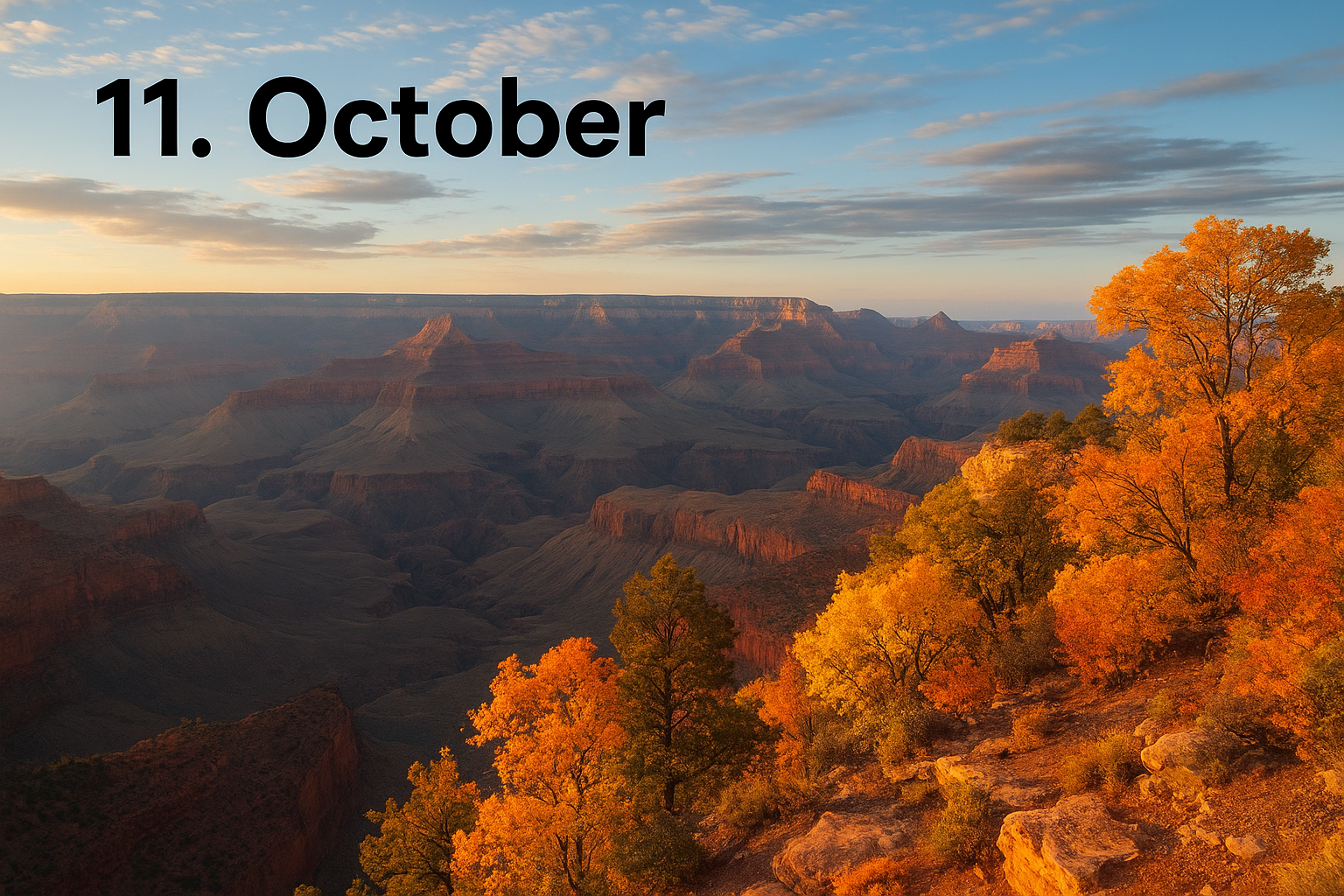
October is one of the strongest months to visit the Grand Canyon, and the case for it is straightforward: temperatures settle into a genuinely comfortable range, crowds thin out sharply from their summer peak, and the canyon walls catch a richer, warmer light as the sun tracks lower across the sky. If your schedule gives you any flexibility, October belongs near the top of your planning list.
Weather and daylight
Daytime highs at the South Rim settle between 60°F and 68°F (15°C to 20°C) through most of October, with overnight lows dropping into the upper 30s°F (around 3°C to 4°C) by late in the month. Monsoon season has fully ended by this point, so clear skies and dry air dominate the forecast and visibility across the canyon stretches to remarkable distances. Daylight pulls back to roughly 11.5 hours, with sunrise around 6:30 AM and sunset near 6:00 PM.
Crowds and costs
Visitor numbers run well below summer peaks through October, though Columbus Day weekend in early October and fall break travel create short-lived bumps. Outside those windows, parking stays accessible and viewpoints open up in ways that summer visitors rarely see. Lodging rates near the park fall from their summer highs, and guided tours from Las Vegas have solid availability through most of the month.
October after Columbus Day weekend consistently delivers some of the best time to visit Grand Canyon conditions of the entire year.
Best things to do and planning tips
October reopens inner-canyon hiking to its full potential, with safe temperatures for descending Bright Angel or South Kaibab Trail well into the morning hours. The Rim Trail delivers spectacular autumn light on the canyon walls during the late afternoon golden hour.
- Bring a warm layer for evenings since temperatures drop quickly after sunset at 7,000 feet
- Book lodging and tours two to three weeks ahead if your trip falls over Columbus Day weekend
12. November
November sits at the edge of winter and delivers a combination of quieter trails, cooler temperatures, and reduced costs that makes it a compelling choice. The South Rim stays fully open through the entire month, and the canyon’s rock faces take on a dramatic quality when early snow dusts the upper rim.
Weather and daylight
Daytime highs at the South Rim drop to around 48°F to 55°F (9°C to 13°C) through most of November, with overnight lows regularly falling below freezing by mid-month. Early snowfall becomes possible from mid-November onward, and trail surfaces can turn icy in the mornings after overnight temperatures drop. Daylight shrinks noticeably, with sunrise around 6:30 AM and sunset pulling back to roughly 5:15 PM by month’s end, giving you about 10.5 hours of usable light.
Crowds and costs
Visitor numbers fall sharply in November, making it one of the quietest months of the year outside of January and February. The one notable exception is Thanksgiving weekend, which drives a significant crowd surge at popular viewpoints and fills lodging near the park weeks in advance. Outside that holiday stretch, parking stays easy and shuttle lines stay short.
November outside of Thanksgiving weekend consistently delivers some of the best time to visit Grand Canyon conditions if low crowds are your priority.
Best things to do and planning tips
Rim photography benefits from November’s crisp, clear air and the lower sun angle that casts long shadows across the canyon walls throughout the day. Desert View Drive remains open and largely uncrowded during weekdays, giving you access to eastern viewpoints without the summer pressure.
- Pack waterproof insulated boots for icy morning trail conditions
- Book tours and lodging four to six weeks ahead if your trip falls over Thanksgiving weekend
13. December
December at the Grand Canyon is a month of genuine winter conditions and remarkable solitude, with the South Rim staying fully open while most visitors shift their attention elsewhere. If cold weather doesn’t discourage you and you pack properly, December rewards you with canyon views and trail access that feel almost private compared to the summer experience.
Weather and daylight
Daytime highs at the South Rim sit between 40°F and 46°F (4°C to 8°C) through most of December, with overnight lows frequently dropping below 20°F (-7°C) by mid-month. Snow is common and can accumulate on rim trails, making waterproof, insulated boots essential for any walking beyond paved viewpoint areas. Daylight hits its annual minimum in December, with sunrise around 7:30 AM and sunset near 5:20 PM, giving you roughly 10 hours of usable light on the shortest days of the year.
Crowds and costs
Visitor numbers stay near their annual low through most of December, with one significant exception: the stretch between Christmas Eve and New Year’s Day draws a notable surge of holiday travelers, filling lodging near the park and pushing viewpoint crowds higher than the rest of the month.
December outside the Christmas and New Year’s window consistently delivers some of the best time to visit Grand Canyon conditions for visitors who prioritize open viewpoints and low costs.
Guided tours from Las Vegas have strong availability through early and mid-December, making it easy to book with minimal lead time outside the holiday window.
Best things to do and planning tips
December delivers exceptional rim photography when snow covers the canyon edges and contrasts sharply against the red and orange rock below. Desert View Drive stays accessible and almost entirely uncrowded on weekdays.
- Pack hand warmers and wind-resistant outer layers for exposed rim sections
- Book tours and lodging four to six weeks ahead if your trip falls between Christmas and New Year’s Day
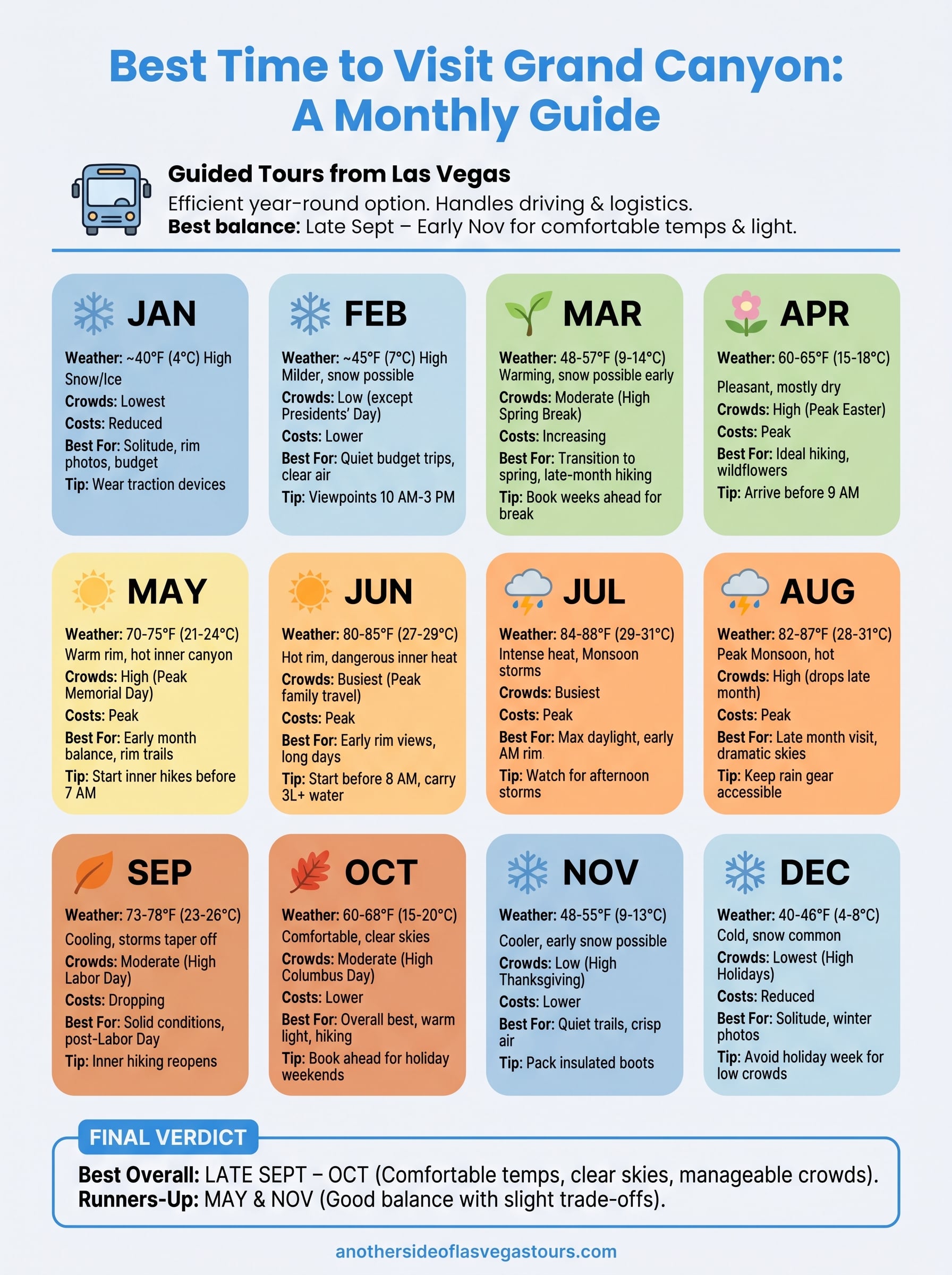
Final pick and next steps
The best time to visit Grand Canyon for most people is late September through October. You get comfortable hiking temperatures, clear skies, manageable crowds, and that deep afternoon light that makes the canyon walls glow. May and November are strong runner-up options if those weeks don’t fit your schedule, offering similar benefits with slightly more trade-offs on either side.
If you’re visiting from Las Vegas, the most efficient way to experience the canyon is through a guided tour that handles driving, logistics, and context so you spend your time looking at the canyon instead of navigating it. Another Side Tours has been running these routes since 2007, and our guides know every viewpoint, every seasonal quirk, and every shortcut worth taking. Check out our private Grand Canyon tour options and book the experience that fits your group.