
Red Rock Canyon sits just 20 minutes west of the Las Vegas Strip, but it feels like a different planet. Towering sandstone cliffs, ancient geological formations, and over 30 miles of hiking trails make it one of the most dramatic outdoor escapes near any major U.S. city. So is Red Rock Canyon worth visiting during your Vegas trip? The short answer is yes, and it’s not even close.
Whether you’ve got a half day to spare or want to build an entire morning around the 13-mile Scenic Loop Drive, Red Rock delivers something the Strip simply can’t: quiet, open space, and views that stick with you. At Another Side Tours, we’ve guided thousands of visitors through Red Rock Canyon and watched it become a highlight of their entire Las Vegas trip, often beating out shows, restaurants, and everything else on their itinerary. We know which trails match your fitness level, which pulloffs most people skip, and how to avoid the crowds.
This guide breaks down what to expect at Red Rock Canyon, including the best hikes, how much time you actually need, and how it stacks up against other nearby outdoor attractions like Valley of Fire and Hoover Dam. Everything here comes from years of firsthand experience leading tours through the area, not recycled travel blog advice.
What makes Red Rock Canyon worth visiting
Red Rock Canyon is a National Conservation Area managed by the Bureau of Land Management, covering over 195,000 acres of Mojave Desert terrain just outside Las Vegas. If you’re weighing whether is red rock canyon worth visiting on a trip built around shows and casinos, the answer comes down to three things: scale, variety, and proximity. You won’t find anything else this dramatic within a 20-minute drive of a major American city.
The geology that stops people cold
The canyon’s defining feature is its Calico Hills formation, a band of Aztec Sandstone stained red and orange by iron oxide deposits over millions of years. These aren’t gentle hills; these are vertical walls of rock rising up to 3,000 feet above the valley floor. Geologists date the formations to roughly 65 to 180 million years ago, so every cliff face you look at is a visible cross-section of geological time.
Most visitors say they had no idea something this dramatic existed 20 minutes from their hotel. The Calico Hills alone justify the drive.
Here’s a quick look at what the geology delivers visually:
- Deep red and cream sandstone layers with sharp color contrast
- Massive limestone peaks formed from ancient sea beds
- Wind-carved rock faces and narrow slot canyons
- Open desert floor framed by 3,000-foot ridgelines
Wildlife you can actually see
Red Rock Canyon supports over 200 bird species, along with desert tortoises, wild burros, coyotes, and bighorn sheep. If you head out in the early morning, you have a real chance of watching bighorn sheep navigate the canyon walls or catching a Mojave desert tortoise crossing the trail. These are wild animals in their natural habitat, and the sightings tend to catch even experienced hikers off guard.
Your odds of wildlife encounters go up significantly when you arrive before 9 a.m. and move quietly on the trails. Animals in Red Rock are active early and retreat to shade as temperatures rise, so timing matters more than luck.
A landscape built for any ability level
One thing that separates Red Rock from other canyon destinations is how accessible it is across activity levels. The 13-mile Scenic Loop gives you sweeping panoramic views from your car without any physical effort, while routes like Turtlehead Peak push even fit hikers to their limits at over 4,500 feet elevation. Whether you walk a flat trail, scramble over boulders, or drive through with the windows down, you leave with a genuine sense of what the Mojave Desert looks like beyond a hotel window.
Plan your visit in 3 to 6 hours
Most people wondering is red rock canyon worth visiting also want to know how long to block off on their itinerary. The honest answer is 3 hours at minimum, with 5 to 6 hours giving you enough time to drive the Scenic Loop, complete one solid hike, and still stop for photos without feeling rushed.
Pick your pace before you arrive
Deciding how much time you have before you arrive saves you from standing at the trailhead map feeling uncertain. Use this framework to match your schedule to the right combination of activities:
| Time available | What you can do |
|---|---|
| 3 hours | Scenic Loop Drive + 1 short trail (under 2 miles) |
| 4 hours | Scenic Loop + 1 moderate hike (Calico Hills or Ice Box Canyon) |
| 5 to 6 hours | Scenic Loop + 1 strenuous hike + early wildlife walk |
If you only have 3 hours, prioritize the Scenic Loop and one Calico Hills trail; those two together give you the full Red Rock experience in condensed form.
When to arrive for the best conditions
Early morning arrival between 7 and 9 a.m. gives you cooler temperatures, better wildlife odds, and thinner crowds at every trailhead. The visitor fee is $15 per vehicle and you can pay online through recreation.gov ahead of time, which skips the entry line and keeps your morning on track.
Avoid arriving after 11 a.m. from May through September because midday desert heat regularly climbs past 100°F, making any trail beyond two miles genuinely uncomfortable and potentially dangerous.
Scenic loop stops you should not miss
The 13-mile one-way Scenic Loop Drive runs counterclockwise from the visitor center and includes 13 numbered pulloffs, each showing you a different angle on the canyon. You don’t need to stop at every one to get the most out of the drive, but skipping certain pulloffs means missing the canyon’s best visual moments. When people ask is red rock canyon worth visiting, this loop road is a significant part of why the answer is yes.
Calico Hills Overlook
At the Calico Hills Overlook, near the start of the loop, you get an unobstructed view of the red and cream sandstone bands that define the canyon’s look. This is where most first-time visitors stop and realize the full scale of what they’re standing in front of.
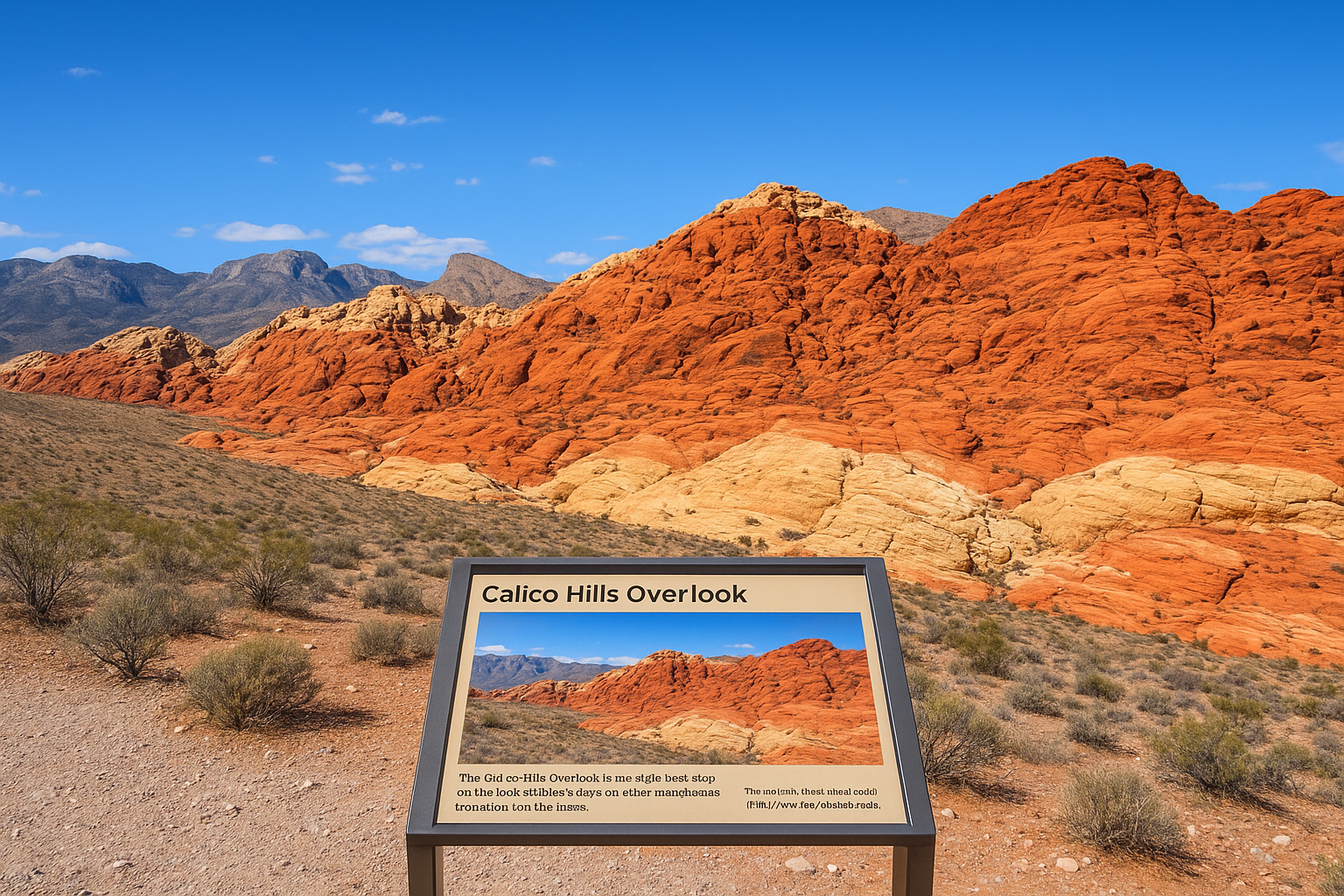
The Calico Hills Overlook is the single best stop on the loop if you’re short on time and want one view that captures Red Rock Canyon completely.
From this pulloff, you can also access the short Calico Hills Trail, which takes you directly into the rock formations for close-up textures and color detail that no car window can replicate.
Sandstone Quarry and Keystone Thrust
Sandstone Quarry (stop 6) sits midway through the loop and marks where workers cut blocks from the canyon walls in the early 1900s. The exposed rock here shows distinct color layers and striations that make the geological history easy to read at a glance. Just past it, the Keystone Thrust pulloff shows the visible fault line where ancient limestone was pushed over younger sandstone. Key details to look for at both stops:
- The sharp horizontal color boundary between limestone and sandstone
- Exposed quarry cuts still visible in the rock face
- The ridgeline fault trace running east to west across the canyon
Best hikes by time and difficulty
Red Rock Canyon’s trail network gives you real options regardless of fitness level, from flat desert walks to exposed ridge scrambles above 4,500 feet. Choosing the right hike before you leave your hotel is one of the most practical steps you can take to get the most out of your visit. Match the trail to your current fitness and your available time, not to what sounds most impressive on paper.
Picking a trail one level below your maximum ability gives you a better day than pushing too hard and cutting the hike short.
Quick trail reference by difficulty
Use this table to find a starting trail based on your group’s fitness and available time. All mileages are round trip.
| Trail | Difficulty | Distance | Time |
|---|---|---|---|
| Moenkopi Loop | Easy | 2.2 miles | 60 to 90 min |
| Calico Hills Trail | Easy | 2.2 miles | 60 to 90 min |
| Lost Creek Loop | Moderate | 1.1 miles | 45 to 60 min |
| Ice Box Canyon | Moderate | 2.6 miles | 2 to 3 hours |
| Turtlehead Peak | Strenuous | 4 miles | 3 to 4 hours |
Both easy trails put you directly inside the red sandstone formations without significant elevation gain, making them the right call if you’re visiting with kids, older family members, or anyone managing joint issues. These two trails alone answer the question of is red rock canyon worth visiting for people who assumed they weren’t fit enough for it.
What to know before moderate and strenuous trails
Ice Box Canyon involves boulder scrambling near the canyon floor and seasonal waterfalls that make the extra effort worthwhile, especially earlier in the season. Bring trekking poles and plan your footing carefully on the wet rock sections near the falls.

Turtlehead Peak climbs 2,000 feet in 4 miles and requires a pre-8 a.m. start from May through September to avoid dangerous midday heat on the exposed upper sections. Carry at least two liters of water per person and wear trail shoes with ankle support, not sneakers.
Red Rock vs Valley of Fire and other day trips
Las Vegas puts you within reach of several strong outdoor destinations, and understanding the differences helps you spend your time well. Red Rock Canyon consistently wins on variety and accessibility, but Valley of Fire and Hoover Dam each hold their own depending on what you want from a half day outside the city.
| Destination | Drive from Strip | Best for | Hiking |
|---|---|---|---|
| Red Rock Canyon | 20 min | Scenic loop + hiking | Extensive |
| Valley of Fire | 60 min | Petroglyphs + raw scenery | Limited |
| Hoover Dam | 30 min | Engineering + history | None |
Valley of Fire State Park
Valley of Fire sits roughly 60 minutes northeast of Las Vegas and delivers some of the most vivid red sandstone scenery in Nevada. The petroglyphs at Atlatl Rock and Mouse’s Tank are the real differentiator; these ancient carvings exist nowhere else nearby and add a layer of human history that Red Rock simply doesn’t offer. The tradeoff is fewer maintained trails, minimal shade, and a noticeably longer drive from your hotel.
If you’re asking is red rock canyon worth visiting versus Valley of Fire, Red Rock edges ahead for most first-time visitors because of its proximity, trail range, and visitor infrastructure, but Valley of Fire belongs on a return trip.
Hoover Dam
Hoover Dam sits about 30 miles southeast of the Strip and offers something neither Red Rock nor Valley of Fire can: the scale of human engineering. The powerplant tour takes you inside the structure, and the views from the Mike O’Callaghan-Pat Tillman Memorial Bridge are genuinely striking. Since there are no hiking trails, Hoover Dam works best as a focused two-to-three hour stop rather than a full half-day outing on its own.
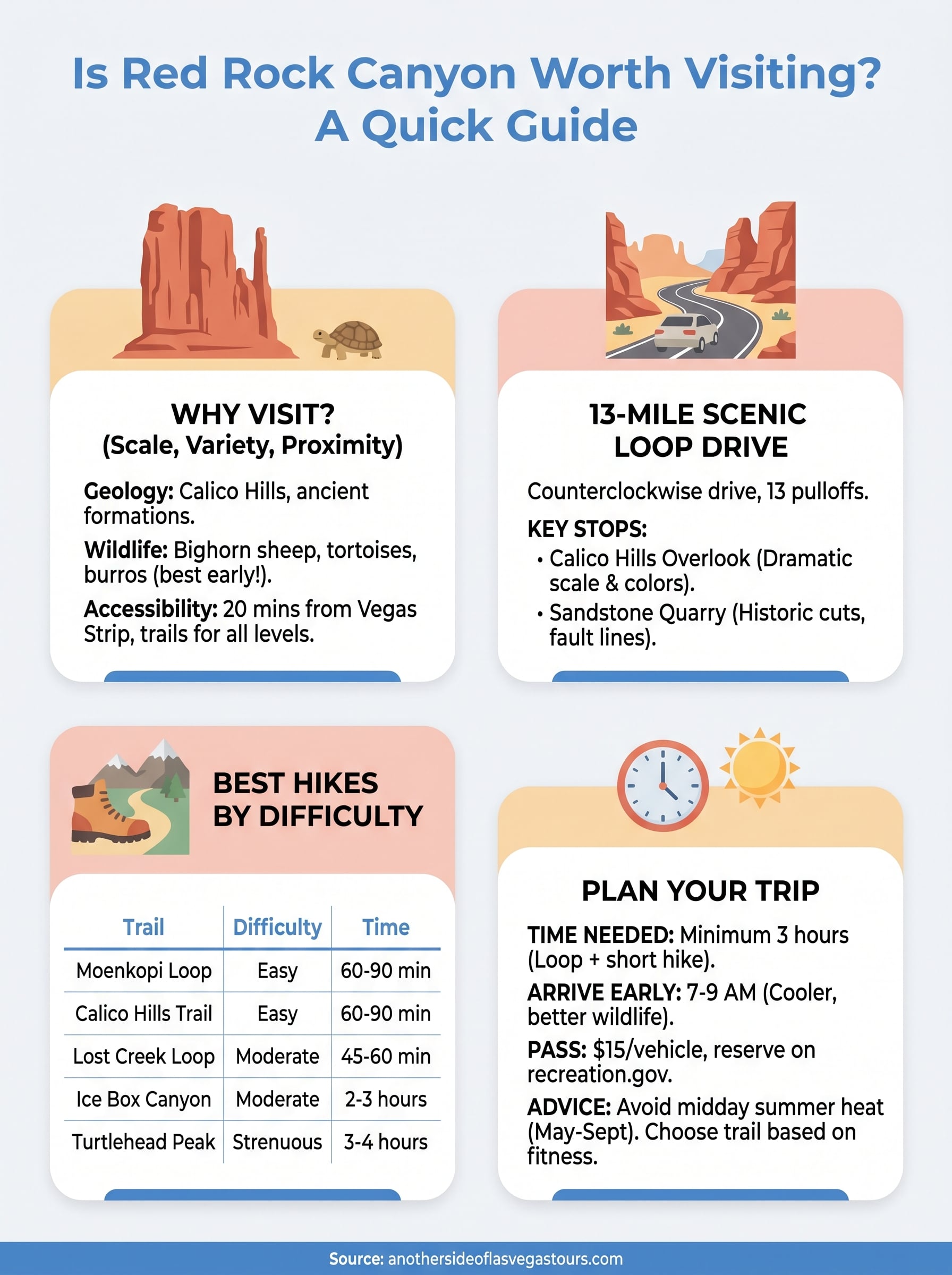
A simple way to decide and go
If you’re still weighing is red rock canyon worth visiting on your Las Vegas trip, use this rule: if you have at least three hours and access to a car or a guided tour, go. The canyon delivers dramatic scenery, real hiking options, and wildlife that no casino or show can replicate, and it sits close enough to the Strip that a half-day visit fits into almost any itinerary. The only reason to skip it is if outdoor experiences genuinely don’t interest your group.
For the smoothest visit, book your entry pass at recreation.gov before you leave your hotel, arrive by 8 a.m., and pick one trail from the difficulty table above before you get there. You’ll walk away with a clear plan and no wasted time at the trailhead. If you’d rather have an expert handle all of it, check out our Las Vegas limo tours and let us take care of the details.