
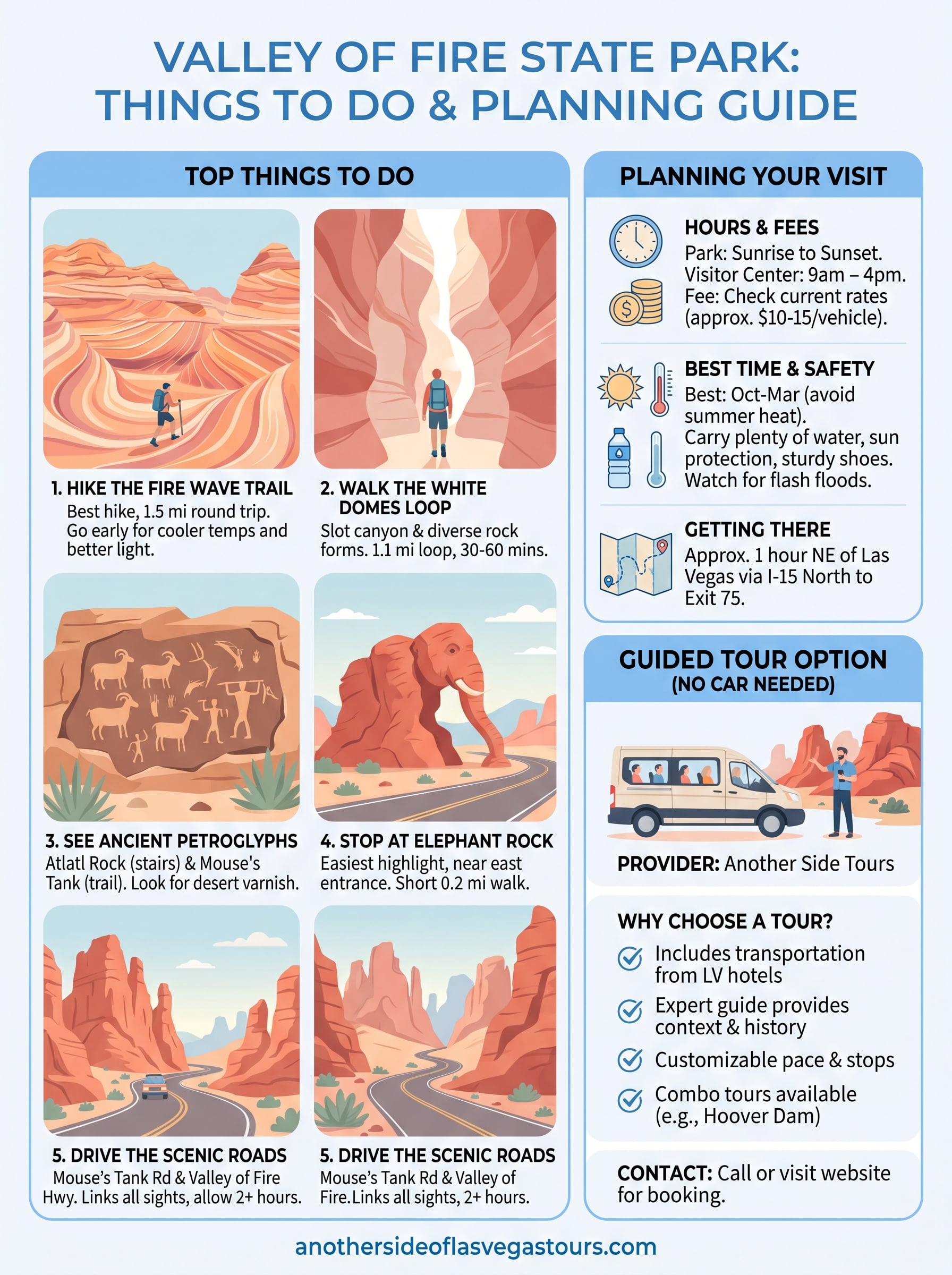
The best Valley of Fire State Park things to do are the Fire Wave hike, the White Domes Loop and its slot canyon, the ancient petroglyphs, Elephant Rock, and the scenic road that ties them together. Hikers should start with the Fire Wave, families with White Domes and Elephant Rock, and anyone without a car with a private guided tour from Las Vegas. Nearly every trail is under two miles, so one day covers the highlights.
The challenge is logistics. The park sits about an hour northeast of Las Vegas, its sights are strung along two roads, and the desert offers almost no shade. Choose badly and you spend the day backtracking, or you hike at noon in 100-degree heat. Choose well and you see the best of the park in half a day.
We guide visitors here from Las Vegas, so this list follows the way a good day in the park actually flows. It opens with the guided option, moves through six more picks by type of experience, then closes with hours, fees, timing and safety so you can plan with confidence.
1. Take a private guided tour of the park
A private guided tour is the easiest way to see the park without driving, parking or planning the route yourself. It also solves the two biggest problems at Valley of Fire State Park, which are heat and timing.
What you’ll see
Another Side Tours runs a private Valley of Fire tour of about six hours from Las Vegas. A full-day version adds Hoover Dam. Your guide picks you up at your hotel, drives the hour north, and builds the day around stops like the Fire Wave, Elephant Rock, White Domes and the Beehives.
The real value is context. The red Aztec sandstone, the petroglyphs carved roughly 2,500 years ago and the 1930s stone cabins all make more sense when someone explains them. A private group also sets its own pace, so you can linger at a photo spot or skip a hike that doesn’t interest you.
A guide turns a drive past red rocks into a day you actually understand.
Details and who it suits
This option suits visitors without a rental car, first-timers unfamiliar with desert roads, photographers, and families or small groups who don’t want to share a bus. It also works well if you want the park and Hoover Dam in one day. When you book, ask what the price includes, such as park entry, so there are no surprises.
- Length: about six hours for the private Valley of Fire tour, a full day for the Hoover Dam combination
- Pickup: your Las Vegas hotel
- Typical stops: Fire Wave, Elephant Rock, White Domes, Beehives
- Booking: through the Valley of Fire tours page or by phone at 1-702-819-9127
2. Hike the Fire Wave Trail and Seven Wonders Loop
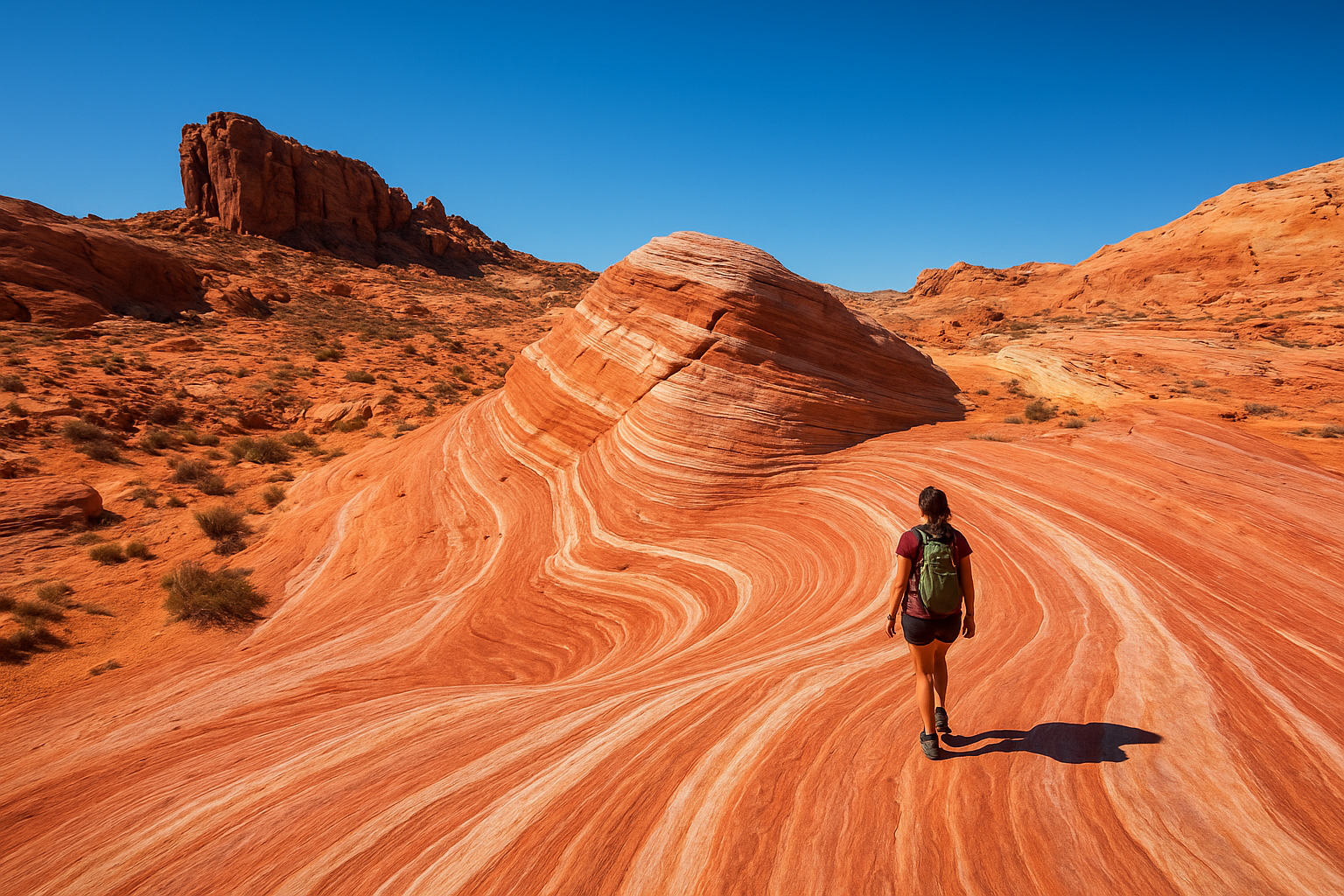
The Fire Wave Trail is the single best hike in the park, and it should top your list of things to do in Valley of Fire State Park if you only have time for one walk.
What you’ll see
The 1.5-mile round trip starts at Parking Lot 3 on White Domes Road. You pass Gibraltar Rock, then cross smooth slickrock where stone piles and metal posts mark the route. At the end, bands of orange, pink and cream sandstone curve like a frozen wave. It resembles the famous Wave in Arizona, but you need no permit lottery to visit.
Keep going past the Fire Wave sign and you join the Seven Wonders Loop, about 1.8 miles in total. This stretch drops into Pink Canyon, where the rock shifts from red to pastel pinks and soft whites, and it squeezes through small slot canyons. The footing is loose sand and uneven rock, but nothing is technically difficult.
If you only have time for one hike, make it the Fire Wave.
Details and who it suits
Almost any fitness level can do this hike, but the lack of shade matters more than the distance. Go early, when the air is cooler, the light is better and the crowds are thin.
- Distance: 1.5 miles round trip to the Fire Wave, about 1.8 miles for the full loop
- Time: 45 to 60 minutes out and back, longer for the loop
- Trailhead: Parking Lot 3, White Domes Road
- Terrain: sand and slickrock with no shade
3. Walk the White Domes Loop and its slot canyon
The White Domes Loop packs more variety into 1.1 miles than any other trail, which makes it one of the top Valley of Fire State Park things to do for first-timers and families.
What you’ll see
From the trailhead at the end of White Domes Road, the path drops through a sandy wash between tall sandstone walls. Soon you enter a short slot canyon, where the walls close in overhead and light bounces off the rock in shades of orange and cream. Kids tend to love this part.
The rest of the loop opens onto dome-shaped formations, distant red ridges and the weathered remains of an old film set. You can hike either direction. Most people go clockwise, descending into the canyon first and climbing out near the end.
White Domes is the best short hike in the park for anyone who wants a slot canyon without a long trek.
Details and who it suits
Families, casual walkers and photographers get the most from this loop, since it takes only 30 to 60 minutes. Check the forecast before you enter the slot canyon, because flash floods are a real risk in desert canyons. Ask at the visitor center about current conditions. Afterward, the White Domes picnic area has shaded tables, though it is the most popular one in the park and fills quickly.
- Distance: 1.1 miles, loop
- Time: 30 to 60 minutes
- Trailhead: end of White Domes Road
- Terrain: a mix of sand, rock and soil
4. See ancient petroglyphs at Atlatl Rock and Mouse’s Tank
Rock art is one of the most meaningful things to do at Valley of Fire State Park, and two easy stops give you the best look at it: Atlatl Rock and the Mouse’s Tank trail.
What you’ll see
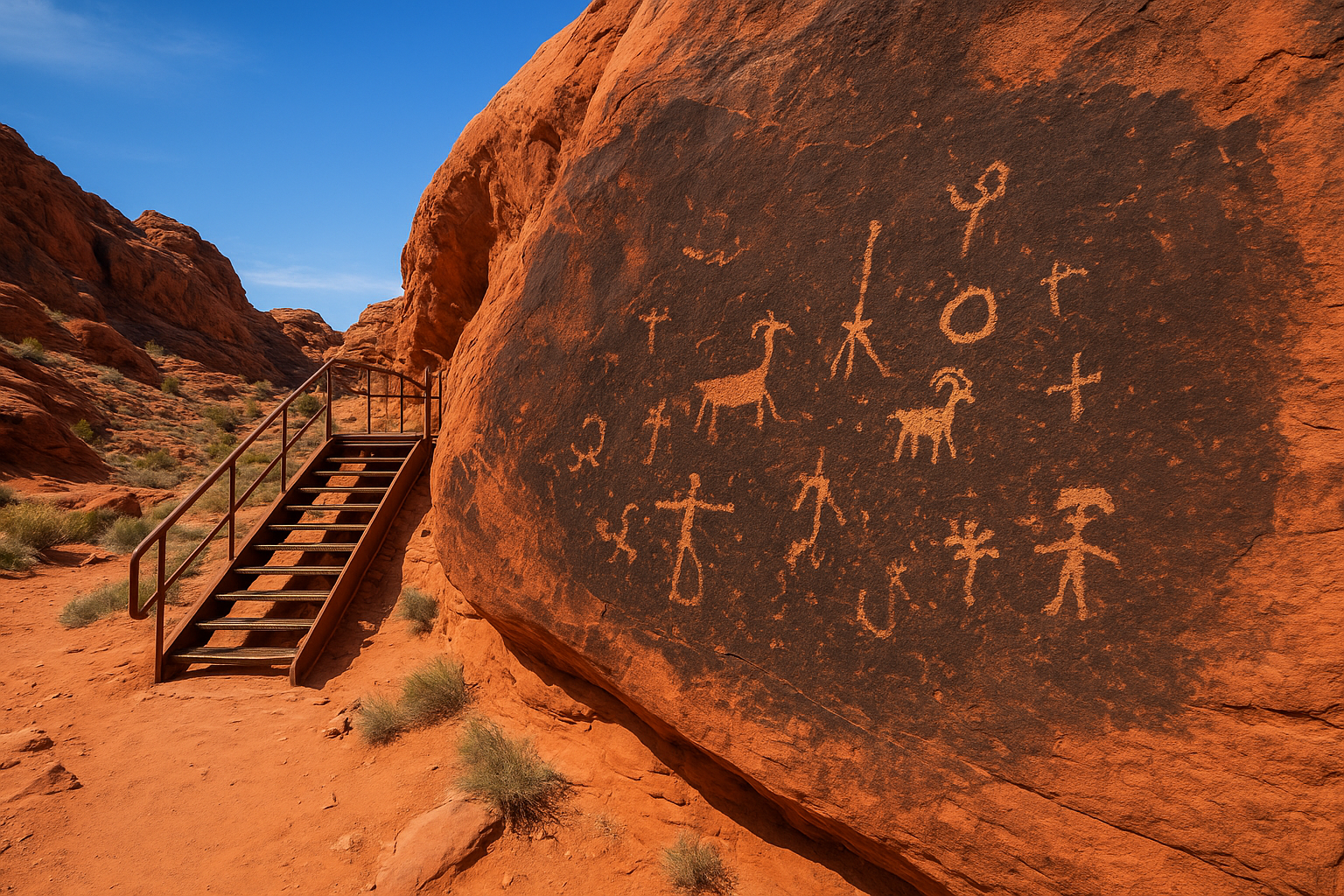
At Atlatl Rock, a steep staircase leads to a viewing platform in front of a panel of petroglyphs thought to be more than 2,000 years old. One carving shows an atlatl, a throwing tool used before the bow and arrow. The climb is short, and the platform keeps you at a respectful distance from the rock.
The Mouse’s Tank trail, also called Petroglyph Canyon, runs 0.7 miles round trip. Look for the dark coating on the sandstone called desert varnish, because that is the surface where ancient artists carved sheep, hunting tools, human figures and symbols. The trail ends at a natural rainwater pool. Local legend ties its name to a Paiute man known as "Little Mouse."
Look for the dark desert varnish, and you will find the petroglyphs.
Details and who it suits
History lovers, curious kids and photographers will enjoy these stops, and both suit short on time visitors. Look, photograph, but never touch the carvings, because oils from skin damage them.
- Atlatl Rock: short but steep staircase, near the Atlatl campground
- Mouse’s Tank: about 15 minutes at a steady pace, longer if you stop at each panel
- Cultures: Basketmaker people carved first, followed by Ancestral Puebloans
- Terrain: sandy trail at Mouse’s Tank, stairs at Atlatl Rock
5. Stop at Elephant Rock and the historic cabins
Elephant Rock is the easiest highlight to add to a day trip, and it makes a fitting finish among the things to do in Valley of Fire State Park if you leave through the east entrance.
What you’ll see
The formation looks exactly like an elephant’s head and trunk, and it stands right beside the Valley of Fire Highway near the east entrance. A walk of 0.2 miles round trip from the parking lot gets you an up-close view. The trunk is thin and fragile, so enjoy it from the ground and don’t climb it for a photo.
A longer loop of about 1.2 miles circles the formation through petrified sand dunes if you want more time on foot. Nearby, the historic cabins are stone shelters built in the 1930s by the Civilian Conservation Corps, the same crews that built the park’s first roads and campgrounds. They make a quick stop with a lovely backdrop of red cliffs.
Elephant Rock takes five minutes to reach and gives you one of the park’s most photographed views.
Details and who it suits
These stops suit anyone with limited mobility, small children, or a tight schedule. Late afternoon light warms the sandstone, so they work well as a closing stop.
- Elephant Rock viewpoint: 0.2 miles round trip
- Elephant Rock loop: about 1.2 miles, sandy terrain
- Location: along the highway near the east entrance
- Cabins: short roadside stop, easy to combine with Elephant Rock
6. Drive Mouse’s Tank Road and the scenic pullouts
Scenic driving is a core part of any Valley of Fire State Park things to do list, because the road links nearly every attraction and many views never need a trailhead.
What you’ll see
White Domes Road, also labeled Mouse’s Tank Road on Google Maps, runs roughly 11 miles out and back from the visitor center to the White Domes lot. Early on you pass Balancing Rock, which looks best from the west side. Further along comes Rainbow Vista, a short and easy walk to a wide, colorful panorama of the park.
The main Valley of Fire Highway connects the west and east entrances and adds its own roadside stops. Look for the Beehives, a cluster of rounded sandstone formations near the west entrance, plus Arch Rock and the fenced petrified logs. The road is paved, so any car can make the trip.
Allow at least two hours for the drive alone, because the pullouts are what make it worthwhile.
Details and who it suits
Drivers, photographers and travelers who prefer viewpoints over hiking will love this one. Stop at the visitor center first for a map and ranger tips. It has exhibits on the park’s geology, ecology and history.
- Best for: sightseeing without long hikes
- Rainbow Vista: short, mostly flat walk to a colorful viewpoint
- Visitor center: open 9 a.m. to 4 p.m. daily
- Timing: shoot at sunrise or late afternoon for the deepest red tones
7. Camp overnight and look for bighorn sheep
Camping is the one way to experience Valley of Fire State Park after the day visitors leave, and it is among the most memorable things to do there.
What you’ll see
The park has two campgrounds with 72 sites in total. Atlatl Rock is the larger one and has RV sites and showers. Arch Rock is smaller, quieter and has more spread-out sites. Each site has a fire pit, water and a picnic table. Light pollution is low, so the night sky is full of stars.
Wildlife is another reason to stay. Desert bighorn sheep are common in the park, and campers often see them at dawn and dusk when the animals are most active. Bring binoculars and keep your distance. Lizards and other desert animals are easy to spot on warm mornings.
Day visitors must leave by sunset, and campers keep the red rocks and the stars to themselves.
Details and who it suits
Campers with their own gear, stargazers and wildlife watchers should consider it. Sites have been first-come, first-served, so arrive early, ideally on a weekday. Confirm current booking rules with Nevada State Parks before you go.
- Campgrounds: Atlatl Rock (larger, showers, RV sites) and Arch Rock (smaller, quieter)
- Access: 24-hour access for campers
- Best for: sunrise hikes before the crowds and night-sky viewing
- Bring: water, food and layers, since services in the park are limited
How to plan your day: hours, fees and timing
Plan a half day if you want the highlights and a full day if you want to hike the Seven Wonders Loop and see the petroglyphs. Start early, whichever you choose.
Hours, fees and getting there
From Las Vegas, take I-15 north to exit 75 and follow Valley of Fire Highway into the park. The drive takes about an hour. Published entry fees have been $10 per Nevada-plated vehicle and $15 per out-of-state vehicle, so confirm current rates on the Nevada State Parks website before you go.
| Detail | What to know |
|---|---|
| Distance from Las Vegas | About 50 to 55 miles northeast |
| Drive time | About one hour to the visitor center |
| Park hours | Sunrise to sunset daily |
| Visitor center | 9 a.m. to 4 p.m. daily |
| Camping access | 24 hours for registered campers |
Best season and how long to stay
October to March is the most comfortable window, and spring and fall are also pleasant. In July the average high is around 106°F, and there is almost no shade, so avoid summer afternoons. Winter evenings can drop to freezing and days are short, which matters because you must be off the trails by sunset.
A half day covers the Fire Wave, White Domes, Mouse’s Tank and Elephant Rock. A full day adds the Seven Wonders Loop, Atlatl Rock and the Beehives. If you are choosing between this park and Red Rock Canyon, Valley of Fire takes longer to reach but rewards you with slot canyons, petroglyphs and the Fire Wave.
Safety, kids and reservations
Every hike here is short, so children can handle them if you bring enough water and plan for the heat. Day visits have not required a reservation, but rules change, so check before you drive.
- Carry more water than you think you need
- Wear sun protection and sturdy shoes
- Skip slot canyons if rain is in the forecast
- Pack lunch, because food options inside the park are scarce
Making the most of your Valley of Fire visit
The best Valley of Fire State Park things to do come down to a few choices. Hike the Fire Wave early, walk the White Domes slot canyon, look at the petroglyphs, stop at Elephant Rock, and drive the scenic roads slowly. Go in the cooler months, leave before sunset, and carry plenty of water.
If you would rather leave the driving and route planning to a local expert, call or message Another Side Tours. We will help you choose between the private six-hour Valley of Fire tour and the full-day Hoover Dam combination, and shape the day around your pace.