
You’ve got one shot at the South Rim, and the canyon doesn’t care if you waste it walking to the wrong overlook. With dozens of pullouts scattered across Desert View Drive and Hermit Road, picking the grand canyon south rim best viewpoints matters more than most visitors realize until they’re standing at a crowded railing at noon wondering why the photos look flat.
This guide answers the question directly: which seven spots actually deliver the views worth your limited time. We cover the classics like Mather Point and Yavapai Point, plus a few quieter overlooks that most tour buses skip entirely, so you’re not just following the crowd to the same three parking lots everyone else hits — and if you want the broader list of must-sees at the Grand Canyon South Rim, that’s covered too.
Each entry includes what makes that viewpoint different, the best time of day to be there, and how it fits into a realistic day trip. If you’re driving from Las Vegas, that timing question gets even bigger, since the canyon sits roughly four and a half hours away and sunrise or sunset light changes everything about which rim edge you want to be standing on when the sun hits the rock.
1. Mather Point
Mather Point sits closest to the main visitor center, which is exactly why it’s the first canyon view most people ever see and also the most crowded. Don’t let that scare you off. The overlook earns its reputation because it juts out on a rocky peninsula, giving you a wraparound view of the canyon that most other pullouts can’t match from a five-minute walk off the parking lot.
What you’ll see
From the railing at Mather Point, you get a nearly 180-degree sweep across the central canyon, including glimpses of the Colorado River far below on clear days. The layered rock formations stretch for miles in every direction, and you can pick out Grand Canyon Village and the South Kaibab Trailhead area from certain angles. It’s a wide, dramatic first impression, not a narrow or specialized angle like some of the other stops on this list.
Mather Point gives first-time visitors the single widest, most immediate payoff for the least amount of walking on the entire South Rim.
Best time to visit
Sunrise here is genuinely worth the early alarm. The crowds thin out dramatically before 7 a.m., and the low light brings out the red and orange bands in the rock walls in a way midday sun flattens out completely. If you can’t manage sunrise, early evening works too, though sunset draws a bigger crowd since it’s the easiest overlook to reach after a day of hiking.
How to get there
Mather Point sits a short, paved walk from the Grand Canyon Visitor Center, making it the easiest viewpoint on this entire list to reach. You can drive to the visitor center parking lot year-round, or hop on the free park shuttle if the lot fills up, which it often does by mid-morning in peak season. No hiking boots required here, just comfortable shoes.
Good to know
Bring water even for this short walk, since Arizona heat catches people off guard fast, and there’s limited shade at the overlook itself. If you’re visiting on one of the South Rim day tours out of Las Vegas, this is typically the first stop, giving your group a strong orientation to the canyon’s scale before heading to quieter viewpoints later in the itinerary. Restrooms and food options are steps away, which makes it a practical starting point for families with kids.
2. Yavapai Point
Yavapai Point sits just a mile from Mather Point along the rim, but it feels like a completely different experience once you’re there. The Yavapai Geology Museum anchors this overlook, and the exhibits inside explain what you’re actually looking at, which turns a pretty view into a genuinely educational stop.
What you’ll see
Unlike the wraparound sweep at Mather Point, Yavapai Point gives you a clearer, more direct line of sight to the Colorado River and the suspension bridges near Phantom Ranch. Geology buffs consider this one of the best south rim viewpoints for actually understanding the canyon’s rock layers, since museum displays map the formations to what’s visible through the windows.
Yavapai Point turns a scenic overlook into a geology lesson, showing you exactly what those rock layers mean instead of just how they look.
Best time to visit
Morning light works best here too, though Yavapai Point holds up better at midday than most overlooks because the museum interior gives you shade and context between glances outside. Late afternoon also brings softer light back across the canyon walls.
How to get there
Access comes via the free shuttle or a short walk from the visitor center, and paved paths connect it to Mather Point if you want to combine both stops on foot.
Good to know
Bathrooms, water fountains, and a small bookstore make this a comfortable rest stop, especially with kids who need a break from walking between overlooks.
3. Grandview Point
Grandview Point trades the paved convenience of the first two stops for something rawer. Miners once hauled copper ore up the cliffside here, and the old Grandview Trail still drops steeply into the canyon from the same spot, giving this overlook a working history that Mather and Yavapai simply don’t have.
What you’ll see
Here you get a sweeping view of Horseshoe Mesa, a distinctive plateau jutting into the canyon that frames the middle distance in a way few other overlooks can match. The formation gives your eye a clear anchor point, which makes the surrounding layers of rock easier to read than the more open panoramas elsewhere on the rim.
Grandview Point rewards visitors who want a dramatic canyon view without fighting the crowds that pack Mather Point all day.
Best time to visit
Early morning light hits the mesa and canyon walls at a low angle that brings out sharp shadows and deep color, making sunrise the strongest window here. Weekday visits also thin out the parking lot considerably compared to weekends, and month-by-month weather and crowd patterns make an even bigger difference than the day you pick.
How to get there
Grandview sits along Desert View Drive, roughly a 12-mile drive east from the main village area, and it’s not on the shuttle route, so you’ll need a car or a tour vehicle to reach it.
Good to know
The trailhead here is genuinely steep and unmaintained past the first mile, so admire it from the rim unless you’re prepared for serious hiking. Parking is limited but rarely full.
4. Hopi Point
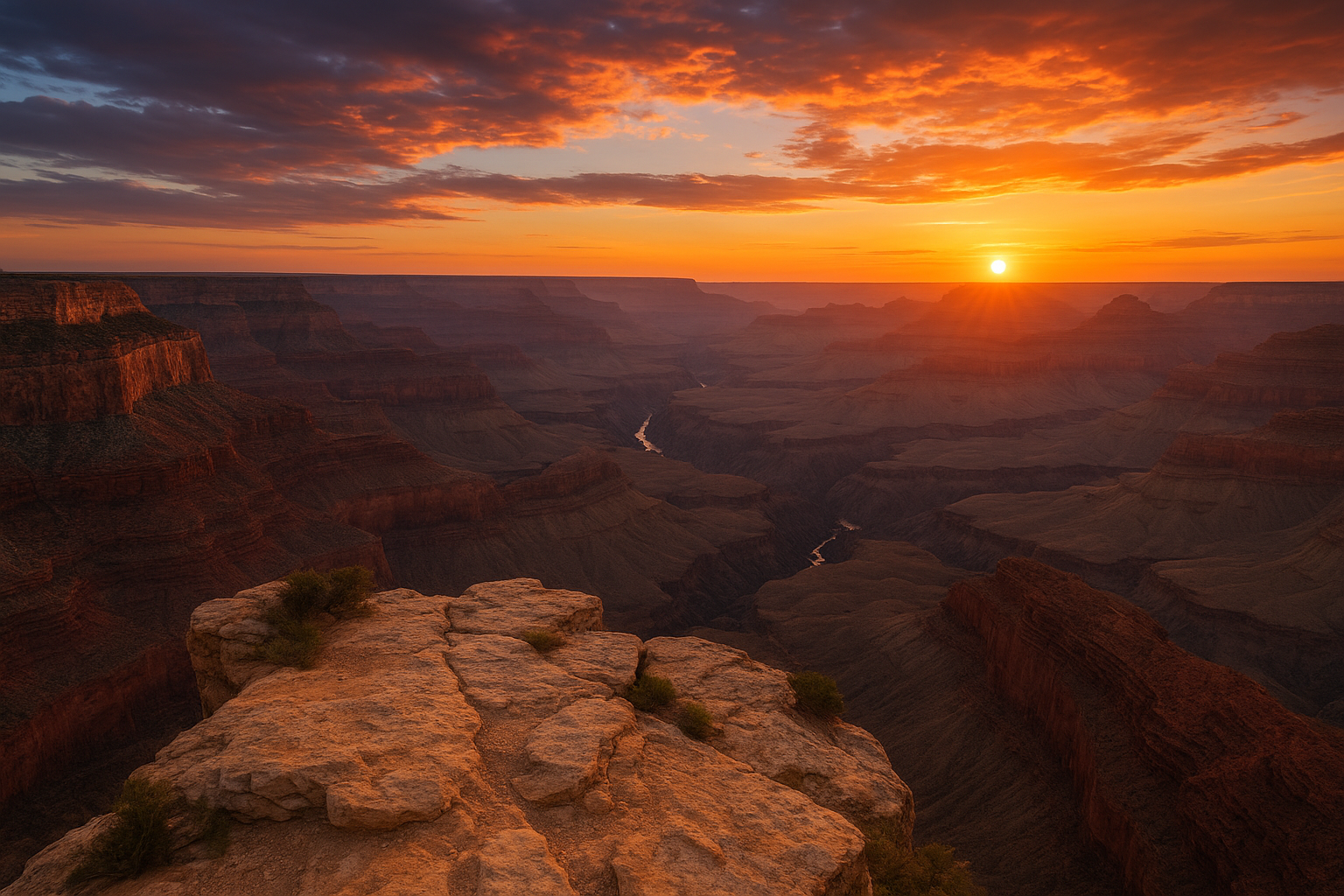
Hopi Point sits along Hermit Road, and it’s the spot experienced rangers point to when you ask about the single best sunset on the South Rim. The overlook juts out further than most, putting you closer to open air on three sides than almost anywhere else along the drive.
What you’ll see
Expect one of the widest unobstructed panoramas on the entire rim, stretching far enough west that you can trace the Colorado River’s path for several miles rather than catching a brief glimpse of it. The exposed, open shape of the point means nothing blocks your sightline, so the canyon’s layered rock reads almost like a topographic map spread out below you.
Hopi Point’s open, three-sided exposure makes it the clearest sunset stage on the entire South Rim.
Best time to visit
Sunset is non-negotiable here. Shuttle buses fill fast an hour before the sun drops, and the changing light across the exposed rock faces is dramatically better than what you’ll catch at midday, when the same view looks washed out and flat.
How to get there
Hopi Point sits along Hermit Road, which closes to private vehicles during peak season from March through November. You’ll need the free shuttle or a tour vehicle to reach it during those months.
Good to know
Bring a jacket even in warm months, since evening wind picks up fast on the exposed point, and the shuttle back to the village can involve a genuine wait once sunset crowds start moving.
5. Pima Point
Pima Point sits at the far end of Hermit Road, past most of the crowds that never make it beyond Hopi Point. Fewer buses stop this far out, which means you often get long stretches of quiet rim time even during peak season, something that’s getting rare on the busier South Rim viewpoints.
What you’ll see
Down below, you can spot the ruins of an old tramway that once hauled ore across the canyon, plus a clear line of sight to Granite Rapids, one of the loudest stretches of whitewater on the Colorado River. On a still day, you can actually hear the rapids from the rim, which isn’t something you get anywhere else on this list.
Pima Point is the rare overlook where you can hear the canyon, not just see it.
Best time to visit
Late afternoon works well here, since the point faces west and catches long shadows that stretch across the inner canyon without the sunset crowd that mobs Hopi Point an hour later.
How to get there
Access runs through the Hermit Road shuttle, and it’s one of the last stops on the route, so budget extra travel time compared to closer overlooks.
Good to know
Bring binoculars if you have them, since the tramway ruins and river rapids sit far enough below that details get lost to the naked eye. Restrooms are available at the stop, but food options are limited, so plan snacks ahead.
6. Lipan Point
Lipan Point sits east of Grandview along Desert View Drive, and many South Rim visitors skip it entirely because it’s farther from the village. That’s a mistake if you care about seeing the Colorado River in a way few other overlooks allow, since Lipan catches a long, uninterrupted stretch of the river bending through the canyon below.
What you’ll see
Unobstructed views of the river’s horseshoe bend define this stop, along with a wide-open look at the canyon’s inner gorge and the Unkar Delta, an ancient farming site used by Ancestral Puebloans centuries ago. The layered rock here reads especially clear, making Lipan a favorite among photographers hunting the best south rim viewpoints for geology shots without a crowd blocking the tripod.
Lipan Point gives you the longest visible stretch of the Colorado River anywhere on the South Rim.
Best time to visit
Sunrise delivers the strongest light here, with the river catching gold tones before the crowds from the village even arrive. Sunset works too, though the point faces a slightly different angle than Hopi, so colors shift more toward deep orange than the fiery reds you’ll catch further west.
How to get there
Reaching Lipan requires a car or tour vehicle, since it sits outside the shuttle network entirely along Desert View Drive, roughly 25 miles from the main village.
Good to know
Parking is small and unpaved in spots, so arrive early if you’re chasing sunrise light without competing for the best angle.
7. Desert View Watchtower
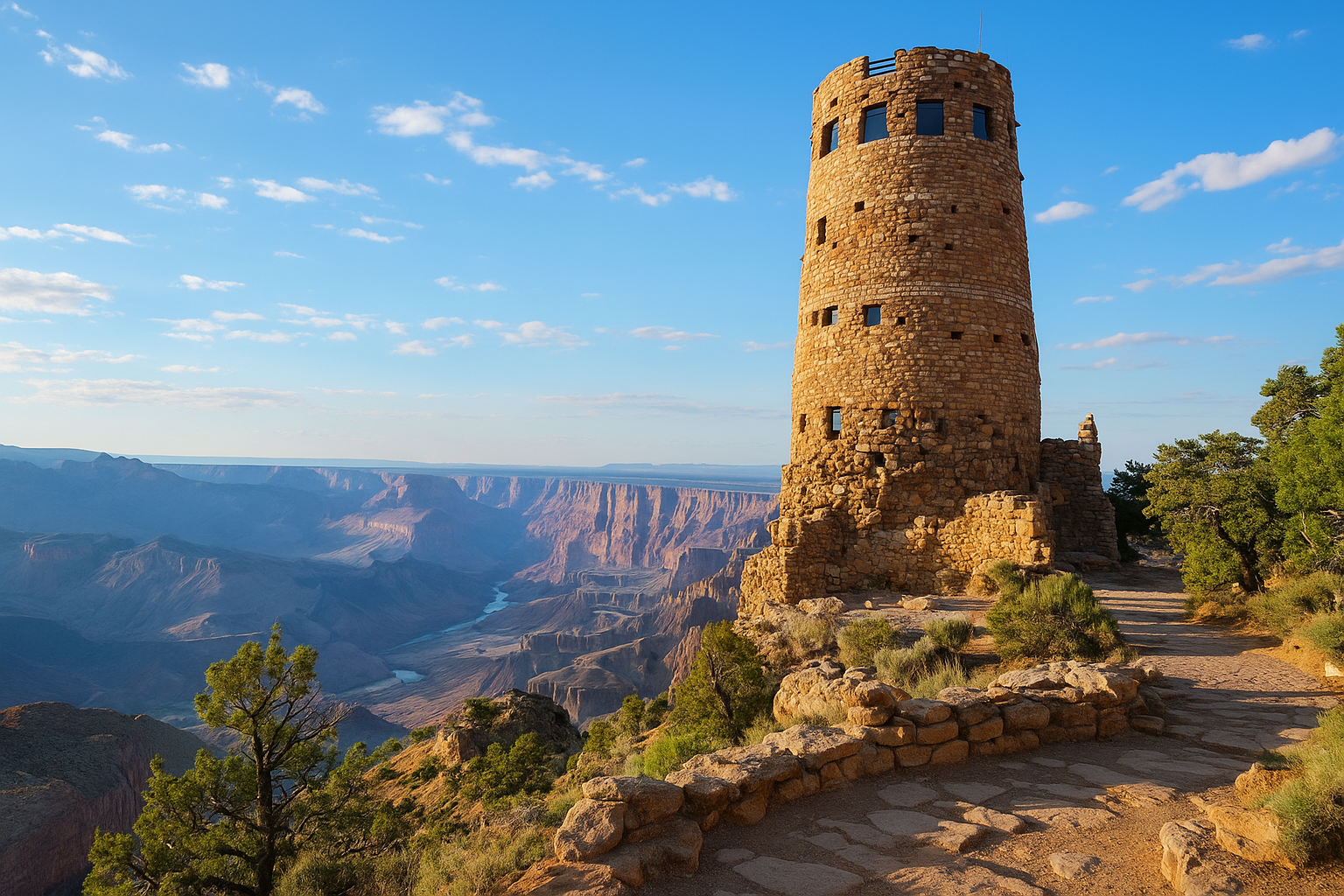
Desert View Watchtower sits at the far eastern edge of Desert View Drive, closing out the South Rim’s viewpoint lineup with something none of the others offer: a 70-foot stone tower you can actually climb. Architect Mary Colter designed it in 1932, drawing on Ancestral Puebloan watchtower styles, and the National Park Service still maintains it as a working historic structure today.
What you’ll see
Climb the spiral staircase and you get a rare elevated vantage point, looking down on the canyon and the Colorado River from height instead of straight across from the rim edge. The interior walls carry murals by Hopi artist Fred Kabotie, adding cultural context you won’t find at any other overlook on this list.
Desert View Watchtower is the only South Rim viewpoint where the view comes with a staircase and a story.
Best time to visit
Morning visits mean shorter lines for the tower’s narrow staircase, since afternoon tour groups tend to cluster here on their way out of the park. Golden hour light also works well from the top floor, catching the canyon at a different angle than ground-level overlooks.
How to get there
Desert View sits roughly 25 miles east of the main village, outside the shuttle network, so you’ll need a car or tour vehicle to reach it.
Good to know
Expect a small entrance area with a trading post, snack bar, and restrooms, making this a natural final stop before leaving the park through the east entrance.
Planning your day along the South Rim
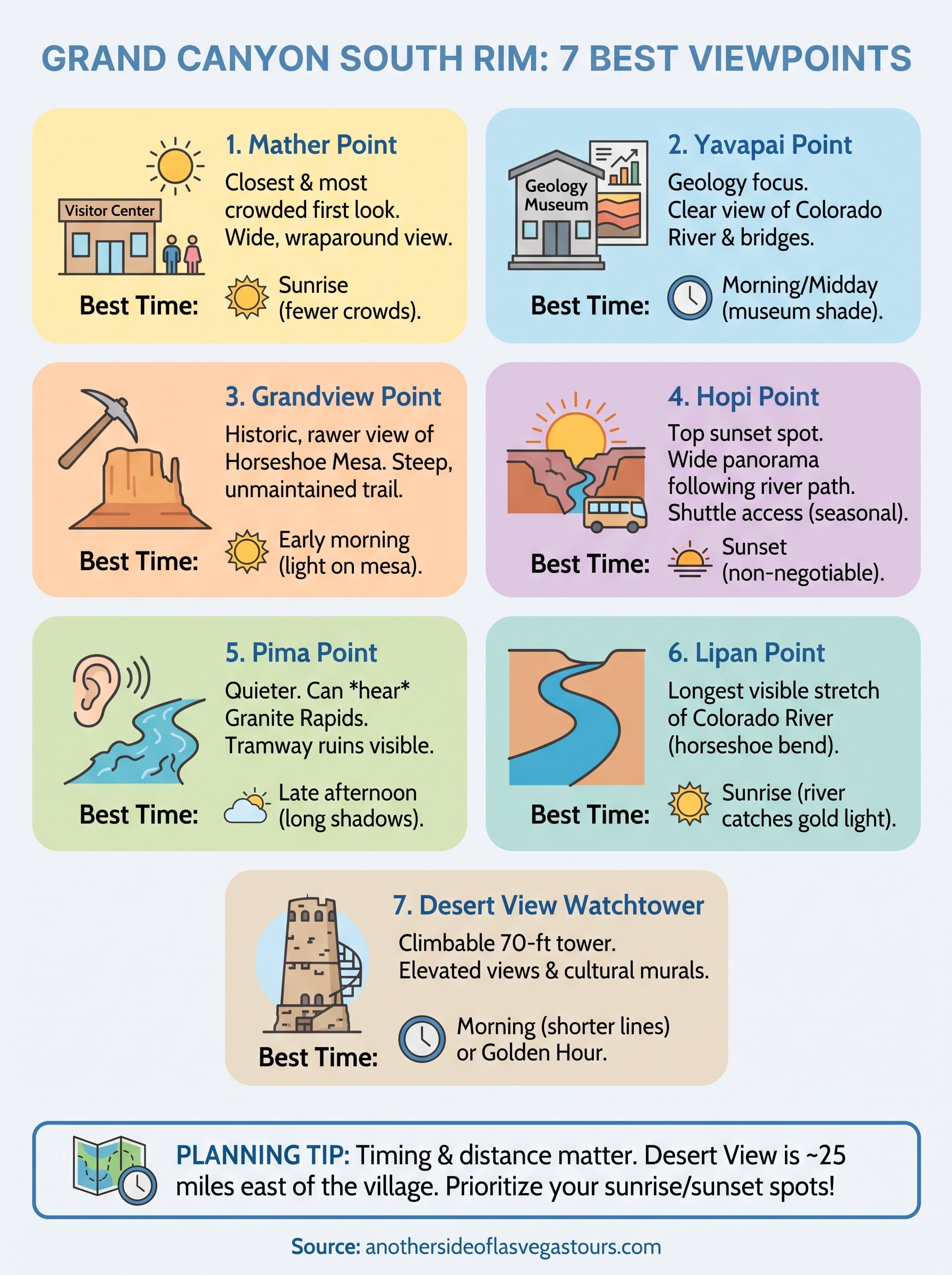
Seven viewpoints sound manageable until you’re standing at Mather Point realizing Desert View sits 25 miles east and the sun won’t wait. Pick your priorities before you drive in. If sunrise matters most, aim for Lipan or Mather. If sunset is the goal, Hopi Point wins every time. Trying to hit all seven in one day means less time at each and more time driving between them.
Given the four-and-a-half-hour drive from Las Vegas, most visitors get one shot at this itinerary, which is why it’s worth weighing whether to reach the South Rim by car or by guided tour before timing and route planning trip you up. Guessing wrong costs you the light, the parking spot, or both.
If you’d rather skip the logistics and let someone else handle the driving, timing, and route, reserve a private guided canyon day from Las Vegas and spend your day actually looking at the canyon instead of your GPS.