
Standing at the rim for the first time, most visitors freeze up. There’s a canyon 277 miles long stretching in every direction, and you have no idea which overlook actually matters. If you’re searching what to see at Grand Canyon South Rim, you’re probably short on time and don’t want to waste it driving to viewpoints that look identical from a parking lot.
Here’s the direct answer: a handful of spots and experiences deliver almost everything worth seeing, from Mather Point at sunrise to the historic stone watchtower at Desert View. You don’t need three days to hit the highlights. You need to know which ten stops give you the views, the history, and the photos people actually remember.
This list breaks down the South Rim’s essential viewpoints, hikes, and landmarks in the order that makes sense for a real visit, whether you’re driving yourself to the South Rim or joining a guided day trip from Las Vegas. We’ve built our own Grand Canyon tours around exactly these spots, so this rundown reflects what actually works on the ground, not just what looks good on a map.
1. Guided day tours from Las Vegas
What it is
A guided South Rim day tour from Las Vegas gets you to the South Rim without renting a car, mapping a route, or figuring out where to park at 8am when every lot is already full. You board a coach or a small luxury van in Las Vegas before sunrise, and a professional guide handles the four-hour drive while narrating the desert landscape, the history of the region, and what to expect once you arrive. Some operators, including our own Grand Canyon tours, also offer helicopter options and what they cost, skipping the drive entirely and dropping you at the rim in under an hour.
Why it’s worth the visit
The canyon is genuinely hard to reach on your own schedule, and each way of visiting the Grand Canyon from Las Vegas comes with tradeoffs. It sits roughly 275 miles and four driving hours from the Las Vegas Strip, and a self-driven round trip eats an entire day even before you factor in stops. A guided tour turns that dead time into part of the experience: guides point out landmarks along Route 66 and the Colorado River, explain the geology before you see it firsthand, and make sure you’re standing at the right overlook when the light is best. That’s the whole appeal of an insider-led visit instead of a solo drive.
A good guide turns four hours of highway into the first chapter of the story, not just the commute to it.
Best time to go
Book a tour that departs early enough to reach the rim by mid-morning, before the tour buses from Williams and Flagstaff arrive in force. Spring and fall trips hit the sweet spot of mild temperatures and manageable crowds, which makes them the best months to visit the Grand Canyon, while summer tours should include enough shaded or indoor stops to break up the desert heat. Winter tours run too, and they’re often the quietest, though snow can occasionally close sections of Desert View Drive.
Good to know before you go
Most day tours from Las Vegas run 12 to 14 hours round trip, so pack layers, water, and comfortable shoes since you’ll be on your feet at multiple stops. Confirm whether the tour includes Route 66 detours or is one of the tours that combine the Grand Canyon with Hoover Dam, since those add time but also context you won’t get driving straight through.
- Departure times: typically 6-7am from the Strip
- Total trip length: 12-14 hours for ground tours, 3-5 hours for helicopter tours
- What’s usually included: transportation, guide narration, and stops at major overlooks
- What to bring: sunscreen, a refillable water bottle, and a light jacket for early morning cold
2. Mather Point
What it is
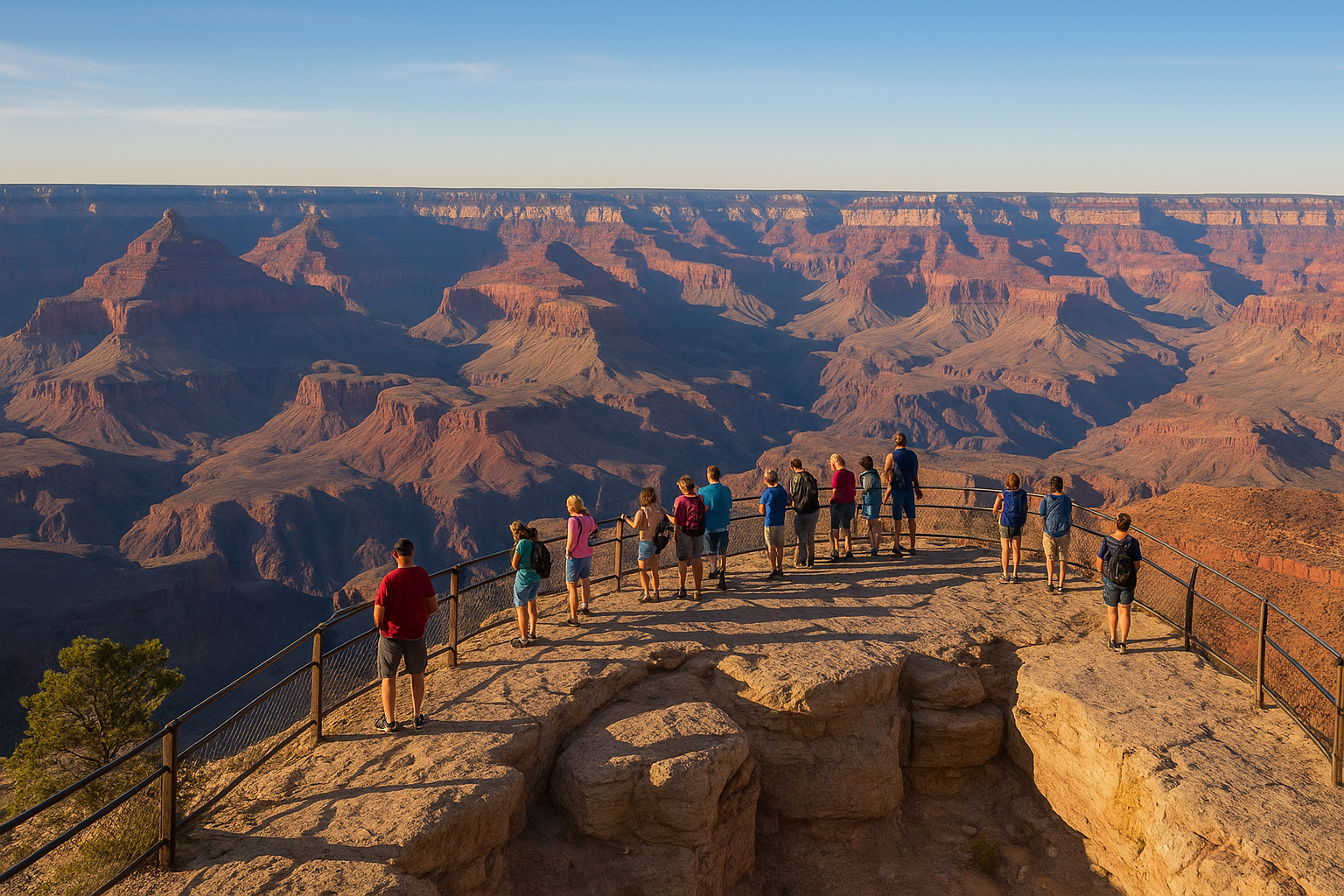
Mather Point sits just a short walk from the South Rim Visitor Center, which makes it the first canyon view most people ever see. It’s a broad rock overlook jutting out toward the canyon’s interior, with railings and multiple viewing platforms so a crowd of fifty people can all get a clear shot without elbowing each other. If you’re only stopping at one place, this is probably it by default, since nearly every shuttle route and parking lot funnels visitors here first.
Why it’s worth the visit
Despite being the busiest overlook on the rim, Mather Point earns its reputation. You get a wide, unobstructed view across the canyon toward the North Rim, roughly ten miles away, with the Colorado River visible in a few spots if the light cooperates. It’s also one of the best places to get oriented before deciding where else to go, since interpretive signs explain the rock layers you’re staring at.
Mather Point isn’t the quietest view on the rim, but it’s the one that makes the canyon real for the first time.
Best time to go
Arrive right at sunrise if you want the overlook mostly to yourself, since tour buses and day-trippers start filling the platforms by mid-morning. Sunset works too, though expect company.
Good to know before you go
Parking fills up fast near the visitor center, so walk over from a nearby lot rather than circling for a close spot. The overlook has no shade, so bring water and sun protection even for a short stop.
3. Yavapai Point and the geology museum
What it is
Yavapai Point sits about a mile east of Mather Point along the Rim Trail, and it houses the Yavapai Geology Museum, a small stone building perched right on the canyon edge. Built in 1928, the museum uses window displays, relief models, and rock samples to explain how the canyon actually formed over nearly two billion years. It’s less crowded than Mather Point but offers an equally sweeping view of the inner gorge.
Why it’s worth the visit
Analyzing the canyon’s layers gets a lot easier once you’ve seen the museum’s cutaway model showing which rock formed when. The floor-to-ceiling windows frame the Colorado River and Phantom Ranch far below, and rangers stationed inside answer questions about erosion, fossils, and the canyon’s age that most visitors never think to ask elsewhere.
The view at Yavapai Point comes with an explanation, which is exactly what most first-time visitors are missing.
Best time to go
Because the museum has walls and a roof, it’s a smart midday stop when the sun gets harsh at the open-air overlooks. Late afternoon light also works well here, since the point faces west and catches the canyon walls turning orange before sunset.
Good to know before you go
Entry to the museum is free with park admission, and it’s wheelchair accessible with paved paths connecting from the parking area. Restrooms and a small bookstore are on site, making this a practical rest stop between longer walks on the Rim Trail. Give yourself 20 to 30 minutes if you actually want to read the displays instead of just glancing at the view.
4. Desert View watchtower
What it is
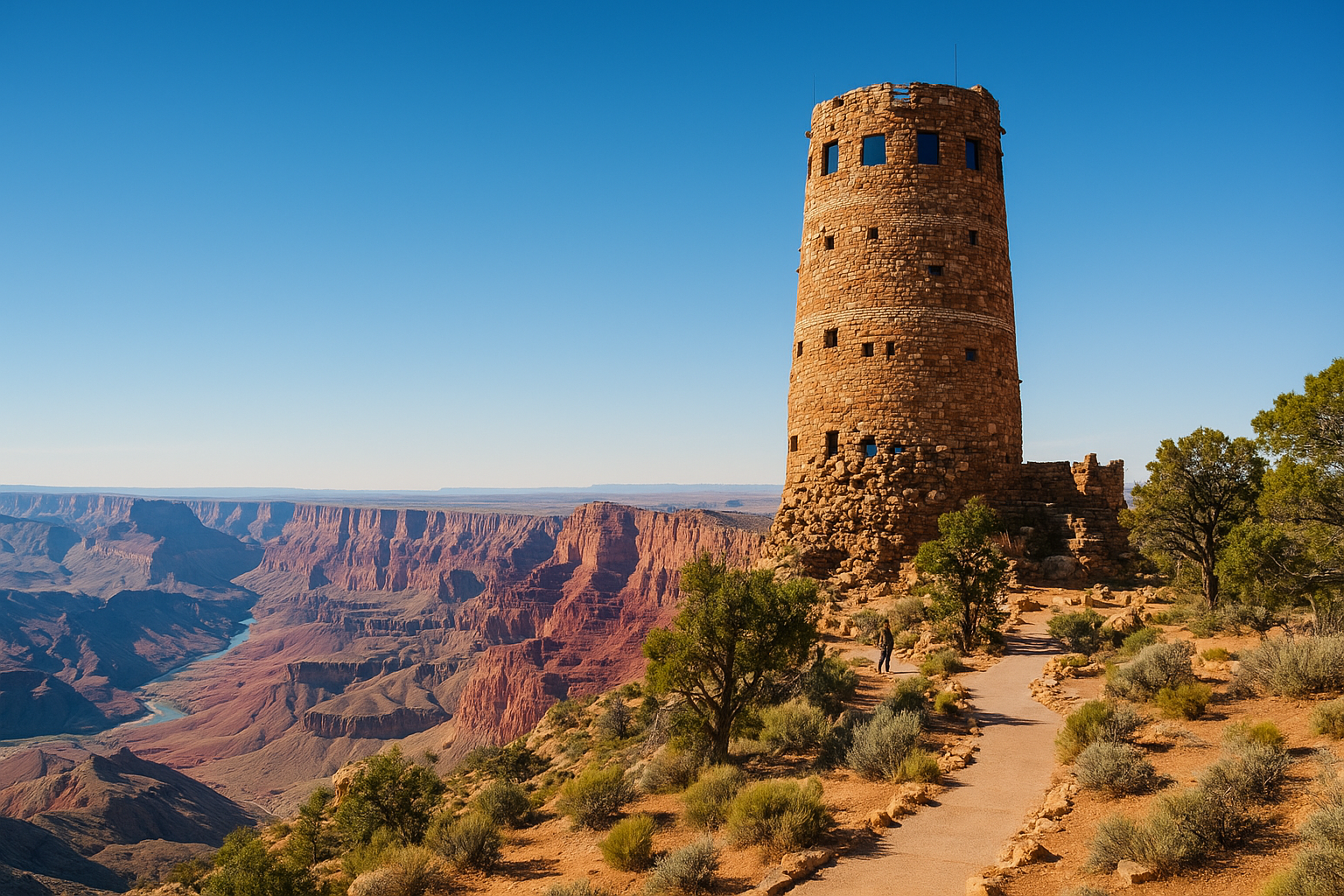
The Desert View Watchtower stands 70 feet tall at the far eastern edge of the South Rim, about 25 miles from Grand Canyon Village. Architect Mary Colter designed it in 1932 to look like an ancient Puebloan structure, and the interior is covered in murals painted by Hopi artist Fred Kabotie. Climbing the spiral staircase inside puts you at the top platform, one of the highest vantage points on the entire South Rim.
Why it’s worth the visit
Unlike the open overlooks closer to the village, this stop combines architecture, Native American art, and a canyon view all in one building. From the top, you can see the Colorado River bending through Marble Canyon and, on clear days, the edge of Navajo Nation land stretching east. It’s a favorite finish point on many VIP Grand Canyon tours out of Las Vegas because it marks the eastern boundary of the park.
Desert View gives you the one South Rim stop where the building is as memorable as the canyon behind it.
Best time to go
Morning light works best here since the tower faces the rising sun over the canyon’s eastern reaches. Afternoons bring heavier crowds, especially between May and September.
Good to know before you go
- The tower’s interior closes seasonally, so check hours before climbing
- A general store, gas station, and market sit nearby, useful for a last supply stop
- Entry is included with general park admission, no extra ticket required
- The stairs are narrow and steep, so this stop isn’t ideal for anyone unsteady on their feet
5. Hopi Point at sunset
What it is
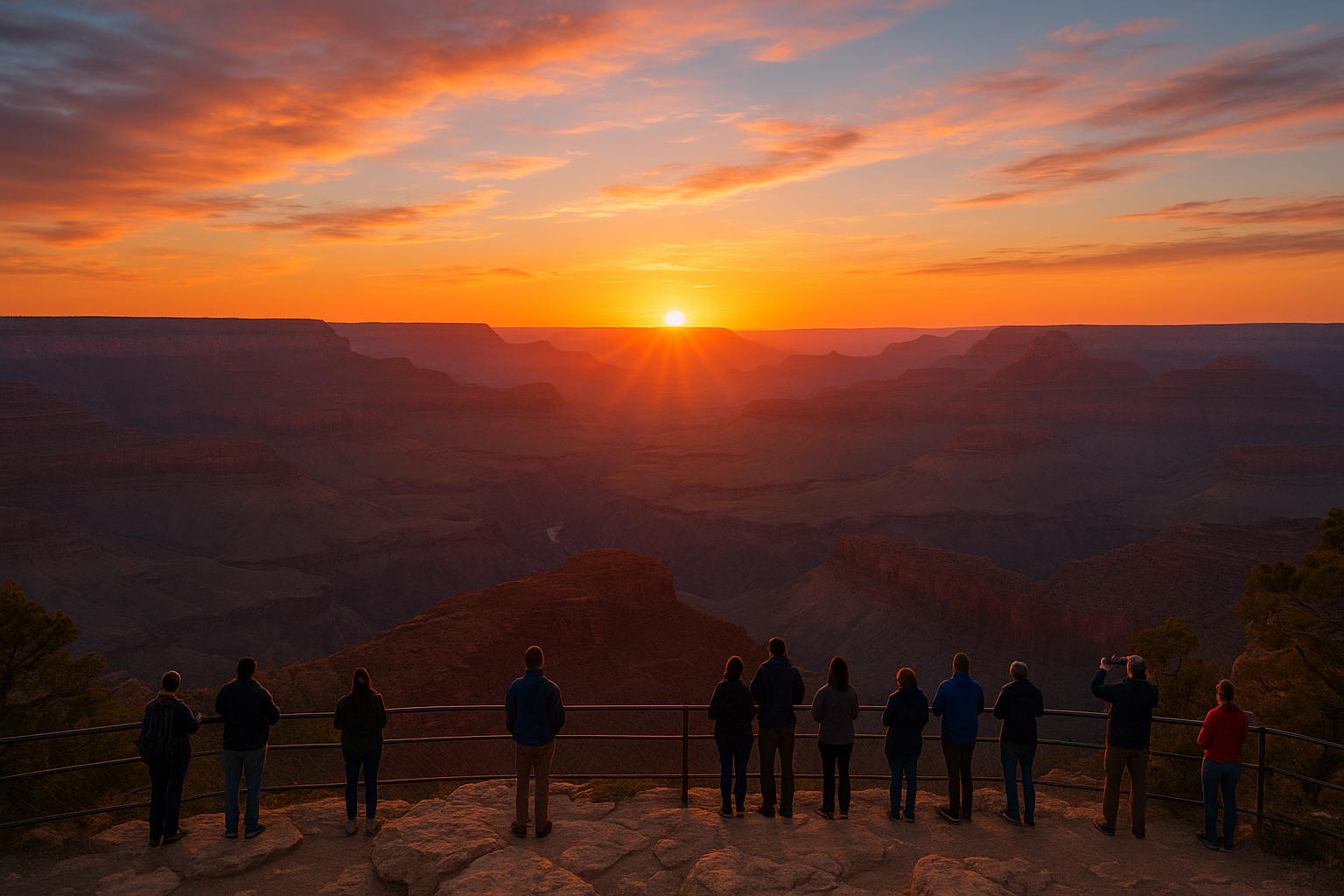
Hopi Point sits along Hermit Road, about four miles west of Grand Canyon Village, and it’s widely considered the best sunset viewpoint on the entire South Rim. The overlook juts further into the canyon than most other stops, giving you an unobstructed sweep of the horizon in both directions. Photographers, rangers, and longtime visitors all point to this spot when someone asks where to watch the sunset at Grand Canyon.
Why it’s worth the visit
Because Hopi Point extends so far from the rim wall, you get roughly 180 degrees of open sky, which means the canyon walls light up in layers of orange and purple as the sun drops. Few other overlooks offer that same uninterrupted view of both the sunset and the canyon simultaneously.
Hopi Point is the one stop where the sunset and the canyon compete for your attention, and somehow both win.
Many visitors on South Rim sunset viewpoints tours plan their whole evening around arriving here 45 minutes before the light show starts.
Best time to go
Go about an hour before official sunset to claim a good spot along the railing, since this overlook fills up fast during summer months. Spring and fall sunsets tend to be less crowded and just as vivid.
Good to know before you go
Hopi Point is closed to private vehicles for most of the year, so you’ll need the free park shuttle from Grand Canyon Village. Bring a flashlight or headlamp for the walk back to the shuttle stop once the sky goes dark.
6. Bright Angel Trail
What it is
Bright Angel Trail starts right in Grand Canyon Village and drops into the canyon along a series of switchbacks carved into the rock face. It’s the most popular hiking trail on the South Rim, with rest houses spaced at 1.5 and 3 miles down, plus a seasonal water station at Indian Garden. Unlike the paved Rim Trail above, this one takes you actually inside the canyon, not just alongside it.
Why it’s worth the visit
Descending even the first mile changes your perspective on scale in a way no overlook can match. The canyon walls close in around you, and the temperature climbs noticeably with every switchback, giving you a physical sense of the elevation you’re losing. Mule trains also use this trail, so you’ll likely share the path with a pack string heading toward Phantom Ranch.
A mile down Bright Angel Trail teaches you more about the canyon’s depth than an hour at any rim overlook.
Best time to go
Start before 7am, especially between May and September, since the trail has no shade and afternoon temperatures inside the canyon regularly top 100 degrees. Cooler months allow a later start without the same heat risk.
Good to know before you go
Rangers strongly discourage hiking to the river and back in one day. Turn around once you’ve used half your water, not half your energy, since the climb out always takes longer than the way down.
7. South Kaibab Trail
What it is
The South Kaibab Trail starts near Yaki Point, a few miles east of Grand Canyon Village, and heads straight down a narrow ridge instead of hugging a canyon wall like Bright Angel does. There’s no shade and no year-round water source, but the tradeoff is a trail that puts you out in the open air with views stretching in almost every direction from the first switchback. Ooh Aah Point, roughly 0.9 miles down, is the most common turnaround for day hikers who want a taste of the descent without committing to the full grind.
Why it’s worth the visit
Unlike most South Rim trails, South Kaibab doesn’t tuck you against rock walls. You’re exposed on a ridge line, which means panoramic views the entire way down instead of glimpses between switchbacks. Cedar Ridge, about 1.5 miles in, gives you a wide flat overlook that rivals anything you’d find at a paved rim viewpoint, minus the crowd.
South Kaibab trades shade for scenery, and most hikers say the view is worth the sunburn.
Best time to go
Start at dawn, ideally before 6am in summer, since there’s zero shade and the exposed ridge heats up fast. Fall and spring mornings offer the same views with far less heat risk.
Good to know before you go
There’s no water anywhere on this trail, so carry more than you think you’ll need. Parking at the trailhead is limited, so most visitors take the free shuttle from Grand Canyon Village instead of driving.
8. The Rim Trail
What it is
The Rim Trail runs roughly 13 miles along the South Rim, mostly paved, connecting Grand Canyon Village to Hermits Rest in the west and Mather Point to South Kaibab Trailhead in the east. Unlike the inner canyon hikes, this one stays level and requires no scrambling, which makes it the easiest way to string together multiple overlooks without driving between each one. Free shuttle stops sit at nearly every major viewpoint along the route, so you can walk one direction and ride back.
Why it’s worth the visit
Giving you access to a dozen distinct overlooks on a single flat path, the Rim Trail is the closest thing the South Rim has to a greatest-hits tour on foot. You pass Trailview, Maricopa Point, and Powell Point in sequence, each offering a slightly different angle on the canyon’s inner gorge. It’s also the rare trail here that works for strollers, wheelchairs, and anyone avoiding steep grades.
The Rim Trail is the one hike at Grand Canyon South Rim where the destination is every step, not just the end.
Best time to go
Early morning or late afternoon light flatters the canyon walls best along this stretch, and temperatures stay manageable even in summer since you’re not descending into the heat.
Good to know before you go
Sections between Monument Creek Vista and Hermits Rest stay unpaved and slightly rougher, so wear real shoes rather than sandals if you’re covering the full distance. Bring water regardless of season, since fountains are spaced unevenly along the route.
9. Grand Canyon Village historic district
What it is
The Grand Canyon Village historic district clusters right along the rim near Mather Point, packed with buildings dating back to the early 1900s when the railroad first brought tourists here. El Towasa Hotel, the Bright Angel Lodge, and the Kolb Studio all sit within a few minutes’ walk of each other, most still operating as working hotels, restaurants, or small museums rather than roped-off relics. Walking through this stretch feels less like a designated stop and more like the connective tissue between the canyon’s other big sights.
Why it’s worth the visit
Combining architecture, park history, and canyon views in one compact area, the village gives you a break from staring at rock layers without leaving the rim. Kolb Studio, built into the cliffside in 1904, houses rotating art exhibits and a small bookstore, while the log-and-stone Bright Angel Lodge shows off Mary Colter’s design work up close, the same architect behind the Desert View Watchtower.
The village is where you rest your legs and still feel like you’re seeing the canyon.
Best time to go
Midday works fine here since most buildings offer shade and indoor exhibits, making this a natural lunch stop between overlooks or trail sections.
Good to know before you go
Several restaurants and a general store make this the easiest place on the South Rim to grab a real meal instead of trail snacks. Parking is tight, so use the shuttle if you’re staying nearby.
10. Desert View Drive viewpoints
What it is
Desert View Drive stretches 25 miles from Grand Canyon Village to the watchtower at the park’s eastern edge, and it strings together a chain of overlooks most visitors never touch because they only see the western viewpoints near the village. Grandview Point, Moran Point, Lipan Point, and Navajo Point all sit along this route, each pulling back the curtain on a different bend of the Colorado River.
Why it’s worth the visit
Spacing these stops out gives you a variation on the canyon that the crowded western overlooks can’t match. Lipan Point shows off the river’s rapids and a wide stretch of layered rock considered some of the best geology viewing on the South Rim, while Grandview Point marks the trailhead for an old mining route now used as a rugged hiking trail. Navajo Point sits closest to the watchtower and catches some of the best light of the whole drive.
Desert View Drive rewards anyone willing to keep driving past where the shuttle buses stop.
Best time to go
Morning light suits Lipan and Navajo Points best, since both face east toward the rising sun. Plan the drive for late afternoon if you’re finishing at the watchtower, since that timing lines up sunset with your last stop.
Good to know before you go
This stretch allows private vehicles year-round, unlike Hermit Road, so you can stop wherever you like without waiting on a shuttle. Pullouts are small at some viewpoints, so expect brief waits during peak summer weekends.
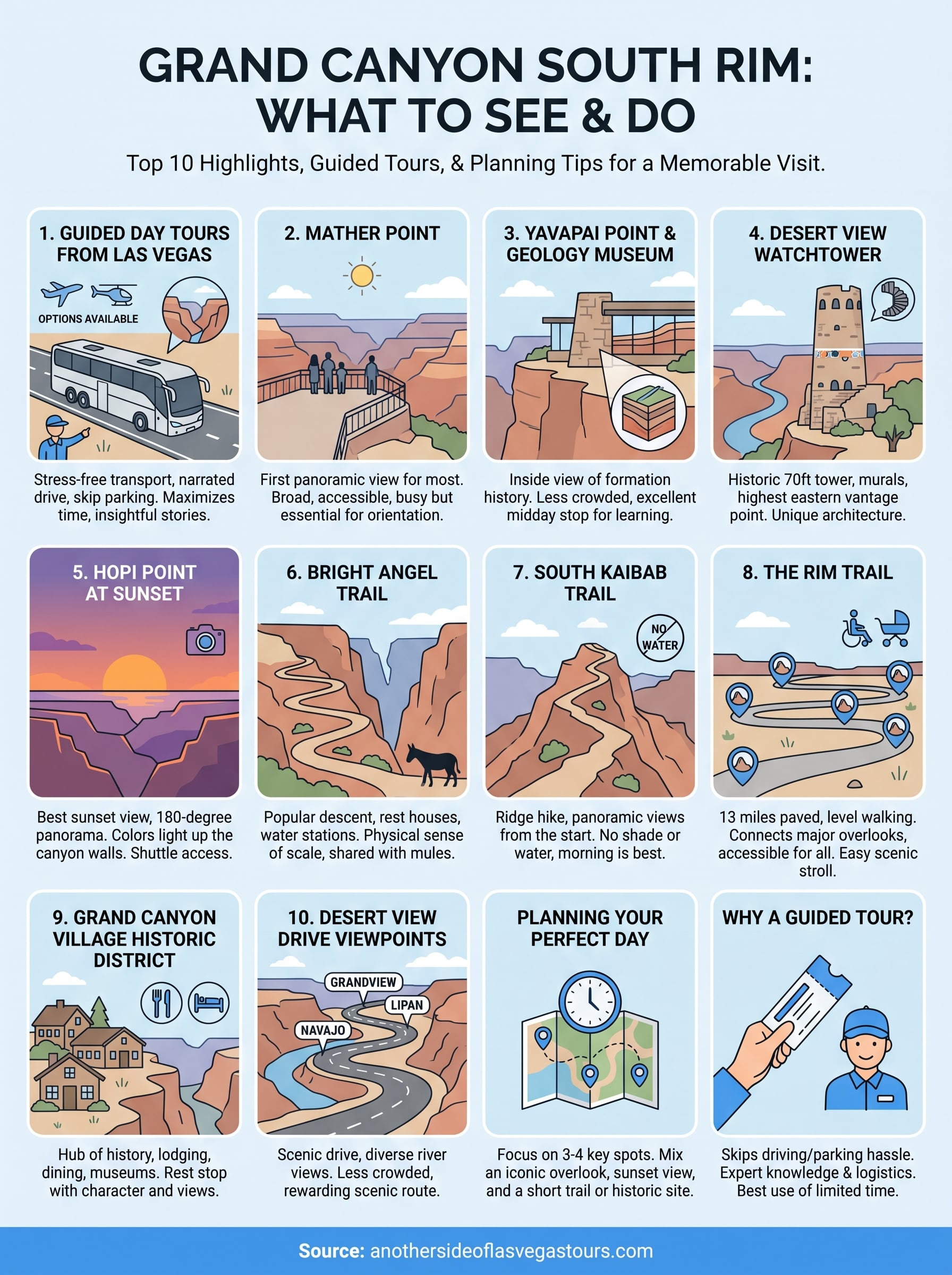
Planning your perfect South Rim day
Ten stops, one canyon, and no wasted driving. That’s the real takeaway here: Mather Point for your first look, Hopi Point for sunset, Desert View Watchtower for the architecture and history, and a mix of rim trails and inner-canyon hikes depending on how much time and stamina you’ve got. Pick three or four that match your pace rather than trying to chase all ten in a single afternoon.
Getting there is still the biggest hurdle for most Las Vegas visitors, and that’s exactly where a guided day trip earns its cost. You skip the four-hour solo drive, the parking scramble, and the guesswork about which overlook actually deserves your limited time, and you show up already knowing the story behind what you’re looking at. If you’d rather hand off the logistics and focus on the view, book a private Grand Canyon tour and let a local guide handle the rest.