
Picking the wrong month for Zion National Park can mean trading canyon views for a parking lot line at the shuttle stop, or hiking Angels Landing in triple-digit heat. Best time to visit Zion National Park depends on what you’re chasing: cooler trails, fewer crowds, or open access to every route including The Narrows. Timing this trip well is the difference between a rushed, sweaty scramble and a day you actually remember.
If you want the short answer, spring and fall consistently deliver the best mix of mild temperatures and manageable visitor numbers, while summer brings the biggest crowds and winter opens up quiet trails but closes some water routes. Each season trades one advantage for another, and knowing those tradeoffs before you book matters more than any generic "go in April" advice.
This guide breaks down what to expect month by month, from crowd levels to trail conditions, so you can match your visit to your priorities. We run guided tours out of Las Vegas to Red Rock Canyon, Hoover Dam, and other desert landscapes nearby, and the same seasonal logic that shapes those trips applies directly to planning Zion.
Why timing matters when planning your Zion trip
Zion’s climate swings hard between seasons, and that swing directly controls which trails are safe, which are miserable, and which are closed outright. Summer highs in the canyon regularly hit 100°F, turning exposed hikes like Angels Landing into a heat-exhaustion risk by mid-morning. Winter flips the script, with icy sections on Walter’s Wiggins and snow at higher elevations like Kolob Terrace. Zion weather by month isn’t a minor detail, it’s the single biggest factor in whether your trip feels like an adventure or an ordeal.
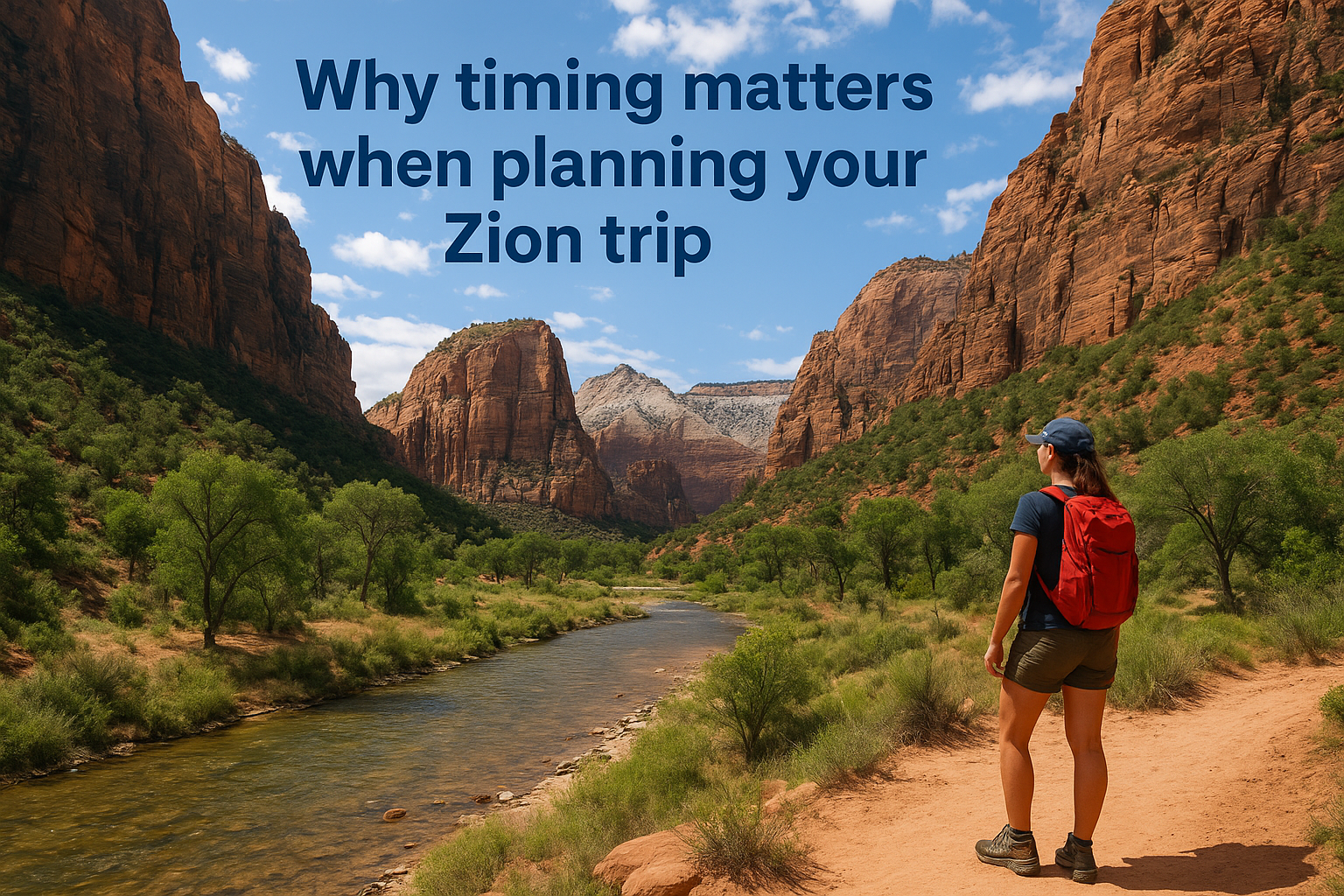
Get the season right, and Zion rewards you with open trails and thin crowds; get it wrong, and you’re rationing water in a parking lot line.
Shuttle access is the second piece most first-time visitors overlook. Zion Canyon Scenic Drive is closed to private vehicles for most of the year, meaning your entire day depends on the park shuttle system. During peak summer months, shuttle lines at the Visitor Center can stretch past an hour before you even reach the first stop. That single bottleneck can eat half a day if you show up unprepared, which is why matching your visit to a quieter season pays off in actual hours on trail, not just comfort.
River conditions shape your options too, especially if The Narrows is on your list. That hike runs through the Virgin River itself, and water levels shift dramatically with snowmelt and monsoon season. Spring runoff can push flows too high and too cold for safe wading, while late summer monsoons bring flash flood risk that closes the canyon with little warning. Knowing when to visit Zion for river hikes specifically is a different calculation than knowing the best month for a dry trail like Emerald Pools.
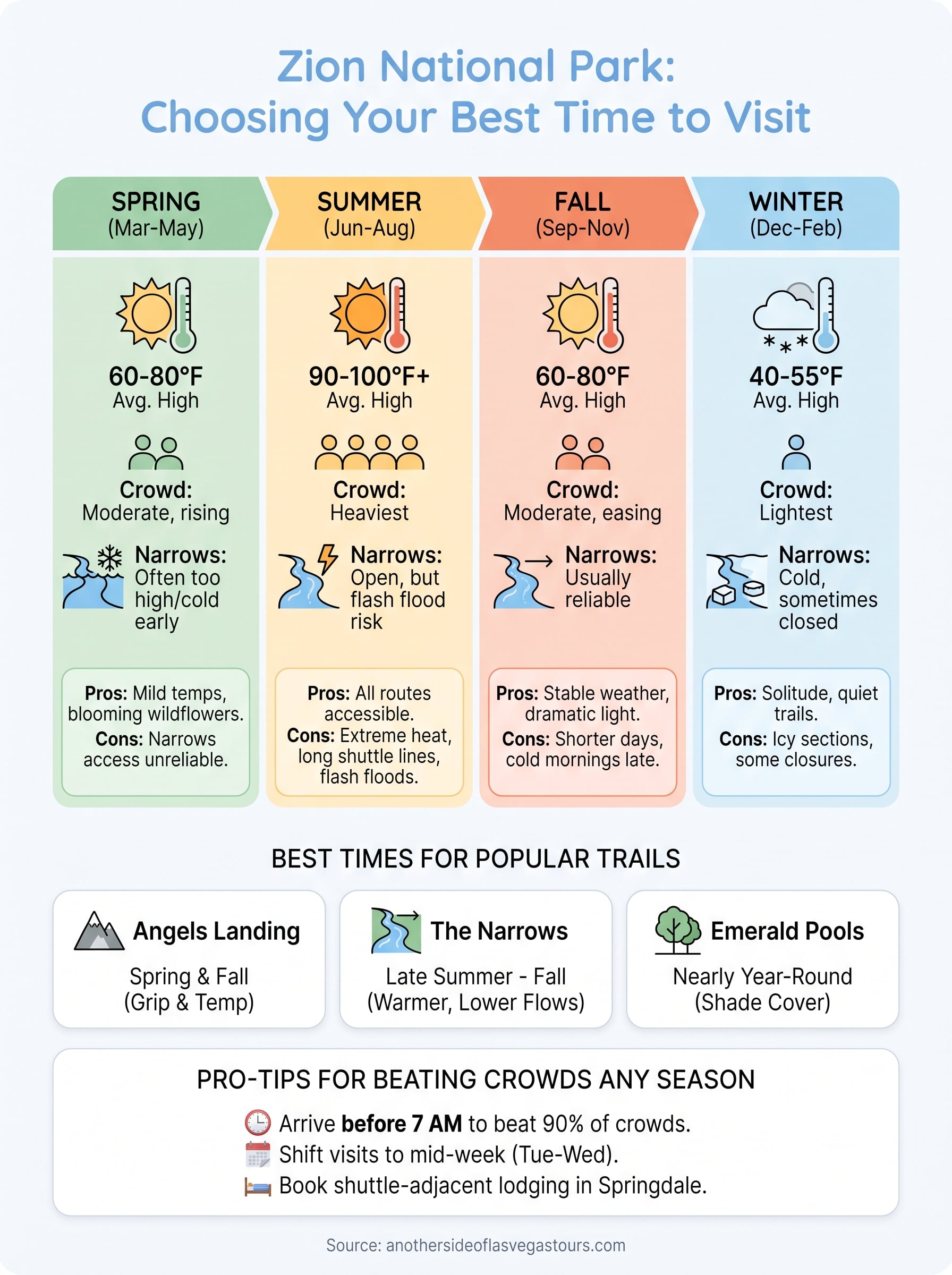
Here’s a quick snapshot of how the seasons stack up on the factors that matter most:
| Season | Avg. High Temp | Crowd Level | Narrows Access |
|---|---|---|---|
| Spring (Mar-May) | 60-80°F | Moderate, rising | Often too high/cold early season |
| Summer (Jun-Aug) | 90-100°F+ | Heaviest | Open, but monsoon flash flood risk |
| Fall (Sep-Nov) | 60-80°F | Moderate, easing | Usually reliable |
| Winter (Dec-Feb) | 40-55°F | Lightest | Cold, sometimes closed |
Timing also affects logistics beyond the park gates. Lodging in Springdale books up months ahead for spring and fall weekends, and permit lotteries for Angels Landing fill fastest during peak season. If you’re building a broader Southwest itinerary that includes stops like Red Rock Canyon or Hoover Dam, aligning your Zion dates with the best months to visit Red Rock Canyon and other shoulder-season travel windows keeps the whole trip smoother, not just the days you spend inside the park.
How to choose the best season for your visit
Start by ranking your own priorities, because no single month wins on every metric. Ask yourself whether you’d rather hike in comfort or hike with fewer people around you, since spring and fall satisfy the first goal while winter satisfies the second. Choosing the best season for Zion comes down to matching the tradeoffs above to what you actually want out of the trip, not chasing a generic recommendation you found online.
Match the season to your priorities
Consider these common traveler goals and which window fits each one:
- Mild hiking weather with open trails: March through May or September through early November
- Lowest crowds and easiest parking: December through February
- Guaranteed Narrows access: Late summer through fall, once monsoon risk fades
- Photography with dramatic light and fall color: Late October into November
If you can only optimize for one thing, optimize for temperature, since heat and cold cause more ruined trips than crowds ever will.
Consider your budget and flexibility
Flexibility matters just as much as the calendar. Travelers locked into a fixed vacation week, like the Fourth of July or spring break, need to plan around crowds rather than avoid them entirely, the same way you would when weighing Las Vegas weather and hotel prices by month, which means booking shuttle-adjacent lodging early and starting hikes before sunrise. Meanwhile, anyone who can shift their dates by even two or three weeks gains real leverage, since late May and early September often deliver near-summer weather with noticeably thinner crowds than the peak months on either side.
Going further, factor in what else is on your itinerary. If Zion is one stop on a bigger Southwest trip that includes Las Vegas, Red Rock Canyon, or Hoover Dam, where monthly weather and crowd patterns at Hoover Dam follow the same rhythm, shoulder-season travel tends to keep lodging and tour availability easier across every stop, not just inside the park boundary.
Best time to hike Zion’s most popular trails
Every trail in Zion has its own weather ceiling, and matching your hike to the right month keeps you off the trail during the hours when it’s actually dangerous. Angels Landing with its exposed chain sections turns treacherous when ice coats the rock, so save it for spring, fall, or a clear winter afternoon after the frost melts off. Observation Point, the longer but less exposed alternative, handles heat better than Angels Landing but still punishes hikers who start after 9 a.m. in July or August.

The best hiking window isn’t a season, it’s the two or three hours right after sunrise, no matter what month you’re visiting.
Water-based hikes run on a completely different clock. The Narrows depends on river flow more than air temperature, so late summer through October usually offers the calmest, warmest wading conditions once spring runoff and monsoon risk both fade. Emerald Pools and Kayenta Trail, both mostly shaded and dry, stay hikeable nearly year-round and make solid backup options among the things to see in Zion National Park when flash flood warnings shut the canyon down.
Quick trail-by-season reference
- Angels Landing: Spring and fall for grip and temperature; avoid icy winter mornings
- Observation Point: Spring, fall, or early winter starts; skip midday summer sun
- The Narrows: Late summer through fall for lower, warmer flows
- Emerald Pools/Kayenta: Nearly any season, thanks to shade cover
Guides who lead hikes in similarly exposed desert terrain, like our own crews on the Red Rock Canyon and Hoover Dam trips and our guided hiking tours near Las Vegas, plan start times around temperature swings the same way. If you’re building hiking into a Southwest itinerary beyond Zion, that early-start habit carries over to every desert trail you tackle, not just the ones inside the park.
Tips for beating the crowds any time of year
Crowds hit every season at Zion, just at different hours and different trailheads, so the real skill is dodging peak windows rather than picking a magically empty month. Beating Zion crowds comes down to controlling when you show up, not just which week you booked, since even July has quiet mornings and even January has a busy Saturday afternoon.
Arrive before 7 a.m. and you’ll beat 90% of the crowd, regardless of the season on the calendar.
Start earlier than feels reasonable
Getting to the Visitor Center before the first shuttle line forms changes everything about your day. Hikers who board by 7 a.m. reach Angels Landing or The Narrows trailhead with open parking, short shuttle waits, and cooler temperatures, while anyone arriving after 9 a.m. in peak season faces both a packed shuttle and a hotter trail. Early starts work in every season, but they matter most from Memorial Day through Labor Day when shuttle lines can stretch past an hour.
Shift your schedule around the week
Weekday visits consistently beat weekends, even during busy months, since local and regional visitors pad Saturday and Sunday numbers on top of the usual tourist traffic. Booking your visit for a Tuesday or Wednesday, especially outside major holidays, can cut wait times noticeably without changing anything about the season itself.
Build in a buffer
Use these habits together for the biggest payoff:
- Reserve shuttle-adjacent lodging in Springdale to skip the outer parking lots entirely
- Check the park’s alert page before you go for closures or flash flood warnings
- Pack a backup trail like Emerald Pools in case your first choice is jammed
Combining an early start with a weekday visit does more for your crowd experience than swapping one month for another.
Planning your Zion getaway
Spring and fall remain the safest bet for anyone chasing mild temperatures, open trails, and manageable crowds, but the right window for you depends on which tradeoff you’re willing to accept. Winter rewards patience with empty trailheads, while summer demands early starts and a strict water routine. Zero in on your priorities first, whether that’s Narrows access, cooler hikes, or thinner shuttle lines, then build your dates around that single factor instead of a generic month recommendation.
Once your Zion dates are locked, extend that same planning into the rest of your Southwest trip. A lot of travelers pair Zion with Las Vegas and its desert landscapes, and matching your shoulder-season timing across both stops keeps lodging and tours easier to book everywhere. If Red Rock Canyon or Hoover Dam are already on your list, look into private guided tours from Las Vegas built around the same seasonal logic that just shaped your Zion itinerary.