
Picking between Upper vs Lower Antelope Canyon trips up a lot of visitors, and honestly, the marketing photos don’t help. Every image looks like a glowing orange tunnel, but the two canyons deliver very different experiences once you’re standing inside them. If you only have time for one, you need to know what separates them before you book anything.
The short answer: Upper Antelope Canyon gives you those famous light beams and an easy, flat walk, while Lower Antelope Canyon offers narrower passages, more dramatic rock formations, and fewer crowds for serious photography. Your choice depends on what you’re after: the postcard shot everyone recognizes, or a quieter, more adventurous scramble through slot canyon terrain.
We’ve guided plenty of travelers who add Antelope Canyon to a broader Southwest itinerary that includes Grand Canyon and Hoover Dam stops, so we know the questions that actually matter. Below, we break down light beam timing, difficulty level, photo opportunities, tour pricing, and which canyon fits your travel style, so you can decide with confidence instead of guessing.
Why the difference between the canyons matters
Understanding what separates these two slot canyons isn’t just trivia, it changes how you plan your entire day in Page, Arizona. Booking the wrong canyon for your priorities means showing up expecting glowing beams and getting soft, shadowy walls instead, or expecting an easy stroll and getting a workout on steel ladders. The canyon terrain and the light conditions inside each one are different enough that tour operators sell them as separate products with separate pricing, guides, and even separate entrances miles apart.
Light beams: the reason everyone books Upper first
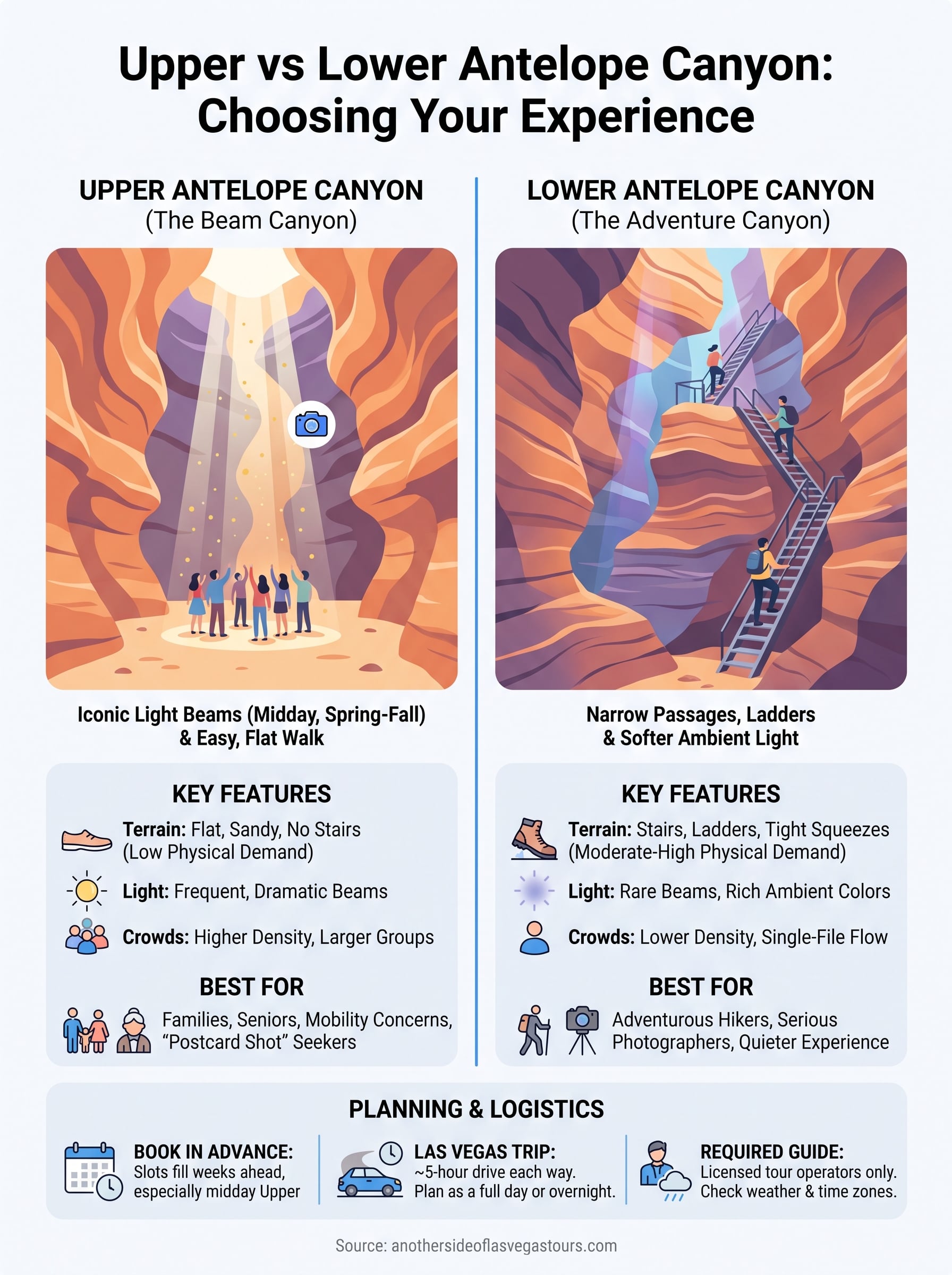
Upper Antelope Canyon sits mostly at ground level, so sunlight pours almost straight down through its wide opening. Between roughly late March and early October, especially from 11am to 1pm, the sun angles just right to send visible shafts of light into the canyon floor, kicking up dust that turns the beams gold and orange in photos. Lower Antelope Canyon is a narrower crevice cut deeper into the rock, so direct beams rarely form there. What you get instead is reflected, ambient light that washes the walls in blue, purple, and rust tones, a completely different visual mood than Upper’s dramatic spotlight effect.
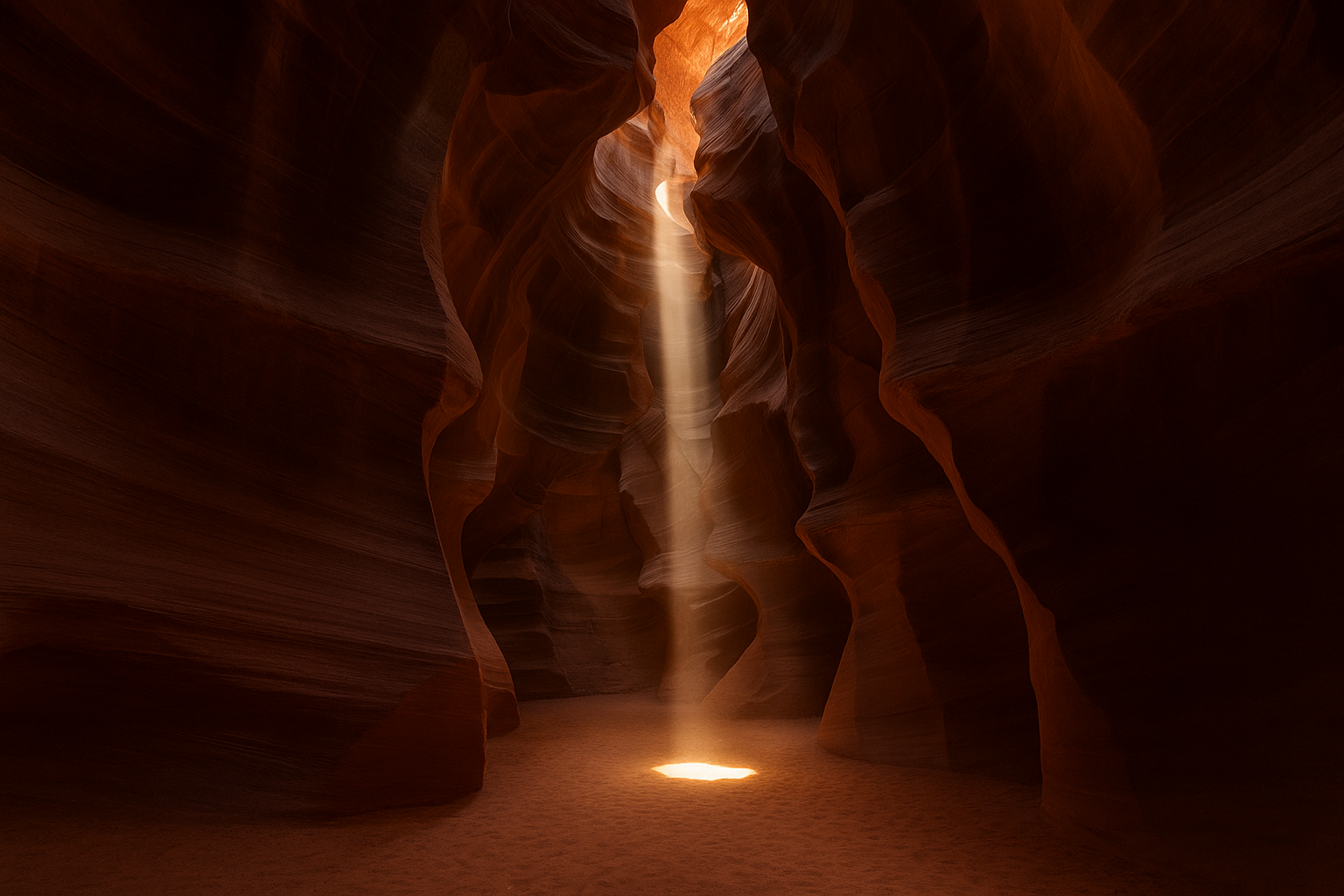
If light beams are the whole reason you’re booking a trip, Upper Antelope Canyon is the one canyon that reliably delivers them.
Difficulty and physical demands
Accessibility is where these two canyons really diverge, and it matters more than most visitors expect before they arrive. Upper Antelope Canyon is a flat, sandy walk of about 600 yards round trip with no stairs or ladders, which makes it workable for older travelers, younger kids, and anyone with mobility concerns. Lower Antelope Canyon involves several steep metal staircases, tight rock squeezes, and uneven footing, and it’s genuinely tougher for anyone with knee problems, claustrophobia, or limited balance.
| Feature | Upper Antelope Canyon | Lower Antelope Canyon |
|---|---|---|
| Terrain | Flat, sandy path | Stairs, ladders, narrow gaps |
| Physical demand | Low | Moderate to high |
| Light beams | Frequent (spring to fall, midday) | Rare, softer ambient light |
| Typical tour length | 60-90 minutes | 60-90 minutes |
| Crowd density | Higher, groups move slower | Lower, single-file flow |
| Best for | Families, first-timers, beam photos | Photographers, adventurous hikers |
Photography quality and crowd size
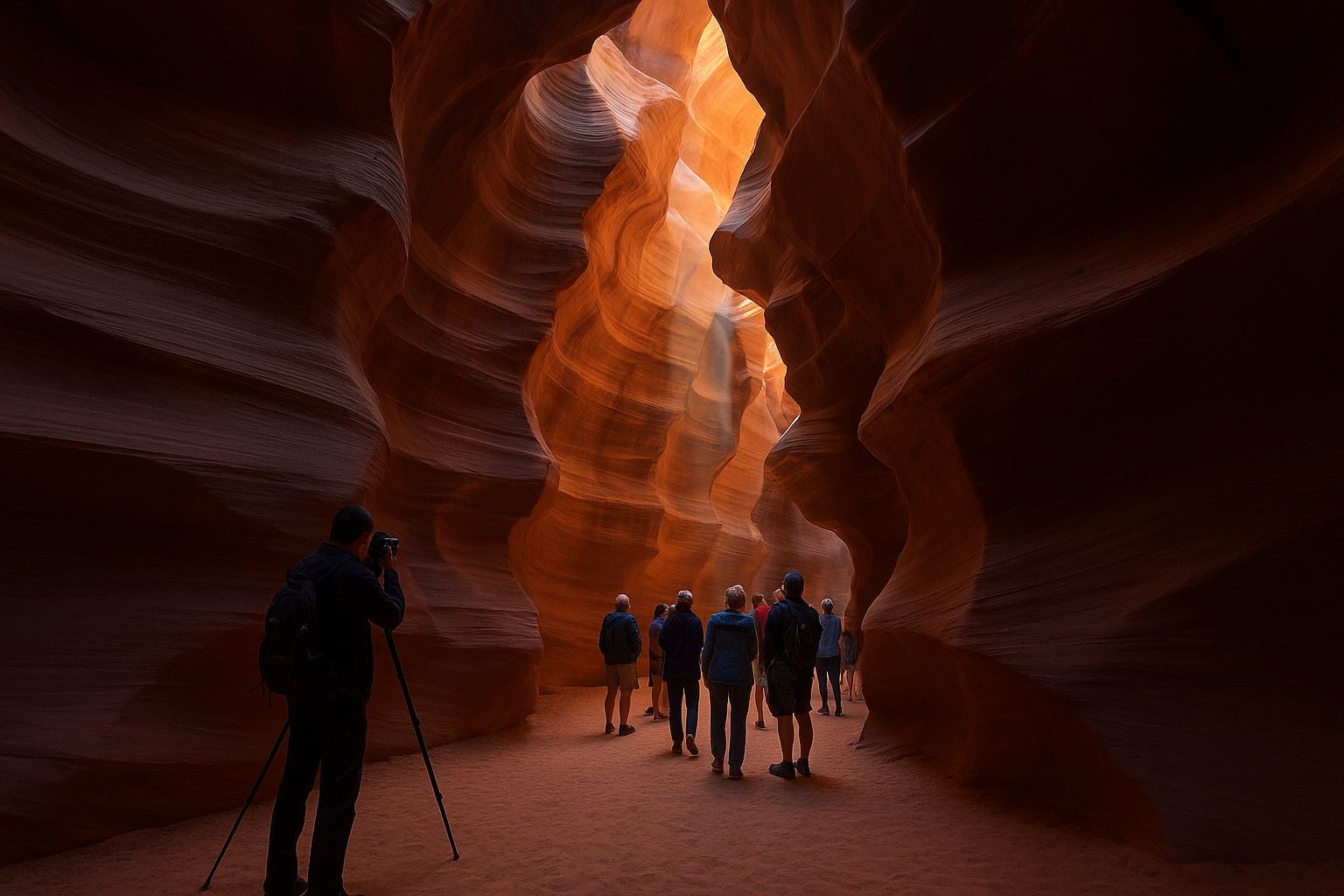
Serious photographers usually lean toward Lower Antelope Canyon because the crowds thin out and the winding passage offers more varied compositions, sweeping curves, layered sandstone, and tighter framing options that don’t show fifteen other tourists in the shot. Upper Antelope Canyon draws bigger tour groups since it’s the beam canyon everyone wants, and that popularity means you’re often shuffled through in a tight cluster with limited time to compose a shot. Both canyons run dedicated photography tour options that allow tripods and extra shooting time outside standard group hours, but you’ll pay a premium and need to book those slots well in advance, sometimes weeks out during peak season.
Pricing and tour length
Cost differences between the two canyons are modest, but they add up if you’re bringing a family or comparing this stop against other Southwest excursions on your itinerary. Standard guided walks through either canyon typically run somewhere in the $50 to $100 per person range, while specialized photography tours or extended access windows push higher. Tour length runs close to identical, usually 60 to 90 minutes inside the canyon plus wait time at the entrance, so the price gap comes down to demand and access rather than duration. Since Navajo Nation land requires a licensed guide for entry into either canyon, you won’t find a way to visit independently regardless of which one you pick, according to the Navajo Nation Parks and Recreation Department.
How to decide which canyon fits your priorities
Most people don’t need a spreadsheet to choose between Upper vs Lower Antelope Canyon, they just need to be honest about what matters most on this particular trip. Ask yourself three questions before you book: how mobile is everyone in your group, is the photo you want a beam shot or a moody wall shot, and how much crowd tolerance do you have on vacation? Answering those three questions upfront will point you toward the right canyon faster than reading another comparison chart.
If you’re traveling with kids, seniors, or anyone with mobility limits
Groups with young children, older relatives, or anyone uneasy on ladders should head to Upper Antelope Canyon without much debate. Its flat sandy floor means strollers get carried rather than pushed, but nobody has to climb metal stairs or squeeze through narrow rock gaps to get the classic canyon view. Lower Antelope Canyon’s steep staircases and tight passages aren’t dangerous for a reasonably fit adult, but they turn into a real obstacle course for anyone with bad knees, vertigo, or claustrophobia.
If photography or a quieter experience is the priority
Serious shooters and anyone who wants breathing room should lean toward Lower Antelope Canyon. Smaller group sizes and a slower single-file pace give you time to actually frame a shot instead of getting nudged along by the next tour group. If you’re set on capturing the light beams that make Upper famous, though, no amount of quiet compensates, you’ll need to book Upper and accept the crowds that come with it. Either way, book a dedicated photography tour slot if a tripod matters to you, since standard group tours generally don’t allow one.
Quick decision checklist
Run through this list and pick the canyon with more checks:
- Traveling with kids under 8 or anyone with mobility issues: Upper
- Want the iconic glowing beam photo: Upper
- Prefer fewer people in your shots and around you: Lower
- Comfortable on ladders and narrow squeezes: Lower
- Visiting outside the beam season (roughly October through March): consider Lower, since Upper’s main advantage disappears
- Booking last minute during peak summer: check Lower availability first, since Upper sells out faster
When in doubt, match the canyon to your body and your camera, not to whichever photo looked best on Instagram.
If you can only pick one
Travelers with a single free morning in Page often ask which canyon delivers more value for the time spent, and the honest answer depends on your travel style rather than any objective ranking. Families and first-time visitors typically walk away happiest from Upper because the experience matches the marketing they’ve already seen. Adventurous travelers and photography enthusiasts usually rate Lower higher precisely because it feels less scripted and more like a genuine slot canyon scramble. Neither canyon is the "wrong" choice, they’re just built for different kinds of trips.
How to plan a smooth visit to either canyon
Reserving your slot weeks ahead solves most of the headaches visitors run into at Antelope Canyon. Both canyons operate entirely through licensed tour operators on Navajo Nation land, and walk-up availability during peak months (May through September) is basically nonexistent. Same-day tickets do occasionally open up, but you’re gambling your whole schedule on a cancellation, and that’s a bad bet when you’ve flown in specifically to see this place.
Booking your tour in advance
Slots fill fastest for the 11am to 1pm window in Upper Antelope Canyon, since that’s when the beams are most reliable, so lock that time in first if beams are your priority. Lower Antelope Canyon books up more slowly but still sells out on weekends and holidays. A few practical steps make the process painless:
- Book at least 2 to 4 weeks out for peak season, and 1 to 2 weeks out for shoulder months
- Confirm whether your tour includes the Navajo Nation entry fee or charges it separately at check-in
- Arrive at the meeting point 20 to 30 minutes early; tours leave on schedule and won’t wait
- Bring a printed or digital confirmation plus a photo ID for every adult in your group
Book your Antelope Canyon slot before you book anything else on your Page, Arizona itinerary, since it sells out faster than nearby attractions.
What to bring and wear
Pack light, since backpacks, tripods, and bulky bags are restricted or banned outright on standard tours in both canyons. Closed-toe shoes matter more in Lower Antelope Canyon, where you’ll be on metal stairs and loose sand, but they’re smart in Upper too. Sunglasses come off before you enter, since the canyon interior is dim enough that they’ll just slow you down, and a phone or point-and-shoot camera works better than a full DSLR setup unless you’ve booked a dedicated photography tour that permits tripods and extra gear.
Timing around season and weather
Season changes what you’ll actually see once you’re inside. Visit between late spring and early fall for the strongest beam activity in Upper Antelope Canyon, and expect softer, cooler-toned light in both canyons from November through February. Summer afternoons in Page regularly hit triple digits, so carry water even for a 90-minute tour, and check the National Weather Service forecast before you go, since flash flood warnings can close either canyon with little notice during monsoon season, which typically runs July through September.
Visiting Antelope Canyon from Las Vegas
Getting from the Strip to Antelope Canyon takes real planning, since Page, Arizona sits roughly 280 miles northeast of Las Vegas, a four-and-a-half to five-hour drive each way through open desert highway. Nobody should treat this as a quick side trip; the round-trip drive alone eats up nine to ten hours, so most visitors either commit to a long single day starting before sunrise or, better, build in an overnight stay in Page so the canyon tour doesn’t feel rushed. Flying is an option too, though it usually means a connection through Phoenix rather than a direct hop, which rarely saves time once you factor in airport hassle on both ends.
Choosing how to make the trip
Deciding between driving yourself, joining a multi-day tour, or flying comes down to how much of your Vegas itinerary you’re willing to give up for one destination. A rental car gives you total control over timing, which matters if you want flexibility around your canyon reservation window, but it also means five hours behind the wheel with nobody narrating the landscape you’re passing through. Guided multi-day trips that bundle Antelope Canyon with stops at the Grand Canyon or Horseshoe Bend solve the logistics problem but lock you into someone else’s schedule.
| Option | Travel Time | Best For |
|---|---|---|
| Self-drive day trip | ~9-10 hrs round trip | Flexible schedules, budget travelers |
| Overnight in Page | 1-2 nights | Photographers, relaxed pacing |
| Multi-day guided tour | 2-3 days | Travelers wanting Grand Canyon + Antelope Canyon combined |
| Fly via Phoenix | 3-4 hrs total | Time-strapped visitors with flexible budgets |
Antelope Canyon isn’t a Las Vegas day trip you squeeze in between shows, it’s a full commitment that deserves its own dedicated day or overnight stay.
Pairing it with other Southwest stops
Since you’re already covering serious mileage to reach Page, it makes sense to stack nearby landmarks into the same trip rather than making separate runs later. Horseshoe Bend sits just a few minutes from the Antelope Canyon parking lots, and Lake Powell offers an easy detour if you have an extra afternoon. Travelers heading out from Las Vegas often knock out Hoover Dam and Red Rock Canyon on the way out or back, since both sit close to the highway route toward Arizona and don’t require much of a detour. We build our own guided trips around exactly this kind of pairing, so a Vegas-based traveler can experience the natural side of the Southwest, Hoover Dam’s engineering, Red Rock’s sandstone cliffs, without having to piece together rental cars and separate reservations themselves.
Budgeting extra time matters more than most first-time visitors expect, since Arizona observes Mountain Standard Time year-round while Nevada follows Pacific Time with daylight saving, which means Page can be an hour ahead of Las Vegas depending on the season. Double-check the time difference before you lock in a canyon tour slot, since arriving late because of a timezone mixup is a common and entirely avoidable mistake.
Making the most of your visit
Choosing between Upper vs Lower Antelope Canyon really comes down to matching the canyon to your group instead of chasing whichever photo looks best online. Families and first-timers get more out of Upper’s flat walk and reliable beams, while photographers and adventurous travelers usually leave Lower more satisfied with the quieter pace and dramatic curves. Given the five-hour drive from Las Vegas, treat this as a full day or overnight trip, not a rushed detour, and lock in your canyon reservation before anything else on your Page itinerary.
Handling that long desert stretch is easier with a guide who already knows the timing, the stops, and the pairing opportunities along the way. If you’d rather skip the logistics and let someone else handle the driving and scheduling around Hoover Dam, Red Rock, and the broader Southwest route, check out our private tours built around exactly this kind of trip.