
You came to Las Vegas with a camera and a plan, and the Strip’s neon isn’t what you’re after. You want red rock, open sky, and light that makes a photo look like it belongs on a gallery wall, not a phone reel. Figuring out where to point your lens once you leave the casino floor is harder than it sounds, since most "best photo spots" lists are written by people who never actually drove out there.
This guide names the las vegas desert photography locations that actually deliver, from sweeping canyon vistas to intimate rock formations perfect for portraits. Each spot gets picked for a reason: golden hour light, easy access, or a background you won’t see on every other traveler’s feed.
We’ve guided photographers through this terrain for years, and we know which trails reward a sunrise start and which turnouts get crowded by 9 a.m. Below you’ll find five locations within reach of the Strip, along with the practical details that make or break a shoot, including best time of day, parking, and what kind of shot each place actually suits, whether that’s a wide landscape or a close-up portrait session.
1. Valley of Fire State Park
Why it’s worth the trip
Valley of Fire earns the top spot on this list because nowhere else near Las Vegas packs this much color into one frame. The park’s Aztec sandstone glows in shades of orange, pink, and deep red, and formations like Fire Wave and Elephant Rock give you a background that looks otherworldly without any editing tricks. Photographers driving out from the Strip consistently rank this as the single best desert photography location within an hour of the city, and it’s the one spot on this list built for both sweeping landscapes and dramatic portrait backdrops.
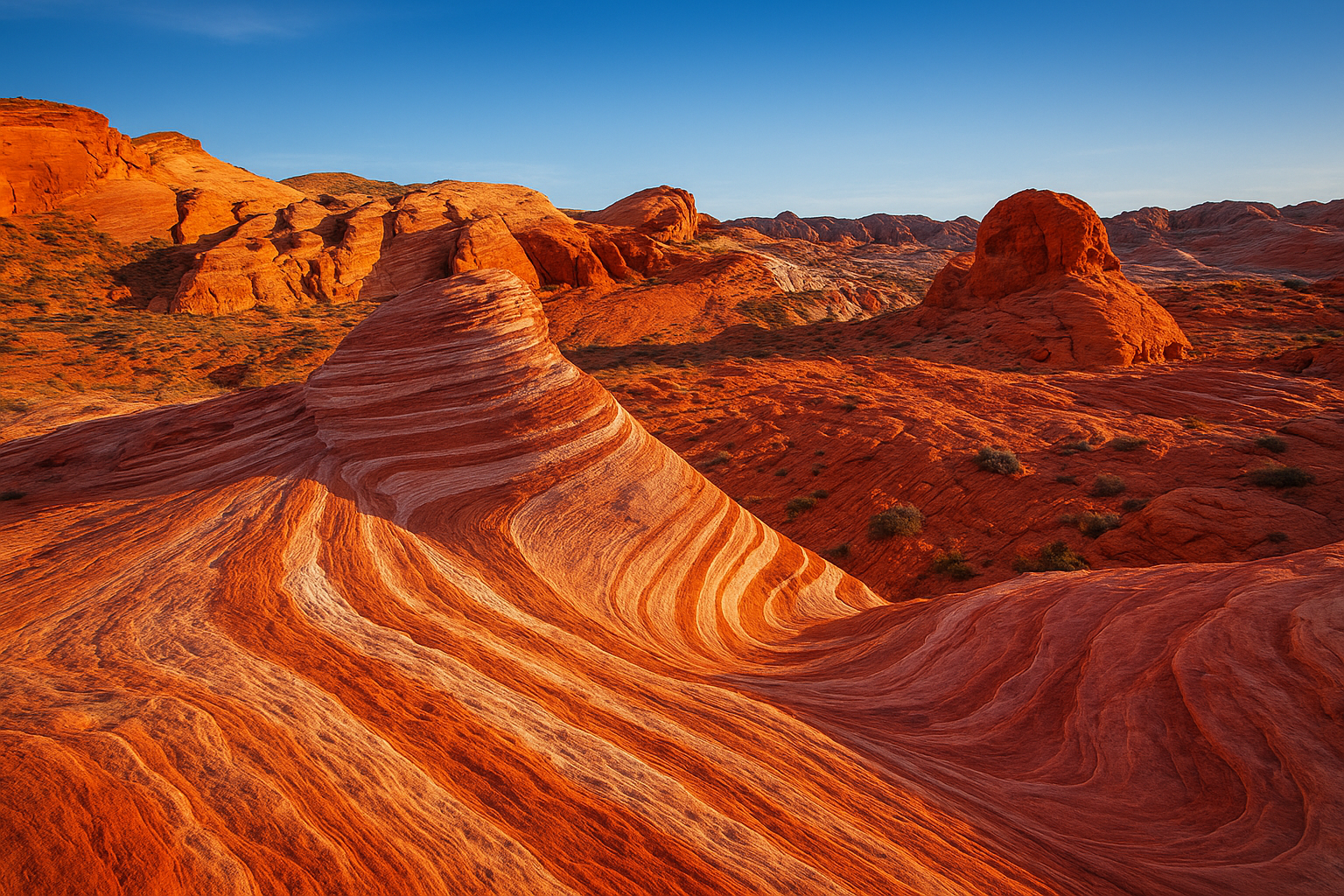
If you only have time for one location on this list, make it Valley of Fire.
Best time for photos
Light shifts fast here, and timing your visit changes the whole mood of your shots. Midday sun flattens the rock’s color and throws harsh shadows across every formation, so plan your shoot around the edges of the day instead of the middle.
- Sunrise: soft, even light across Fire Wave and White Domes
- Late afternoon into sunset: deep reds and long shadows along the main loop
- Avoid 11 a.m. to 3 p.m., especially in summer, when heat and flat light both work against you
How to get there
Getting to the park from Las Vegas takes about 50 minutes, mostly on I-15 North toward the Valley of Fire exit, then a short drive along Valley of Fire Highway. Entry costs $10 per vehicle, payable at the self-serve station near the entrance. Nevada’s state park system posts updated hours, closures, and heat advisories on its official Valley of Fire page, and it’s worth checking before you drive out since summer conditions sometimes limit access to certain trails.
Tips for your shoot
- Pack more water than you think you’ll need since cell service inside the park is unreliable
- Reach Fire Wave and White Domes early, both require a short hike and get crowded fast after sunrise
- Carry a polarizing filter to cut glare if you end up shooting outside your ideal window
2. Red Rock Canyon National Conservation Area
Why it’s worth the trip
Red Rock Canyon sits closer to the Strip than Valley of Fire, and it trades bright red sandstone for layered cliffs, Joshua trees, and a 13-mile scenic loop that gives you a new composition around every bend. It’s the pick for photographers who want canyon vistas without a long drive, plus enough variety in terrain to shoot both wide landscapes and shaded, close-up portrait work. The conservation area’s scale makes it easy to find a spot free of other tourists, even on a busy weekend.
Red Rock rewards photographers who want variety over drama.
Best time for photos
Morning light works best here, since the scenic loop faces east and catches direct sun on the cliff faces right after sunrise. Afternoon shoots tend to wash out the color, so aim for the first two hours after the gates open.
How to get there
The drive from the Strip takes about 30 minutes via West Charleston Boulevard. Entry runs $20 per vehicle, and the National Conservation Area’s official site lists current loop hours, which shift seasonally.
Tips for your shoot
- Book a timed-entry slot online before driving out, since spots sell out during peak season
- Pull into Calico Basin for closer rock access without the full loop drive
- Bring a wide-angle lens for the sweeping cliff shots along Scenic Drive
3. Seven Magic Mountains
Why it’s worth the trip
Seven Magic Mountains gives you something none of the natural landscapes on this list can: color that doesn’t come from the desert itself. This public art installation stacks boulders painted in neon pink, yellow, and green against flat desert scrub, and the contrast makes for one of the most instantly recognizable photo backdrops near Las Vegas. It’s a favorite for photographers who want a bold, graphic shot rather than a natural landscape, and it works especially well for portrait sessions where the towers become a colorful backdrop rather than the subject itself.
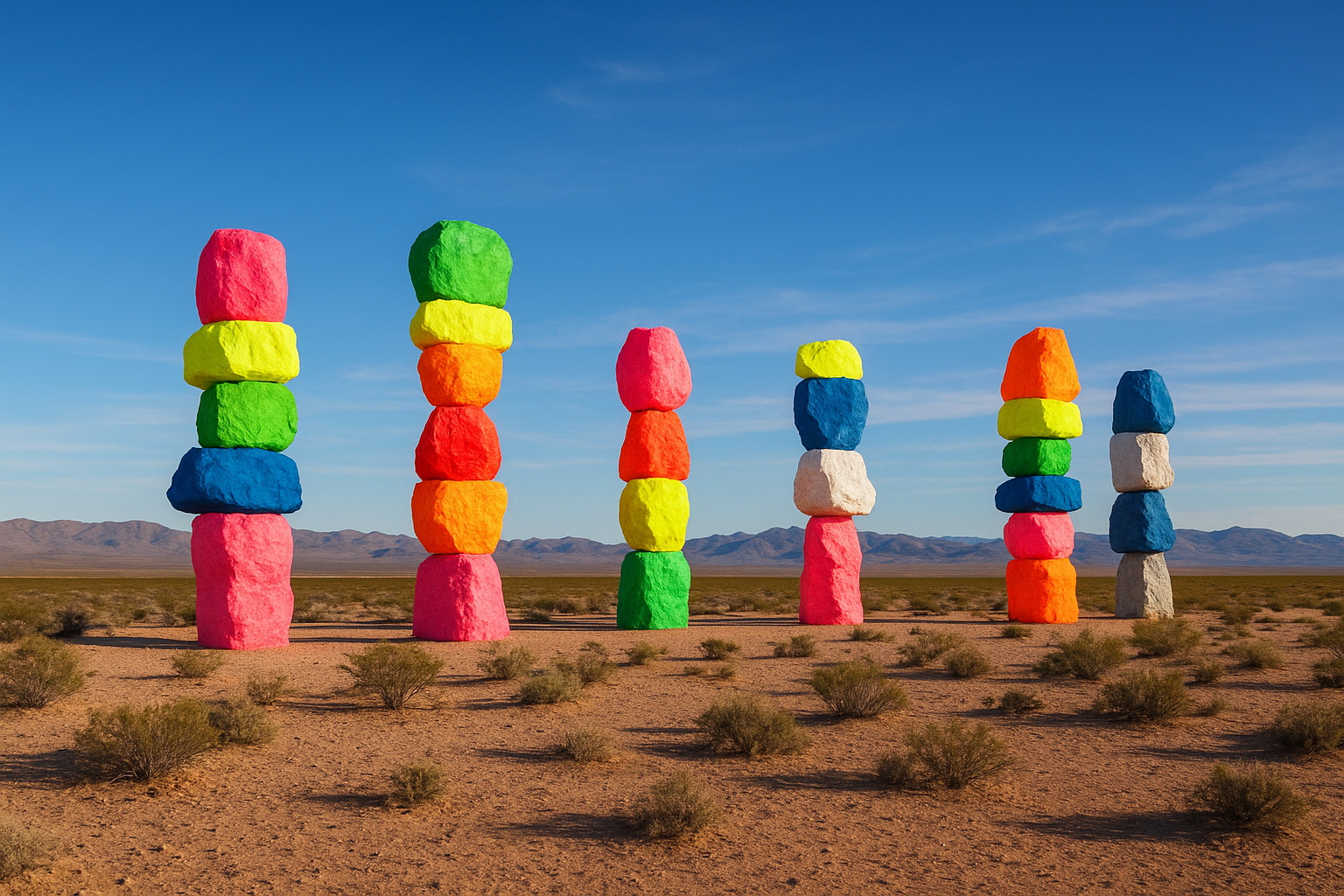
Seven Magic Mountains trades desert subtlety for pure visual punch.
Best time for photos
Late afternoon light warms up the painted rock without blowing out the saturated colors, so aim for the two hours before sunset. Midday sun bounces hard off the bright paint and can wash out your shot.
How to get there
The site sits about 25 minutes south of the Strip off I-15, near Jean, Nevada. Parking is free, and the installation is visible right from the pullout, though the Art Production Fund’s official project page notes the piece is on view long-term but not guaranteed permanent.
Tips for your shoot
- Arrive early to beat the tour buses that stop through midday
- Shoot low angles to exaggerate the boulders’ height against the sky
- Watch for foot traffic in your frame, this spot draws steady visitors
4. Nelson Ghost Town
Why it’s worth the trip
Nelson Ghost Town gives you rusted trucks, weathered wood buildings, and mining relics scattered across a small stretch of desert about 45 minutes from the Strip. This spot suits photographers chasing texture and story over open landscape, since every rusted-out car and leaning shack works as its own found-object backdrop. It’s a favorite for editorial-style shoots and anyone who wants grit instead of grandeur in their frame.
Nelson works best when you’re shooting texture, not scenery.
Best time for photos
Morning light keeps the rust and wood grain from blowing out under direct sun, so plan an early arrival. By midday, the flat desert light strips the color from the props that make this location worth visiting.
How to get there
Drive south on US-95 toward Boulder City, then follow NV-165 into the town itself, about 45 minutes from the Strip. There’s a small fee to access the private props on the main lot, and Clark County’s tourism site lists directions and current conditions for the area.
Tips for your shoot
- Ask before shooting on private property inside the town
- Bring a longer lens to isolate details on the old trucks and signage
- Expect dust and uneven ground, wear boots instead of sandals
5. Jean Dry Lake Bed
Why it’s worth the trip
Jean Dry Lake Bed strips the desert down to nothing but flat ground and open sky, and that’s exactly the appeal. Photographers use this spot for minimalist compositions, especially when a subject needs to stand alone against an empty backdrop with no rock, cactus, or fence line competing for attention. It’s also become a go-to for drone photography, since the flat terrain and lack of obstructions make aerial shots easy to frame and safe to fly.
Jean Dry Lake Bed is where you go to shoot nothing but your subject and the horizon.
Best time for photos
Sunrise and sunset both work here since there’s no canyon wall or rock formation blocking the light at any angle. Midday shooting is actually workable too, unlike the other spots on this list, because the flat ground doesn’t cast the harsh shadows you’d fight elsewhere.
How to get there
The lake bed sits just off I-15 near Jean, Nevada, about 25 minutes south of the Strip, close to Seven Magic Mountains. Pull-offs are unmarked, so watch for dirt access roads branching off the highway frontage.
Tips for your shoot
- Check wind conditions before flying a drone
- Bring extra water, there’s zero shade
- Watch for soft, muddy patches after rain
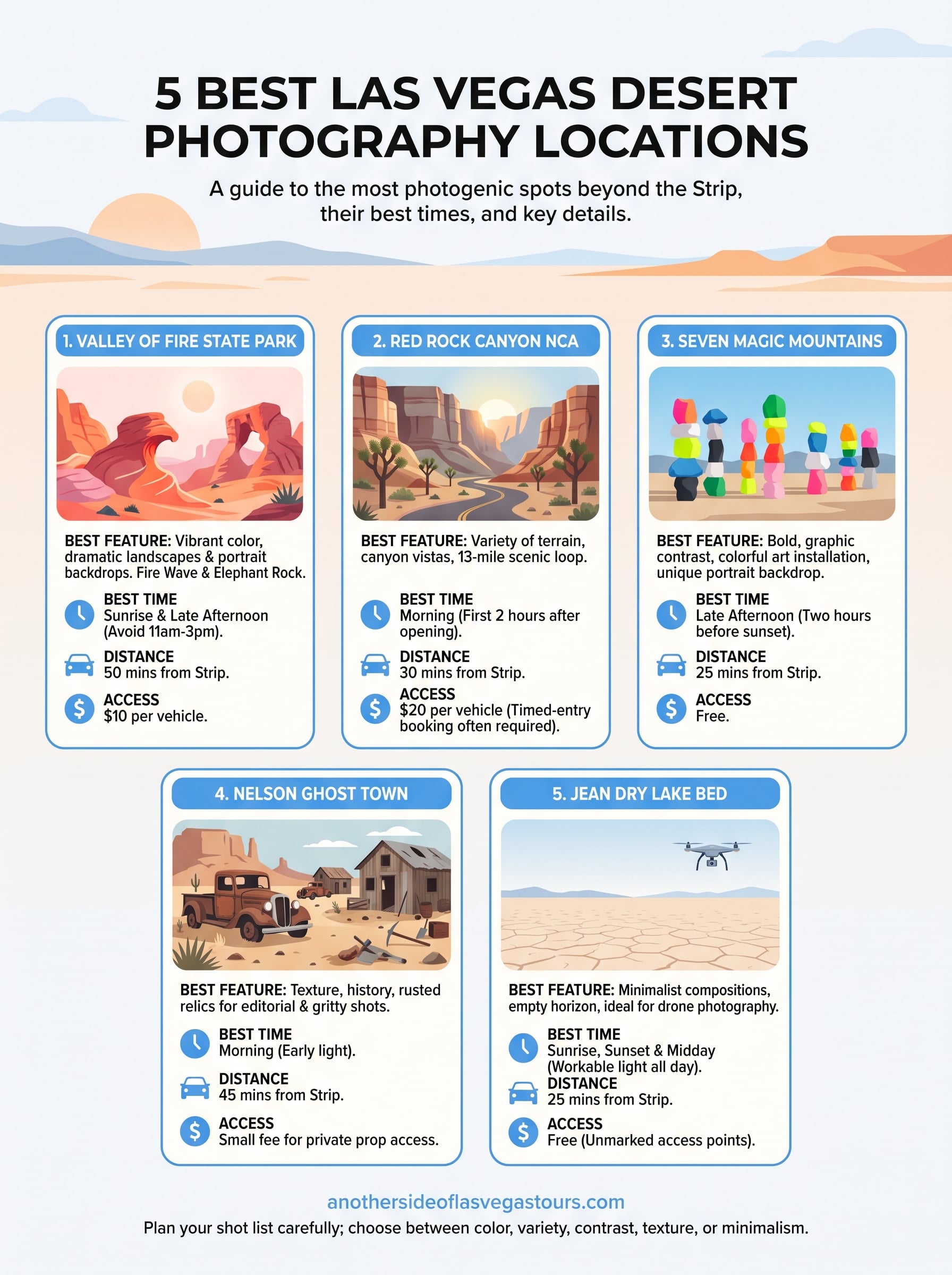
Planning your desert photography trip
Five locations, five completely different looks, and all of them within an hour of the Strip. Valley of Fire gives you color, Red Rock gives you range, Seven Magic Mountains gives you a bold pop of contrast, Nelson gives you texture, and Jean Dry Lake Bed gives you nothing but sky and subject. Pick your shot list before you leave the hotel, since chasing golden hour at two locations in one day means driving fast and packing light.
Getting the timing and access right is the hard part, especially if you’re unfamiliar with desert roads or don’t want to burn a morning on logistics instead of shooting. If you’d rather hand that off to someone who knows exactly when the light hits Fire Wave, book a private Valley of Fire tour and spend your time behind the camera, not behind the wheel.