
Red Rock Canyon sits just 20 miles west of the Strip, but the experience there changes dramatically depending on when you show up. Visit during a scorching July afternoon and you’ll be miserable. Time it right, best time to visit Red Rock Canyon considered, and you’ll get comfortable temperatures, golden light across the sandstone, and trails you can actually enjoy without rushing back to your car for air conditioning.
The difference between a great visit and a forgettable one often comes down to two decisions: what month you go and what hour you arrive. Summer heat can push temperatures past 110°F on the scenic loop, while winter mornings bring crisp air and stunning visibility. Even within the same week, a sunrise start versus a midday arrival creates a completely different experience.
At Another Side Tours, we’ve guided thousands of visitors through Red Rock Canyon and know exactly how the seasons, weather, and crowds shape each trip. This guide breaks down the best months, the ideal times of day, and the conditions you can expect season by season, so you can plan a visit that’s actually worth your time. We’ll also cover crowd patterns and practical tips that most planning guides skip.
What to know before you pick dates and times
Red Rock Canyon is a high desert environment, and that means temperature swings that can catch visitors off guard. The canyon spans roughly 3,000 to 7,000 feet in elevation depending on where you are on the scenic loop or trails. That elevation range creates conditions that differ noticeably from Las Vegas proper, and it’s the first thing you need to factor into any planning. Before you lock in dates, you need to understand how the climate, access rules, and crowd cycles interact with each other.
Red Rock Canyon’s climate swings harder than you expect
Summer in the canyon is genuinely difficult for unprepared visitors. Temperatures between June and September regularly exceed 100°F, and exposed trails with little shade can push the heat index even higher. The National Park Service issues heat advisories on a regular basis during this period and closes certain trails when conditions become hazardous. If you’re trying to determine the best time to visit Red Rock Canyon, this single factor eliminates a significant chunk of the calendar for anyone planning a full outdoor day.
The National Park Service recommends carrying at least one liter of water per hour of hiking in hot desert conditions, so plan your supply before you leave the car.
Winter and spring flip the experience entirely. November through March brings cool mornings, occasional snow dusting the upper formations, and temperatures that stay manageable for hiking. Spring, particularly March and April, offers wildflowers, moderate temperatures, and some of the best light of the year. Fall runs a close second, with October standing out as the most consistently comfortable month across the board.
Access rules you need to check before you go
The scenic 13-mile one-way loop requires a timed entry reservation during peak months. The National Park Service introduced this system to manage congestion, and it applies from late February through late November during busy morning and midday hours. Without a reservation during these windows, you will be turned away at the gate. Reservation slots open 30 days in advance on the Recreation.gov platform, and popular Saturday and Sunday windows fill within hours of becoming available.
The canyon also operates under a standard National Parks per-vehicle entry fee or annual pass. If you plan to visit multiple parks during your trip, the America the Beautiful annual pass covers your Red Rock entry along with hundreds of other federal sites. Factor this into your budget before you arrive rather than deciding at the gate.
What crowds actually look like by season
Weekend mornings from September through May draw the largest crowds. Parking lots at popular trailheads like Calico Hills and Ice Box Canyon fill up before 9 a.m. on Saturdays and Sundays during this stretch. Weekday visits during the same period are noticeably quieter, and you’ll have more flexibility on parking and trail selection.
Spring break and major holiday weekends represent the single most congested periods of the year. If your trip falls during mid-March, late November, or the week between Christmas and New Year’s, plan to arrive before sunrise or book a guided tour that handles parking and logistics for you. Summer weekdays, despite the heat, are actually among the least crowded times on the loop, simply because most visitors avoid the extreme temperatures and stay closer to the Strip.
Step 1. Choose the best season for your priorities
Picking the right season is the single biggest decision you’ll make when figuring out the best time to visit Red Rock Canyon. Each season delivers a distinctly different experience, and the right choice depends on what matters most to you: comfortable hiking temperatures, crowd levels, photography lighting, or travel flexibility.
Spring and fall offer the most flexibility
Spring, specifically March through May, gives you the widest window for outdoor activity. Daytime temperatures typically range from 55°F to 85°F, wildflowers appear across the desert floor in March and April, and the light on the sandstone cliffs turns deep amber during golden hour. Fall, particularly October and November, mirrors that comfort level without the wildflowers but with fewer crowds and similarly mild temperatures.
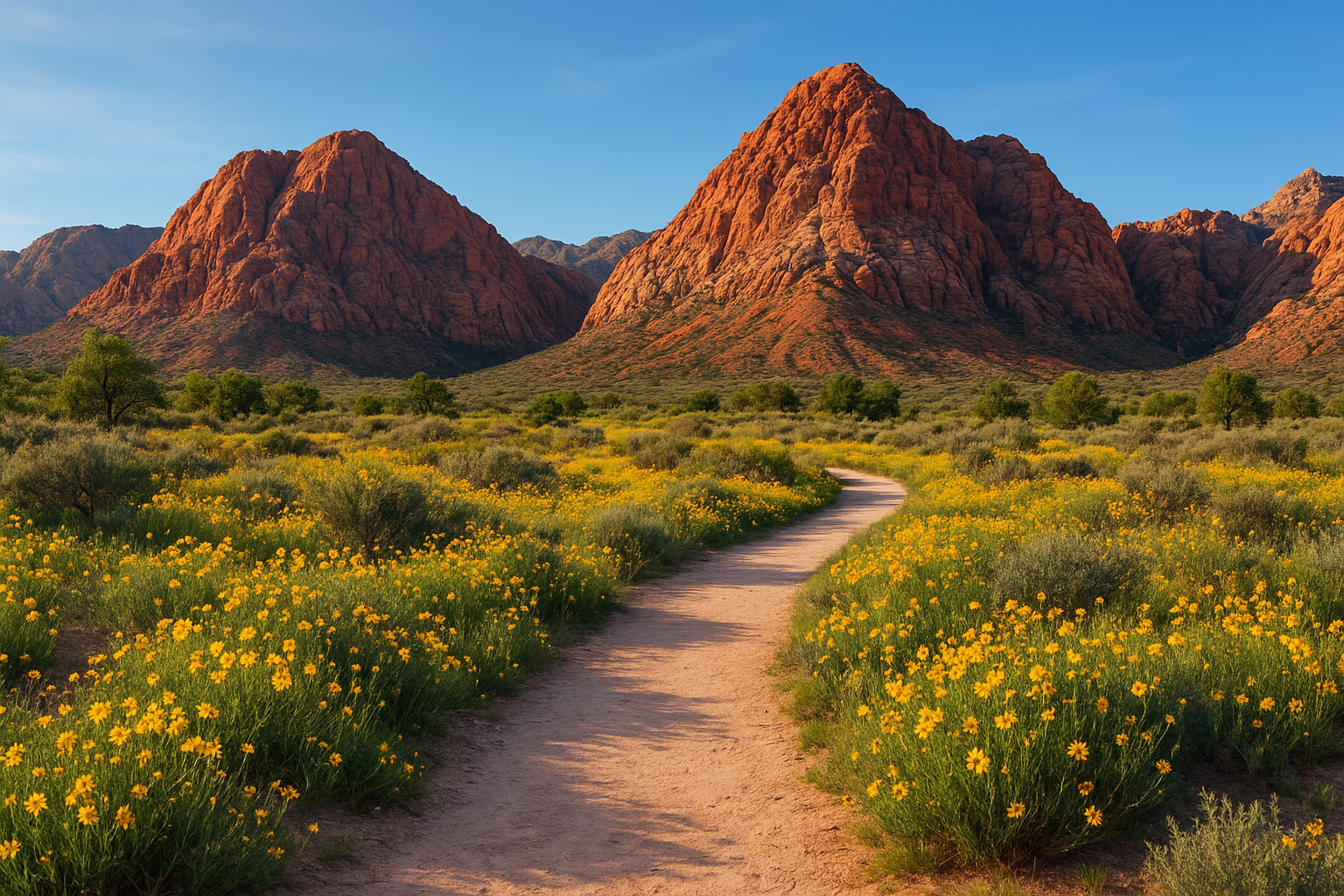
If you can only visit once, October is the single most reliable month for comfortable weather, manageable crowds, and excellent light at Red Rock Canyon.
Both seasons work well for the full scenic loop drive and longer trails like Calico Tanks or the Keystone Thrust trail. Plan to arrive by 8 a.m. on weekdays and no later than 7:30 a.m. on weekends to lock in parking before the lots fill.
Summer requires strict planning to be worthwhile
Summer visits from June through August are only practical if you commit to an early morning start before 7 a.m. and plan to leave before 10 a.m. Temperatures climb fast after sunrise, and exposed sections of the loop become genuinely dangerous by midday. Short hikes near the visitor center are your best option during this window, and longer trails should wait for a cooler season.
Families with school-age children who can only travel in summer should prioritize that early two-hour window and consider a guided tour so someone else handles the logistics while you focus on the experience rather than the clock.
Winter rewards visitors who prepare for cold starts
December through February brings the fewest crowds and some of the most dramatic scenery of the year. Snow occasionally dusts the red formations, creating a contrast that landscape photographers specifically plan trips around. Daytime highs generally reach 45°F to 60°F, which is comfortable for hiking once the morning chill lifts around 9 to 10 a.m.
Pack removable layers you can strip off as the temperature rises, and check the National Park Service website for any trail closures after storm events before you leave your hotel.
Step 2. Pick the best time of day for weather and light
The time of day you arrive at Red Rock Canyon shapes your experience as much as the season you choose. Temperatures can rise by 20 to 30 degrees between sunrise and noon, and the quality of light on the red sandstone shifts from warm and textured in the morning to flat and harsh by midday. Once you’ve settled on your season, locking in the right arrival window is the next move toward making the best time to visit Red Rock Canyon work in your favor.
Arrive before 8 a.m. for the most comfortable conditions
Early arrivals get the best of everything: cooler air, open parking spots, and softer light that makes the formations look far more dramatic. On spring and fall mornings, temperatures before 8 a.m. typically sit in the 50s and 60s Fahrenheit, which makes even moderate hikes feel easy. By 11 a.m., those same trails can feel considerably harder as the desert floor absorbs and radiates heat.
Plan to be pulling into the main entrance no later than 7:30 a.m. on weekends during spring and fall. Trailhead lots fill up fast after 9 a.m.
Use this timing checklist to structure your morning:
- 6:30 a.m. – Leave your Las Vegas hotel or accommodation
- 7:00-7:30 a.m. – Arrive at the Red Rock Canyon Visitor Center or scenic loop entrance
- 7:30-10:30 a.m. – Complete your hike or primary scenic drive while temperatures stay manageable
- 10:30-11:00 a.m. – Wrap up exposed trail time and return to the car or shaded areas
Use golden hour for photography and the scenic drive
If photography or the scenic loop drive is your priority, the hour after sunrise and the hour before sunset deliver the most dramatic results. The low angle of the sun throws long shadows across the canyon walls and turns the red and orange formations into something that looks almost surreal in photos. Morning golden hour also means you’re on the road before crowds build, while evening golden hour works well for the loop drive since most visitors have already left by 5 p.m.
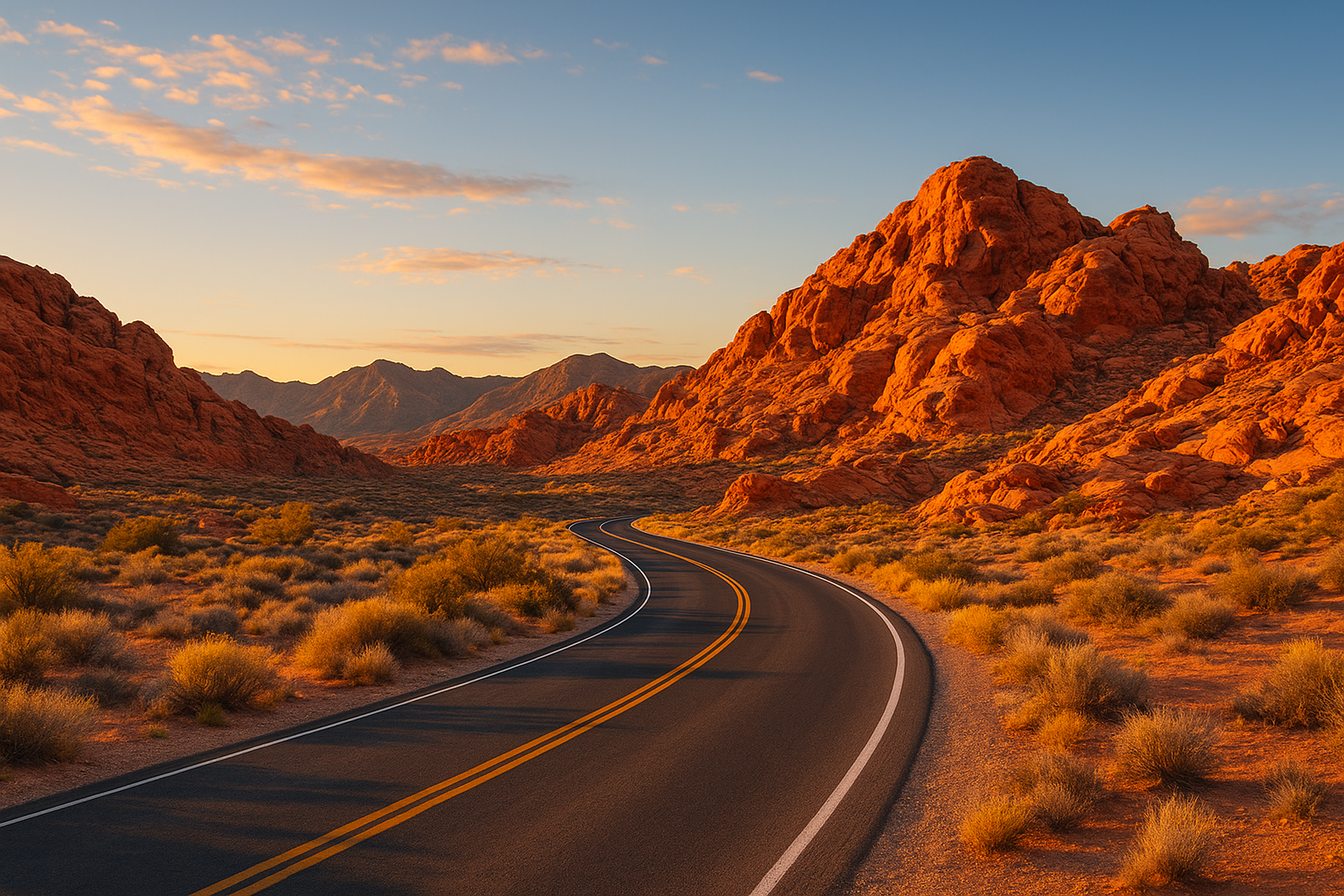
Late afternoon arrivals during fall and winter can work well for capturing the scenic loop in fading light, but confirm the park’s closing time before you go since seasonal hours shift the gate closure earlier during winter months. Check the National Park Service site for current hours before your visit.
Step 3. Plan around hours, timed entry, and crowds
Understanding how the park manages access is a critical part of figuring out the best time to visit Red Rock Canyon without running into a closed gate or a full parking lot. The National Park Service uses a timed entry reservation system during peak months, and combining that knowledge with crowd patterns by day and hour gives you a visit that runs smoothly from start to finish.
How timed entry reservations work
Reservations are required from late February through late November, typically covering the 6 a.m. to 3 p.m. window during high-traffic hours on the scenic loop. You book your slot through Recreation.gov, and slots open on a rolling 30-day advance window. On popular spring weekends, morning slots disappear within a few hours of becoming available, so set a reminder for the exact date your window opens and book immediately. Walking up without a reservation during required periods means the gate attendant will turn you away regardless of how far you’ve driven to get there.
Book your timed entry slot at Recreation.gov the moment the 30-day window opens if you’re targeting a weekend morning between March and May or in October.
Use this table to plan your access approach by time of year:
| Time of Year | Reservation Required | Best Booking Strategy |
|---|---|---|
| Late Feb – late Nov | Yes (6 a.m. – 3 p.m.) | Book exactly at the 30-day mark |
| December – early Feb | No | Walk-up entry available |
| Major holidays (any season) | Yes | Book within hours of the 30-day opening |
Crowd patterns by day and time
Weekday visits deliver a noticeably quieter experience across every season outside of summer. If your schedule gives you flexibility, Tuesday through Thursday mornings are consistently the least congested windows. Parking fills more slowly on those days, and popular trailheads like Calico Hills stay accessible well past 9 a.m. without the pressure you’ll feel on a Saturday.
Weekend mornings from September through May draw the heaviest crowds, with parking lots at key trailheads filling by 8:30 to 9 a.m. on Saturdays. Arriving by 7 a.m. on these days gives you a solid buffer before the rush builds. On holidays like spring break, Thanksgiving weekend, and the stretch between Christmas and New Year’s, treat the visit like a peak Saturday and plan to arrive at or before sunrise to lock in parking and start your morning before the trails get congested.
Step 4. Match your plan to hikes, drives, and tours
The best time to visit Red Rock Canyon depends not just on weather and crowds, but on what you actually plan to do once you arrive. A hiker tackling a 6-mile trail needs a completely different schedule than someone doing the scenic loop drive or joining a guided tour. Aligning your activity to the right time window turns a good visit into a genuinely great one.
Short hikes work best in the early morning window
Short to moderate hikes like Calico Hills, Calico Tanks, and the Moenkopi Loop are manageable year-round as long as you schedule them during the cooler parts of the day. In spring and fall, aim to start no later than 8 a.m. to finish before the midday heat builds. In summer, you need to be on the trail by 6:30 a.m. and back at your car by 9 a.m. at the absolute latest.
Use this quick reference to match trail length to your arrival window:
| Trail Type | Recommended Start Time | Season Flexibility |
|---|---|---|
| Under 2 miles (easy) | 7:00-9:00 a.m. | Year-round with care |
| 2-5 miles (moderate) | 6:30-8:00 a.m. | Fall, spring, winter only |
| 5+ miles (strenuous) | Before 7:00 a.m. | Fall and spring only |
The scenic loop drive fits almost any schedule
The 13-mile one-way scenic loop gives you maximum flexibility compared to hiking. You can complete it in roughly 60 to 90 minutes depending on how many overlooks and pullouts you stop at. The loop works well for late morning visits in cooler months when the hiking window has already passed, or as an evening activity during fall when the light on the formations turns exceptional after 5 p.m.
The scenic loop drive is your best contingency plan if you arrive later than intended or if a family member isn’t up for a full hike.
Guided tours handle the logistics so you can focus on the experience
If you’re visiting for the first time or traveling with a group that includes children, older adults, or anyone unfamiliar with desert environments, a guided tour removes the friction from your day. A professional guide handles reservations, parking, trail selection, and timing based on real-time conditions, so you spend your time experiencing the canyon rather than managing a checklist. Tours also give you context about the geology, history, and wildlife that a solo visit simply can’t replicate.
Ready to plan your Red Rock day
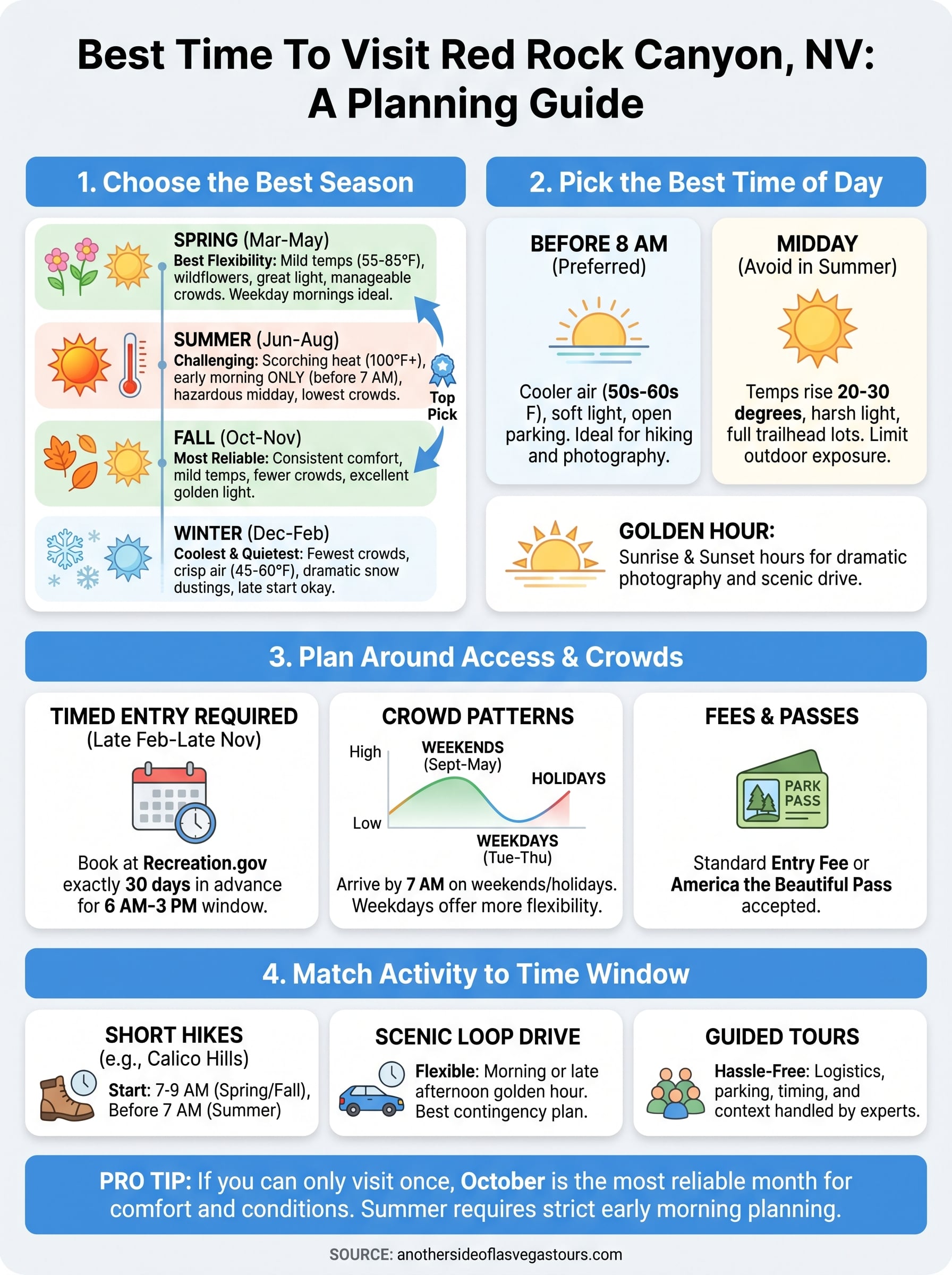
You now have everything you need to pick the best time to visit Red Rock Canyon with confidence. The core decisions are straightforward: target October through May for the most comfortable conditions, arrive before 8 a.m. on weekends, book your timed entry reservation the moment your 30-day window opens, and match your activity type to the right temperature window. Whether you’re planning a short hike, a full scenic loop drive, or a longer desert outing, the timing framework in this guide applies directly to your trip.
Taking the guesswork out of logistics makes the whole day easier, especially if you’re visiting for the first time or traveling with a group. A guided experience handles reservations, parking, pacing, and context so you spend your time in the canyon rather than managing details. Check out our Red Rock Canyon limo tours to see what a fully guided visit looks like.