
Las Vegas pulls in over 40 million visitors a year, and most of them make the same mistake: they show up without a plan and spend half their trip figuring things out on the fly. A solid Las Vegas travel guide matters because the city is designed to separate you from your money, and your time, if you’re not intentional about how you spend both. Between the hotels, restaurants, shows, day trips, and everything in between, the decisions stack up fast.
We know this firsthand. At Another Side Tours, we’ve guided over a million guests through Las Vegas and the surrounding region since 2007. We’ve watched visitors light up when they discover Red Rock Canyon, Hoover Dam, or the Arts District for the first time, and we’ve seen plenty of people wish they’d planned better before arriving. That experience has given us a sharp sense of what actually matters when you’re building a Vegas itinerary from scratch.
This guide covers the practical stuff: when to visit, where to stay, how to set a realistic budget, what to eat, and which experiences are worth your time both on and off the Strip. Whether you’re visiting for a long weekend or a full week, traveling as a couple or with a group, you’ll walk away with a clear plan. No fluff, no filler, just the information you need to make smart decisions before you book a single thing.
What to know before you book anything
Every good Las Vegas travel guide starts with the same advice: the decisions you make before you arrive shape your entire trip. Hotel room rates, show tickets, and tour availability all shift dramatically depending on when you visit and what you’re trying to do. Locking in a few key decisions early prevents you from scrambling once you’re on the ground.
Pick the right time of year
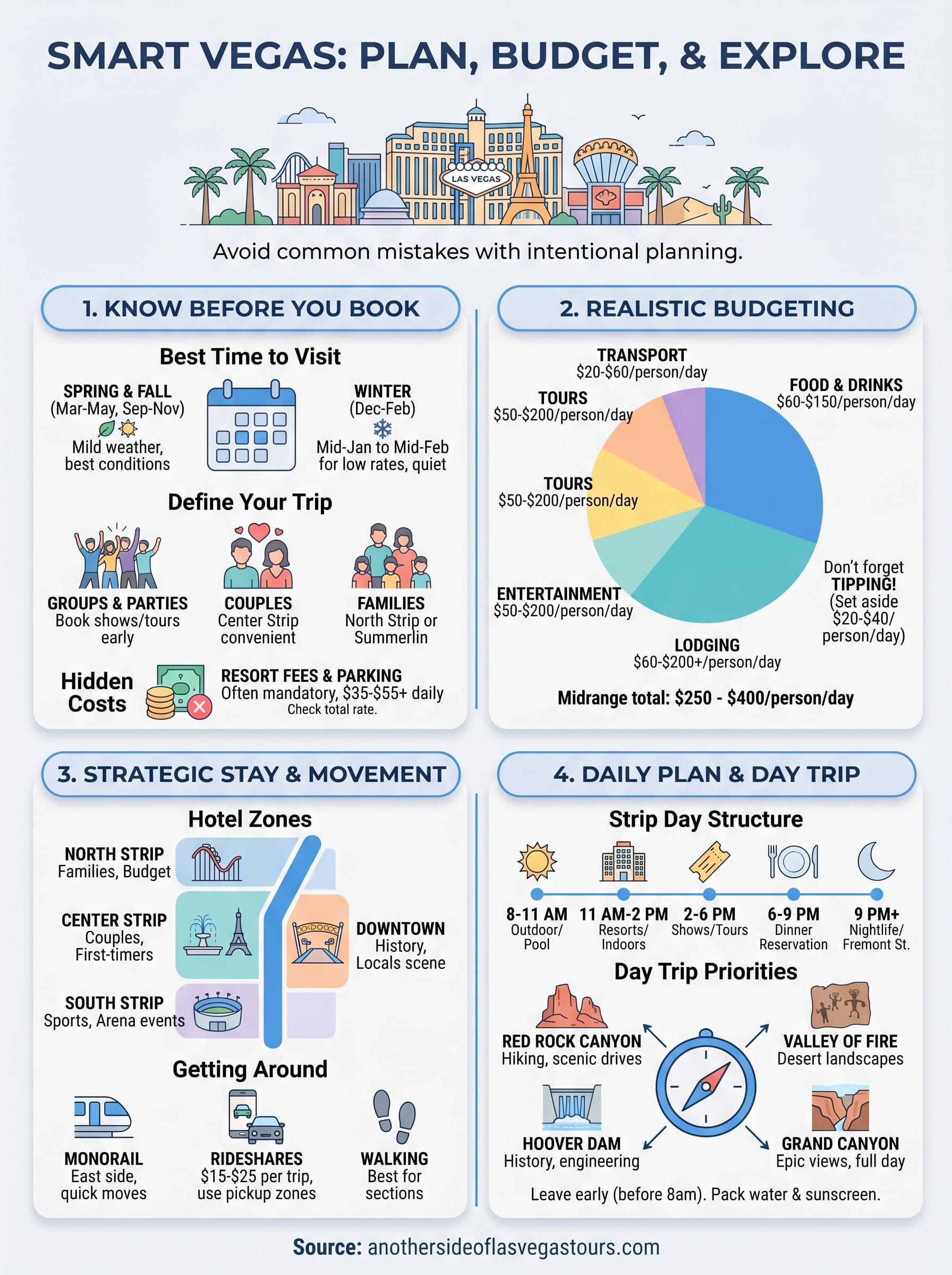
Las Vegas weather is not forgiving in the summer. Temperatures regularly hit 108°F between June and August, which makes outdoor activities like Red Rock Canyon or Valley of Fire genuinely uncomfortable in the middle of the day. If natural scenery is on your list, March through May or September through November gives you the best conditions: mild temperatures, manageable crowds, and lower airfare compared to peak periods.
Spring and fall are the sweet spots for first-time visitors who want to see both the city and the surrounding desert without battling extreme heat.
Winter visits (December through February) are underrated. The Strip gets busy around the holidays, but mid-January through mid-February is one of the quietest stretches of the year, and you can find significantly lower hotel rates during that window. Temperatures drop into the 40s at night, so pack layers if you plan to spend any time outdoors.
Know what kind of trip you’re planning
Before you book a single hotel night, decide what your trip actually looks like. A 48-hour bachelor party looks nothing like a four-day family vacation or a couples’ retreat, and your hotel location, dining choices, and daily schedule should reflect that difference clearly. Visitors who try to plan everything once they arrive waste time on decisions that could have taken 20 minutes at home.
Families traveling with kids do well staying north of the Bellagio on the Strip, or they can consider a property in Summerlin for faster access to Red Rock Canyon. Couples often find the center Strip most convenient, particularly near the Cosmopolitan or Park MGM, where dining and entertainment options are dense and walkable. Groups should book shows and tours early, since availability shrinks fast for parties of six or more, especially on weekends and around major events.
Watch for resort fees and hidden costs
Las Vegas hotels charge resort fees, and they are not optional. These fees typically run between $35 and $55 per night on top of your room rate, covering amenities you may or may not use, including the gym, pool access, and Wi-Fi. A room listed at $89 per night can easily land closer to $160 once fees and taxes are added at checkout.
Before you confirm any reservation, check the total nightly rate including all fees rather than relying on the advertised base price. Most booking platforms now surface this before you finalize payment, but the layout does not always make it obvious. Reading the full breakdown before clicking confirm protects you from a frustrating surprise at the front desk. The same rule applies to show tickets: service charges frequently add 20 to 30 percent to the face value, so build that into your entertainment budget from the beginning rather than discovering it later.
Build a realistic Vegas budget
Most visitors underestimate what Las Vegas actually costs per day. A practical budget covers five categories: lodging, food, entertainment, transportation, and a buffer for anything unexpected. Skipping even one of those categories is how people end up pulling from their emergency credit card by day two without knowing where it all went.
Break down your daily spending
Any useful las vegas travel guide will tell you that daily spending varies widely depending on your choices. Here is a realistic breakdown to anchor your planning before you book:
| Category | Budget Range (per person/day) |
|---|---|
| Hotel (your share) | $60 – $200+ |
| Food and drinks | $60 – $150 |
| Entertainment and shows | $50 – $200 |
| Transportation | $20 – $60 |
| Tours and activities | $50 – $200 |
Midrange visitors typically spend $250 to $400 per person per day when you factor in one sit-down meal, one show or activity, and moderate drinking. Budget travelers who stick to free attractions and walkable areas can get by closer to $150, but that number climbs fast once you add alcohol or any ticketed experience.
Guided tours often replace multiple separate expenses at once: transportation, admission, and a meal stop can fold into a single booking, which simplifies both your budget and your schedule.
Account for the extras that add up fast
Tipping is not optional in Las Vegas, and visitors who forget this blow their daily budget without tracking where it went. Cocktail servers, dealers, valet staff, bellhops, and tour guides all expect tips, and those individual amounts compound significantly across a multi-day trip. Set aside $20 to $40 per person per day specifically for gratuities and treat it as a fixed line item.
Parking catches people off guard as well. Most major Strip hotels now charge for self-parking, with daily rates ranging from $15 to $30. If you are renting a car or driving in, add that cost directly alongside your nightly hotel total so the number at checkout matches what you planned for, not what you forgot.
Choose where to stay and how to get around
Where you sleep in Las Vegas has a bigger impact on your trip than most visitors expect. Your hotel location determines your walking distance to restaurants, shows, and attractions, and in a city where the Strip stretches nearly four miles from end to end, being poorly positioned adds up to wasted time and expensive rideshares every day you are there.
Pick your hotel zone strategically
The Strip divides into three rough zones, and each one suits a different type of visitor. Use this breakdown to match your hotel location to your actual priorities before you book anything in a Las Vegas travel guide search:
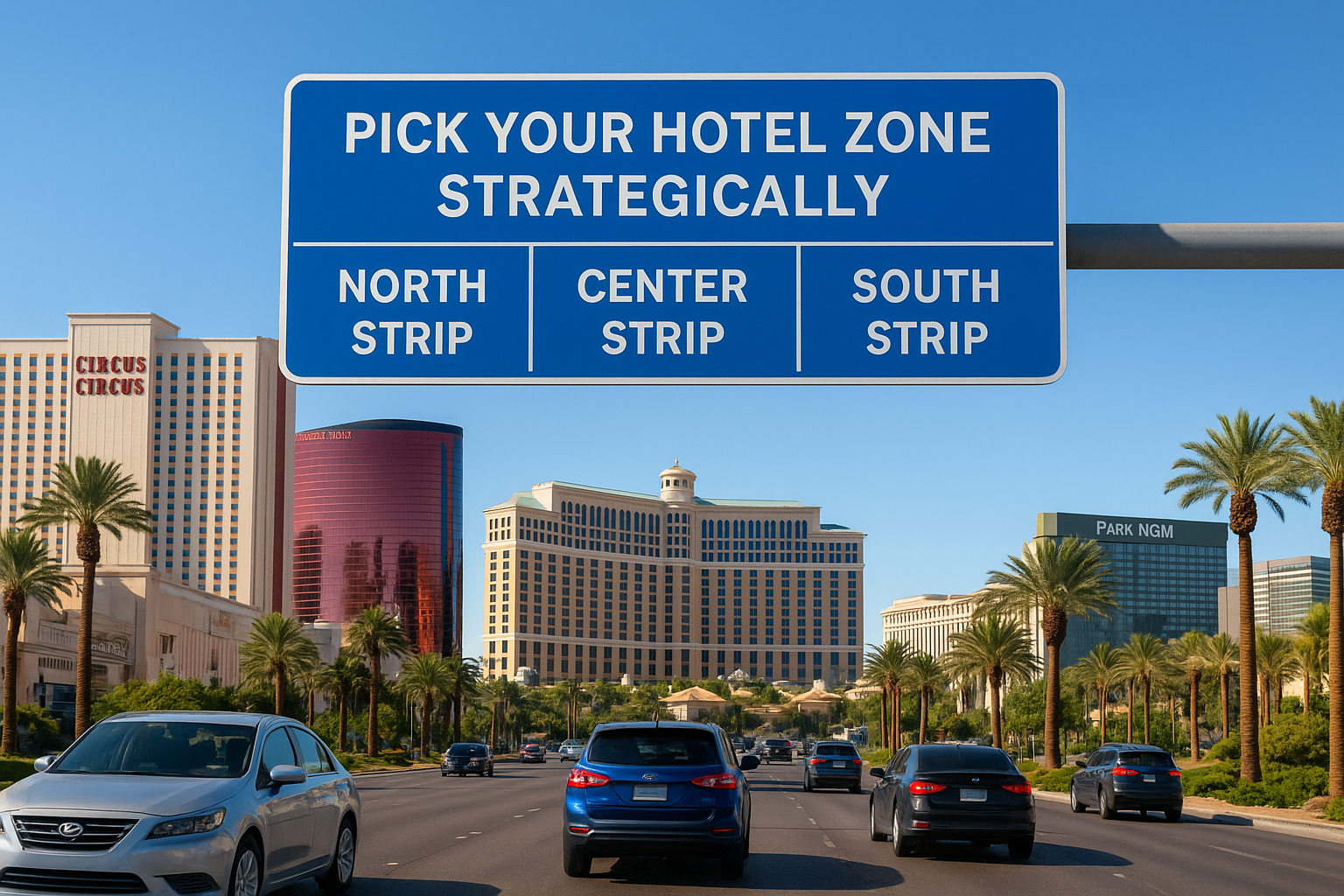
| Zone | Best For | Notable Properties |
|---|---|---|
| North Strip | Budget travelers, families | Circus Circus, Resorts World, Sahara |
| Center Strip | Couples, first-timers | Cosmopolitan, Bellagio, Park MGM |
| South Strip / Airport | Sports fans, arena events | Mandalay Bay, MGM Grand, Allegiant access |
| Downtown | History lovers, locals scene | Circa, Golden Nugget, Arts District proximity |
Downtown properties run 20 to 40 percent cheaper than comparable Strip hotels, and the Fremont Street Experience gives you a dense concentration of entertainment within walking distance. The tradeoff is that you will need a rideshare or the Deuce bus to reach the center Strip, which adds 20 to 30 minutes each way.
If you plan to visit Red Rock Canyon or Valley of Fire, staying on the west side of the Strip or in Summerlin cuts your drive time significantly and makes early morning starts much easier.
Getting around without a rental car
Most visitors do not need a rental car for a Strip-focused trip, and renting one often creates more problems than it solves when you factor in daily parking fees and traffic during busy evenings. The Las Vegas Monorail runs along the east side of the Strip and covers several major stops for a flat per-ride fee, which works well for quick mid-day movement between properties.
Rideshares handle everything else reliably. Budget $15 to $25 per rideshare trip between major destinations, and use the designated pickup zones most hotels now provide, since trying to hail from the main entrance adds wait time during peak hours.
Plan your days on the Strip and downtown
Time on the Strip moves differently than anywhere else. Casinos have no clocks, walkways stretch longer than they look on the map, and it is easy to burn three hours without realizing it. Any practical las Vegas travel guide will tell you that the visitors who enjoy their days most are the ones who block out a loose structure before they leave the hotel, not an hour-by-hour script, but a clear sense of what they are doing, where, and roughly when.
Structure your Strip day to save time
Start your Strip mornings early, before the heat peaks and before crowds fill the pools and restaurants. Walk the section you are most interested in between 9 and 11 a.m., then plan a sit-down lunch before temperatures climb in summer months. Afternoons are best used indoors: explore a resort you are not staying in, catch a show matinee, or book a tour that departs mid-morning and returns before the hottest part of the day.
Walking the full Strip end to end covers roughly four miles and takes between 90 minutes and two hours with light stops, so plan that as a standalone activity rather than a warm-up.
Use this simple daily template to anchor your schedule:
| Time Block | Activity |
|---|---|
| 8:00 – 11:00 a.m. | Outdoor walking, breakfast, pool |
| 11:00 a.m. – 2:00 p.m. | Resort exploring, indoor attractions |
| 2:00 – 6:00 p.m. | Shows, tours, or casino time |
| 6:00 – 9:00 p.m. | Dinner reservation |
| 9:00 p.m. onward | Nightlife, Fremont Street, or live entertainment |
What to do downtown and when
Fremont Street is at its best after dark, when the LED canopy light show runs overhead and the energy matches what most people picture when they think of old Vegas. Plan your downtown visit for an evening rather than midday to get the full effect. The Arts District sits just south of Fremont and works best as a morning or early afternoon stop, with independent galleries, coffee shops, and murals worth walking through at a relaxed pace on any day of the week.
Add one day trip beyond the city
Las Vegas sits within two to three hours of some of the most striking landscape in the American Southwest, and skipping a day trip is one of the most common regrets visitors mention after returning home. Building one day outside the Strip into your las vegas travel guide plan gives you a natural break from casino floors and buffets, and the contrast makes the city itself feel more interesting when you return. You do not need a full week to pull this off; most of the best options are built around a half-day or single-day format.
Choose your day trip based on what you want to see
Your priorities should drive the destination, not the other way around. The four most popular options each offer something distinct, and the right choice depends on how much driving you want to do and what kind of experience you are after.
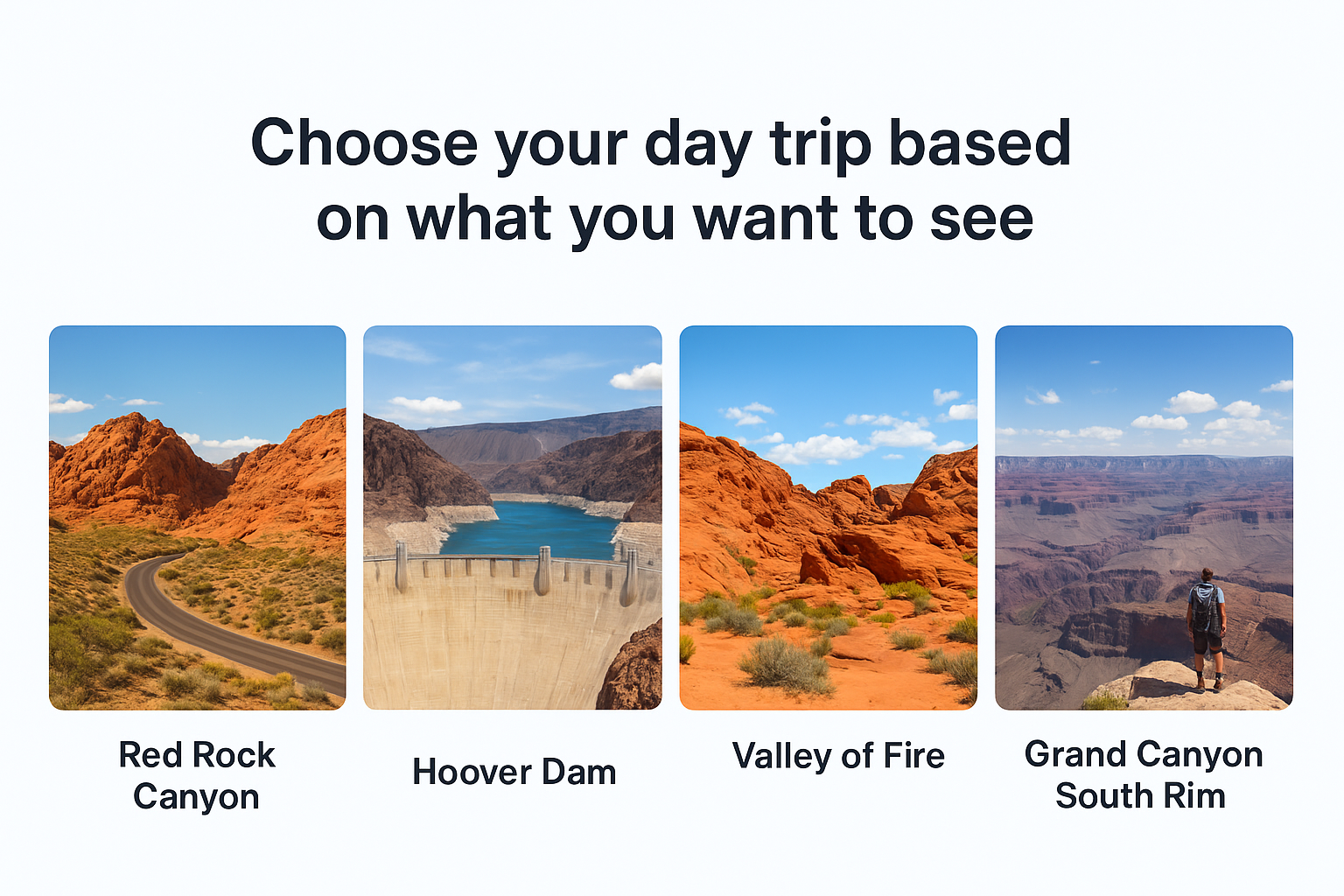
| Destination | Drive Time from Strip | Best For |
|---|---|---|
| Red Rock Canyon | 30 minutes | Hiking, scenic drives, photography |
| Hoover Dam | 45 minutes | History, architecture, Colorado River views |
| Valley of Fire | 1 hour | Desert landscapes, ancient petroglyphs |
| Grand Canyon South Rim | 4.5 hours | Once-in-a-lifetime views, full-day commitment |
Red Rock Canyon is the easiest entry point for visitors who want outdoor scenery without a long drive. The 13-mile scenic loop takes about 90 minutes by car with stops, and the trailheads give you options from short walks to multi-hour hikes. Hoover Dam works well if you are more interested in history and engineering than hiking.
Booking a guided tour for your day trip handles logistics that can otherwise derail the experience, including where to park, what order to see things in, and how to avoid the crowds at peak hours.
What to pack and when to leave
Leave the Strip no later than 8 a.m. for any outdoor destination, especially between April and October. Heat builds fast in the desert, and arriving early gives you the best light, cooler temperatures, and less competition for parking at trailheads. Bring at least one liter of water per person per hour you plan to spend outside, sunscreen with SPF 50 or higher, and closed-toe shoes for any trail.
Wrap up and book with confidence
This las vegas travel guide gives you everything you need to stop guessing and start planning with real numbers and clear priorities. You know when to visit, how to budget honestly, where to position your hotel, how to structure your days, and which day trip fits your schedule. The difference between a frustrating Vegas trip and a great one almost always comes down to decisions made before you arrive, not after.
Most visitors leave Las Vegas wishing they had done one thing differently: spent more time outside the city. Red Rock Canyon, Hoover Dam, and Valley of Fire are all within reach, and a guided tour handles every logistical headache so you can focus on the experience itself. Another Side Tours has been running these trips since 2007, and our guides know these destinations in detail.
Ready to lock in your itinerary? Book a private Las Vegas tour and get your full day planned from pickup to drop-off.