Before the Strip existed, before the megaresorts, the neon skyline, or the crowds, there was Fremont Street. The downtown Las Vegas history most visitors never hear about starts with a 1905 railroad land auction that turned empty desert into a town site almost overnight.
From that single day of bidding, Downtown grew into the city’s original gambling district, its cultural core, and the place where Las Vegas first earned its reputation. Fremont Street hosted the first paved road, the first telephone, the first gaming license, and the first high-rise in the state. Every major chapter of the city’s story, from mob-era casinos to the construction of Hoover Dam, played out on these few blocks.
At Another Side Tours, our guides walk guests through these streets and share the stories behind the landmarks, because Downtown makes a lot more sense when you know what happened there. This timeline covers the major milestones from that original land auction through today, giving you a clear picture of how Downtown Las Vegas became the foundation for everything the city is now.
Why downtown Las Vegas history matters
Understanding downtown Las Vegas history gives you a completely different lens for the city. Most visitors arrive on the Strip and never realize that Las Vegas existed for decades before those megaresorts were built, and that the city’s real character was shaped just a few miles north on Fremont Street.
It gives context to the whole city
When you know where Downtown started, the Strip makes more sense. The original casinos, the regulatory frameworks, the gambling culture, the showroom entertainment: all of it began Downtown. Fremont Street pioneered every format that the Strip later scaled up and glamorized. Without that foundation, the Las Vegas most people visit today would not exist in the form it does.
Fremont Street was not just the starting point of Las Vegas gambling; it was the laboratory where the city figured out what worked.
Knowing this history also helps you read the city’s geography. Downtown sits at the north end of Las Vegas Boulevard, separated from the Strip by a stretch of pawn shops and motels. That gap is not random; it reflects decades of development pressure that pushed growth south while the original district had to reinvent itself to stay relevant.
It makes your visit more meaningful
When you walk Fremont Street with no historical context, you see lights, crowds, and casinos. When you know that the first gaming license in Nevada was issued right here in 1931, or that Binion’s Horseshoe changed how poker was played, those same streets carry real weight. History turns a stroll into something closer to a tour.
Your experience of Las Vegas is richer and more memorable when you understand what came before the neon.
Timeline 1905–1930: a railroad town becomes a city
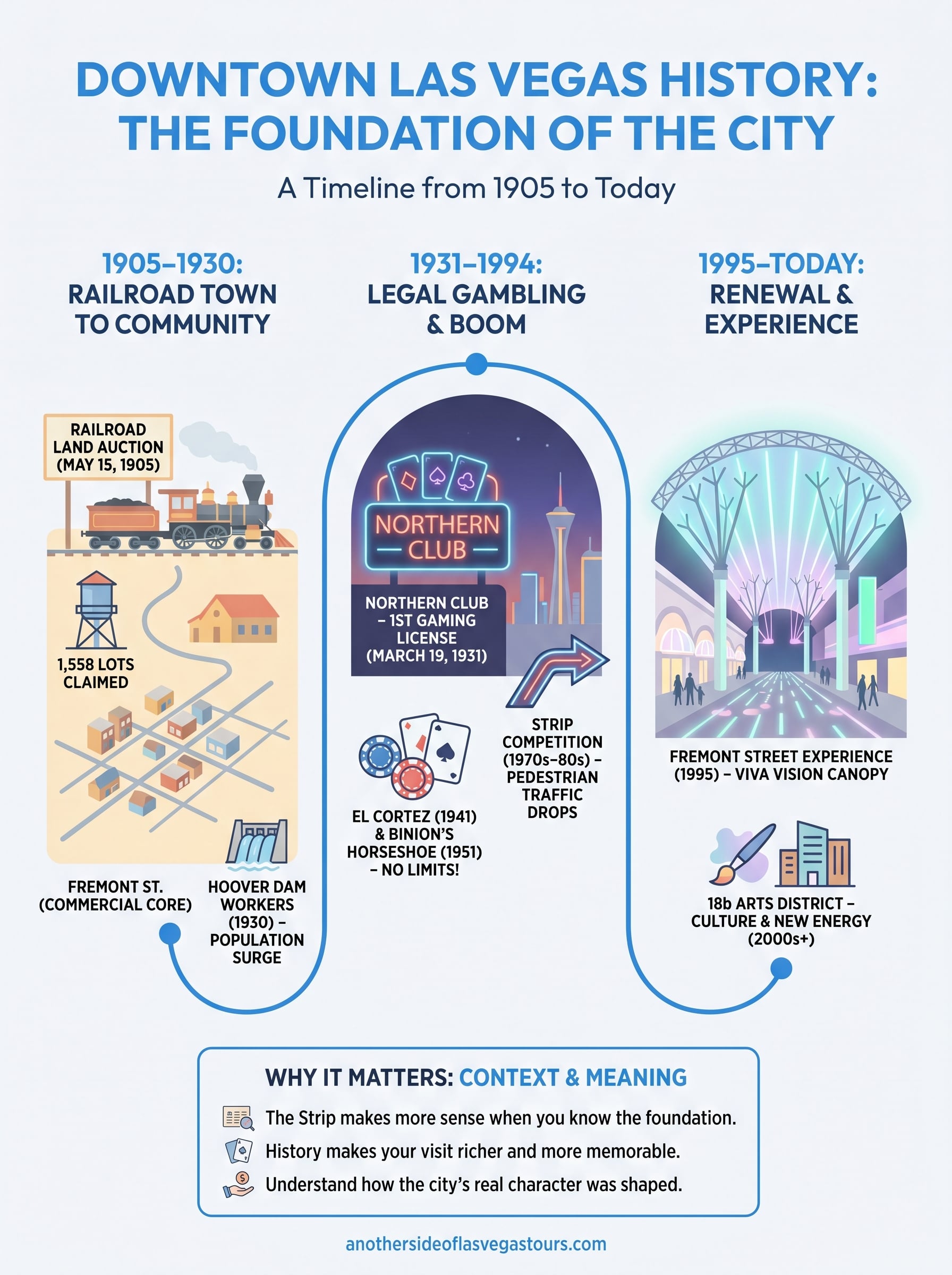
The earliest chapter of downtown Las Vegas history begins on May 15, 1905, when the San Pedro, Los Angeles and Salt Lake Railroad held a land auction at what is now the intersection of Main Street and Fremont Street. Within hours, buyers had claimed 1,558 lots, and Las Vegas became an incorporated town site. The railroad needed a water and service stop between Los Angeles and Salt Lake City, and this stretch of desert was the right spot at the right time.
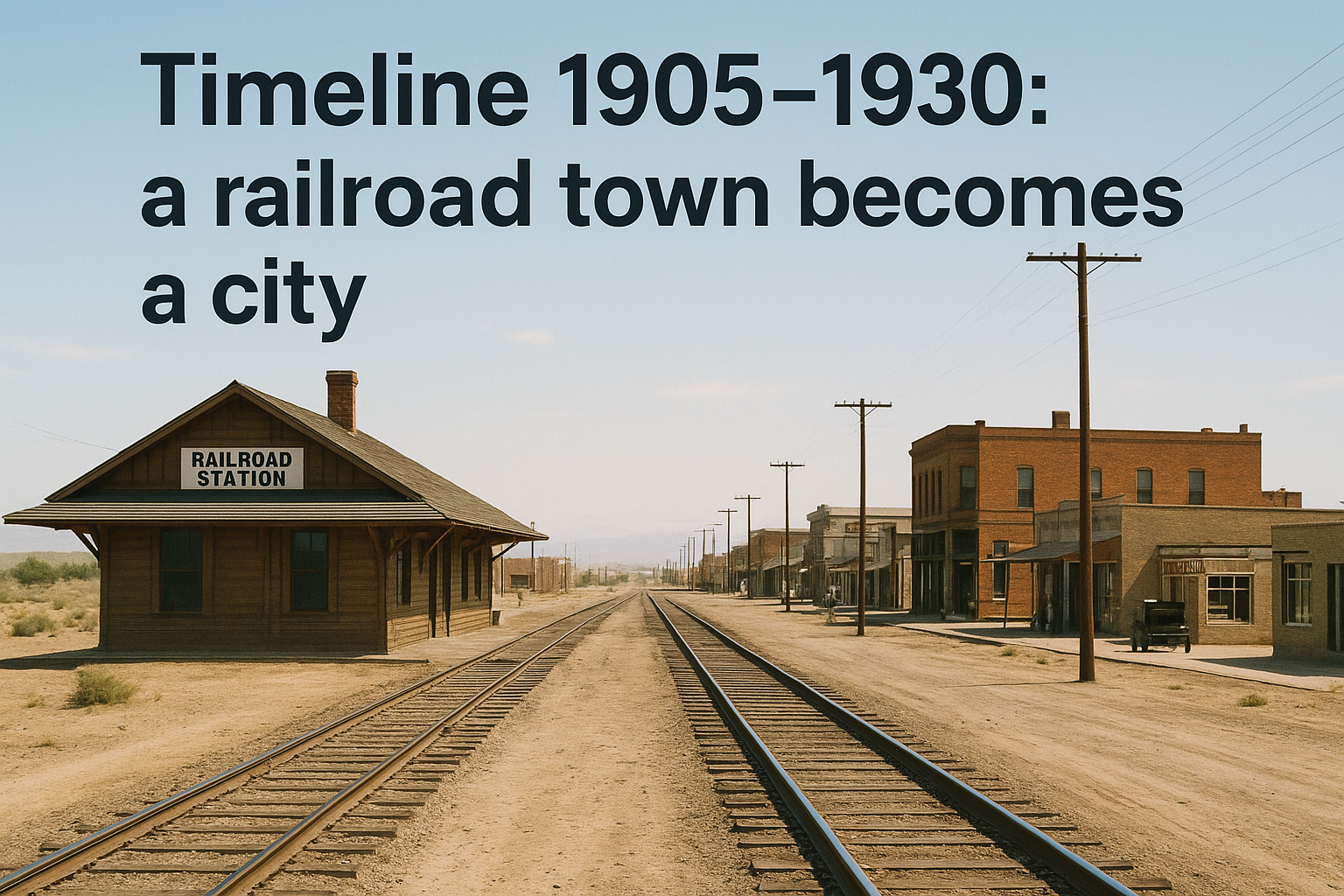
That single auction day created the street grid you can still walk through today on Fremont Street.
From camp to community
By 1911, Las Vegas had incorporated as a city with a population of around 800 people. Fremont Street quickly became the commercial core, hosting the town’s first hotel, general stores, and saloons. The railroad kept steady freight and passenger traffic moving through, which gave local businesses enough customers to survive in the desert.
Then by 1930, construction crews arriving to build Hoover Dam brought a surge of workers and wages into town, pushing the population past 5,000 and setting the stage for everything that followed.
Timeline 1931–1994: legal gambling, boom, and competition
Nevada legalized gambling on March 19, 1931, and Downtown moved immediately. The Northern Club on Fremont Street received the first gaming license issued in the state, cementing the area as the center of downtown Las Vegas history for the next four decades.
The casino boom takes hold
Fremont Street became a corridor of neon and card tables through the 1940s and 1950s. Properties like the El Cortez (1941) and Binion’s Horseshoe (1951) drew serious gamblers with loose rules and high limits. Benny Binion changed the game by eliminating betting caps, which made his casino the destination for high-stakes poker players across the country.
Binion’s decision to remove betting limits helped turn poker into the competitive spectator sport it eventually became.
Competition from the Strip
By the 1970s and 1980s, the Strip’s larger resorts were pulling crowds and money south. Downtown casinos fought back with lower table minimums and aggressive promotions, but the gap kept widening.
Fremont Street’s pedestrian traffic dropped sharply by 1994, forcing city leaders and casino operators to rethink the district entirely. That pressure produced a solution that would transform how visitors experience Downtown for the next 30 years.
Timeline 1995–today: Fremont Street Experience and renewal
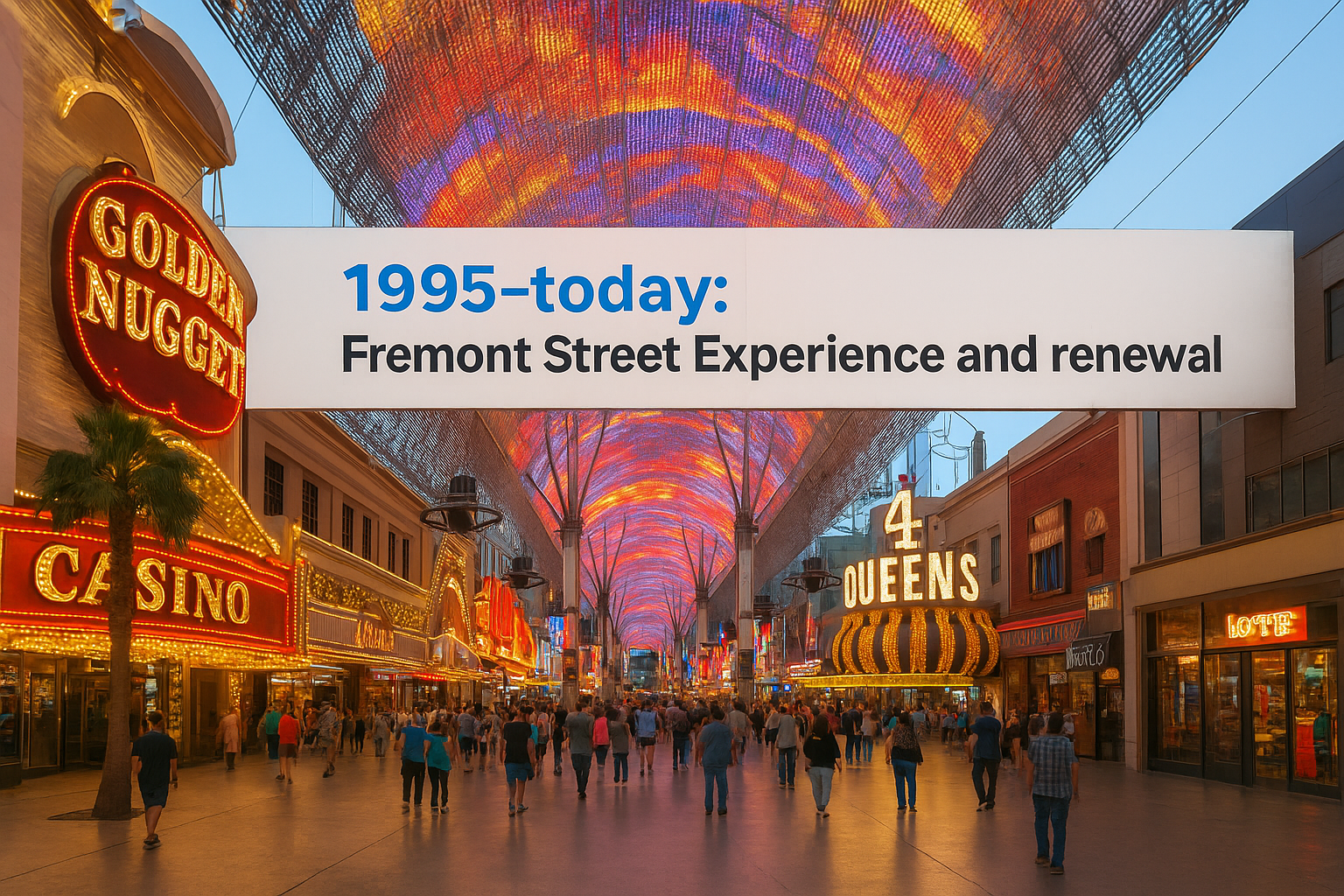
The answer to Downtown’s declining foot traffic arrived in 1995 with the opening of the Fremont Street Experience, a $70 million covered canopy stretching four blocks overhead. The canopy features a massive LED display called Viva Vision that runs light shows every hour after dark. That investment gave visitors a clear reason to spend time on Fremont Street again rather than staying on the Strip.
Ongoing investment and the arts district
By the 2000s and 2010s, new energy started flowing into adjacent neighborhoods. The 18b Arts District, just south of Fremont Street, attracted galleries, restaurants, and independent shops that added a creative layer to the area. Developers converted old motels and warehouses into boutique hotels and bars, drawing a younger crowd interested in something different from the casino floor.
This combination of entertainment, culture, and history makes Downtown one of the most layered parts of downtown Las Vegas history to explore on foot.
Downtown today offers live music, street art, and local breweries alongside operating casinos that have been running for decades. The district keeps changing, but the bones of that original 1905 railroad town are still visible if you know where to look.
How to experience downtown Las Vegas history today
Walking Fremont Street on your own gives you the landmarks, but a guided tour gives you the stories behind them. The difference matters when you’re trying to understand downtown Las Vegas history rather than just pass through it. Context is what separates a meaningful visit from a forgettable walk.
A knowledgeable guide turns a block of casinos into a timeline you can actually follow.
Walk the street with a guide
Our Downtown Las Vegas tours at Another Side Tours cover the key historical sites along Fremont Street, including the spots where the first gaming license was issued, where Binion’s changed poker forever, and where the city’s original hotels once stood. Guides share the context that street signs and plaques simply cannot provide. You leave knowing the actual sequence of events, not just the names.
What to look for on your own
If you explore at your own pace, keep your eyes on the older casino facades and the street-level architecture that dates back to the 1940s and 1950s. El Cortez, still operating today, gives you one of the best surviving examples of that era. Check opening hours before you go, as some historical sections have limited visitor access.
Wrapping it up
Downtown Las Vegas history stretches from a single railroad auction in 1905 to a fully realized urban district that keeps evolving today. Fremont Street gave the city its first paved road, its first gaming license, its first high-rise, and its first real identity. Every major force that shaped Las Vegas, the railroad, Hoover Dam workers, mob-era casino operators, and urban renewal projects, left its mark on these few blocks.
Your visit to Downtown hits differently when you walk it with that background in mind. The landmarks mean more, the stories stick, and you leave with a real understanding of how the city came to be rather than just a photo of a neon sign.
If you want to see these streets through the eyes of someone who knows them well, our guides are ready to take you there. Book a private Las Vegas tour and experience Downtown the way insiders do.